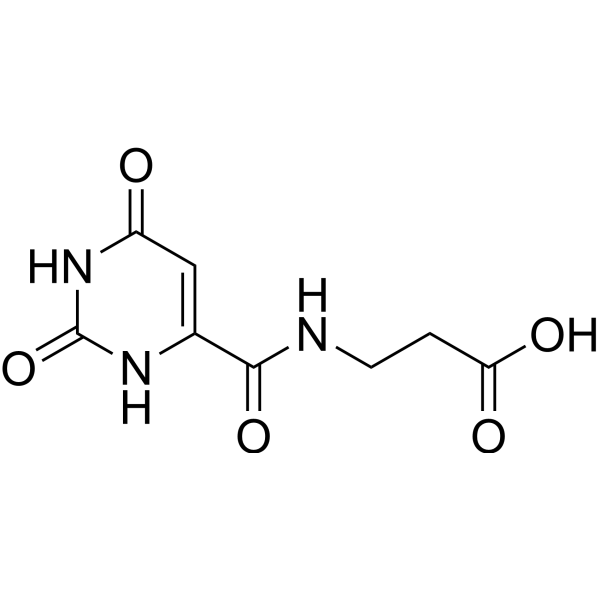
MHC
Major Histocompatibility Complex; MHC
MHC is a group of genes encoding proteins which are transferred to the cell surfaces to present the intracellular or extracellular, self or non-self antigens to the cells of the immune system, thereby helping T cells in differentiating self from non-self proteins, and initiating adaptive immune responses. MHC can be divided into 3 subtypes, MHC I, MHC II and MHC III, in which MHC I presents endogenous antigens (such as antigens produced by virus-infected cells or tumor cells) to activate cytotoxic T cells (CD8+ T cells); MHC II presents exogenous antigens (such as bacteria or parasites) to activate helper T cells (CD4+ T cells); MHC III does not directly participate in antigen presentation, but involves in immune regulation, inflammatory response and cell signaling. MHC is crucial for stem cell transplant (SCT), and could lead to graft-versus-host disease (GVHD)[1][2].
References:
- [1]. Deakin JE, et al., Evolution and comparative analysis of the MHC Class III inflammatory region. BMC Genomics. 2006 Nov 2;7:281. [Content Brief]
- [2]. Sharma S K. Major Histocompatibility Complex[M]//Basics of Hematopoietic Stem Cell Transplant. Singapore: Springer Nature Singapore, 2023: 903-913.
MHC Isoform Specific Products
All Product Categories
-
MHC Related Products (122)
Related Products (122)

-
MHC Isoform Comparison
-
1,10-Decanediol
 0 Images1,10-Decanediol is a diol compound that can react with α-ketoglutarate (aKG) to generate polymeric microparticles (termed paKG MPs) for the sustained release of aKG, thereby promoting immunosuppressive regulation. Additionally, paKG MPs can bind to dendritic cells (DCs), reducing their glycolysis and mitochondrial respiration in vitro. These metabolic changes lead to the modulation of MHC-II and CD86 expression in DCs and alter the frequency of regulatory T cells (Tregs) as well as T-helper type 1/2/17 cells in vitro. 1,10-Decanediol can be used in research within the field of immunometabolism. can be used as a surfactant/stabilizer in the synthesis of nanomaterials.
-
InsB (9-23)
 0 ImagesSynonyms: Insulin B chain (9-23)InsB (9-23) (Insulin B chain (9-23)) is an HLA-DQ8-restricted insulin B-chain peptide composed of amino acid residues 9-23. InsB (9-23) serves as a major MHC II class-restricted antigen. InsB (9-23) supports the recognition and activation of T cells, stimulates the secretion of IFN-γ and cytokines, and induces cross-reactive immune responses. InsB (9-23)-specific CD4 T cells can initiate diabetes. InsB (9-23) can be used in research related to type 1 diabetes and autoimmune diabetes.
-
PADRE peptide
 0 ImagesPADRE peptide is a pan-HLA-DR binding epitope and immunostimulant. PADRE peptide binds to the peptide-binding groove of MHC class II molecules for presentation to CD4+ T cells, thereby effectively stimulating specific immune responses. PADRE peptide not only enhances anti-tumor immune responses, inhibits tumor growth and prolongs survival; it also significantly increases the frequency of E7-specific CD8+ T cells and improves therapeutic efficacy against TC-1 tumors when used in combination with E7 peptide-based vaccines and poly (I:C). The intensity of the immune response induced by PADRE peptide is lower than that of the Ii-PADRE DNA vaccine, and it fails to enhance the immune effect of CRT-E7 DNA. PADRE peptide is widely applicable to research on related tumors such as melanoma, glioblastoma and cervical cancer.
-
OVA(250-264)
 0 ImagesSynonyms: OVApOVA(250-264) (OVAvac) (OVAp) is an antigen peptide that can be from ovalbumin (OVA) presented by the class I MHC molecule, H-2Kb. OVA(250-264) combined withαMSLN (anti-MSLN antibody) significantly induces antigen-specific CD8+ T cell generation and infiltration for enhancing antitumor efficacy in orthotopic pancreatic cancer mice model. OVA(250-264) can be used for neoantigen vaccine development in pancreatic cancer immunotherapy research.
-
1-Adamantaneethanol
 0 Images1-Adamantaneethanol is an allele-selective MHC II class molecule loading enhancer (MHC loading enhancer, MLE) that enhances peptide loading and ligand exchange of HLA-DR molecules. 1-Adamantaneethanol targets the polymorphic P1 pocket of HLA-DR molecules and preferentially acts on HLA-DR subtypes with Gly at position β86, thereby stabilizing the peptide-receptor conformation and accelerating antigen loading. 1-Adamantaneethanol can be used in studies related to MHC II antigen presentation, peptide vaccines, adaptive immunity and tumor immunity.
-
Lacutamab
 0 ImagesSynonyms: IPH 4102; Anti-KIR3DL2/CD158k Reference Antibody (lacutamab)Lacutamab (IPH 4102) is a humanized monoclonal antibody targeting KIR3DL2/CD158k, which eliminates KIR3DL2-expressing cells via antibody-dependent cellular cytotoxicity and phagocytosis. Lacutamab is applicable to research related to mycosis fungoides, relapsed or refractory peripheral T-cell lymphoma, and relapsed or refractory cutaneous T-cell lymphoma.
-
Gp100 (25-33), human TFA
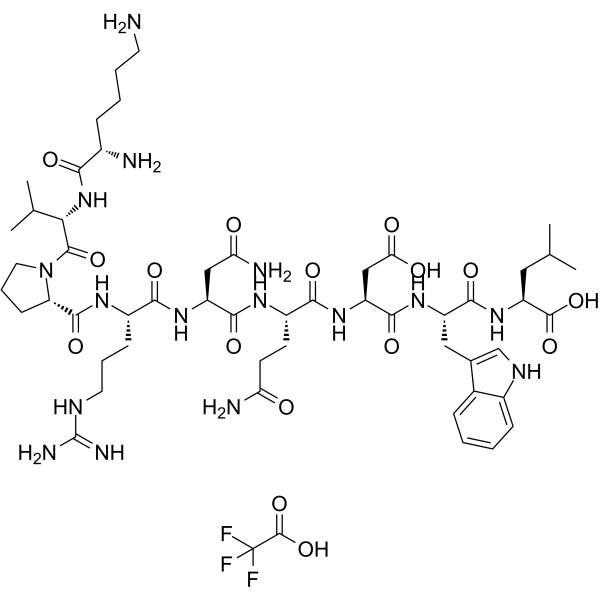 0 ImagesCat. No.: HY-P1585APurity: 99.73%Synonyms: Hgp100 (25-33) TFAGp100 (25-33), human TFA (Hgp100 (25-33) (TFA)) is the amino acids 25-33 fragment of the human melanoma antigen. Gp100 (25-33), human TFA is a 9-amino acid (AA) epitope restricted by MHC class I H-2Db and recognized by the T cells. Gp100 (25-33), human TFA has immunogenicity and induces specific T cells. Gp100 (25-33), human TFA can be used for the cancer research, such as melanoma.
-
ESAT6 Epitope
 0 ImagesCat. No.: HY-P6312CAS No.: 183273-40-7ESAT6 Epitope is a ESAT6 CD4+ T cell epitope. ESAT6 Epitope binds to MHC class I molecules with an IC50 value of approximately 180 nM. ESAT6 Epitope has weak immunogenicity. ESAT6 Epitope can be used in studies related to pulmonary tuberculosis.
-
Anti-Mouse MHC Class I (H-2Kb) Antibody (Y-3)
 0 ImagesCat. No.: HY-P99135Purity: 99.16%Anti-Mouse MHC Class I (H-2Kb) Antibody (Y-3) is a mouse-derived IgG2b antibody inhibitor, targeting to mouse MHC Class I (H-2Kb). Anti-Mouse MHC Class I (H-2Kb) Antibody (Y-3) reacts with the mouse H-2Kb, H-2Kk, H-2Kq, H-2Kr, H-2ks MHC class I alloantigens and not H-2Kd. Anti-Mouse MHC Class I (H-2Kb) Antibody (Y-3) can block MHC Class I. Anti-Mouse MHC Class I (H-2Kb) Antibody (Y-3) can be used for immunology research.
-
Anti-Monkey/Human MHC class II (HLA-DR) Antibody (L243)
 0 ImagesCat. No.: HY-P990189Anti-Monkey/Human MHC class II (HLA-DR) Antibody (L243) is a mouse-derived IgG2a κ type antibody inhibitor, targeting to monkey/human MHC class II. Anti-Monkey/Human MHC class II (HLA-DR) Antibody (L243) can inhibits tumor cells proliferation and induce apoptosis. Anti-Monkey/Human MHC class II (HLA-DR) Antibody (L243) increases cellular reactive oxygen species (ROS) and loss of mitochondrial membrane potential in human endothelial cells. Anti-Monkey/Human MHC class II (HLA-DR) Antibody (L243) can be used for the researches of cancer and infection, such as lymphoma.
-
Adrixetinib
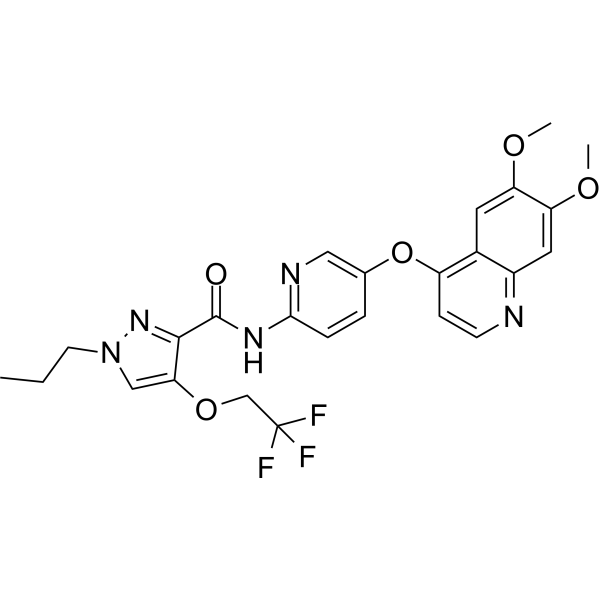 0 ImagesSynonyms: Q702Adrixetinib (Q702) is an orally active triple inhibitor against CSF1R, Mer, and Axl, with Kd values of 8.7 nM, 0.8 nM, and 0.3 nM, respectively. Adrixetinib acts as a potent immune modulator that remodels the tumor microenvironment. Adrixetinib increases the abundance of M1 macrophages and CD8⁺ T cells, while decreasing the levels of M2 macrophages and myeloid-derived suppressor cells (MDSCs). Adrixetinib upregulates the expression of MHC class I and E-cadherin in tumor cells. Adrixetinib shows remarkable antitumor efficacy in syngeneic mouse tumor models. Adrixetinib is suitable for the research of breast cancer, renal adenocarcinoma, colon carcinoma, and melanoma.
-
Anti-Mouse MHC Class II (I-A/I-E) Antibody (M5/114)
 0 ImagesCat. No.: HY-P990187Purity: 99%Anti-Mouse MHC Class II (I-A/I-E) Antibody (M5/114) is a rat-derived IgG2b type antibody inhibitor, targeting to mouse MHC Class II. Anti-Mouse MHC Class II (I-A/I-E) Antibody (M5/114) reacts with mouse MHC Class II haplotypes I-Ab, I-Ad, I-Aq, I-Ed, and I-Ek. Anti-Mouse MHC Class II (I-A/I-E) Antibody (M5/114) does not react with I-Af, I-Ak, or I-As haplotypes. Anti-Mouse MHC Class II (I-A/I-E) Antibody (M5/114) blocks MHC Class II and inhibit T cell generation. Anti-Mouse MHC Class II (I-A/I-E) Antibody (M5/114) can be used for the researches of infection and immunology, such as influenza A virus (IAV) infection.
-
MK-1966
 0 ImagesCat. No.: HY-P991257MK-1966 is an anti-IL-10 antibody. MK-1966 inhibits secretion of cytokines from activated macrophages, production of CC and CXC chemokines, and a TH1 response, down-regulates MHC and costimulatory molecules on dendritic cells (DCs), and induces regulatory T cells. MK-1966 can be used for the research of cancer , such as gastric cancer.
-
SIIVFEKL TFA
 0 ImagesCat. No.: HY-P10581APurity: 99.67%SIIVFEKL TFA is a variant of the major MHC class I-restricted epitope SIINFEKL. SIIVFEKL TFA is an antigenic peptide, that can stimulate specific T cells in experimental settings to study the competitive interaction between T cells. SIIVFEKL TFA exhibits low affinity for the OT-I T cell receptor (TCR), and can be used for detection of CD8+ T cells.
-
CMV pp65(13-27)
 0 ImagesCMV pp65(13-27) is a biological active peptide. (This peptide is derived from amino acid residues 13 to 27 of the 65k lower matrix phosphoprotein of the human cytomegalovirus. It contains a nine-amino-acid sequence (LGPISGHVL) that matches the consensus binding motif for a major histocompatibility complex H2-Dd T-cell epitope.)
-
Anti-Mouse MHC class II (I-A) Antibody (Y-3P)
 0 ImagesCat. No.: HY-P990188Purity: 98.852%Anti-Mouse MHC class II (I-A) Antibody (Y-3P) is a mouse-derived IgG2a κ type antibody inhibitor, targeting to mouse MHC class II. Anti-Mouse MHC class II (I-A) Antibody (Y-3P) reacts with mouse MHC Class II haplotypes I-Ab, I-Af, I-Ap, I-Aq, I-Ar, I-As, I-Au, I-Av, and weakly with I-Ak. Anti-Mouse MHC class II (I-A) Antibody (Y-3P) blocks MHC class II and inhibits expansion of regulate T cells. Anti-Mouse MHC class II (I-A) Antibody (Y-3P) can be used for the immunology research.

-
SIYNFEKL TFA
 0 ImagesCat. No.: HY-P10582APurity: 99.92%SIYNFEKL TFA is a variant of major MHC class I-restricted epitope SIINFEKL. SIYNFEKL TFA is an antigenic peptide, that can stimulate specific T cells in experimental settings to study the competitive interaction between T cell. SIYNFEKL TFA exhibits low affinity for the OT-I T cell receptor (TCR), and can be used for detection of CD8+ T cells.