



Orphan Nuclear Receptor Inhibitor
- 1
-
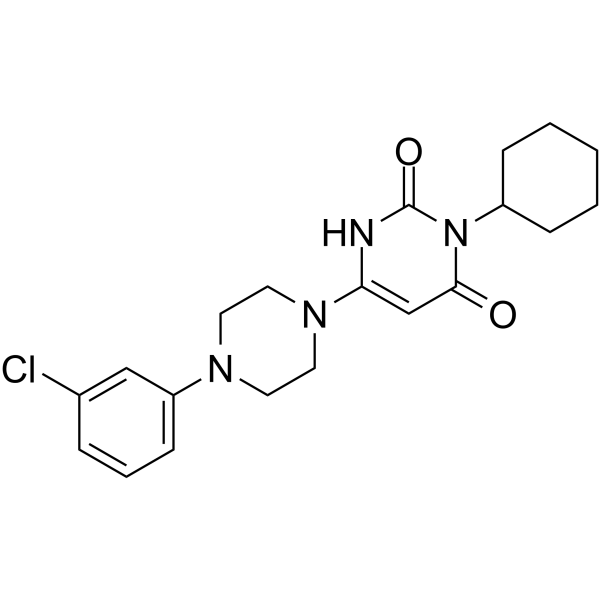
ML-180
 0 ImagesSynonyms: SR1848
ML-180 (SR1848) is a potent orphan nuclear receptor liver receptor homolog 1 (LRH-1; NR5A2) inverse agonist with an IC50 of 3.7 μM. ML-180 is inactive for steroidogenic factor-1 (SF-1; NR5A1; IC50>10 μM). ML-180 has the potential for LRH-1-dependent cancers.
-
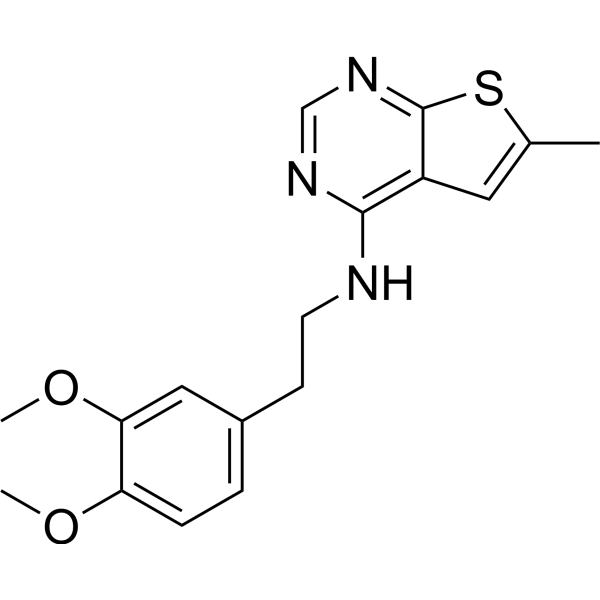
NR2F2-IN-1 free base
 0 Images
NR2F2-IN-1 (free base) is a COUP-TFII (orphan nuclear receptor NR2F2) inhibitor with antitumor activity against prostate cancer. NR2F2-IN-1 (free base) directly binds to the COUP-TFII ligand-binding domain and disrupts COUP-TFII interaction with transcription regulators including FOXA1. NR2F2-IN-1 (free base) can be used for the research of prostate cancer.
-
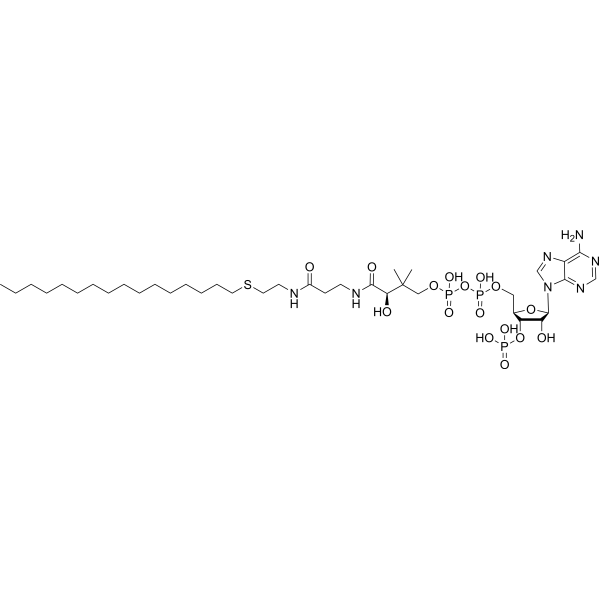
Hexadecyl-CoA
 0 ImagesCat. No.: HY-E70277CAS No.: 71425-89-3
Hexadecyl-CoA is a non-hydrolyzable thioether analog of Palmitoyl-CoA. Hexadecyl-CoA competitively inhibits the acyl-CoA thioesterase activity of HNF-4α with a Ki of 0.3 μM, and inhibits DGAT2 activity with an IC50 of approximately 2 μM. Hexadecyl-CoA also inhibits ATGL activity and serves as a reference inhibitor for DGAT2 LC/MS enzyme activity assays. Hexadecyl-CoA can be used in studies related to lipid metabolism, triglyceride synthesis and lipolysis.
-
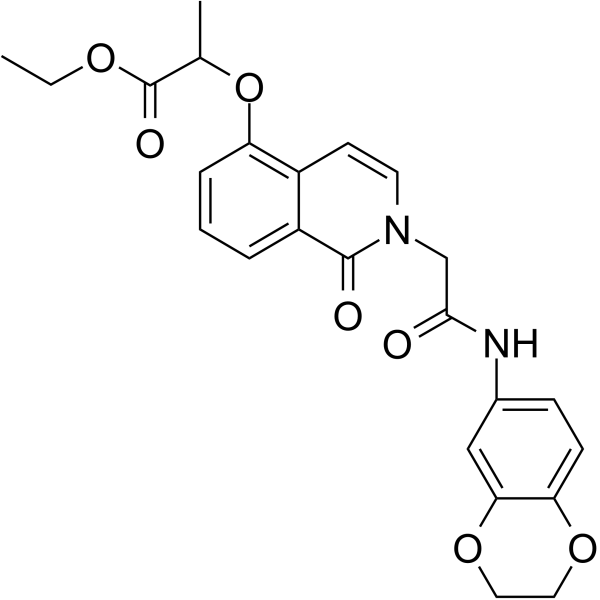
SID 7969543
 0 Images
SID 7969543 is a selective SF-1 (steroidogenic factor 1, NR5A1) inhibitor with an IC50 of 760 nM. SID 7969543 inhibits SF-1-triggered luciferase expression with IC50 of 30 nM. SF-1 is a transcription factor belonging to the nuclear receptor superfamily.
-
DHQZ-17
 0 Images
DHQZ-17 is a HNF4A inhibitor. DHQZ-17 triggers apoptosis in head and neck squamous cell carcinoma cells. DHQZ-17 can be used for the research of head & neck squamous cell carcinoma.
-
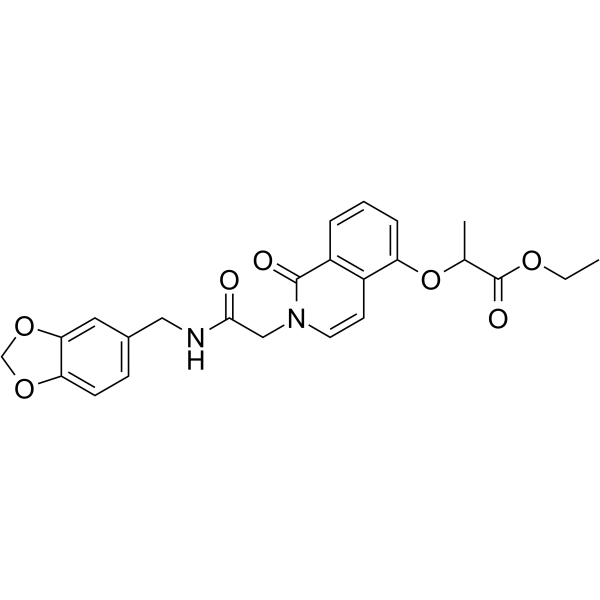
LRH-1 Inhibitor-3
 0 Images
LRH-1 Inhibitor-3 is a small molecule that inhibits LRH-1 transcriptional activity, thereby decreasing the expression of target genes associated with cell growth and proliferation. LRH-1 Inhibitor-3 has shown potential in reducing cancer cell proliferation in human pancreatic, colon, and breast adenocarcinoma cell lines. LRH-1 Inhibitor-3 serves as a molecular probe for investigating the role of LRH-1 in various malignancies.
-
NR2F2-IN-1
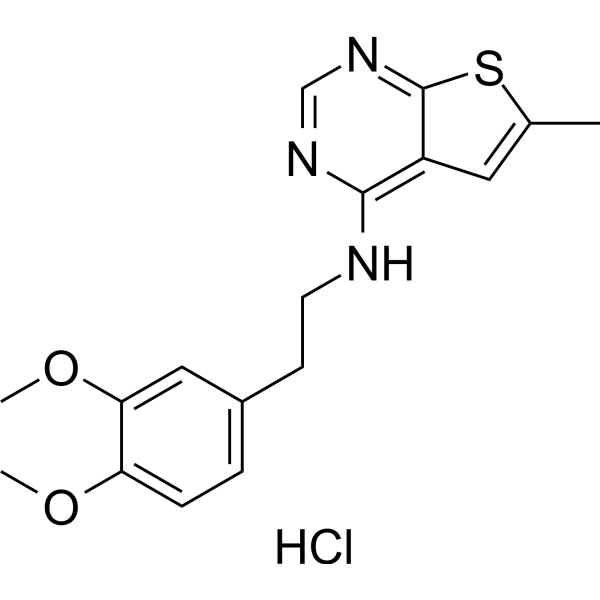 0 ImagesCat. No.: HY-156190CAS No.: 1049691-47-5
NR2F2-IN-1 is a COUP-TFII (orphan nuclear receptor NR2F2) inhibitor with antitumor activity against prostate cancer. NR2F2-IN-1 directly binds to the COUP-TFII ligand-binding domain and disrupts COUP-TFII interaction with transcription regulators including FOXA1. NR2F2-IN-1 can be used for the research of prostate cancer.
-
XY25028
 0 ImagesCat. No.: HY-181971
XY25028 is an orally active LRH-1 inhibitor with an IC50 of 0.30 μM. XY25028 inhibits the proliferation of androgen receptor (AR)-positive prostate cancer cells and suppresses the expression of AR target genes KLK2 and KLK3. XY25028 can be used in the research of castration-resistant prostate cancer.
-
XY25026
 0 ImagesCat. No.: HY-181970
XY25026 is an orally active LRH-1 inhibitor with an IC50 of 0.28 μM. XY25026 inhibits the proliferation of androgen receptor (AR)-positive prostate cancer cells, suppresses the expression of AR target genes KLK2 and KLK3, and inhibits tumor growth in xenograft models. XY25026 is applicable to the research of castration-resistant prostate cancer.
-
Iso-RJW100
 0 ImagesCat. No.: HY-155168CAS No.: 1276664-61-9
Iso-RJW100 (compound 24-endo) is a dual-liver receptor homologue-1 (LRH-1) and steroidogenic factor-1 (SF-1) agonist with pEC50 of 6.4 and 7.2, respectively.
-
SID 7969543 (Standard)
 0 ImagesCat. No.: HY-107404RCAS No.: 868224-64-0
SID 7969543 (Standard) is the analytical standard of SID 7969543 (HY-107404). This product is intended for research and analytical applications. SID 7969543 is a selective SF-1 (steroidogenic factor 1, NR5A1) inhibitor with an IC50 of 760 nM. SID 7969543 inhibits SF-1-triggered luciferase expression with IC50 of 30 nM. SF-1 is a transcription factor belonging to the nuclear receptor superfamily.
- 1



