



Orthopoxvirus
Orthopoxvirus is a genus of viruses in the family Poxviridae and subfamily Chordopoxvirinae. The orthopoxvirus genus consists of 12 viruses including variola virus, vaccinia virus (VV), cowpox viruses (CV), monkeypox virus, and camelpox virus.
There are not many drugs available for orthopoxvirus treatment. The only product currently available for treatment of complications of Orthopoxvirus infection is vaccinia immunoglobulin (VIG). In 2021, brincidofovir was approved by FDA for the treatment of smallpox and tecovirimat was approved by EMA for the treatment of monkeypox in 2022. A few active compounds including interferon and interferon inducers, and a variety of nucleosides or nucleotides have been reported to have activity against orthopoxvirus.
All Product Categories
-
Orthopoxvirus Related Products (140)
Related Products (140)

-
Tolypomycin R
 0 ImagesCat. No.: HY-126820CAS No.: 33889-22-4Tolypomycin R is an inhibitor of poxvirus that can block the rifampin-induced virus maturation.
-
Rifampicin-d11
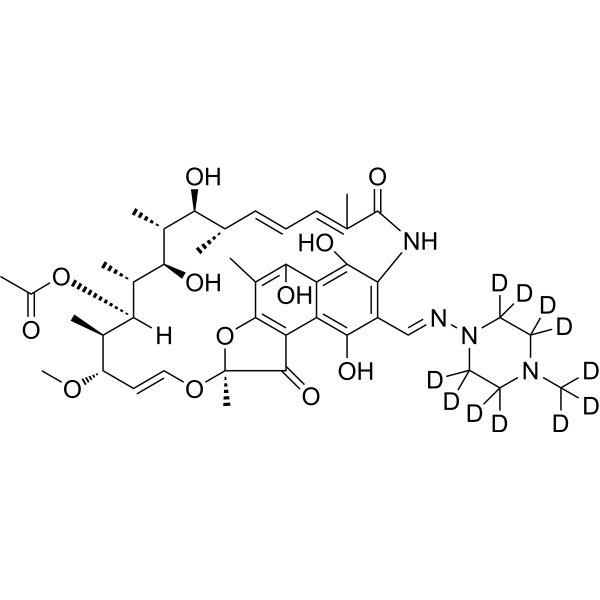 0 ImagesCat. No.: HY-B0272S3Synonyms: Rifampin-d11; Rifamycin AMP-d11Rifampicin-d11 (Rifampin-d11; Rifamycin AMP-d11) is the deuterium labeled Rifampicin (HY-B0272). Rifampicin is a potent and broad spectrum antibiotic against bacterial pathogens. Rifampicin has anti-influenza virus activities. Rifampicin shows anti-orthopoxvirus activity.
-
HOE961
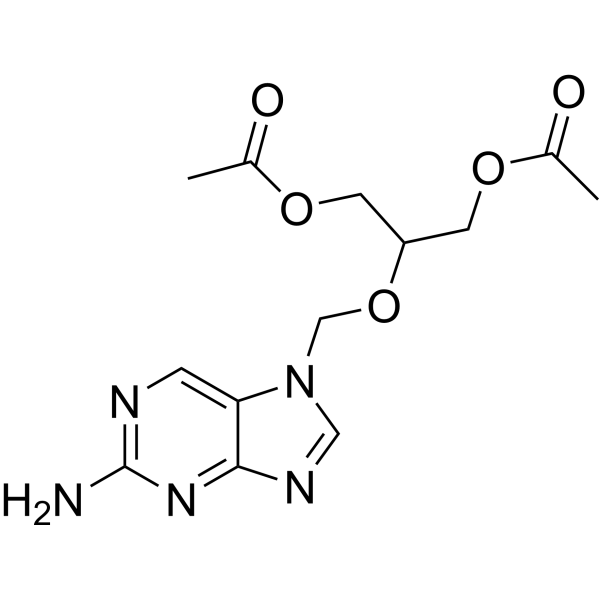 0 ImagesCat. No.: HY-147015CAS No.: 152819-48-2HOE961, the diacetate ester proagent of S2242, is active against respiratory cowpox virus infections, is orally active in infection models. Anti-orthopoxvirus activity.
-
Netropsin
 0 ImagesNetropsin dihydrochloride is a small-molecule MGB (minor-groove binder) and antibiotic, inhibits the catalytic activity of isolated topoisomerase and interferes with the stabilization of the cleavable complexes of topoisomerase II and I in nuclei. Netropsin dihydrochloride has antibacterial and antiviral activity.
-
G243-1720
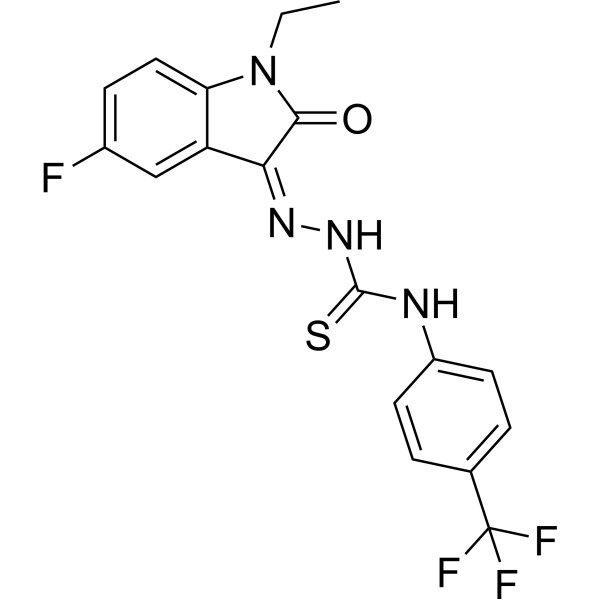
 0 ImagesCat. No.: HY-180785CAS No.: 932311-85-8G243-1720 is a potent, orally active, broad-spectrum anti-orthopoxvirus agent that functions by targeting the OPG57 (F13) protein and inducing its dimerization. G243-1720 effectively inhibits the replication of various poxviruses, but has no inhibitory effect on non-poxviruses. G243-1720 prevents the formation of extracellular membrane virus particles and the spread between cells. G243-1720 significantly reduces the viral load of monkeypox virus (MPXV) in the lungs of mice
-
Spirovirimat
 0 ImagesCat. No.: HY-172775CAS No.: 3051872-92-2Spirovirimat (Compound 7) is a potent Monkeypox virus (MPXV) p37 protein inhibitor with an IC50 value of 35 nM. Spirovirimat blocks the formation of extracellular virions by inhibiting viral membrane wrapping. Spirovirimat is promising for research of Monkeypox virus infections.
-
Cidofovir diphosphate-13C3
 0 ImagesCat. No.: HY-131606SCidofovir diphosphate-13C3 is the 13C-labeled Cidofovir diphosphate (HY-131606). Cidofovir diphosphate is the intracellular active metabolite of Cidofovir (HY-17438) and its oral prodrug Brincidofovir (HY-14532). By inhibiting viral DNA polymerase (Ki ≈ 76.3 μM), cidofovir diphosphate is widely used in studies on double-stranded DNA virus infections, including cytomegalovirus (CMV), adenovirus (AdV), and poxviruses (such as monkeypox and molluscum contagiosum virus, MCV).
-
Brincidofovir-d6
 0 ImagesCat. No.: HY-14532SCAS No.: 1917374-64-1Synonyms: CMX001-d6; HDP-CDV-d6Brincidofovir-d6 (CMX001-d6) is the deuterium labeled Brincidofovir (HY-14532). Brincidofovir (CMX001), the lipid-conjugated prodrug of Cidofovir (HY-17438), is an orally available, long-acting antiviral. Brincidofovir shows activity against a broad spectrum of DNA viruses including cytomegalovirus (CMV), adenovirus (ADV), varicella zoster virus, herpes simplex virus, polyomaviruses, papillomaviruses, poxviruses, and mixed double-stranded DNA virus infections. Brincidofovir, an oral antiviral in late stage development, has proven effective against orthopoxviruses in vitro and in vivo..
-
Cidofovir sodium
 0 ImagesCat. No.: HY-167911CAS No.: 127749-27-3Synonyms: GS 0504 sodium; HPMPC sodium; (S)-HPMPC sodiumCidofovir sodium is an acyclic monophosphate nucleotide analogue and CMV inhibitor with antiviral activity. Cidofovir sodium inhibits cytomegalovirus (CMV) replication by selectively inhibiting viral DNA polymerase. Cidofovir sodium induces apoptosis and can be used in studies of AIDS cytomegalovirus retinitis, herpes, and cancer. Cidofovir sodium also has anti-orthopoxvirus and anti-variola activities.
-
Thymidine-d14
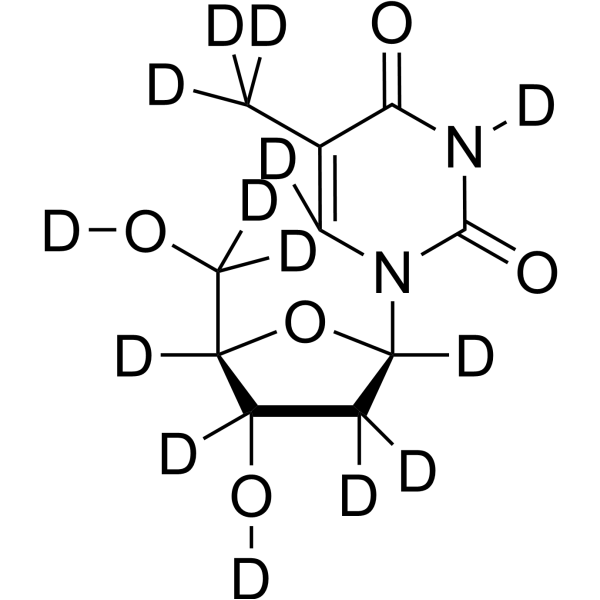 0 ImagesCat. No.: HY-N1150S10CAS No.: 1134181-96-6Synonyms: DThyd-d14; NSC 21548-d14
-
6-Methoxypurine arabinoside
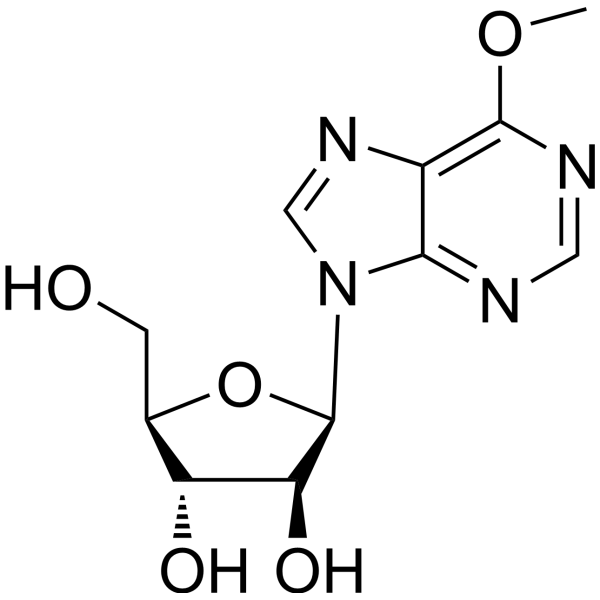 0 ImagesCat. No.: HY-W416300CAS No.: 91969-06-1Synonyms: Ara-m6-Methoxypurine arabinoside (Ara-m) is a potent varicella-zoster virus inhibitor. 6-Methoxypurine arabinoside has 50% inhibitory concentrations ranging from 0.5 to 3 microM against eight strains of VZV.
-
UMM-766
 0 ImagesCat. No.: HY-162517CAS No.: 443643-17-2UMM-766 is an orally available nucleoside analog. UMM-766 has potent, broad-spectrum antiviral activity against multiple members of the pox virus family. UMM-766 provides protection in a murine model of orthopox disease.
-
Levofloxacin-d3 sodium
 0 ImagesCat. No.: HY-W744235Levofloxacin-d3 sodium is the deuterium labeled Levofloxacin sodium (HY-B0330C). Levofloxacin ((-)-Ofloxacin) sodium is an orally active antibiotic and is active against both Gram-positive and Gram-negative bacteria. Levofloxacin sodium inhibits the DNA gyrase and topoisomerase IV. Levofloxacin sodium can be used for chronic periodontitis, airway inflammation and BK Viremia research. Levofloxacin sodium shows anti-orthopoxvirus activity.
-
Amantadine in Methanol (Standard)
 0 ImagesCat. No.: HY-B0402R1CAS No.: 768-94-5Synonyms: 1-Adamantanamine in Methanol (Standard); 1-Aminoadamantane in Methanol (Standard)Amantadine in Methanol (Standard) is the solution of Amantadine (Standard). This product is intended for research and analytical applications. Amantadine (1-Adamantanamine) is an orally avtive and potent antiviral agent with activity against influenza A viruses. Amantadine inhibits several ion channels such as NMDA and M2, and also inhibits Coronavirus ion channels. Amantadine also has anti-orthopoxvirus and anticancer activity. Amantadine can be used for Parkinson's disease, postoperative cognitive dysfunction (POCD) and COVID-19 research[4].
-
Enrofloxacin monohydrochloride (Standard)
 0 ImagesCat. No.: HY-B0502ARCAS No.: 93106-59-3Synonyms: BAY Vp 2674 monohydrochloride (Standard); PD160788 monohydrochloride (Standard)Enrofloxacin (monohydrochloride) (Standard) is the analytical standard of Enrofloxacin (monohydrochloride). This product is intended for research and analytical applications. Enrofloxacin monohydrochloride (BAY Vp 2674 monohydrochloride) is an effective antibiotic with an MIC90 of 0.312 μg/mL for Mycoplasma bovis. Enrofloxacin monohydrochloride shows inhibitory activity against vaccinia virus (VV).
-
Orthopoxviruses-IN-1
 0 ImagesCat. No.: HY-178449CAS No.: 3089950-34-2Orthopoxviruses-IN-1 (Compound 4) is a potent p37 protein inhibitor (IC50= 0.017 µM against Vaccinia virus (VACV)). Orthopoxviruses-IN-1 is promising for research of orthopoxvirus-related diseases, including variola virus (smallpox) and monkeypox.
-
Adefovir dipivoxil (Standard)
 0 ImagesSynonyms: GS 0840 (Standard)Adefovir dipivoxil (Standard) is the analytical standard of Adefovir dipivoxil. This product is intended for research and analytical applications. Adefovir dipivoxil is an orally active adenosine analog and Adefovir prodrug. Adefovir dipivoxil inhibits DNA synthesis, activates the ATR signaling pathway, and disrupts the KCTD12-CDK1 interaction. Adefovir dipivoxil has antiviral activity against PRV, HBV, and orthopoxviruses. Adefovir dipivoxil has inhibitory effects on both lamivudine-resistant and wild-type strains. Adefovir dipivoxil has antitumor activity against lung and colon cancer.
-
PS1097
 0 ImagesCat. No.: HY-186075CAS No.: 1822320-58-0PS1097 is a broad-spectrum antiviral inhibitor with a BVDV RdRp IC50 of 0.64 μM. PS1097 selectively reduces RTN3 protein levels, causes partial RTN3 mRNA reduction, and leaves other endoplasmic reticulum-resident proteins unaffected. PS1097 inhibits replication of Zika virus and multiple viruses that use the endoplasmic reticulum as a replication hub. PS1097 inhibits BVDV RdRp enzymatic activity and exerts activity against Bovine Viral Diarrhea Virus. PS1097 can be used for the research of zika virus infection, usutu virus infection, west nile virus infection, COVID-19, coxsackie b virus 5 infection, chikungunya virus infection, vaccinia virus infection.
-
Cidofovir (Standard)
 0 ImagesSynonyms: GS 0504 (Standard); HPMPC (Standard); (S)-HPMPC (Standard)Cidofovir (Standard) is the analytical standard of Cidofovir. This product is intended for research and analytical applications. Cidofovir (GS 0504) is an acyclic monophosphate nucleotide analogue and CMV inhibitor with antiviral activity. Cidofovir inhibits cytomegalovirus (CMV) replication by selectively inhibiting viral DNA polymerase. Cidofovir induces apoptosis and can be used in studies of AIDS cytomegalovirus retinitis, herpes, and cancer. Cidofovir also has anti-orthopoxvirus and anti-variola activities.



