



p62
Sequestosome-1; SQSTM1
p62 (SQSTM1 or Sequestosome 1 ), a ubiquitous and multifunctional protein, can direct ubiquitinated proteins to the proteasome or the growing autophagosome. p62 serves as an essential adaptor to identify and deliver specific organelles and protein aggregates to autophagosomes for degradation, a process known as selective autophagy.
All Product Categories
-
p62 Related Products (70)
Related Products (70)

-
Nur77 modulator 3
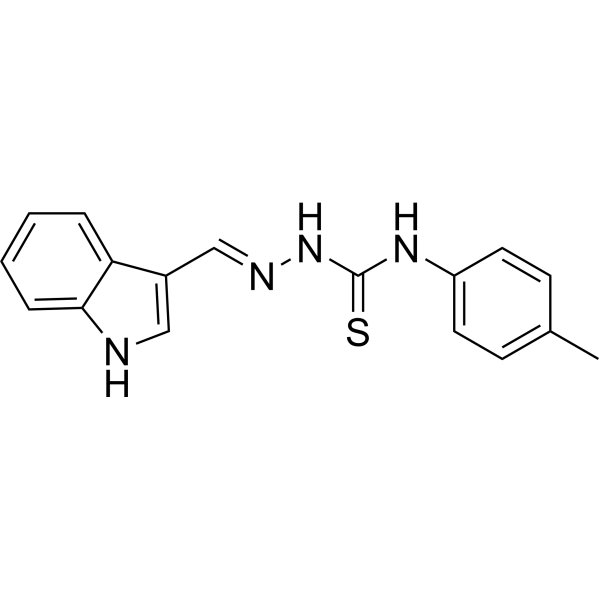 0 ImagesNur77 modulator 3 is a Nur77 modulator. Nur77 modulator 3 induces Nur77 expression, inhibits hepatic stellate cells (HSCs) activation, and reduces extracellular matrix (ECM) deposition. Nur77 modulator 3 enhances Nur77-denpendent autophagic flux and significantly inhibits the mTORC1 signaling pathway. Nur77 modulator 3 ameliorates HSCs activation, inflammation and hepatic fibrosis in vivo.
-
ICSN3250
 0 ImagesCat. No.: HY-112774CAS No.: 1561902-73-5ICSN3250 is a halitulin analogue and specific mTORC1 inhibitor. ICSN3250 directly binds to mTOR's FRB domain and displaces phosphatidic acid (PA), reversing mTORC1 activation. ICSN3250 shows high cytotoxicity in cancer cells (nanomolar concentration) through a caspase-independent cell death mechanism. ICSN3250 specifically inhibits the mTORC1 pathway, inducing autophagy and G0-G1 cell-cycle arrest in cancer cells. ICSN3250 can be used for the study of cancer.
-
TRAF6 control peptide
 0 ImagesCat. No.: HY-P3708CAS No.: 852690-80-3TRAF6 control peptide is a control peptide for TRAF6.
-
Keap1-p-p62-IN-1
 0 ImagesCat. No.: HY-184204Keap1-p-p62-IN-1 is a potent and selective Keap1-p-p62 inhibitor with an IC50 of 0.11 μM. Keap1-p-p62-IN-1 shows 18.73-fold selectivity over Keap1-Nrf2 interaction. Keap1-p-p62-IN-1 normalizes Nrf2 ubiquitination, sensitizes cells to Sorafenib (HY-10201)-induced ferroptosis. Keap1-p-p62-IN-1 can be used for the research of p62 aberrant hepatocellular carcinoma.
-
Leupeptin hydrochloride
 0 ImagesCat. No.: HY-183478CAS No.: 39740-82-4Leupeptin hydrochloride is a broad-spectrum protease inhibitor. By inhibiting the activation of the PTEN/PI3K/Akt/NF-κB/ERK1/2/p38 signaling pathway, Leupeptin hydrochloride significantly reduces LPS-induced NO and ROS production, mitochondrial membrane potential hyperpolarization, phagocytic activity, pro-inflammatory cytokine release, and M1 polarization in mouse peritoneal macrophages, and reverses autophagic flux impairment. It also decreases Concanavalin A (HY-P2149)-induced proliferation index of mouse splenic lymphocytes and the Th1/IL-10 and Th2/IL-10 cytokine ratios, thereby modulating innate and adaptive immune responses. Leupeptin hydrochloride inhibits blood coagulation and tumorigenesis in mouse skin. Leupeptin hydrochloride can be used in research on chronic inflammatory diseases and skin tumorigenesis.
-
EAD1 TFA
 0 ImagesCat. No.: HY-123056ACAS No.: 2320427-95-8EAD1 TFA is a Chloroquine (HY-17589A) analog with anticancer activity. EAD1 TFA blocks autophagy, leading to the intracellular accumulation of autophagosome-related proteins LC3-II and p62. EAD1 TFA induces cancer cell apoptosis and inhibits cancer cell proliferation. EAD1 TFA can be used in the research of lung cancer and pancreatic cancer.
-
RSL3 (Standard)
 0 ImagesSynonyms: (1S,3R)-RSL3 (Standard)RSL3 (Standard) is the analytical standard of RSL3 (HY-100218A). This product is intended for research and analytical applications. RSL3 ((1S,3R)-RSL3) is an inhibitor of glutathione peroxidase 4 (GPX4) (ferroptosis activator), reduces the expression of GPX4 protein, and induces ferroptotic death of head and neck cancer cell. RSL3 increases the expression of p62 and Nrf2 and inactivates Keap1 in HN3-rslR cells.
-
Bifendate (Standard)
 0 ImagesSynonyms: DDB (Standard)Bifendate (DDB), extracted from Schisandrae chinensis, is an orally active anti-HBV agent against chronic hepatitis B. Bifendate inhibits ATG5-dependent autophagy and attenuates oleic acid-induced lipid accumulation with anti-oxidant properties in vitro. Bifendate can decrease alanine transaminase (ALT) level in mice. Bifendate attenuates hepatic steatosis in cholesterol/bile salt- and high-fat diet-induced hypercholesterolemia in mice. Bifendate potently increases the activity of cytochrome proteins (CYPs) and reverse P-gp-mediated multi-drug resistance (MDR).
-
K67 (Standard)
 0 ImagesCat. No.: HY-111126RCAS No.: 2046250-48-8K67 (Standard) is the analytical standard of K67 (HY-111126). This product is intended for research and analytical applications. K67 is a selective the interaction between Keap1 and S349 phosphorylated p62 inhibitor, with an IC50 of 1.5 μM. K67 has a weaker inhibitory effect on the interaction between Keap1 and Nrf2 (IC50 is 6.2 μM). K67 competitively binds to the binding site of Keap1 with p-p62, blocKing the abnormal activation of the p62-dependent Nrf2 pathway. K67 inhibits tumor cell proliferation and enhances the sensitivity of hepatocellular carcinoma (HCC) to chemotherapeutic drugs by restoring Keap1-mediated ubiquitination and degradation of Nrf2.
-
Atiprimod hydrochloride
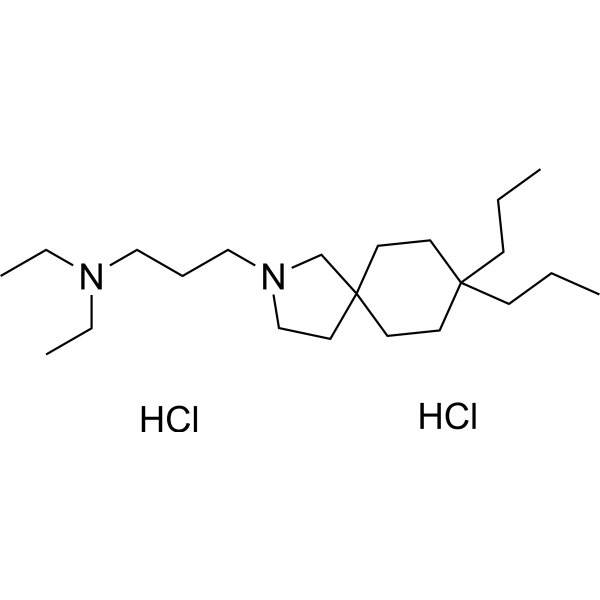 0 ImagesCat. No.: HY-110102CAS No.: 130065-61-1Synonyms: Azaspirane hydrochloride; SKF 106615-12 hydrochloride; SKF 106615Atiprimod (Azaspirane) hydrochloride is a STAT3 inhibitor with antitumor, anti-inflammatory, and anti-angiogenic activities. Atiprimod blocks the signaling pathways of IL-6 and VEGF by inhibiting the phosphorylation of signal transducer and activator of STAT3. Atiprimod blocks the JAK-STAT signaling pathway by inhibiting the phosphorylation of JAK2 and JAK3. Atiprimod also inhibits cell proliferation, induces cell cycle arrest, and induces autophagy and apoptosis. Atiprimod triggers persistent ER stress-mediated apoptosis in breast cancer cells by activating the PERK/eIF2α/ATF4/CHOP axis and inhibiting the nuclear translocation of STAT3/NF-κB. Atiprimod shows great anti-tumor activities in tumor xenograft mouse models. Atiprimod can be used for the study of pituitary adenoma, breast cancer, multiple myeloma and acute myeloid leukemia (AML).



