



Pyroptosis
Pyroptosis is a type of programmed cell death that features pore formation on the plasma membrane, cell swelling and plasma membrane disruption. Pyroptosis is a form of lytic programmed cell death initiated by inflammasomes, which detect cytosolic contamination or perturbation.
Gasdermin D (GSDMD), as the executive protein of pyroptosis, is activated and transferred to the membrane to induce glial rupture, resulting in the release of more inflammatory mediators.
Inflammasome is an intracellular signaling complex of the innate immune system. Activation of inflammasomes promotes the secretion of IL-1β/IL-18 and triggers pyroptosis. The proinflammatory effect of IL-1β/IL-18 and pyroptosis contributes to the development of autoimmune and inflammatory diseases.
All Product Categories
-
Pyroptosis Related Products (146)
Related Products (146)

-
Antibodies (1)
-
Related Compound Screening Libraries (1)
-
Pyroptosis Signaling Pathway
-
8α-Tigloyloxyhirsutinolide 13-O-acetate
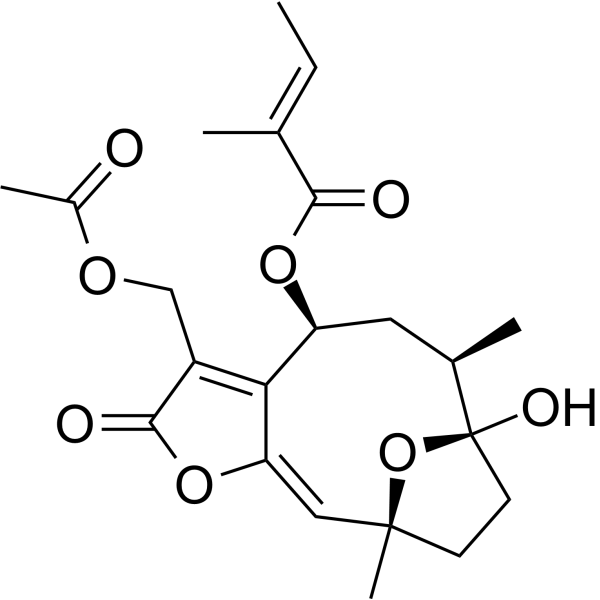 0 ImagesCat. No.: HY-138071CAS No.: 83182-58-5Synonyms: 8αTGH8α-Tigloyloxyhirsutinolide 13-O-acetate (8αTGH) is a potent and orally active STAT3 inhibitor. 8α-Tigloyloxyhirsutinolide 13-O-acetate induces early oxidative stress and pyroptosis, and late DNA damage, cell cycle arrest, apoptosis in the TNBC cells. 8α-Tigloyloxyhirsutinolide 13-O-acetate suppresses tumor cell growth in vitro and tumor growth in vivo.
-
NLRP3-IN-55
 0 ImagesCat. No.: HY-169227NLRP3-IN-55 (Compound 19) is a potent NLRP3 inhibitor (IC50 = 0.34 μM). NLRP3-IN-55 directly targets the NLRP3 protein (KD = 0.45 μM), blocking the assembly and activation of the NLRP3 inflammasome, leading to anti-inflammatory effects and inhibition of cellular pyroptosis.
-
Prosapogenin A (Standard)
 0 ImagesCat. No.: HY-N6940RCAS No.: 19057-67-1Synonyms: Progenin III (Standard)
-
Ac-FEID-CMK
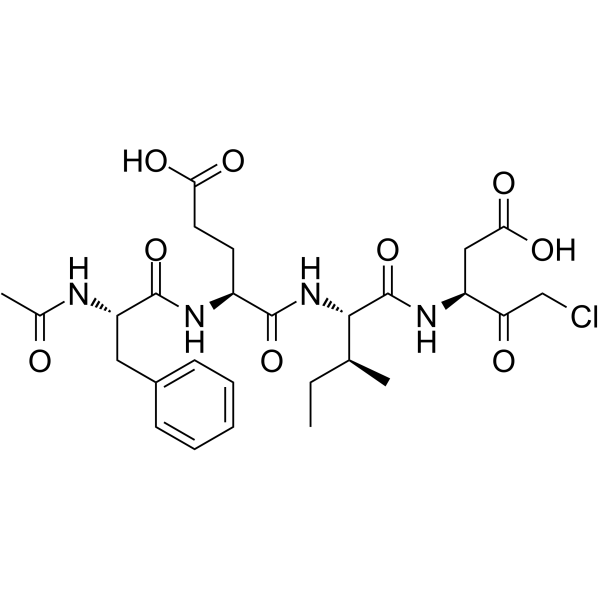 0 ImagesCat. No.: HY-P3434Ac-FEID-CMK is a potent zebrafish-specific GSDMEb-derived peptide inhibitor. Ac-FEID-CMK can attenuate the mortality and kidney injury during septic shock. Ac-FEID-CMK inhibits pyroptosis and attenuates septic AKI (acute kidney injury) in vivo. Ac-FEID-CMK can suppress the caspy2-mediated noncanonical inflammasome pathway.
-
PARP1/EZH2-IN-1
 0 ImagesCat. No.: HY-179386PARP1/EZH2-IN-1 is a selective PARP1 and EZH2 dual inhibitor. PARP1/EZH2-IN-1 has IC50s of 28 nM, 414 nM and 74 nM for PARP1, PARP2 and EZH2, respectively. PARP1/EZH2-IN-1 inhibits the proliferation and migration of TNBC cells (triple-negative breast Cancer cells). PARP1/EZH2-IN-1 induces PANoptosis (Apoptosis, Pyroptosis and Necroptosis), increases the level of reactive oxygen species (ROS), and activates related inflammatory pathways. PARP1/EZH2-IN-1 can be used in triple-negative breast cancer research.
-
Troponin-IN-1
 0 ImagesCat. No.: HY-175640Troponin-IN-1 is a troponin inhibitor. Troponin-IN-1 protects OGD/R-injured H9c2 cardiomyocytes by reducing LDH leakage, pyroptosis and ROS accumulation. Troponin-IN-1 inhibits NO production and IL-1β/TNF-α/IL-18 release in LPS (HY-D1056)-induced RAW264.7 cells. Troponin-IN-1 acts via caspase-1/GSDMD/IL-18 pathway. Troponin-IN-1 reduces myocardial infarct size in LAD-induced myocardial ischemia/reperfusion (MI/R) male rats. Troponin-IN-1 can be used for the study of myocardial ischemia/reperfusion (MI/R) injury.
-
WYJ-2
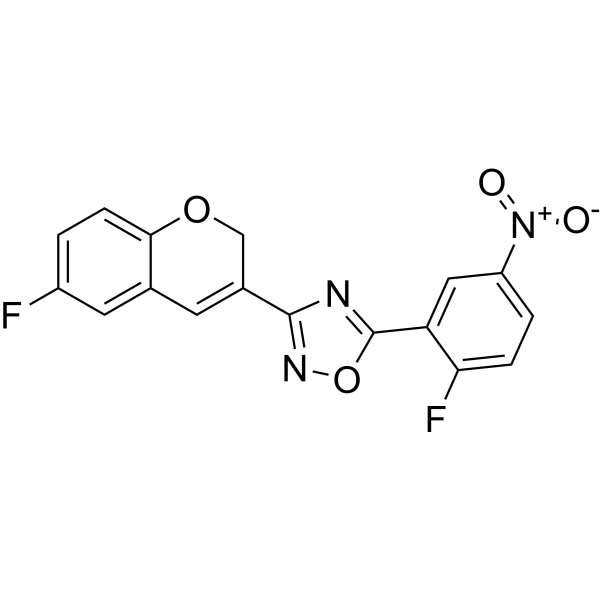 0 ImagesCat. No.: HY-158058CAS No.: 3029403-05-9WYJ-2 is a selective agonist for toll-like receptor 2/1 (TLR2/1) with EC50 of 18.57 nM in human TLR2 and TLR1 transient-cotransfected HEK 293T cells. WYJ-2 induces pyroptosis and exhibits anticancer activity against non-small cell lung cancer (NSCLC).
-
TNI-97
 0 ImagesCat. No.: HY-175030CAS No.: 2790425-52-2TNI-97 is a selective and orally active HDAC6 inhibitor, with an IC50 of 0.2 nM. TNI-97 potently inhibited TNBC cell MDA-MB-453 growth and clonogenicity. TNI-97 induces PANoptosis including apoptosis, necroptosis and pyroptosis in MDA-MB-453 cells. TNI-97 shows antitumor activity in the mice carrying the MDA-MB-453 xenograft or carrying murine-derived TNBC cell allografts. TNI-97 can be used for the study of triple-negative breast cancer.
-
BD-AcAc2
 0 ImagesSynonyms: R,S-1,3-Butanediol acetoacetate diesterBD-AcAc2 (R,S-1,3-Butanediol acetoacetate diester) is an orally active, CNS-penetrant antiepileptic agent. BD-AcAc2 inhibits NF-κB, NLRP3 inflammasome, caspase-1/3, pyroptosis, apoptosis, and enhances autophagy. BD-AcAc2 exhibits antioxidant activity by modulating ROS, MDA, SOD, and GSH levels, and alleviates oxidative stress. BD-AcAc2 mitigates chronic colitis, counteracts Dextran Sodium Sulfate (DSS)-induced pathology, protects against central nervous system oxygen toxicity and acute lung injury, and exhibits anti-seizure efficacy. BD-AcAc2 can be used for the research of colitis, sarcopenia, acute lung injury, seizure, and obesity.
-
Spiroplatin
 0 ImagesCat. No.: HY-105890CAS No.: 74790-08-2Synonyms: TNO 6
-
Clemastine fumarate (Standard)
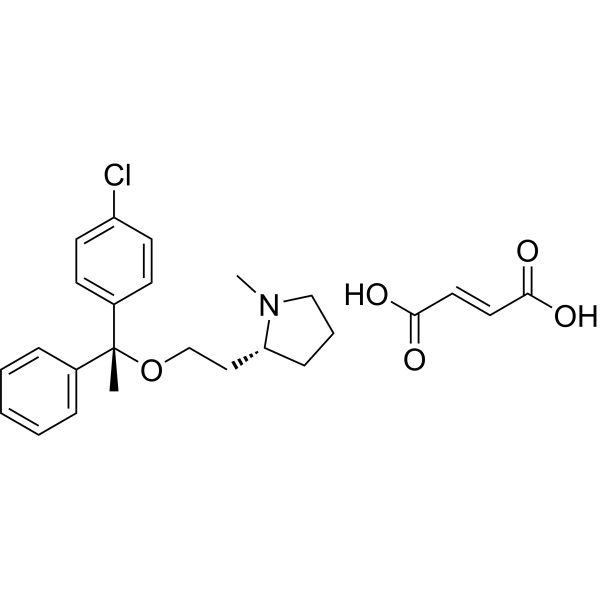 0 ImagesSynonyms: HS-592 fumarate (Standard); Meclastine fumarate (Standard)Clemastine (HS-592; Meclastine) fumarate (Standard) is the analytical standard of Clemastine fumarate. This product is intended for research and analytical applications. Clemastine fumarate is an orally active, blood-brain barrier-permeable H1 histamine receptor (H1 histamine receptor) antagonist with potent antiallergic effects. Clemastine fumarate also antagonizes muscarinic acetylcholine receptors (mAChR), particularly the M1 and M4 subtypes. In addition to antihistamine effects, Clemastine fumarate exhibits multiple pharmacological activities, especially in promoting central nervous system remyelination, activating autophagy and pyroptosis, exerting anti-apoptotic and neuroprotective effects, and suppressing inflammation .
-
DdBIC
 0 ImagesCat. No.: HY-180786CAS No.: 3085711-53-8DdBIC is a pyroptosis inducer. DdBIC binds to Nur77 and triggers its translocation to mitochondria, activates SDHA to deplete succinyl-CoA, disrupts heme homeostasis, induces electron leakage, and elicits mitochondrial ROS production. DdBIC induces mitochondrial ROS that oxidatively activates OMA1, promotes OPA1 cleavage and its release into the cytoplasm, activates the integrated stress response via PERK, and ultimately activates granzyme B to cleave GSDMC. DdBIC can be used for the study of melanoma.
-
TRBP-IN-1
 0 ImagesCat. No.: HY-172885TRBP-IN-1 (Compound 13j) is an orally active TAR RNA binding protein 2 (TRBP) inhibitor (IC50: 12.72 μM). TRBP-IN-1 has significant anti-hepatocellular carcinoma (HCC) activity and can inhibit the proliferation and metastasis of HCC cells (HCCLM3 cells (IC50: 18.96 μM); SK-Hep-1 cells (IC50: 16.45 μM)). TRBP-IN-1 regulates miRNA biogenesis and inhibits oncogenic miRNA expression by targeting TRBP. TRBP-IN-1 induces apoptosis and pyroptosis in HCC cells by inhibiting the level of miRNA. TRBP-IN-1 can be used for targeted therapy research of HCC.
-
Ac-DMLD-CMK
 0 ImagesCat. No.: HY-P10939CAS No.: 2588354-33-8Ac-DmLD-CMK is a caspase 3 inhibitor and a GSDME inhibitor. Ac-DmLD-CMK binds directly to the catalytic domain of caspase-3, blocks caspase-3-mediated cleavage of GSDME, inhibits the activation of caspase 3 and Gsdme in the caspase 3-Gsdme signaling pathway, and reduces the levels of pyroptosis and apoptosis as well as the expression of LDH, IL-6, IL-1β and IL-18. Ac-DmLD-CMK alleviates renal function deterioration, renal tubular epithelial cell injury, inflammatory cytokine secretion, pulmonary structural damage, and chemotherapy-induced nephrotoxicity.
-
Polyphyllin VI (Standard)
 0 ImagesPolyphyllin VI (Standard) is the analytical standard of Polyphyllin VI. This product is intended for research and analytical applications. Polyphyllin VI, an active saponin, possess anti-cancer activities. Polyphyllin VI induces G2/M cell cycle arrest and triggers apoptosis. Polyphyllin VI induces caspase-1-mediated pyroptosis via the induction of ROS/NF-κB/NLRP3/GSDMD signal axis in non-small cell lung cancer.
-
NLRP3-IN-61
 0 ImagesCat. No.: HY-170529CAS No.: 3060585-94-3NLRP3-IN-61 (Compound 1) is an inhibitor for NLRP3. NLRP3-IN-61 inhibits pyroptosis in THP-1 cell with an IC50 of 12.6 nM, inhibits IL-β release with an IC50 of 25.3 nM.

-
ABT-546
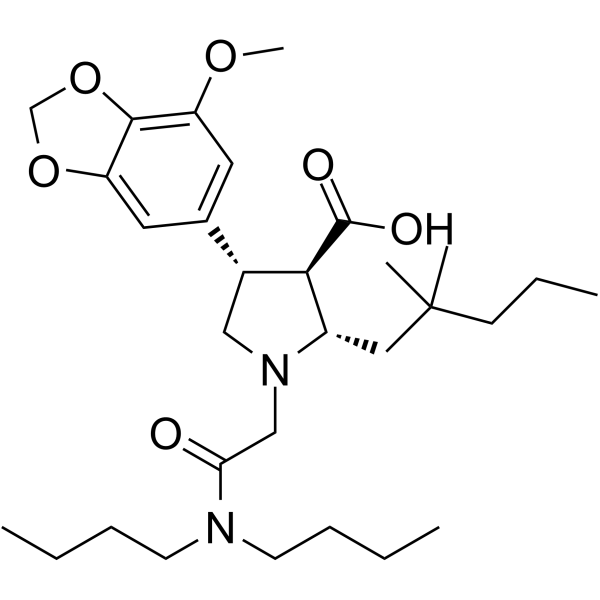 0 ImagesCat. No.: HY-135283CAS No.: 212481-66-8Synonyms: A-216546ABT-546 (A-216546) is an orally active ETA receptor antagonist, with Ki values of 0.46 nM and 13000 nM for human ETA and ETB receptors, respectively, and exhibits >25000-fold selectivity over the ETB receptor. ABT-546 effectively inhibits ET-1 (HY-P0202)-induced phosphoinositide hydrolysis (IC50 = 0.59 nM) and arachidonic acid release (IC50 = 3.03 nM), and antagonizes ET-1-induced contraction in isolated vascular rings. ABT-546 crosses the placental barrier but shows extremely low fetal exposure, with a favorable safety profile. ABT-546 inhibits ET-1-induced pressor response and downregulates the NLRP3/ROS/GSDMD-mediated pyroptosis pathway. ABT-546 can be used for research on abdominal aortic aneurysm.
-
ACT001 hydrochloride
 0 ImagesCat. No.: HY-128861BCAS No.: 1403357-80-1Synonyms: Dimethylaminomicheliolide hydrochloride; DMAMCL hydrochlorideACT001 (Dimethylaminomicheliolide; DMAMCL) hydrochloride is an orally active, blood-brain barrier-permeable anti-inflammatory and anti-tumor agent. ACT001 hydrochloride exerts microglia-mediated neuroanti-inflammatory effects by inhibiting the AKT/NF-κB/NLRP3 axis and suppressing apoptosis (apoptosis). ACT001 hydrochloride inhibits tumor proliferation by upregulating NKTR and inhibiting AKT. ACT001 hydrochloride alleviates metabolic-associated fatty liver disease by regulating gut microbiota and inhibiting ileal FXR. ACT001 hydrochloride inhibits pyroptosis (pyroptosis) and pro-inflammatory cytokine release by activating PPAR-γ and inhibiting NF-κB/NLRP3.
-
4,4′-Secalonic acid D
 0 ImagesCat. No.: HY-N15380CAS No.: 2265910-52-74,4′-Secalonic acid D (Compound 12) is a PARP1 inhibitor. 4,4′-Secalonic acid D induces the accumulation of ROS and DNA damage, activates the caspase-3/GSDME pathway, and triggers apoptosis and pyroptosis of tumor cells by inhibiting PARP1. 4,4′-Secalonic acid D has anti-tumor activity.




