



Altemicidin
Altemicidin is a monoterpene alkaloid originally isolated from S. sioyaensis with acaricidal and anticancer activities. It is acaricidal to two-spotted spider mites (T. urticae) in a greenhouse pot test at concentrations of 10 and 100 ppm. Altemicidin inhibits the growth of murine L1210 lymphocytic leukemia and IMC carcinoma cells (IC50s=0.84 and 0.82 μg/mL, respectively). It is toxic to mice with an LD50 value of 0.3 mg/kg.
For research use only. We do not sell to patients.
- CAS No.: 125399-82-8
- Formula: C13H20N4O7S
- Molecular Weight:376.39
-
Storage:
Please store the product under the recommended conditions in the Certificate of Analysis.


To place orders, for customer services and technical support, please contact: MedChemExpress USA
Tel: 609-228-6898 E-mail: [email protected] [email protected]


-
 Biological Activity
-
Chemical Information
- Protocols
- Purity & Documentation
- References
-
 Help & FAQs


-
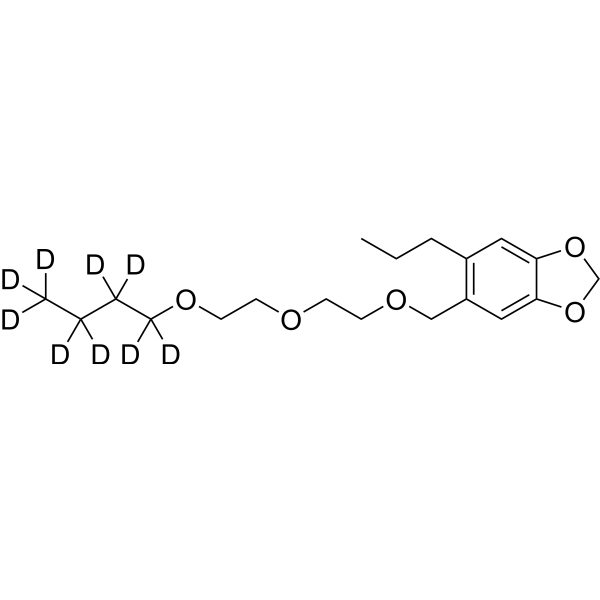
HY-B1198S
Piperonyl butoxide-d9Stable Isotope -
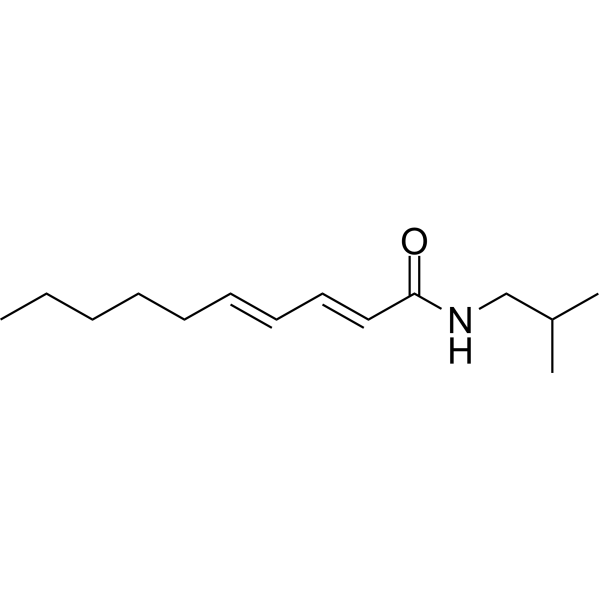
HY-N3097
PellitorineTRPV1 Antagonist -
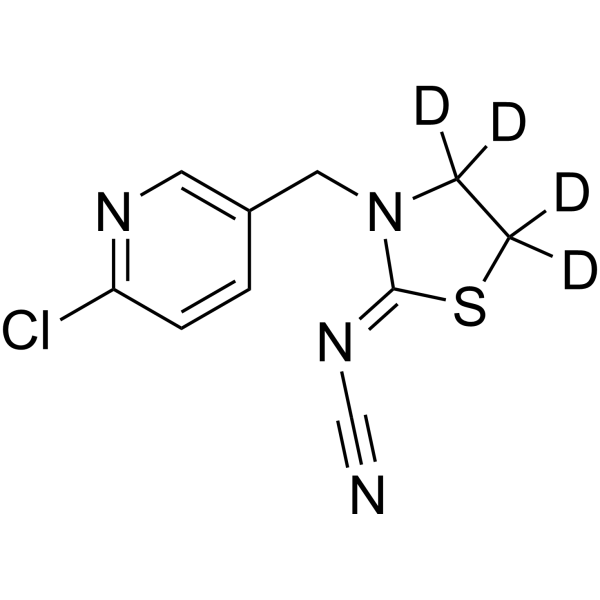
HY-B1953S
Thiacloprid-d4Stable Isotope -
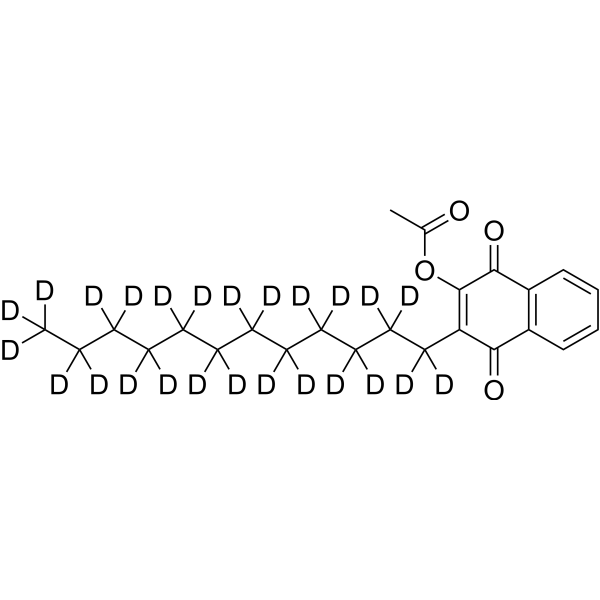
HY-118896S
Acequinocyl-d25Stable Isotope -
HY-B1315S1
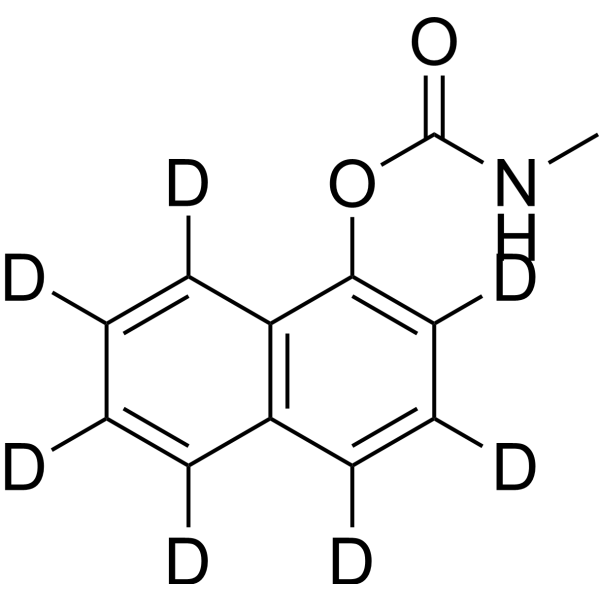
Carbaryl-d7Stable Isotope -

HY-N3097R
Pellitorine (Standard)Standard of Pellitorine -

HY-B0850S
Difenoconazole-d6 hydrochlorideStable Isotope


Biological Activity
Description
Cellular Effect
|
Cell Line

|
Type | Value | Description | References |
|---|---|---|---|---|
| L1210 | IC50 |
0.84 μM
Compound: 9
|
Antiproliferative activity against mouse L1210 cells assessed as inhibition of cell proliferation incubated for 48 hrs by Coulter counter method
Antiproliferative activity against mouse L1210 cells assessed as inhibition of cell proliferation incubated for 48 hrs by Coulter counter method
|
[PMID: 33160760] |
| L1210 | IC50 |
2.12 μM
Compound: 1
|
Cytotoxicity against mouse L1210 cells assessed as growth inhibition after 48 hrs by coulter counter analysis
Cytotoxicity against mouse L1210 cells assessed as growth inhibition after 48 hrs by coulter counter analysis
|
[PMID: 26035239] |


Chemical Information
-
CAS No. 125399-82-8
-
Molecular Weight 376.39
-
Formula C13H20N4O7S
-
SMILES
O=C(C[S](N)(=O)=O)N[C@@]1([C@@](CN2C)([H])[C@@](C(C(N)=O)=C2)([H])C[C@@H]1O)C(O)=O
-
Synonyms
(-)-Altemicidin
-
Shipping
Room temperature in continental US; may vary elsewhere.
-
Storage
Please store the product under the recommended conditions in the Certificate of Analysis.

Protocols
-
Acute Systemic Toxicity Study
Acute systemic toxicity studies evaluate adverse effects occurring after a single exposure, or repeated exposure within a short acute window, and the main in vivo readouts are mortality, moribund condition, clinical signs, body-weight change, and gross pathological findings; acute oral toxicity methods were developed to replace classical LD50 testing with reduced-animal designs such as fixed-dose procedure, acute toxic class method, and up-and-down procedure. The fixed-dose procedure classifies acute toxicity by administering predefined dose levels and observing evident toxicity rather than using death as the primary endpoint, whereas the acute toxic class method uses sequential groups of three animals per step and the up-and-down procedure doses animals sequentially to estimate an LD50 with fewer animals than conventional LD50 testing.


Purity & Documentation
References

Calculators
Concentration (start) × Volume (start) = Concentration (final) × Volume (final)


Altemicidin Related Classifications
HY-N10653 Related Classifications
 Powered by Bioz