



SNX5 Antibody (YA1712)
(Synonyms: Sorting nexin-5)
Based on 1 Customer Validation
SNX5 Antibody (YA1712) is a Rabbit-derived and non-conjugated IgG monoclonal antibody, targeting to SNX5.
-
Host:
Rabbit
-
Isotype:
IgG
-
Application:
WB, IHC-P, ICC/IF, FC
-
Reactivity :
Human, Mouse, Rat
-
Formulation:
Supplied in 50mM Tris-Glycine(pH 7.4), 0.15M NaCl, 40% Glycerol, 0.01% Sodium azide and 0.05% BSA
-
Conjugation:
Non-conjugated


To place orders, for customer services and technical support, please contact: MedChemExpress USA
Tel: 609-228-6898 E-mail: [email protected] [email protected]





Applications
| Application |
WB

WB: Western Blot
|
IHC-P
IHC-P: Immunohistochemistry-Paraffin
|
ICC/IF
ICC/IF: Immunocytochemistry/
Immunofluorescence |
FC
FC: Flow Cytometry
|
|---|---|---|---|---|
| Dilution Ratio | 1:1000-1:5000 | 1:200-1:500 | 1:20-1:50 | 1:20-1:50 |


Product Details
SNX5 Antibody (YA1712) is a Rabbit-derived and non-conjugated IgG monoclonal antibody, targeting to SNX5.
-
Host Rabbit

-
Clonality Recombinant,Monoclonal

-
Species ReactivityHuman, Mouse, Rat
-
Observed Molecular WeightObserved band size: 47 kDa
Note: Due to possible protein modifications or aggregation, the molecular weight should be confirmed by actual measurement, and the predicted value is for reference only.

-
Calculated Molecular Weight Predicted band size: 47 kDa

Entrez Gene: 27131 Human ; 69178 Mouse ; 296199 Rat
SwissProt: Q9Y5X3 Human ; Q9D8U8 Mouse ; B1H267 Rat
OMIM: 605937 Human
Recombinant protein of human SNX5 aa:28-127.
Endogenous
Affinity Purified
Non-conjugated
Unmodified
IgG


Product Properties
-
Appearance
Solution
-
Formulation
Supplied in 50mM Tris-Glycine(pH 7.4), 0.15M NaCl, 40% Glycerol, 0.01% Sodium azide and 0.05% BSA
-
Concentration
Batch-dependent, Please check the COA for the concentration of each lot. Check Lot Concentration
-
Storage & Stability
Stored at -20°C for 1 year. Avoid repeated freeze / thaw cycles.
-
Shipping
Shipping with blue ice.


Verification Images
-
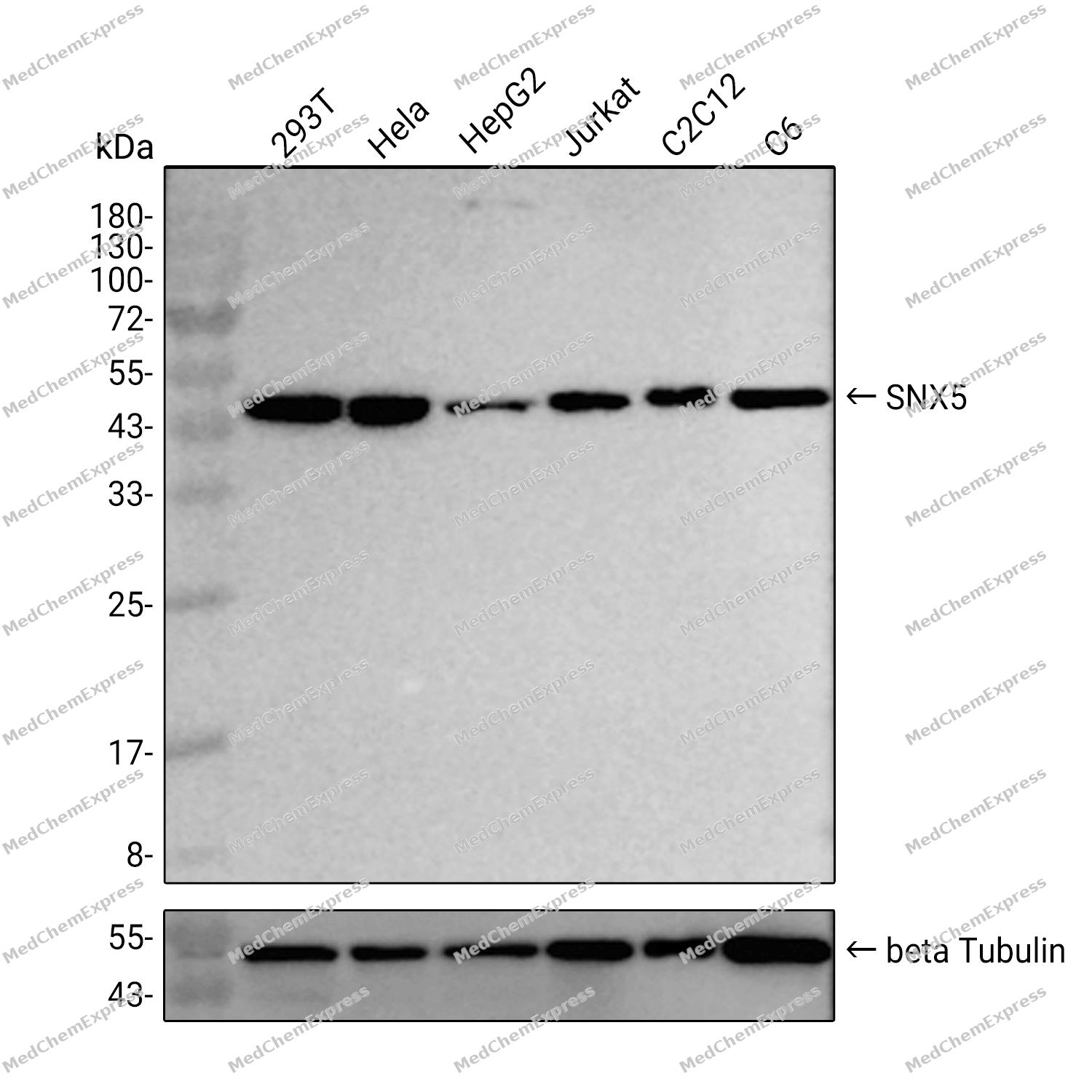 Western blot analysis of extracts from Jurkat (lane 2(20μg), HEK293T (lane 3(20μg), Hela (lane 4(20μg), HepG2 (lane 5(20μg) using SNX5 Antibody. Proteins were transferred to a PVDF membrane and blocked with 5% BSA in TBST for 2 hour at room temperature. The primary antibody (1/1000) and Loading control antibody (Beta Actin, HY-P80438, 1/3000) was used in 5% BSA in TBST at 4°C overnight. Goat Anti-Mouse/Rabbit IgG-HRP Secondary Antibody (HY-P8004/HY-P8001, 1/10,000) was used for 1 hour at room temperature.
 -
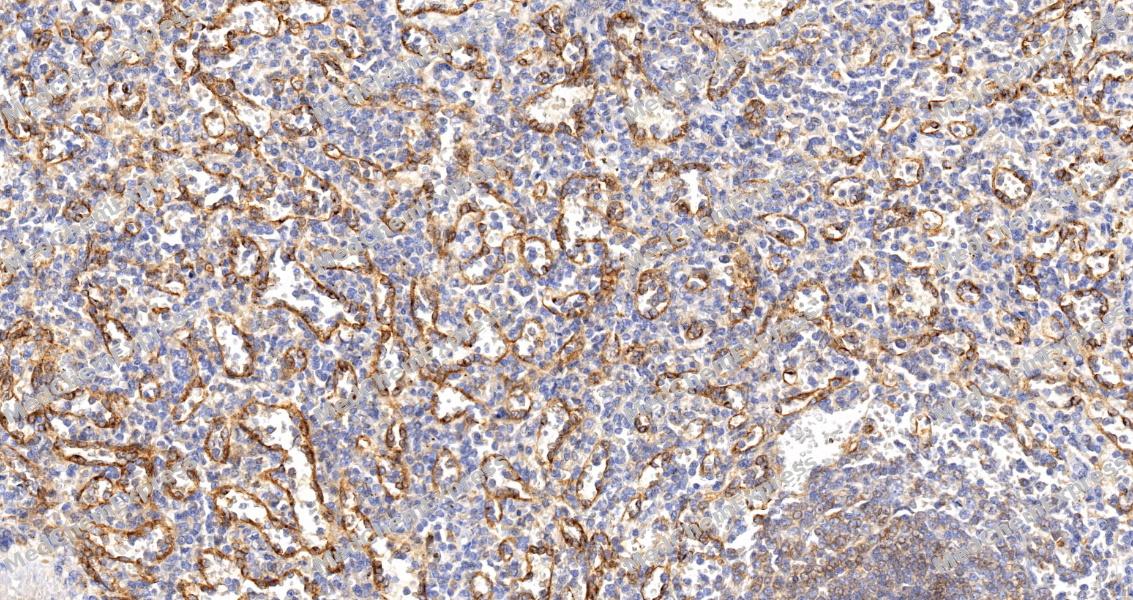 Immunohistochemical analysis of paraffin-embedded human spleen tissue using SNX5 Antibody (HY-P81967, 1/400). The section was pretreated using heat mediated antigen retrieval with sodium citrate buffer (pH 6.0) for 8 minutes. The tissues were blocked with quick block buffer for 0.5 hours at room temperature, washed with PBS and PBST, and then incubated with the primary antibody overnight at 4℃. The detection was performed using an HRP conjugated compact polymer system. DAB was used as the chromogen. Tissues were counterstained with hematoxylin and mounted with DPX.
 -
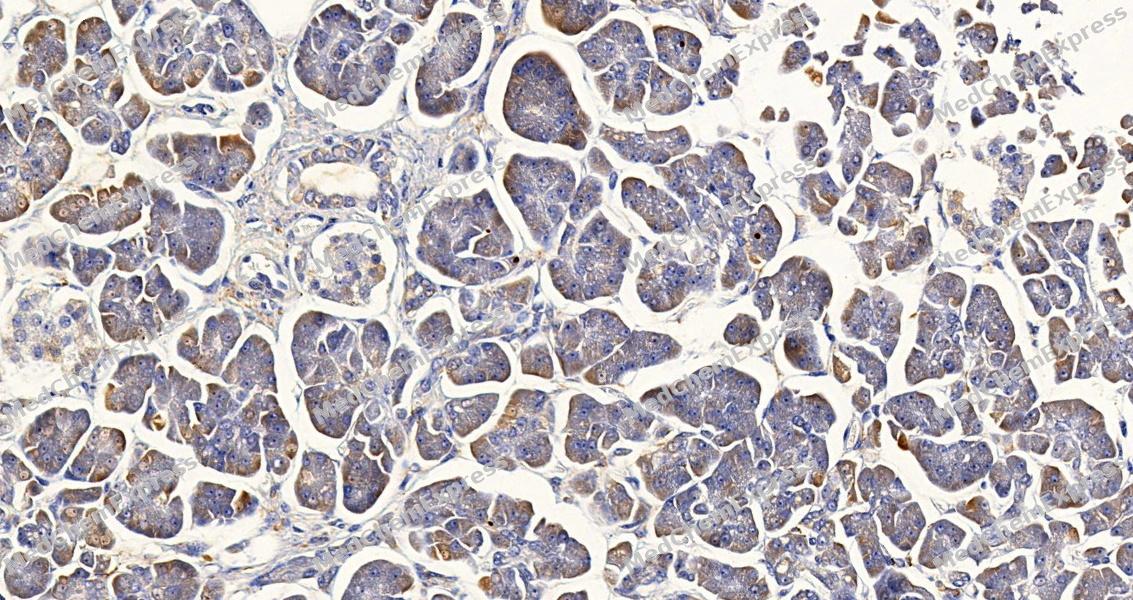 Immunohistochemical analysis of paraffin-embedded human pancreas using SNX5 Antibody (HY-P81967, 1/400). The section was pretreated using heat mediated antigen retrieval with sodium citrate buffer (pH 6.0) for 8 minutes. The tissues were blocked with quick block buffer for 0.5 hours at room temperature, washed with PBS and PBST, and then incubated with the primary antibody overnight at 4℃. The detection was performed using an HRP conjugated compact polymer system. DAB was used as the chromogen. Tissues were counterstained with hematoxylin and mounted with DPX.
 -
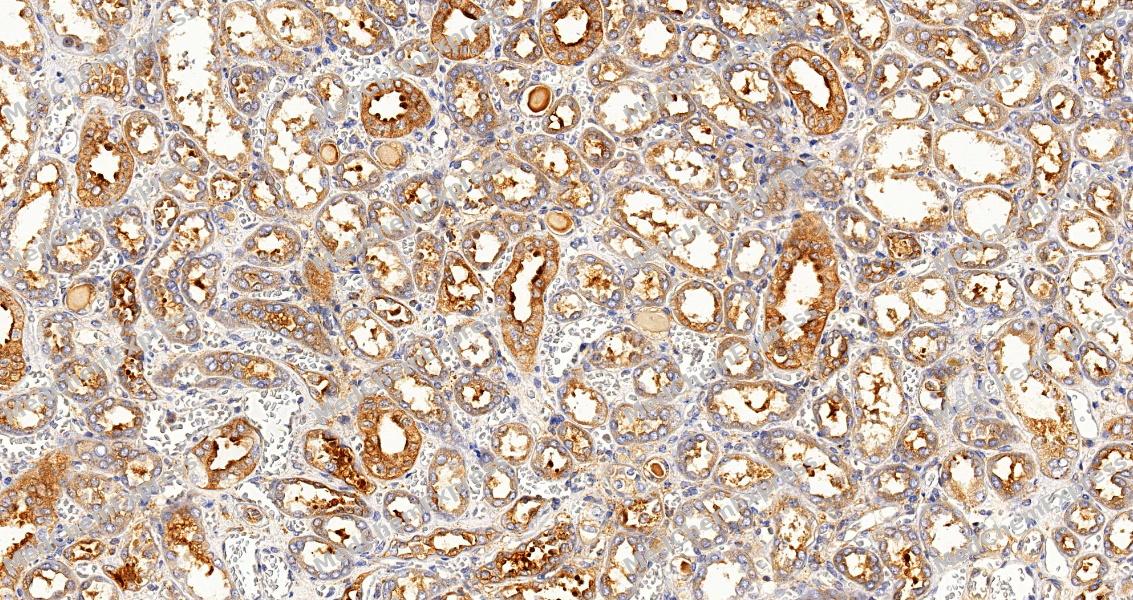 Immunohistochemical analysis of paraffin-embedded human kidney tissue using SNX5 Antibody (HY-P81967, 1/400). The section was pretreated using heat mediated antigen retrieval with sodium citrate buffer (pH 6.0) for 8 minutes. The tissues were blocked with quick block buffer for 0.5 hours at room temperature, washed with PBS and PBST, and then incubated with the primary antibody overnight at 4℃. The detection was performed using an HRP conjugated compact polymer system. DAB was used as the chromogen. Tissues were counterstained with hematoxylin and mounted with DPX.
 -
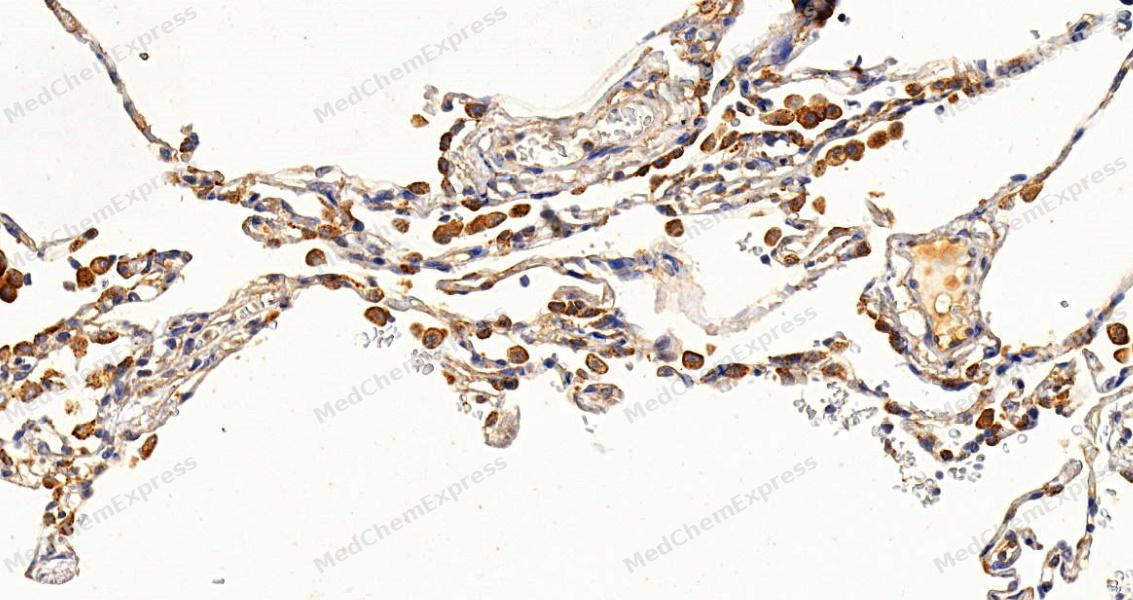 Immunohistochemical analysis of paraffin-embedded human lung tissue using SNX5 Antibody (HY-P81967, 1/400). The section was pretreated using heat mediated antigen retrieval with sodium citrate buffer (pH 6.0) for 8 minutes. The tissues were blocked with quick block buffer for 0.5 hours at room temperature, washed with PBS and PBST, and then incubated with the primary antibody overnight at 4℃. The detection was performed using an HRP conjugated compact polymer system. DAB was used as the chromogen. Tissues were counterstained with hematoxylin and mounted with DPX.
 -
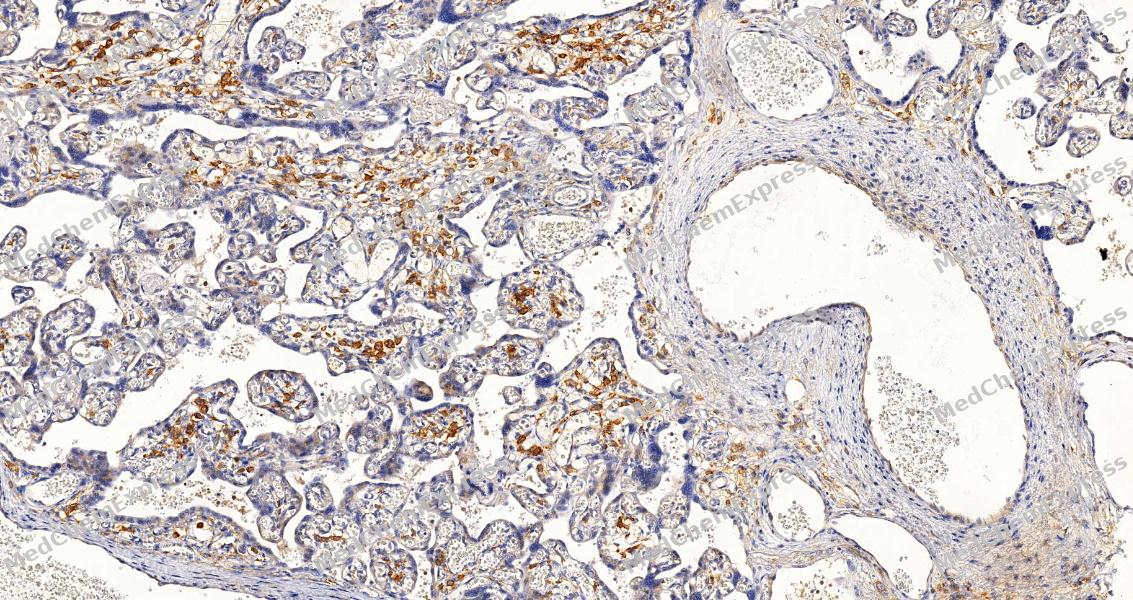 Immunohistochemical analysis of paraffin-embedded human placenta tissue using SNX5 Antibody (HY-P81967, 1/400). The section was pretreated using heat mediated antigen retrieval with sodium citrate buffer (pH 6.0) for 8 minutes. The tissues were blocked with quick block buffer for 0.5 hours at room temperature, washed with PBS and PBST, and then incubated with the primary antibody overnight at 4℃. The detection was performed using an HRP conjugated compact polymer system. DAB was used as the chromogen. Tissues were counterstained with hematoxylin and mounted with DPX.
 -
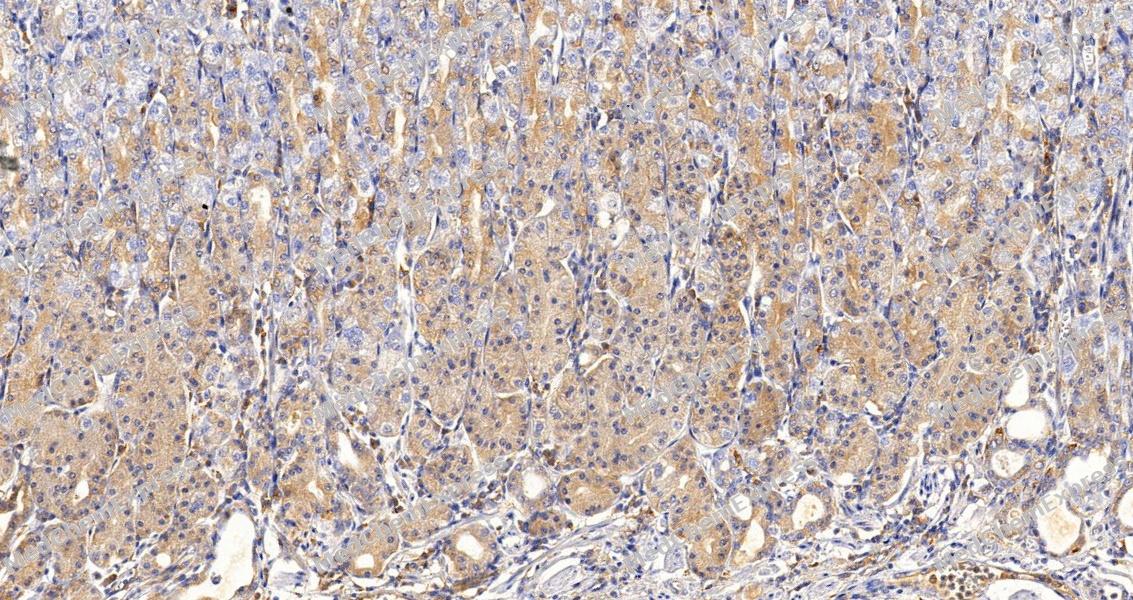 Immunohistochemical analysis of paraffin-embedded human stomach tissue using SNX5 Antibody (HY-P81967, 1/400). The section was pretreated using heat mediated antigen retrieval with sodium citrate buffer (pH 6.0) for 8 minutes. The tissues were blocked with quick block buffer for 0.5 hours at room temperature, washed with PBS and PBST, and then incubated with the primary antibody overnight at 4℃. The detection was performed using an HRP conjugated compact polymer system. DAB was used as the chromogen. Tissues were counterstained with hematoxylin and mounted with DPX.


Background
-
Function
SNX5 is involved in several stages of intracellular trafficking. Interacts with membranes containing phosphatidylinositol 3-phosphate (PtdIns(3P)) or phosphatidylinositol 3,4-bisphosphate (PtdIns(3,4)P2). Acts in part as component of the retromer membrane-deforming SNX-BAR subcomplex. The SNX-BAR retromer mediates retrograde transport of cargo proteins from endosomes to the trans-Golgi network (TGN) and is involved in endosome-to-plasma membrane transport for cargo protein recycling. The SNX-BAR subcomplex functions to deform the donor membrane into a tubular profile called endosome-to-TGN transport carrier (ETC) (Probable). Does not have in vitro vesicle-to-membrane remodeling activity. Involved in retrograde transport of lysosomal enzyme receptor IGF2R. May function as link between endosomal transport vesicles and dynactin (Probable). Plays a role in the internalization of EGFR after EGF stimulation (Probable). Involved in EGFR endosomal sorting and degradation; the function involves PIP5K1C isoform 3 and is retromer-independent. Together with PIP5K1C isoform 3 facilitates HGS interaction with ubiquitinated EGFR, which initiates EGFR sorting to intraluminal vesicles (ILVs) of the multivesicular body for subsequent lysosomal degradation (Probable). Involved in E-cadherin sorting and degradation; inhibits PIP5K1C isoform 3-mediated E-cadherin degradation. Plays a role in macropinocytosis[1][2][3][4][5][6][7][8].
-
Subcellular Localization
Endosome; Early endosome; Early endosome membrane; Peripheral membrane protein; Cytoplasmic side; Cell membrane; Peripheral membrane protein; Cytoplasmic side; Cytoplasmic vesicle membrane; Peripheral membrane protein; Cytoplasmic side; Cytoplasm; Cell projection, phagocytic cup; Cell projection, ruffle
-
Isoforms & Post-Translational Modification
Q9Y5X3 has 2 isomers: Q9Y5X3-1: 46816 Da (predicted); Q9Y5X3-2: 13349 Da (predicted).
-
Subunit
Forms heterodimers with BAR domain-containing sorting nexins SNX1 and SNX2; does not homodimerize (PubMed:23085988). The heterodimers are proposed to self-assemble into helical arrays on the membrane to stabilize and expand local membrane curvature underlying endosomal tubule formation. Thought to be a component of the originally described retromer complex (also called SNX-BAR retromer) which is a pentamer containing the heterotrimeric retromer cargo-selective complex (CSC), also described as vacuolar protein sorting subcomplex (VPS), and a heterodimeric membrane-deforming subcomplex formed between SNX1 or SNX2 and SNX5 or SNX6 (also called SNX-BAR subcomplex); the respective CSC and SNX-BAR subcomplexes associate with low affinity (Probable). Interacts with SNX1, SNX2, VPS26A, VPS29, VPS35, DCTN1, DOCK1, MIB1, PIP5K1C isoform 3. Interacts with HGS; increased by PIP5K1C isoform 3 kinase activity and by PtdIns(3P) and/or PtdIns(3,4)P2 (PubMed:16857196, PubMed:16968745, PubMed:18596235, PubMed:19619496, PubMed:23085988, PubMed:23602387, PubMed:24610942)
-
SwissProt ID
-
Synonyms
Sorting nexin-5
-
Research Field
Signal Transduction


Documentation
-
Data Sheet (262 KB)
-
SDS (251 KB)
- English - EN (251 KB)
- Français - FR (251 KB)
- Deutsch - DE (251 KB)
- Norwegian - NO (251 KB)
- Español - ES (251 KB)
- Swedish - SV (251 KB)
- Italian - IT (251 KB)
- Korean - KR (251 KB)
- Portuguese - PT (251 KB)
-
User Guide for Antibodies (1077 KB)
References
[1]. Merino-Trigo A, et al. Sorting nexin 5 is localized to a subdomain of the early endosomes and is recruited to the plasma membrane following EGF stimulation. J Cell Sci. 2004 Dec 15;117(Pt 26):6413-24. [Content Brief]
[2]. van Weering JR, et al. Molecular basis for SNX-BAR-mediated assembly of distinct endosomal sorting tubules. EMBO J. 2012 Nov 28;31(23):4466-80. [Content Brief]
[3]. Wassmer T, et al. A loss-of-function screen reveals SNX5 and SNX6 as potential components of the mammalian retromer. J Cell Sci. 2007 Jan 1;120(Pt 1):45-54. [Content Brief]
[4]. Hara S, et al. The DHR1 domain of DOCK180 binds to SNX5 and regulates cation-independent mannose 6-phosphate receptor transport. Mol Biol Cell. 2008 Sep;19(9):3823-35. [Content Brief]
[5]. Sun Y, et al. Endosomal type Iγ PIP 5-kinase controls EGF receptor lysosomal sorting. Dev Cell. 2013 Apr 29;25(2):144-55. [Content Brief]
[6]. Schill NJ, et al. Isoform 5 of PIPKIγ regulates the endosomal trafficking and degradation of E-cadherin. J Cell Sci. 2014 May 15;127(Pt 10):2189-203. [Content Brief]
[7]. Lim JP, et al. A role for SNX5 in the regulation of macropinocytosis. BMC Cell Biol. 2008 Oct 14;9:58. [Content Brief]
[8]. Wang JT, et al. The SNX-PX-BAR family in macropinocytosis: the regulation of macropinosome formation by SNX-PX-BAR proteins. PLoS One. 2010 Oct 29;5(10):e13763. [Content Brief]

 Powered by Bioz
