



Alloxan hydrate
Based on 1 publication(s) in Google Scholar
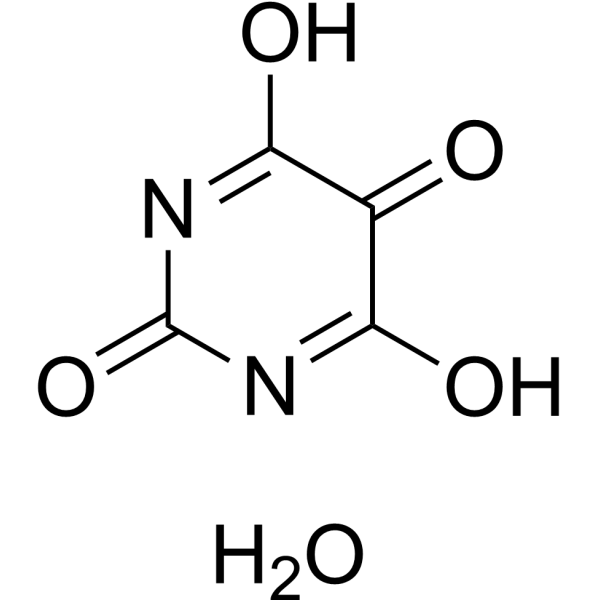
Alloxan hydrate is a diabetogenic agent to induce diabetes. Alloxan hydrate is a proteasome inhibitor. Alloxan causes diabetes in experimental animals through its ability to destroy the insulin-secreting B-cells of the pancreas.
Nur für Forschungszwecke. Wir verkaufen nicht an Patienten.
- Reinheit : 99.99%
- CAS. Nr.: 2244-11-3
- Formel: C4H4N2O5
- Molecular Weight:160.08
-
Speicherung:
4°C, sealed storage, away from moisture
* In solvent : -80°C, 6 months; -20°C, 1 month (sealed storage, away from moisture)

To place orders, for customer services and technical support, please contact: MedChemExpress USA
Tel: 609-228-6898 E-mail: [email protected] [email protected]


-
 Biologische Aktivität
-
Chemical Information
-
Lösungsmittel & Löslichkeit
- Protokoll
- Reinheit & Dokumentation
- Verweise
-
 Help & FAQs


-
HY-13753
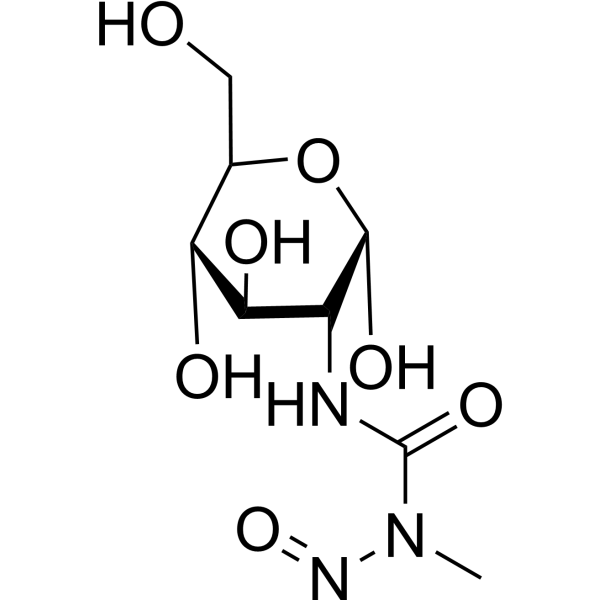
StreptozotocinDiabetes Modeling Agent -
HY-15162
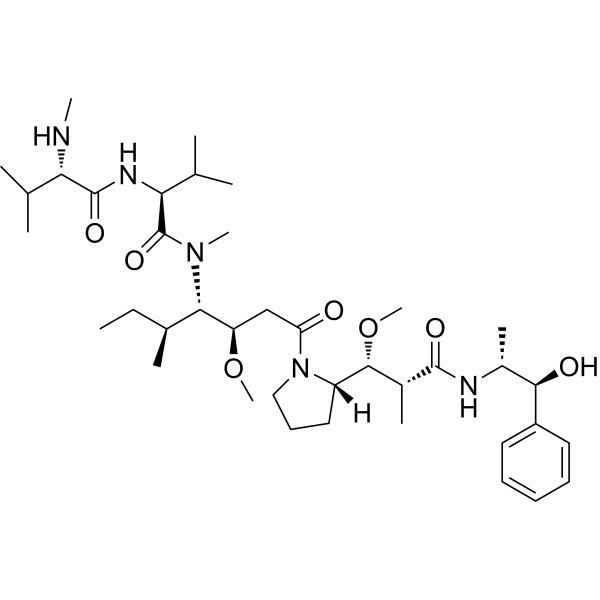
Monomethyl auristatin EAntimitotic Agent -
HY-N0662
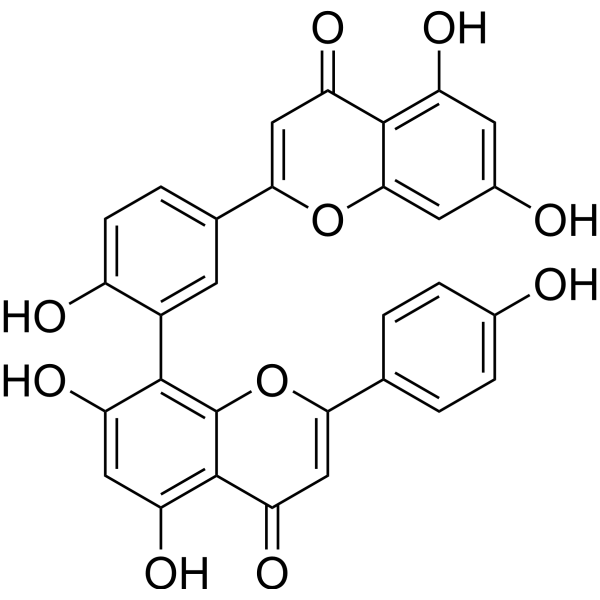
AmentoflavoneGABA(A) Negative Modulator -
HY-123647
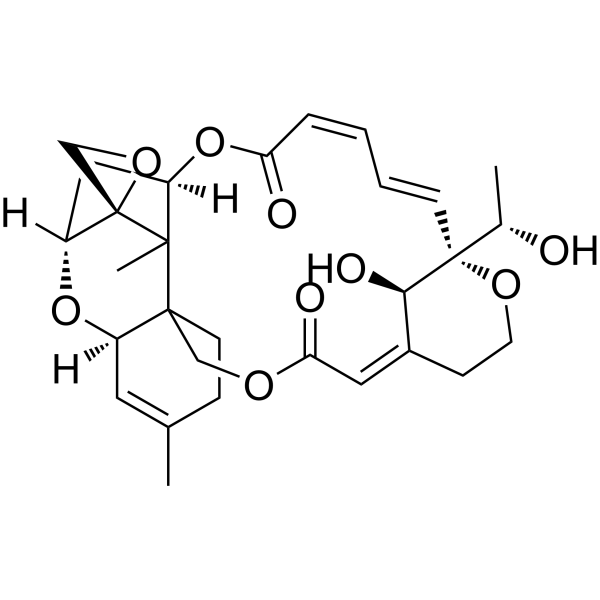
Satratoxin HRibosome Binding Agent\nApoptosis Inducer\nGenotoxin -
HY-10448
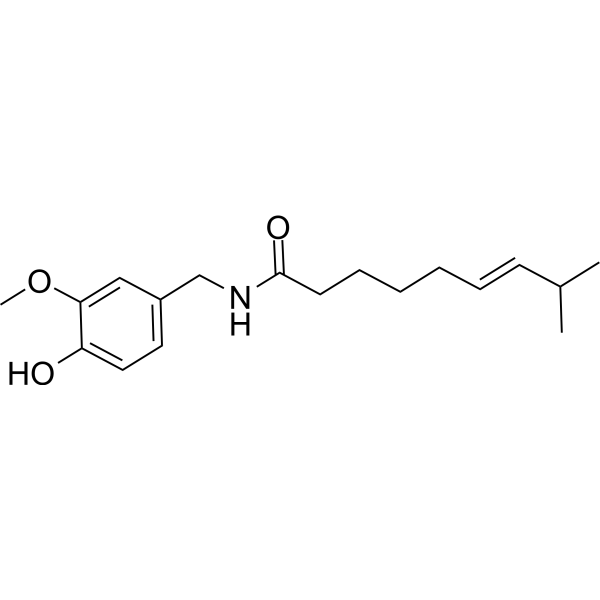
CapsaicinTRPV1 Agonist -
HY-14654
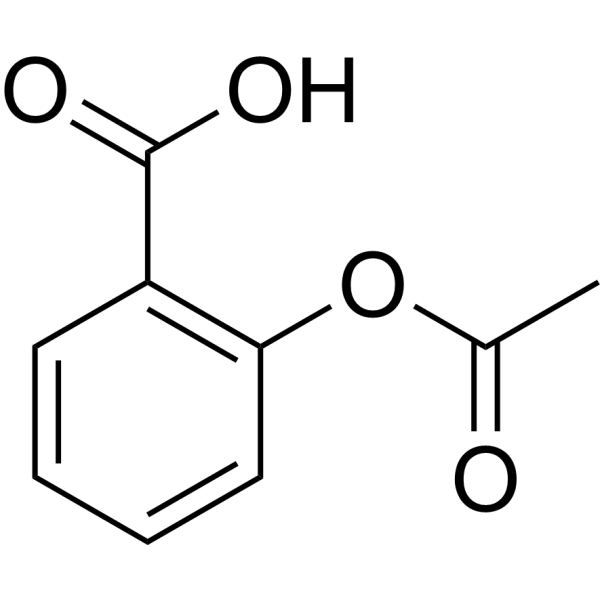
AspirinCOX Inhibitor -
HY-130476
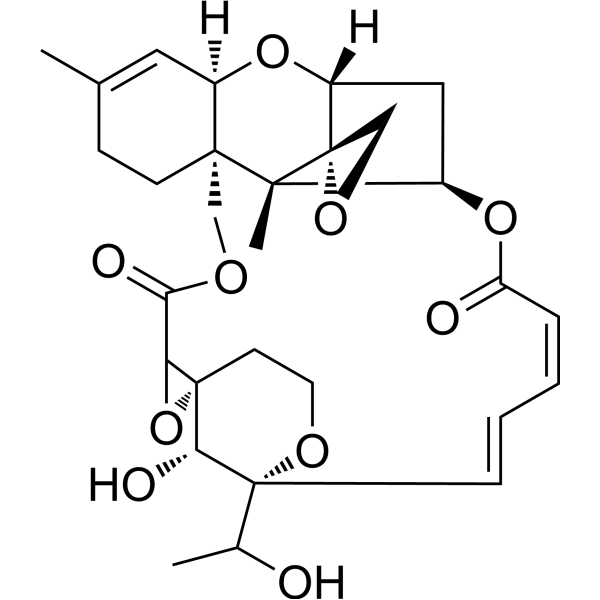
Satratoxin GLarge Cyclic Mucor Toxin. -
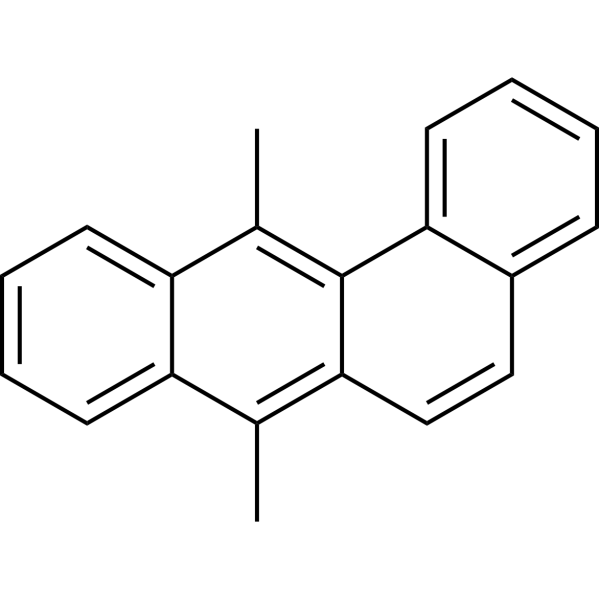
HY-W011845
DMBA -
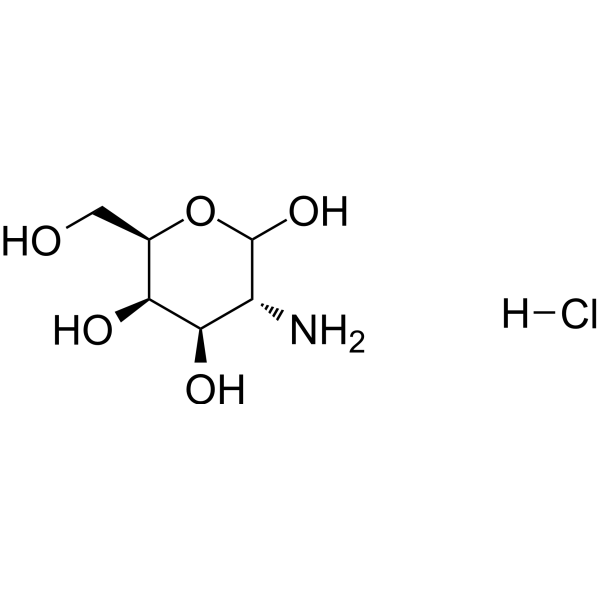
HY-42682
D(+)-Galactosamine hydrochlorideAcute Liver Injury Inducer -
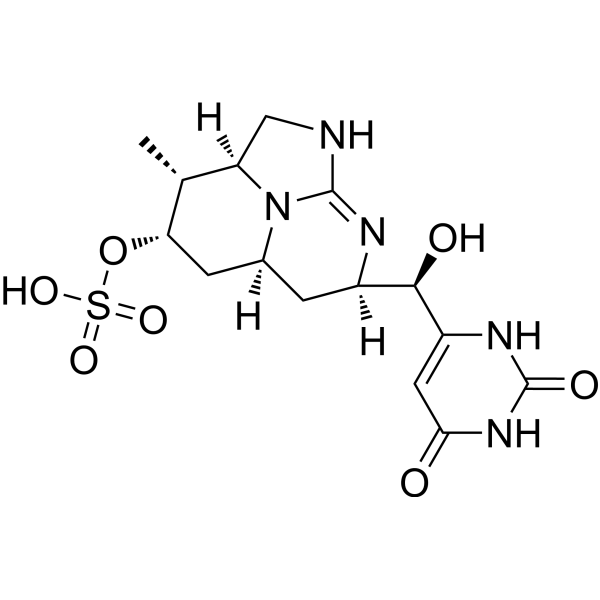
HY-121360
CylindrospermopsinCyanotoxin -
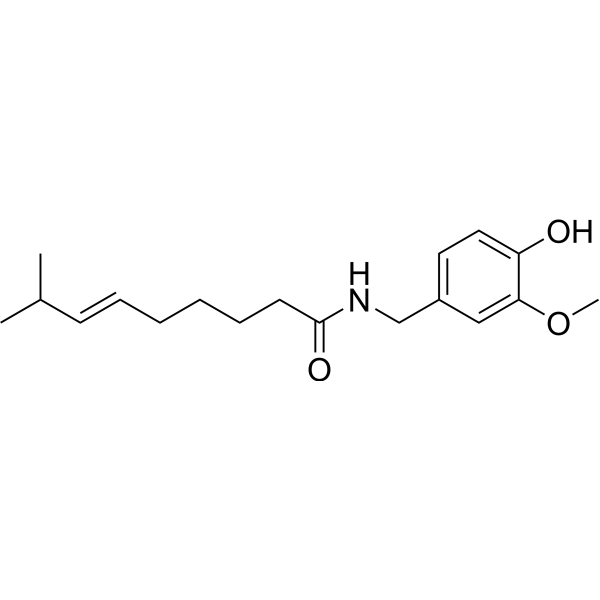
HY-10448R
Capsaicin (Standard)Analytical Standard -
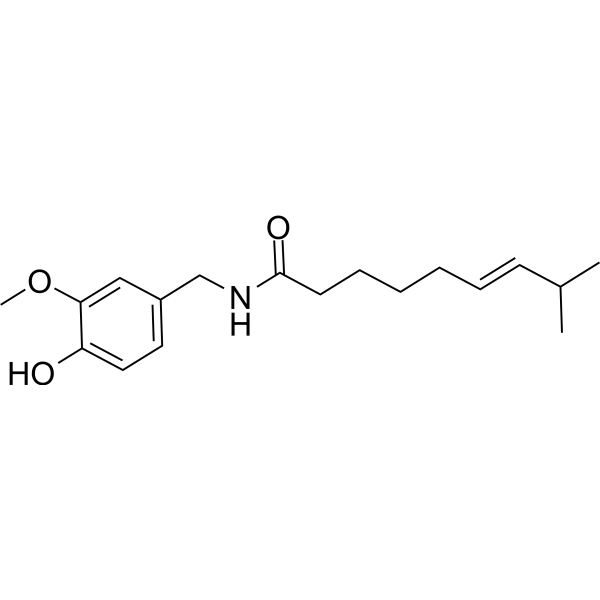
HY-10448A
Capsaicin (Purity 65%)TRPV1 Agonist
Publications Citing Use of MedChemExpress (MCE) Alloxan hydrate
More

Biologische Aktivität
Beschreibung
In Vitro
Alloxan hydrate inhibits the peptidase activities of the purified 26S and 20S proteasomes[1].
MedChemExpress (MCE) has not independently confirmed the accuracy of these methods. They are for reference only. Further protocols information, click here.
Induced Disease Models
Please do not refer to only one article to determine the experimental conditions. It is recommended to determine the optimal experimental conditions (animal strain, age, dosage, frequency and cycle, detection time and indicators, etc.) through preliminary experiments before the formal experiment.
Alloxan hydrate can be used in animal modeling to create diabetes models. Administration of Alloxan hydrate leads to a sharp increase in blood glucose levels in mice, peaking at 45 minutes. Two hours after administration, blood glucose levels decrease to near-hypoglycemic levels, reaching the lowest blood glucose level at 6 hours[3].
Administration: 70 mg/kg • i.v.
(2) Blood sampling was done through the eye socket, with 25μL and 250μL taken to measure blood glucose and plasma insulin levels, respectively.
(3) Blood glucose and plasma insulin levels were measured using enzyme and immunoassays, respectively. Mice with blood glucose levels reaching or exceeding 200 mg/100 mL are considered diabetic.
MedChemExpress (MCE) has not independently confirmed the accuracy of these methods. They are for reference only.


Chemical Information
-
CAS. Nr. 2244-11-3
-
Appearance Solid
-
Molecular Weight 160.08
-
Formel C4H4N2O5
-
Color White to yellow
-
SMILES
O=C(C(O)=N1)C(O)=NC1=O.O
-
Versand
Room temperature in continental US; may vary elsewhere.
-
Speicherung
4°C, sealed storage, away from moisture
* In solvent : -80°C, 6 months; -20°C, 1 month (sealed storage, away from moisture)


Publications (1)
-
Journal Impact Factor
-
Most Recent


Lösungsmittel & Löslichkeit
In Vitro:
DMSO : 100 mg/mL (624.69 mM; Need ultrasonic; Hygroscopic DMSO has a significant impact on the solubility of product, please use newly opened DMSO)
H2O : ≥ 100 mg/mL (624.69 mM)
* "≥" means soluble, but saturation unknown.
Please refer to the solubility information to select the appropriate solvent. Once prepared, please aliquot and store the solution to prevent product inactivation from repeated freeze-thaw cycles.
Storage method and period of stock solution: -80°C, 6 months; -20°C, 1 month (sealed storage, away from moisture). When stored at -80°C, please use it within 6 months. When stored at -20°C, please use it within 1 month.
* Note: If you choose water as the stock solution, please dilute it to the working solution, then filter and sterilize it with a 0.22 μm filter before use.
Please refer to the solubility information to select the appropriate solvent. Once prepared, please aliquot and store the solution to prevent product inactivation from repeated freeze-thaw cycles.
Storage method and period of stock solution: -80°C, 6 months; -20°C, 1 month (sealed storage, away from moisture). When stored at -80°C, please use it within 6 months. When stored at -20°C, please use it within 1 month.
* Note: If you choose water as the stock solution, please dilute it to the working solution, then filter and sterilize it with a 0.22 μm filter before use.
Konzentration (Stammlösung) × Volumen (Stammlösung) = Konzentration (Ziellösung) × Volumen (Ziellösung)
In Vivo:
Select the appropriate dissolution method based on your experimental animal and administration route.
- For the following dissolution methods, please ensure to first prepare a clear stock solution using an In Vitro approach and then sequentially add co-solvents:
- To ensure reliable experimental results, the clarified stock solution can be appropriately stored based on storage conditions. As for the working solution for In Vivo experiments, it is recommended to prepare freshly and use it on the same day.
- The percentages shown for the solvents indicate their volumetric ratio in the final prepared solution. If precipitation or phase separation occurs during preparation, heat and/or sonication can be used to aid dissolution.
Add each solvent one by one: 10% DMSO 40% PEG300 5% Tween-80 45% Saline
Solubility: ≥ 2.5 mg/mL (15.62 mM); Clear solution
This protocol yields a clear solution of ≥ 2.5 mg/mL (saturation unknown).
Taking 1 mL working solution as an example, add 100 μL DMSO stock solution (25.0 mg/mL) to 400 μL PEG300, and mix evenly; then add 50 μL Tween-80 and mix evenly; then add 450 μL Saline to adjust the volume to 1 mL.
Preparation of Saline: Dissolve 0.9 g sodium chloride in ddH₂O and dilute to 100 mL to obtain a clear Saline solution.
Add each solvent one by one: 10% DMSO 90% (20% SBE-β-CD in Saline)
Solubility: ≥ 2.5 mg/mL (15.62 mM); Clear solution
This protocol yields a clear solution of ≥ 2.5 mg/mL (saturation unknown).
Taking 1 mL working solution as an example, add 100 μL DMSO stock solution (25.0 mg/mL) to 900 μL 20% SBE-β-CD in Saline, and mix evenly.
Preparation of 20% SBE-β-CD in Saline (4°C, storage for one week): 2 g SBE-β-CD powder is dissolved in 10 mL Saline, completely dissolve until clear.
In Vivo Dissolution Calculator
Please enter the basic information of animal experiments:
-
-
-
-
Recommended: Prepare an additional quantity of animals to account for potential losses during experiments.
Working solution concentration: 0.22 mg/mL
This product has good water solubility, please refer to the measured solubility data in water/PBS/Saline for details.

Protokoll
-
Research Protocol for Endocrine Diseases
Endocrine diseases often arise from disrupted hormone production, hormone signaling, or target-tissue responsiveness; for diabetes-focused endocrine disease models, insulin signaling regulates glucose uptake, hepatic glucose output, lipid metabolism, and β-cell compensation. Type 2 diabetes develops through interacting defects in insulin resistance, β-cell dysfunction, adipose inflammation, hepatic glucose overproduction, altered incretin signaling, and ectopic lipid metabolism. A major unresolved question is whether endocrine dysfunction is driven primarily by target-tissue insulin resistance, intrinsic β-cell failure, immune/inflammatory stress, or combined multi-organ failure that differs by disease stage.
-
Research Protocol for Metabolic Diseases
AMP-activated protein kinase, AMPK, is a conserved cellular energy sensor that responds to reduced cellular energy status and coordinates metabolism by increasing ATP-generating catabolic pathways while suppressing ATP-consuming anabolic processes. In metabolic disease research, the AMPK pathway is experimentally relevant because it regulates hepatic lipid synthesis, fatty acid oxidation, glucose production, skeletal-muscle glucose disposal, mTORC1-linked biosynthesis, autophagy, mitochondrial homeostasis, and whole-body energy balance. The central pathway logic is that energy stress, metformin, exercise-like stimulation, or direct AMPK activators increase AMPKα Thr172 phosphorylation and downstream substrate phosphorylation, including ACC and RAPTOR. Phosphorylation of ACC suppresses lipogenesis and supports fatty acid oxidation, whereas phosphorylation of RAPTOR suppresses mTORC1 signaling and links cellular energy status to growth and protein synthesis control. The pathway is linked


Reinheit & Dokumentation
-
Data Sheet (282 KB)
-
SDS (394 KB)
- English - EN (394 KB)
- Français - FR (394 KB)
- Deutsch - DE (394 KB)
- Norwegian - NO (394 KB)
- Español - ES (394 KB)
- Swedish - SV (394 KB)
- Italian - IT (394 KB)
- Korean - KR (394 KB)
- Portuguese - PT (394 KB)
-
Handling Instructions (2659 KB)
Verweise
[1]. Zhou W, et al. Diabetogenic agent alloxan is a proteasome inhibitor. Biochem Biophys Res Commun. 2017;488(2):400-406. [Content Brief]
[2]. Munday R, et al. The relationship between the physicochemical properties and the biological effects of alloxan and several N-alkyl substituted alloxan derivatives. J Endocrinol. 1993;139(1):153-163. [Content Brief]


Complete Stock Solution Preparation Table
Please refer to the solubility information to select the appropriate solvent. Once prepared, please aliquot and store the solution to prevent product inactivation from repeated freeze-thaw cycles.
Storage method and period of stock solution: -80°C, 6 months; -20°C, 1 month (sealed storage, away from moisture). When stored at -80°C, please use it within 6 months. When stored at -20°C, please use it within 1 month.
| Optional Solvent | Concentration Solvent Mass | 1 mg | 5 mg | 10 mg | 25 mg |
|---|---|---|---|---|---|
| DMSO / H2O | 1 mM | 6.2469 mL | 31.2344 mL | 62.4688 mL | 156.1719 mL |
| 5 mM | 1.2494 mL | 6.2469 mL | 12.4938 mL | 31.2344 mL | |
| 10 mM | 0.6247 mL | 3.1234 mL | 6.2469 mL | 15.6172 mL | |
| 15 mM | 0.4165 mL | 2.0823 mL | 4.1646 mL | 10.4115 mL | |
| 20 mM | 0.3123 mL | 1.5617 mL | 3.1234 mL | 7.8086 mL | |
| 25 mM | 0.2499 mL | 1.2494 mL | 2.4988 mL | 6.2469 mL | |
| 30 mM | 0.2082 mL | 1.0411 mL | 2.0823 mL | 5.2057 mL | |
| 40 mM | 0.1562 mL | 0.7809 mL | 1.5617 mL | 3.9043 mL | |
| 50 mM | 0.1249 mL | 0.6247 mL | 1.2494 mL | 3.1234 mL | |
| 60 mM | 0.1041 mL | 0.5206 mL | 1.0411 mL | 2.6029 mL | |
| 80 mM | 0.0781 mL | 0.3904 mL | 0.7809 mL | 1.9521 mL | |
| 100 mM | 0.0625 mL | 0.3123 mL | 0.6247 mL | 1.5617 mL |
* Note: If you choose water as the stock solution, please dilute it to the working solution, then filter and sterilize it with a 0.22 μm filter before use.


Alloxan hydrate Related Classifications
HY-W017227 Related Classifications
 Powered by Bioz