2407 Results for "

decrease

" in MedChemExpress (MCE) Product Catalog:
Products (2407)

2407 Results for "decrease" in MCE Product Catalog:

Cat. No.: HY-N18905
CAS No.: 161713-86-6
α-D-Glucosyl hesperidin is an orally effective structural modification derivative of Hesperidin (HY-15337) with anti-apoptotic (apoptosis) and antioxidant activities. α-D-Glucosyl hesperidin upregulates the expression of the Bcl-2 gene, while downregulating the expressions of the Bax and caspase-3 genes. α-D-Glucosyl hesperidin increases total antioxidant capacity, SOD and catalase levels, and decreases malondialdehyde and glutathione levels. α-D-Glucosyl hesperidin improves sperm motility, viability and plasma membrane function, while restoring reproductive organ weight and seminiferous tubule structure. α-D-Glucosyl hesperidin increases fertility index and exerts a synergistic protective effect with Proanthocyanidins (HY-N0794) in male rats with testicular ischemia-reperfusion injury. α-D-Glucosyl hesperidin can be used in the research of testicular ischemia-reperfusion injury .
loading...
    loading...
Cat. No.: HY-N6799R
CAS No.: 36519-25-2
Neosolaniol (Standard) is the analytical standard of Neosolaniol (HY-N6799). This product is intended for research and analytical applications. Neosolaniol is an orally active type A trichothecene mycotoxin, and it is a metabolite of T-2 Toxin (HY-N6792) in human cancer cells and renal epithelial cells. Neosolaniol targets Bax, Bcl-2, caspase 3, caspase 8, and cytochrome c, thereby inducing apoptosis, emesis and anorexia. Neosolaniol reduces intracellular ATP levels, elevates ROS levels, decreases mitochondrial membrane potential, induces mitochondrial damage, and exerts toxicity on Leydig cells. Neosolaniol downregulates the expression of intestinal tight junction proteins in broilers and increases the load of Salmonella enteritidis in the cecum of broilers. Neosolaniol can be used in research related to anorexia, lymphoma, Fusarium melonis rot, and Salmonella infection .
loading...
    loading...
Cat. No.: HY-N8389
CAS No.: 489-41-8
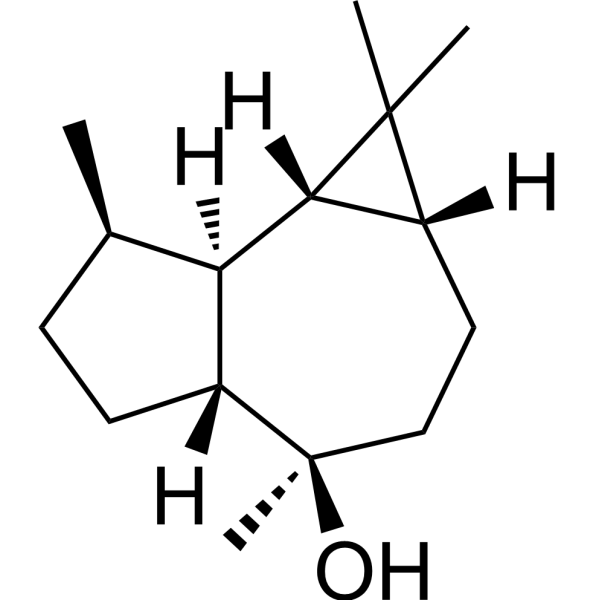
Globulol is a terpenoid metabolite and Antimicrobial agent. Globulol can be isolated from Alpinia oxyphylla Miq. Globulol binds to PAK4, reduces the expression level of PAK4 in cancer cells, decreases the phosphorylation of AKT, and downregulates the expressions of STAT3, phosphorylated STAT3, and PD-L1. Globulol promotes the secretion of CCL4 by cancer cells. Globulol reduces the viability and proliferation ability of cancer cells, induces G0/G1 cell cycle arrest and Apoptosis in cancer cells, and inhibits cancer cell migration and the integrity of 3D tumor spheres. Globulol enhances the relevant effects of anti-PD-1 agents in the cancer cell microenvironment. Globulol exhibits anticancer activity against liver cancer. Globulol inhibits the mycelial growth of phytopathogenic fungi and the growth of phytopathogenic bacteria. Globulol can be used in studies related to hepatocellular carcinoma .
loading...
    loading...
Cat. No.: HY-P10868A
Synonyms: RLS-0071 TFA
Pegtarazimod TFA (RLS-0071 TFA) is a dual-target anti-inflammatory peptide that exerts its effects by simultaneously regulating the complement system and neutrophil-associated inflammatory pathways. Pegtarazimod TFA reduces ROS production both in vitro and in vivo, and decreases the level of neutrophil elastase, a marker of neutrophil extracellular traps (NETs), in vivo, thereby alleviating inflammatory responses. Pegtarazimod TFA significantly improves the survival rate of mice in multiple in vivo models of acute graft-versus-host disease (aGVHD). Pegtarazimod TFA inhibits the activation of the C1 complex, reduces the herpes zoster-like spread of herpes simplex virus type 1 skin infection, and improves the survival rate of infected mice . Pegtarazimod TFA can be used in research related to acute graft-versus-host disease, acute pulmonary diseases, and skin herpes simplex virus type 1 infection .
loading...
    loading...
Cat. No.: HY-P11892
c10c-G1V3 is a BRAG2 binder with a Kd value of 7.37 μM. c10c-G1V3 binds to BRAG2, thereby disrupting its interaction with GluA2 and blocking GluA2 endocytosis and AMPAR subunit switching. c10c-G1V3 reduces glutamate-induced intracellular reactive oxygen species (ROS) accumulation and cell apoptosis (apoptosis). c10c-G1V3 decreases infarct volume in the transient middle cerebral artery occlusion model. c10c-G1V3 can be used in studies related to ischemic stroke .
loading...
    loading...
Cat. No.: HY-P12080
CAS No.: 176365-43-8
pUR4 is a recombinant peptide that acts as a fibronectin (FN) inhibitor. pUR4 binds to the N-terminal type I modules of fibronectin, inhibiting the polymerization of soluble fibronectin and its deposition into the extracellular matrix (ECM). pUR4 reduces β1 integrin activation by depleting ECM fibronectin and disrupting FN-β1 integrin coupling. pUR4 attenuates TNF-α-induced endothelial hyperpermeability, maintains endothelial monolayer integrity, and reduces TNF-α-induced cell morphological changes. pUR4 decreases neutrophil adhesion to cardiac endothelial cells, T cell interstitial migration, immune cell infiltration, collagen deposition, and fibroblast activation. pUR4 can be used in research on pathological vascular leakage, heart failure, inflammation, chronic kidney disease, liver fibrosis, and intestinal fibrosis .
loading...
    loading...
Cat. No.: HY-P990552A

Target:  

PAI-1 Integrin

Research Areas:  

Cancer

huATN-658 is an inhibitor that specifically targets the DIII domain of human urokinase plasminogen activator receptor (uPAR). huATN-658 neutralizes uPAR function by blocking the interaction between uPAR and integrins, without interfering with the binding of uPA or vitronectin to uPAR. huATN-658 inhibits the proliferation and invasion of breast cancer cells, slows the growth of primary breast tumors, reduces breast cancer-induced bone lesions and decreases osteoclast activity. huATN-658 also alters the gene expression of the TGF-β receptor complex signaling pathway. huATN-658 exerts synergistic anticancer effects when combined with Zoledronic Acid (HY-13777), and does not cause physiological or behavioral abnormalities in immunodeficient mice. huATN-658 can be used in research related to breast cancer, metastatic breast cancer and breast cancer-induced bone disease .
loading...
    loading...
Cat. No.: HY-P992410

Target:  

PAI-1 TGF-beta/Smad

Research Areas:  

Inflammation/Immunology

MEDI-579 is a fully human monoclonal antibody against PAI-1, with a KD value of 6 pM for human PAI-1 and 105 pM for rat PAI-1. MEDI-579 restores renal plasmin activity and inhibits PAI-1-mediated intracellular signal transduction. MEDI-579 reduces albuminuria, glomerulosclerosis severity, TGF-β1 expression level, and phosphorylated Smad2 level induced in diabetic mice. MEDI-579 decreases the levels of active PAI-1 in plasma and kidneys, and increases plasma plasmin level in a mouse model of lupus nephritis. MEDI-579 can be used in research related to diabetic nephropathy and lupus nephritis. The recommended isotype control is human IgG1 kappa (HY-P99001) .
loading...
    loading...
Cat. No.: HY-W017982
CAS No.: 55965-84-9
Synonyms: CMI/MI
CMIT/MIT (14.5% in water) (CMI/MI) is a mixture of CMIT and MIT, and is also a preservative and skin sensitizer. CMIT/MIT (14.5% in water) increases the levels of phosphorylated ERK1/2, p38, JNK1/2, p53, p21 and Bax, decreases the level of Bcl-2, and activates the Nrf-2/HO-1 signaling pathway. CMIT/MIT (14.5% in water) increases LDH release and lipid peroxidation levels, impairs antioxidant defense capacity, promotes pro-inflammatory cytokine release, induces apoptosis, triggers cell cycle arrest, exhibits neurotoxicity in neuroblastoma cells, and causes dysregulation of Th2/Th17 immune responses. CMIT/MIT (14.5% in water) can be used in studies related to allergy, atopic dermatitis and lung injury .
loading...
    loading...
Cat. No.: HY-W040171S
CAS No.: 2714419-98-2
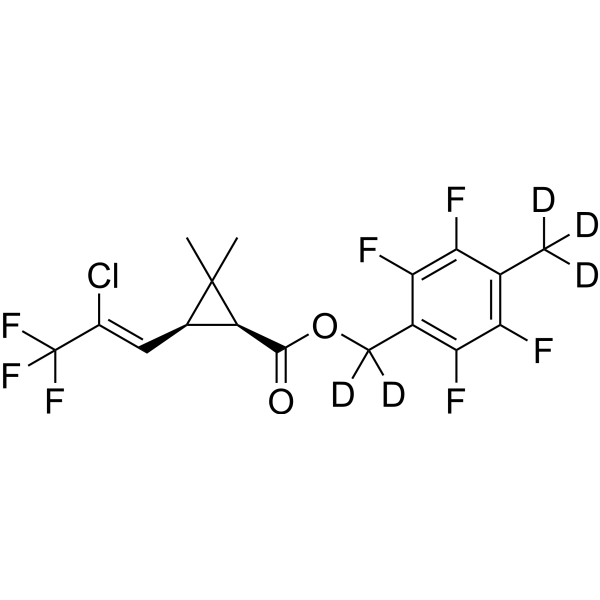
Tefluthrin-d5 is the deuterated-labeled Tefluthrin (HY-W040171). Tefluthrin is a pyrethroid insecticide with developmental toxicity. Tefluthrin modifies the Nav1.6 voltage-gated sodium channel, prolonging Nav1.6 channel inactivation and deactivation in HEK293 cells . Tefluthrin reduces L-type Ca 2+ currents, inhibits K + outward currents, and enhances spontaneous/oscillatory action currents. Tefluthrin induces oxidative stress in rat models, causing damage to blood, immune, and nucleic acid metabolism, chromosomal aberrations, and sperm malformations; it induces oxidative stress and p53‑caspase‑3 pathway apoptosis in zebrafish models, leading to cardiac-skeletal developmental malformations such as pericardial edema, spinal curvature, and decreased skeletal mineralization. Tefluthrin can be used for pest control and research on diseases such as neurodegenerative diseases .
loading...
    loading...
Cat. No.: HY-W062109
CAS No.: 113806-05-6
Target:  

Histamine Receptor CXCR

Research Areas:  

Inflammation/Immunology

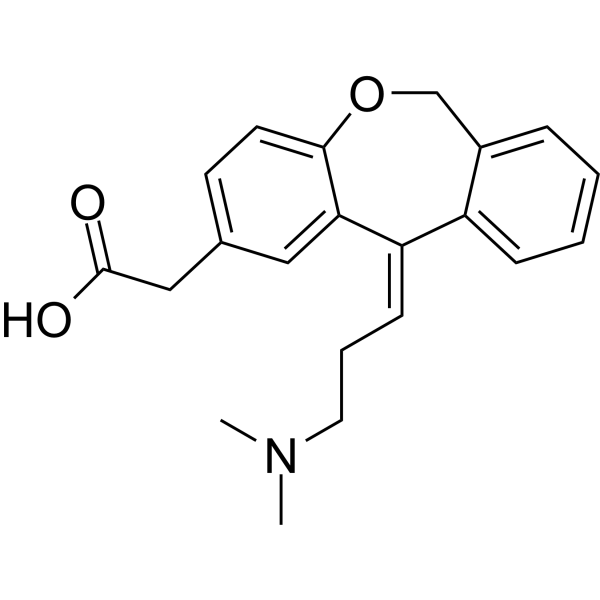
Olopatadine (ALO4943A; KW4679) is an orally active histamine H1 receptor antagonist and mast cell stabilizer. Olopatadine exerts antiallergic effects by blocking histamine H1 receptor-mediated activities. Olopatadine inhibits exocytosis, chemokine release, F-actin polymerization, CXCL10-induced calcium influx, and T cell chemotactic activity. Olopatadine also reduces the expression levels of CXCR3 on the surface of CD4 + and CD8 + T cells. Olopatadine inhibits scratching behavior, improves dermatitis scores, and suppresses intraepidermal neurite outgrowth. Olopatadine simultaneously decreases the levels of inflammatory markers, growth factors, histamine, and specific IgE, while increasing the expression of ErbB3A/HER3A. Olopatadine can be used in research related to seasonal pollinosis, chronic rhinitis, urticaria, allergic conjunctivitis, alopecia areata, and atopic dermatitis .
loading...
    loading...
Cat. No.: HY-W668775
CAS No.: 871100-12-8
Quin-C7 is an orally active FPR2/ALX antagonist. Quin-C7 binds to the orthosteric ligand-binding pocket of FPR2/ALX, modulates receptor activation, and inhibits pro-inflammatory ERK signaling mediated by serum amyloid A (SAA). Quin-C7 reduces pro-inflammatory mediators TNF-α levels, increases anti-inflammatory IL-10, decreases inflammatory neutrophils and pro-inflammatory M1 macrophages, downregulates ERK1/2 phosphorylation, and upregulates JNK1/2/3 phosphorylation. Quin-C7 blocks FPR2/mFpr2 signaling, reduces brain lesion volume. Quin-C7 can be used for the research of inflammatory bowel disease and neuromyelitis optica spectrum disorder .
loading...
    loading...
Cat. No.: HY-W700834
CAS No.: 1216708-84-7
Harman-d3 is deuterium labeled Harmane. Harmane is a benzodiazepine receptor inhibitor (IC50=7 μM), with IC50 values for mACh, Opioid Receptor, MAO-A/B, and α2-adrenergic receptor of 24 μM, 2.8 μM, 0.5 μM, 5 μM, and 18 μM, respectively. Harmane also inhibits haloperidol and serotonin, with IC50 values of 163 μM and 101 μM, respectively. Harmane inhibits the I1 imidazoline receptor (IC50=30 nM) to reduce blood pressure and has antidepressant, anti-anxiety, anticonvulsant, and analgesic effects. Harmane inhibits dopamine biosynthesis by decreasing tyrosine hydroxylase (TH) activity and enhancing L-DOPA-induced cytotoxicity in PC12 cells. Additionally, Harmane can increase the mutagenic effect induced by 2-acetylaminofluorene (AAF) .
loading...
    loading...
Cat. No.: HY-W996116
CAS No.: 1933460-23-1
AZM198 is an orally active myeloperoxidase (MPO) inhibitor. AZM198 irreversibly inactivates MPO (IC50=0.015 μM) via covalent binding to the heme prosthetic group, preferentially targets extracellular MPO activity, and reduces neutrophil extracellular trap formation, reactive oxygen species production and degranulation. AZM198 increases the fibrous cap thickness of atherosclerotic plaques, reduces lesion area, ameliorates hepatic steatosis and fibrosis in non-alcoholic steatohepatitis, and alleviates proteinuria and inflammatory infiltration associated with glomerulonephritis. AZM198 also decreases circulating levels of high-sensitivity Cardiac Troponin I and IL-1β, and mitigates endothelial cell injury. Therefore, AZM198 is suitable for research on various MPO-related diseases, including atherosclerotic cardiovascular disease, myocardial infarction, ischemic stroke, non-alcoholic steatohepatitis and crescentic glomerulonephritis .
loading...
    loading...
Cat. No.: HY-L045
4,368 compounds

Oxygen homeostasis regulation is the most fundamental cellular process for adjusting physiological oxygen variations, and its irregularity leads to various human diseases, including cancer. Hypoxia is closely associated with cancer development, and hypoxia/oxygen-sensing signaling plays critical roles in the modulation of cancer progression.

Hypoxia-inducible factor 1 (HIF-1) is a transcription factor that functions as a master regulator of oxygen homeostasis. A variety of HF-1 target genes have been identified thus far which encode proteins that play key roles in critical developmental and physiological processes including angiogenesis/vascular remodeling, erythropoiesis, glucose transport, glycolysis, iron transport, and cell proliferation/survival.

HIF-1 is a heterodimeric transcription factor consisting of a constitutively expressed β-subunit and an oxygen-regulated α-subunit. The unique feature of HIF-1 is the regulation of HIF-1α expression and activity based upon the cellular O2 concentration. Under normoxic conditions, hydroxylation of HIF-1α on these different proline residues is essential for HIF proteolytic degradation by promoting interaction with the von Hippel-Lindau tumor-suppressor protein (pVHL) through hydrogen bonding to the hydroxyproline-binding pocket in the pVHL β-domain. As oxygen levels decrease, hydroxylation of HIF decreases; HIF-1α then no longer binds pVHL, and becomes stabilized, allowing more of the protein to translocate to the cell’s nucleus, where it acts as a transcription factor, upregulating (often within minutes) the production of proteins that stimulate blood perfusion in tissues and thus tissue oxygenation.

MCE offers a unique collection of 4,368 oxygen sensing related compounds targeting HIF/HIF Prolyl-Hydroxylase, MAPK/ERK, PI3K/AKT signaling pathways, etc. MCE Oxygen Sensing Compound Library is a useful tool to study hypoxia, oxidative stress and discover new anti-cancer drugs.

Cat. No.: HY-101126R
CAS No.: 1361951-15-6
Synonyms: TP-3654 (Standard)
Research Areas:  

Cancer

Nuvisertib (Standard) (TP-3654 (Standard)) is the analytical standard of Nuvisertib (HY-101126). This product is intended for research and analytical applications. Nuvisertib (TP-3654) is an orally active second-generation pan-PIM kinase inhibitor with Ki values of 5 nM, 239 nM, and 42 nM against PIM-1, PIM-2, and PIM-3, respectively. Nuvisertib inhibits JAK-independent inflammatory and survival signaling pathways, reduces the production of proinflammatory cytokines, restores apoptotic sensitivity, inhibits mTORC1, MYC, and TGF-β signaling pathways, and decreases the expression of fibrosis markers. Nuvisertib selectively impairs the transport function of ABCG2, resensitizes multidrug-resistant cancer cells to cytotoxic drugs, and overcomes JAK2 inhibitor resistance. Nuvisertib can be used in research related to myelofibrosis, renal cell carcinoma, multidrug-resistant cancer, advanced solid tumors, urothelial carcinoma, and prostate adenocarcinoma .
loading...
    loading...
Cat. No.: HY-10459R
CAS No.: 717907-75-0
Synonyms: VS-6062 (Standard)
PF-562271 (Standard) (VS-6062 (Standard)) is the analytical standard of PF-562271 (HY-10459). This product is intended for research and analytical applications. PF-562271 (VS-6062) is an orally active, ATP-competitive, reversible FAK/Pyk2 inhibitor, with an IC50 of 1.5 nM for FAK and 13 nM for Pyk2. PF-562271 induces tumor regression, and inhibits tumor growth, invasion and metastasis. PF-562271 exerts no effect on tumor necrosis, angiogenesis or apoptosis in an orthotopic mouse model of pancreatic ductal adenocarcinoma. When combined with Sunitinib (HY-10255A), PF-562271 reduces tumor vascularization, decreases serum alpha-fetoprotein levels and improves cachexia. PF-562271 can be used in research related to prostate cancer, breast cancer, pancreatic cancer, colon cancer, glioblastoma, lung cancer, pancreatic ductal adenocarcinoma and hepatocellular carcinoma .
loading...
    loading...
Cat. No.: HY-113166R
CAS No.: 25518-54-1
Synonyms: (-)-Lauroylcarnitine (Standard)
Dodecanoylcarnitine (Standard) is the analytical standard of Dodecanoylcarnitine (HY-113166). This product is intended for research and analytical applications. Dodecanoylcarnitine ((-)-Lauroylcarnitine) is a medium long-chain acylcarnitine, an intermediate product in key energy metabolic pathways of fatty acid β-oxidation and amino acids catabolism. The abnormal decrease in the Dodecanoylcarnitine levels indicats that mitochondrial fuel metabolism, including fatty acid oxidation is significantly disturbed. Changes in plasma concentrations of Dodecanoylcarnitine are not only associated with type II diabetes, but also with pre-diabetes status. Dodecanoylcarnitine is present in fatty acid oxidation disorders such as long-chain acyl CoA dehydrogenase deficiency, carnitine palmitoyltransferase I/II deficiency, and is also associated with celiac disease. Dodecanoylcarnitine deomonstrates high sensitivities and specificities in predicting asthma. Combined model of Decanoylcarnitine (HY-113069), Dodecanoylcarnitine, PC (16:0/0:0), and Asp Arg Pro can be used as a potential biomarker for the diagnosis of Yin-deficiency-heat syndrome .
loading...
    loading...
Cat. No.: HY-113302
CAS No.: 510-64-5
Purity:  99.11%
19-Hydroxyandrost-4-ene-3,17-dione is an endogenous adrenal C19 steroid and also an agonist of the olfactory receptor OR51E2, with an EC50 of 0.15 nM. 19-Hydroxyandrost-4-ene-3,17-dione activates G protein-coupled receptor signaling pathways, drives neuroendocrine transdifferentiation, induces G0/G1 cell cycle arrest, reduces apoptosis and anabolic signaling, decreases cell viability, and reprograms cell metabolic profiles. 19-Hydroxyandrost-4-ene-3,17-dione induces sodium retention and hypertension, and its secretion is regulated by ACTH and the renin-angiotensin system. 19-Hydroxyandrost-4-ene-3,17-dione can be used in research related to prostate cancer, metastatic breast cancer, and hypertension .
loading...
    loading...
Cat. No.: HY-117219
CAS No.: 136209-43-3
SKF 104976 is a 3,2-carboxylic acid derivative with potent 14-alpha-demethylase (14 alpha DM) inhibitory activity. SKF 104976 inhibited 14 alpha DM activity by 50% at 2 nM in Hep G2 cell extracts. SKF 104976 inhibited the incorporation of [14C]acetate into cholesterol in intact cells at similar concentrations, accompanied by accumulation of lanosterol, and resulted in a 40-70% decrease in 3-hydroxy-3-methylglutaryl-CoA reductase (HMGR) activity. SKF 104976 did not affect the uptake and degradation of low-density lipoprotein in Hep G2 cells, indicating that HMGR and low-density lipoprotein receptor activities are not coordinately regulated under these conditions. The inhibitory effect of SKF 104976 on HMGR activity remained unchanged even when the flux of carbon units in the sterol synthesis pathway was reduced by 80%. SKF 104976 did not inhibit HMGR activity under conditions where sterol synthesis was almost completely blocked by lovastatin .
loading...
    loading...

