



Biotinoyl tripeptide-1

Based on 1 Customer Validation
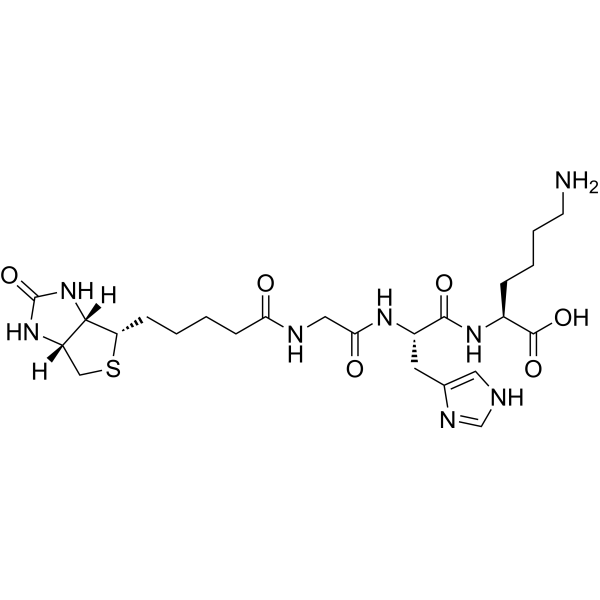
Biotinoyl tripeptide-1 (Biotinyl-GHK) is a biotinylating reagent linked to a GHK (glycyl-L-histidyl-L-lysine) tripeptide. Biotin tripeptide-1 is a bioactive peptide with hair care (improves the appearance and feel of hair) and hair growth effects. Biotinoyl tripeptide-1 has a certain affinity for streptavidin. Biotinoyl tripeptide-1 inhibits the production of ROS and has antioxidant effects. Biotinoyl tripeptide-1 reduces the production of carbonylated amyloid-β (Aβ) and inhibits Aβ aggregation. Biotinoyl tripeptide-1 can be used in the study of neurodegenerative diseases.
For research use only. We do not sell to patients.
- Purity : 99.02%
- CAS No.: 299157-54-3
- Formula: C24H38N8O6S
- Molecular Weight:566.67
-
Storage:
Sealed storage, away from moisture.
Powder -80°C, 2 years , -20°C, 1 year* In solvent : -80°C, 6 months; -20°C, 1 month (sealed storage, away from moisture)

To place orders, for customer services and technical support, please contact: MedChemExpress USA
Tel: 609-228-6898 E-mail: [email protected] [email protected]


-
 Biological Activity
-
Chemical Information
-
Solvent & Solubility
- Protocols
- Purity & Documentation
- References
-
 Help & FAQs


-
HY-W129161
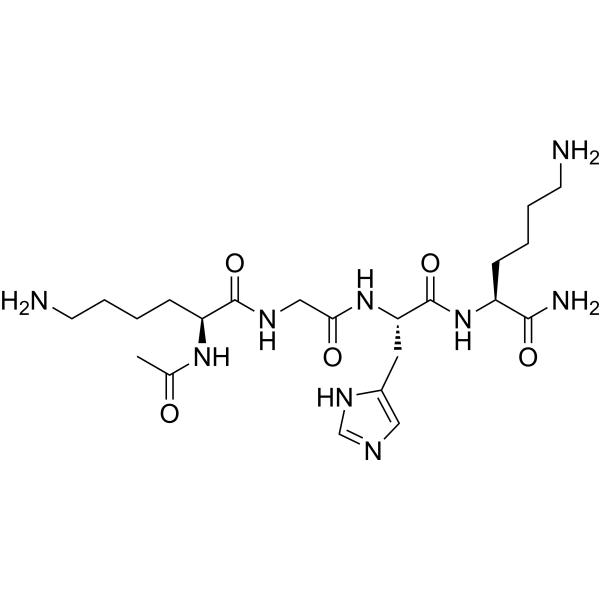
Acetyl tetrapeptide-3ECM Protein Stimulant -
HY-P0102
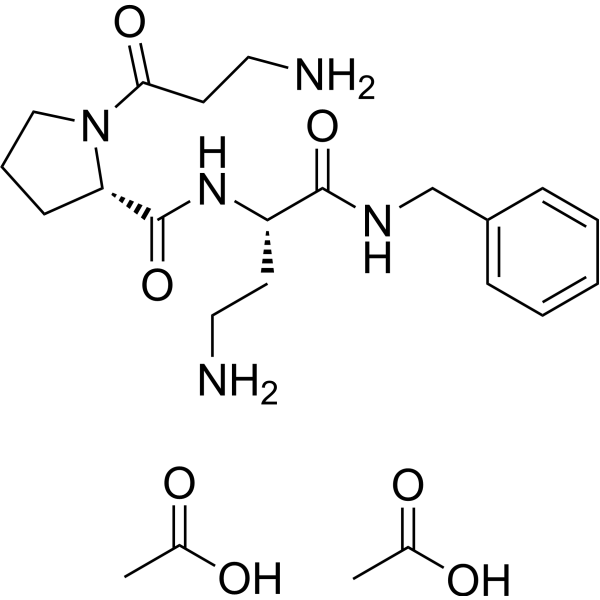
Dipeptide diaminobutyroyl benzylamide diacetatenAChR Antagonist -

HY-66018
Palmitoyl tripeptide-5 diTFAAnti-aging Peptide -
HY-W013494
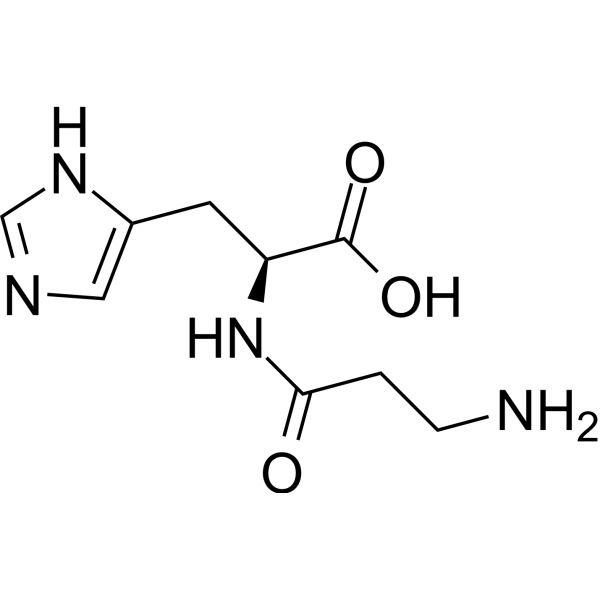
L-CarnosineFree Radical Scavenger -

HY-W013494R
L-Carnosine (Standard) -
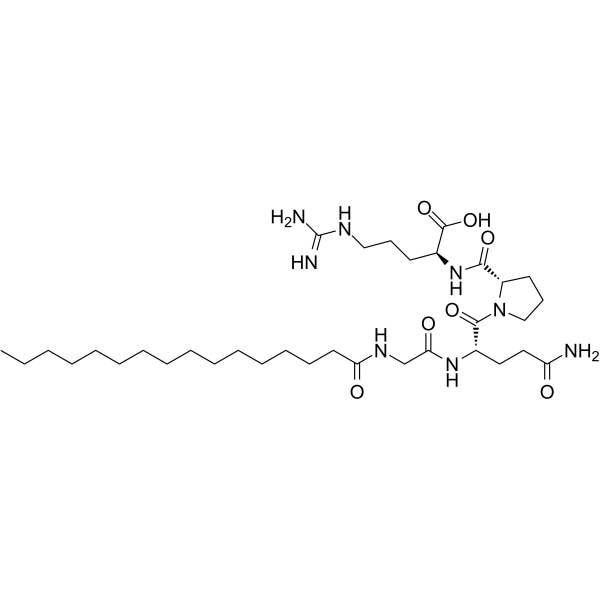
HY-P0064
Palmitoyl Tetrapeptide-3IL-6 Inhibitor -
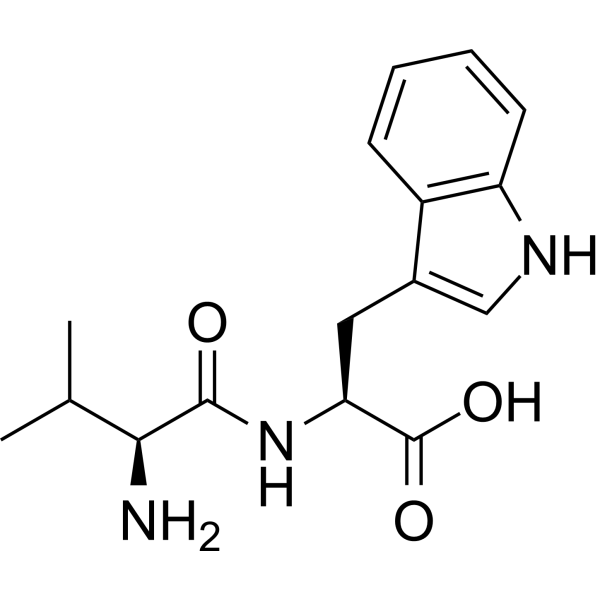
HY-118060
Dipeptide 2ACE Inhibitor -
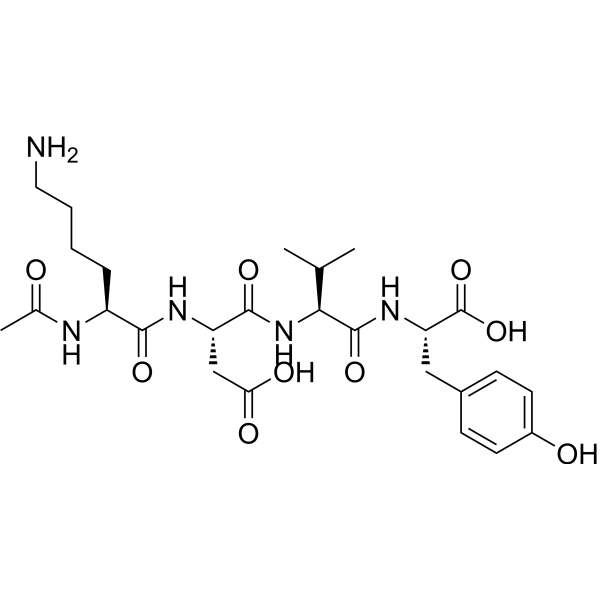
HY-P2663
Acetyl tetrapeptide-2Anti-aging Peptide -
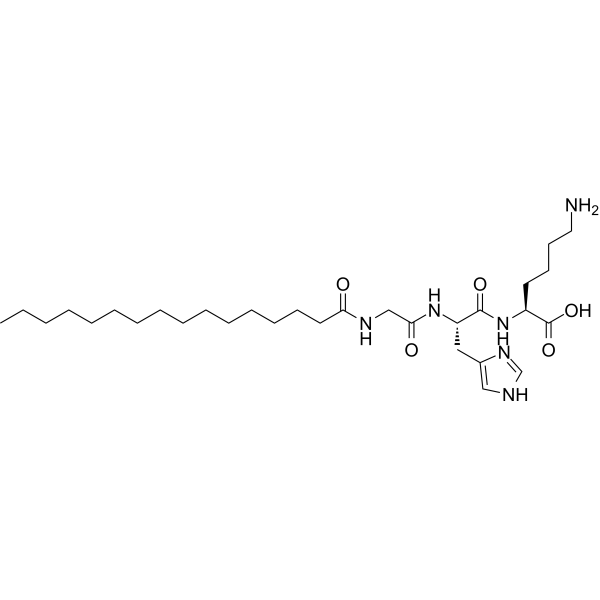
HY-P0047
Palmitoyl Tripeptide-1Polypeptide -
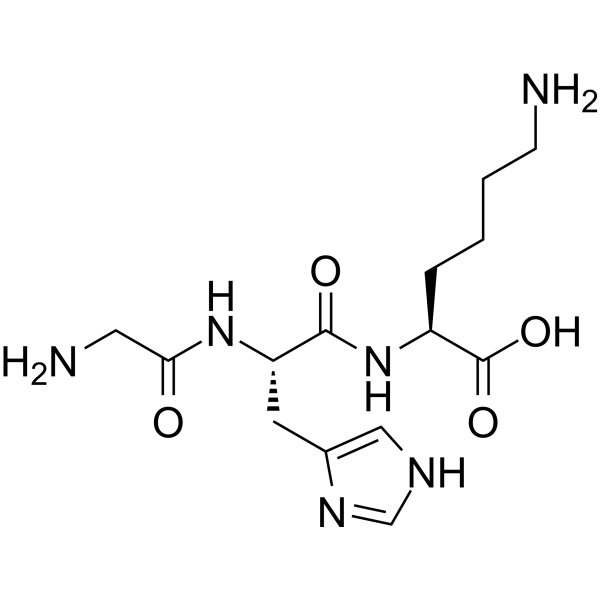
HY-P0046
Glycyl-L-histidyl-L-lysineTripeptide -
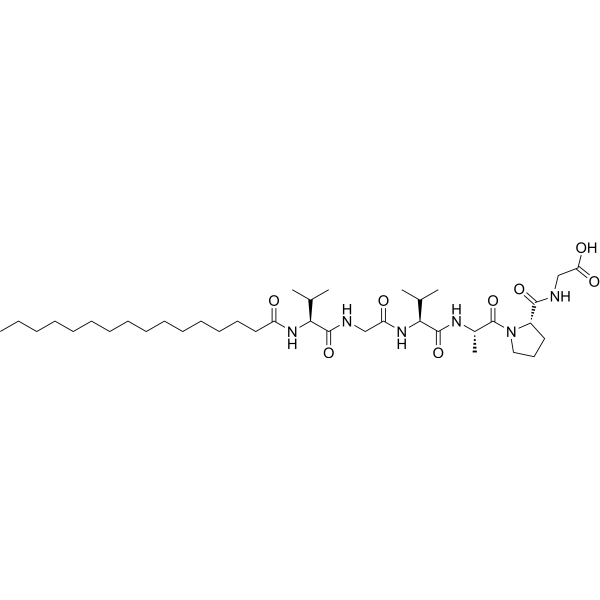
HY-66015
Palmitoyl hexapeptide-12Anti-aging Peptide -
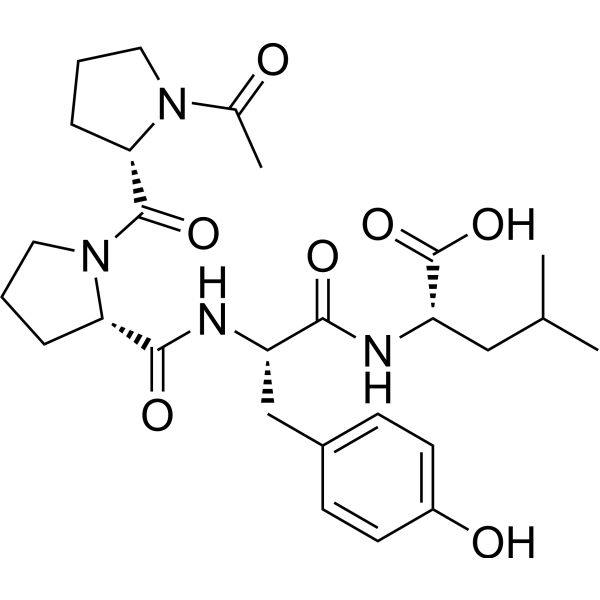
HY-P5233
Acetyltetrapeptide 11Anti-aging Peptide


Biological Activity
Description
In Vitro
Biotinoyl tripeptide-1 (2 mM) can inhibit the binding of HABA to streptavidin (IC50: 30 µM), indicating that it has a higher affinity for streptavidin[2].
Biotinoyl tripeptide-1 (0-30 μM, 45 min) dose-dependently alters the oxidative activity of ascorbic acid (ASC) induced by Cu-Aβ complexes by coordinating with copper ions and reducing the generation of ROS[2].
Biotinoyl tripeptide-1 (0-120 μM, 100 min) effectively inhibits the production of carbonylated amyloid β in acrolein-induced Aβ1-16[2].
Biotinoyl tripeptide-1 (20 μM, 50 h) inhibits the amyloid aggregation of Aβ in Aβ42[2].
MedChemExpress (MCE) has not independently confirmed the accuracy of these methods. They are for reference only. Further protocols information, click here.


Chemical Information
-
CAS No. 299157-54-3
-
Appearance Solid
-
Molecular Weight 566.67
-
Formula C24H38N8O6S
-
Color White to off-white
-
Synonyms
Biotinyl-GHK; Bio-GHK
-
Sequence
{Biotinyl}-Gly-His-Lys
-
Sequence Shortening
{Biotinyl}-GHK
-
Shipping
Room temperature in continental US; may vary elsewhere.
-
Storage
Sealed storage, away from moisture
Powder -80°C 2 years -20°C 1 year * In solvent : -80°C, 6 months; -20°C, 1 month (sealed storage, away from moisture)


Solvent & Solubility
In Vitro:
DMSO : 87.5 mg/mL (154.41 mM; Need ultrasonic; Hygroscopic DMSO has a significant impact on the solubility of product, please use newly opened DMSO)
Please refer to the solubility information to select the appropriate solvent. Once prepared, please aliquot and store the solution to prevent product inactivation from repeated freeze-thaw cycles.
Storage method and period of stock solution: -80°C, 6 months; -20°C, 1 month (sealed storage, away from moisture). When stored at -80°C, please use it within 6 months. When stored at -20°C, please use it within 1 month.
Please refer to the solubility information to select the appropriate solvent. Once prepared, please aliquot and store the solution to prevent product inactivation from repeated freeze-thaw cycles.
Storage method and period of stock solution: -80°C, 6 months; -20°C, 1 month (sealed storage, away from moisture). When stored at -80°C, please use it within 6 months. When stored at -20°C, please use it within 1 month.
Concentration (start) × Volume (start) = Concentration (final) × Volume (final)

Protocols
-
ROS/oxidative-stress fluorescent staining
ROS/oxidative-stress fluorescent staining uses cell-permeant fluorogenic probes that become fluorescent after oxidation inside cells or tissues; commonly used examples include DCFH-DA/DCFDA for broad cellular oxidant detection, DHE for superoxide-related signal detection, MitoSOX for mitochondrial superoxide-related signal detection, and CellROX probes for oxidative-stress-associated fluorescence readouts. The assay detects probe oxidation rather than a single ROS species unless the probe and analysis method have been chemically validated for that species. DCFH-DA enters cells, is deacetylated by intracellular esterases to DCFH, and produces fluorescent DCF after oxidation, so the readout is used as an operational measure of total cellular oxidative stress rather than a species-specific ROS measurement. DHE and MitoSOX can report superoxide-related oxidation, but red fluorescence alone can include non-specific ethidium-like oxidation products; HPLC or optimized spectral approaches are
-
Amyloid: Congo Red Amyloid Staining
Congo red amyloid staining is a histochemical method used to detect extracellular amyloid deposits in tissue sections based on the affinity of Congo red dye for β-pleated sheet-rich protein aggregates. When bound to amyloid, Congo red produces characteristic apple-green birefringence under polarized light microscopy, which is widely regarded as a diagnostic feature of amyloid deposition in histopathology. The diagnostic principle relies on the combination of dye binding (congophilia) and optical anisotropy under polarized illumination, which distinguishes amyloid from most non-amyloid eosinophilic extracellular deposits in routine histological evaluation. Amyloid identification by Congo red staining remains a cornerstone in diagnostic pathology despite the availability of adjunct methods such as immunohistochemistry and mass spectrometry, particularly because of its ability to localize deposits directly within tissue architecture. The specificity of Congo red-positive deposits is incre
-
Alzheimer’s Disease Modeling
Alzheimer’s Disease (AD) is a neurodegenerative disorder characterized by a progressive decline in cognitive functions and loss of specific types of neurons and synapses. Alzheimer's symptoms can be simulated in mice by injecting drugs (such as Aβ) or genetically modified.


Purity & Documentation
-
Data Sheet (273 KB)
-
SDS (393 KB)
- English - EN (393 KB)
- Français - FR (393 KB)
- Deutsch - DE (393 KB)
- Norwegian - NO (393 KB)
- Español - ES (393 KB)
- Swedish - SV (393 KB)
- Italian - IT (393 KB)
- Korean - KR (393 KB)
- Portuguese - PT (393 KB)
-
Handling Instructions (2659 KB)
References
[1]. Wang L, et al. Overview of Peptides and Their Potential Roles in Skin Health and Beauty. J Pept Sci. 2025 Feb;31(2):e3668. [Content Brief]
[2]. Tosto R, et al. New Biotinylated GHK and Related Copper(II) Complex: Antioxidant and Antiglycant Properties In Vitro against Neurodegenerative Disorders. Molecules. 2023 Sep 20;28(18):6724. [Content Brief]


Complete Stock Solution Preparation Table
Please refer to the solubility information to select the appropriate solvent. Once prepared, please aliquot and store the solution to prevent product inactivation from repeated freeze-thaw cycles.
Storage method and period of stock solution: -80°C, 6 months; -20°C, 1 month (sealed storage, away from moisture). When stored at -80°C, please use it within 6 months. When stored at -20°C, please use it within 1 month.
| Optional Solvent | Concentration Solvent Mass | 1 mg | 5 mg | 10 mg | 25 mg |
|---|---|---|---|---|---|
| DMSO | 1 mM | 1.7647 mL | 8.8235 mL | 17.6470 mL | 44.1174 mL |
| 5 mM | 0.3529 mL | 1.7647 mL | 3.5294 mL | 8.8235 mL | |
| 10 mM | 0.1765 mL | 0.8823 mL | 1.7647 mL | 4.4117 mL | |
| 15 mM | 0.1176 mL | 0.5882 mL | 1.1765 mL | 2.9412 mL | |
| 20 mM | 0.0882 mL | 0.4412 mL | 0.8823 mL | 2.2059 mL | |
| 25 mM | 0.0706 mL | 0.3529 mL | 0.7059 mL | 1.7647 mL | |
| 30 mM | 0.0588 mL | 0.2941 mL | 0.5882 mL | 1.4706 mL | |
| 40 mM | 0.0441 mL | 0.2206 mL | 0.4412 mL | 1.1029 mL | |
| 50 mM | 0.0353 mL | 0.1765 mL | 0.3529 mL | 0.8823 mL | |
| 60 mM | 0.0294 mL | 0.1471 mL | 0.2941 mL | 0.7353 mL | |
| 80 mM | 0.0221 mL | 0.1103 mL | 0.2206 mL | 0.5515 mL | |
| 100 mM | 0.0176 mL | 0.0882 mL | 0.1765 mL | 0.4412 mL |


Biotinoyl tripeptide-1 Related Classifications
HY-125616 Related Classifications
 Powered by Bioz