



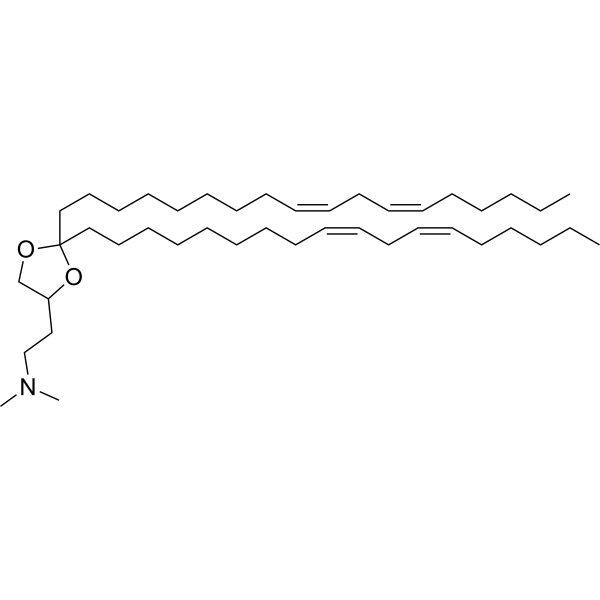
DLin-KC2-DMA
Based on 9 publication(s) in Google Scholar
DLin-KC2-DMA is an ionisable cationic lipid (pKa≈6) that is virtually non-toxic to antigen presenting cells (APCs). DLin-KC2-DMA produces significant siRNA-mediated gene silencing of GAPDH, when binds to lipid nanoparticles (LNP). DLin-KC2-DMA can be used in siRNA delivery studies.
For research use only. We do not sell to patients.
- Purity : 99.88%
- CAS No.: 1190197-97-7
- Formula: C43H79NO2
- Molecular Weight:642.09
-
Storage:
-20°C, stored under nitrogen
* The compound is unstable in solutions, freshly prepared is recommended.

To place orders, for customer services and technical support, please contact: MedChemExpress USA
Tel: 609-228-6898 E-mail: [email protected] [email protected]


-
 Biological Activity
-
Chemical Information
-
Solvent & Solubility
- Protocols
- Purity & Documentation
- References
-
 Help & FAQs


-
HY-112251
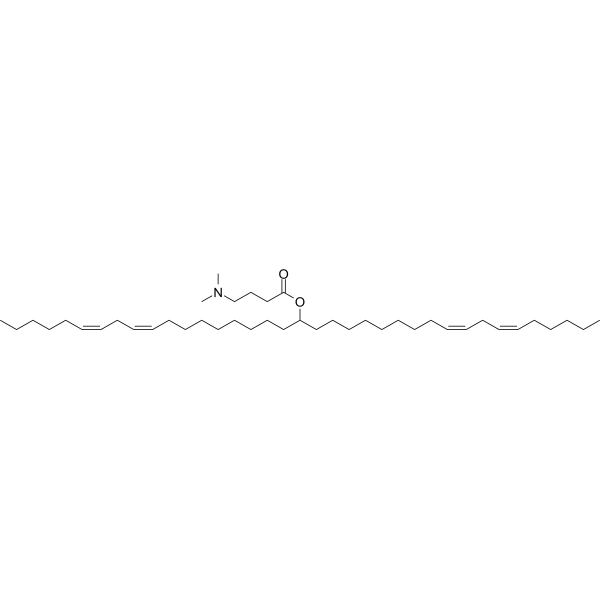
D-Lin-MC3-DMAsiRNA Delivery Vehicle -
HY-138170
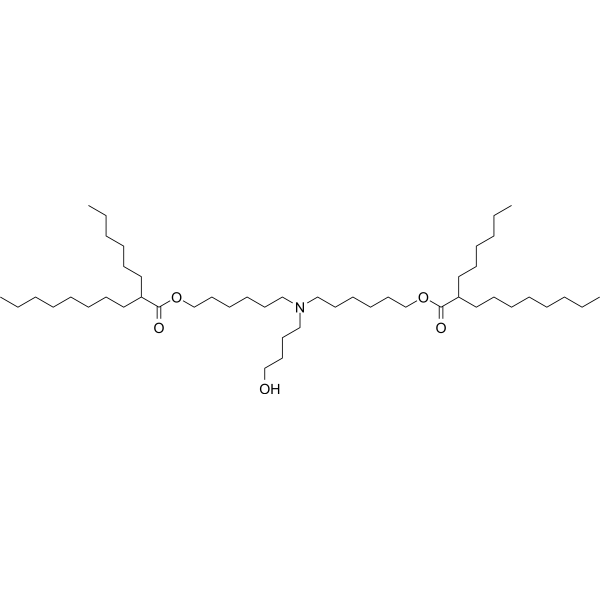
ALC-0315Lipid Nanoparticle Component -
HY-134541
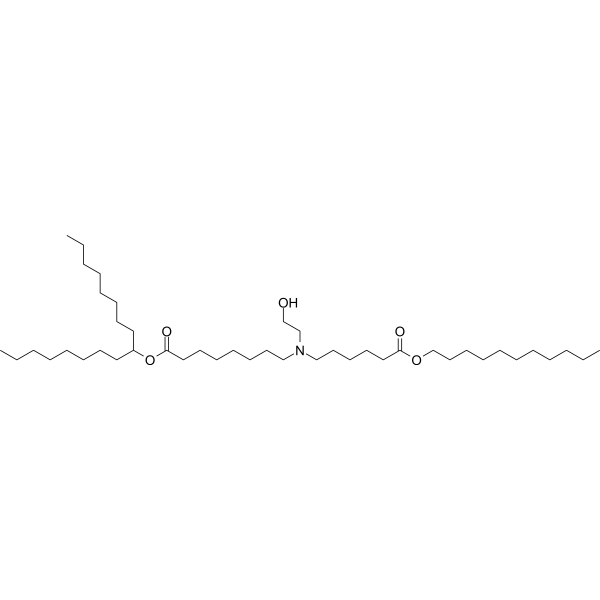
SM-102Ionizable Amino Lipid -
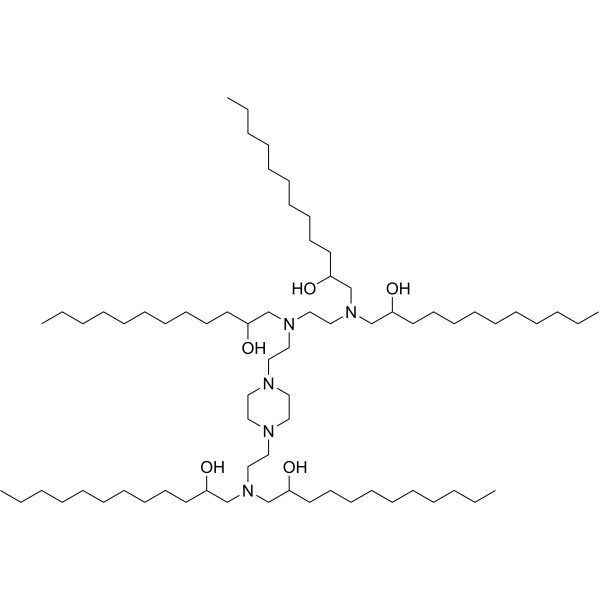
HY-145405
C12-200Cationic Lipidoid -
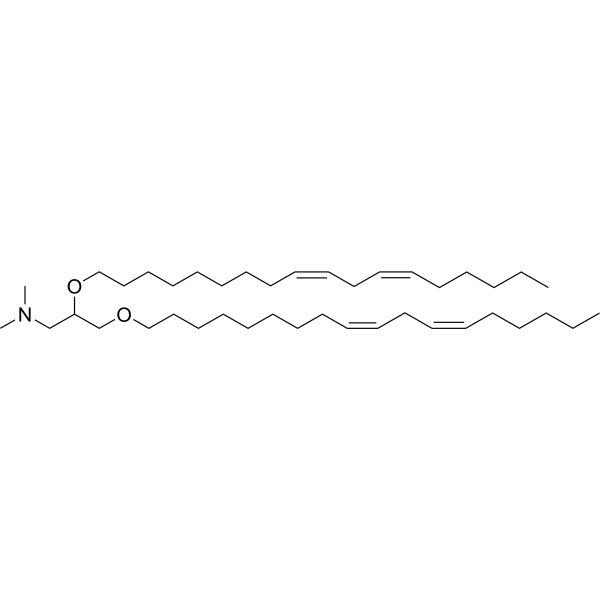
HY-112757
DLinDMAIonizable Cationic Lipid -
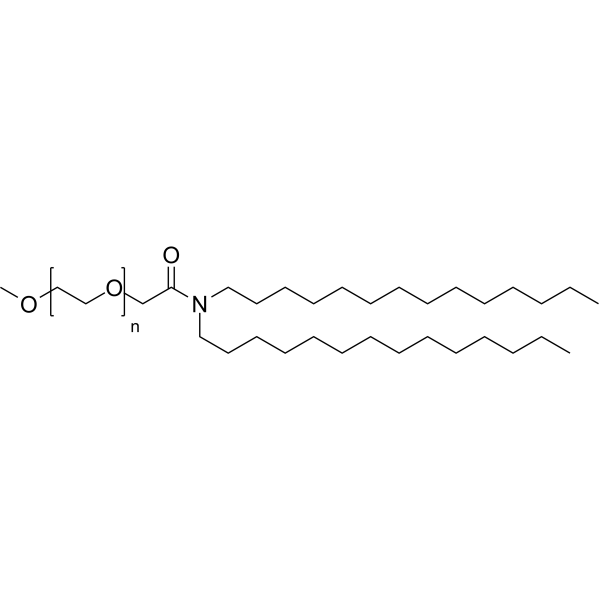
HY-138300
ALC-0159Liposome -
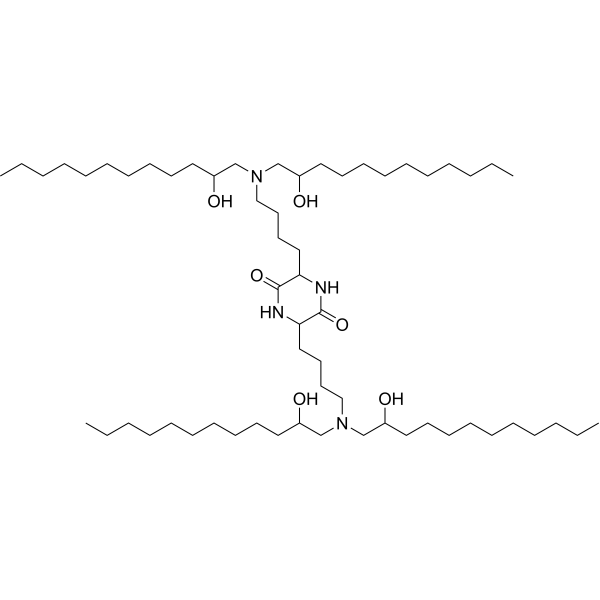
HY-134781
CKK-E12Ionizable Lipid -
HY-17031
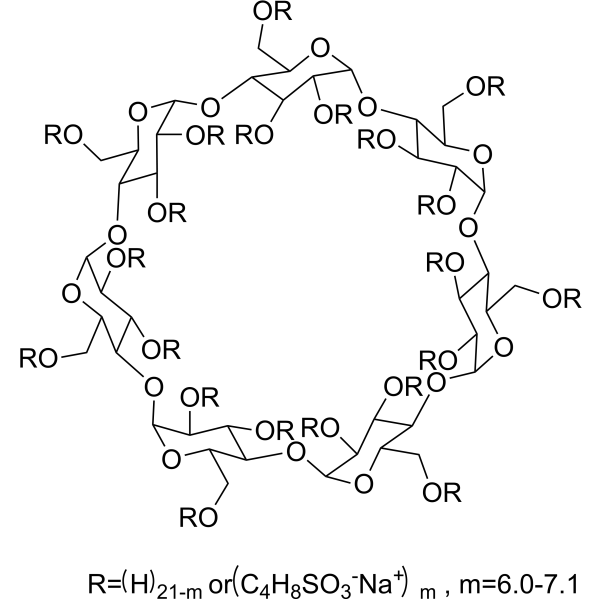
SBE-β-CDExcipient -
HY-112764
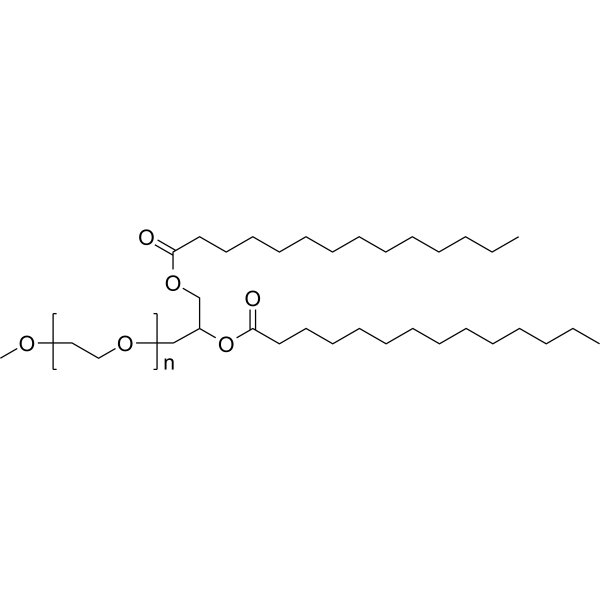
mPEG2000-DMGLiposome -
HY-N0322
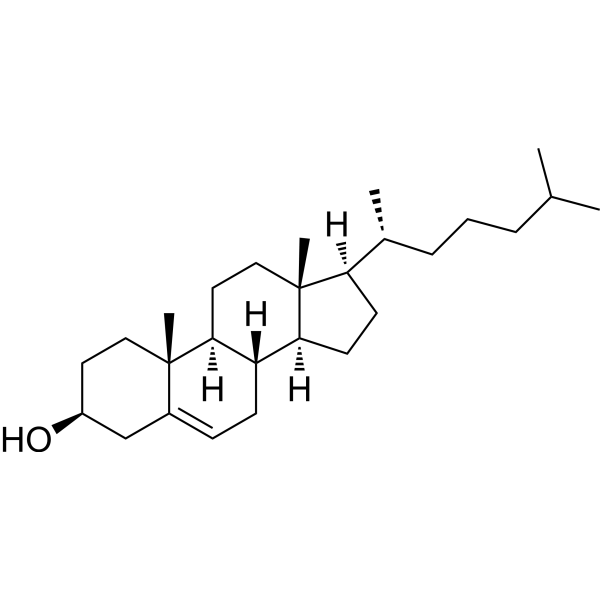
Cholesterol (from animal)ERRα Agonist -
HY-130751
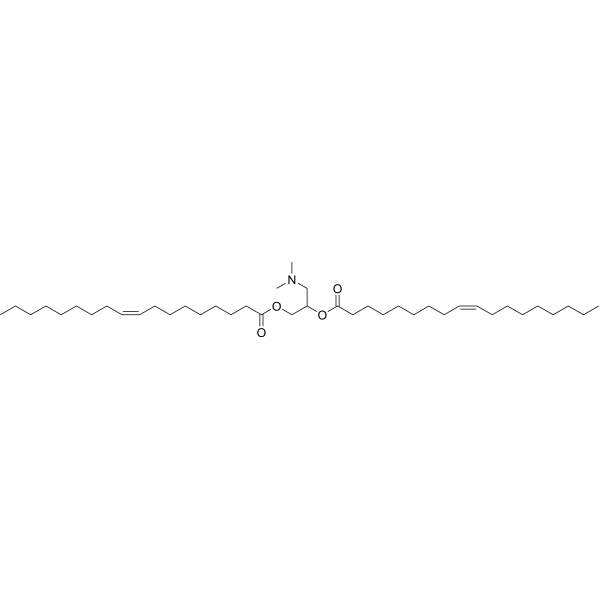
DODAPCationic Lipid -
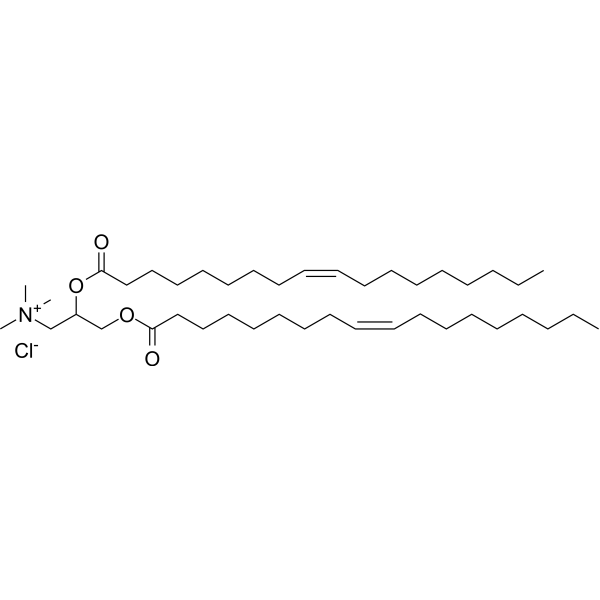
HY-112754A
DOTAP chlorideCationic Lipid
Publications Citing Use of MedChemExpress (MCE) DLin-KC2-DMA
More- Nat Nanotechnol. 2026 Jan 14. [Abstract]
- Proc Natl Acad Sci U S A. 2025 Sep 9;122(36):e2426094122. [Abstract]
- Proc Natl Acad Sci U S A. 2024 Mar 12;121(11):e2307809121. [Abstract]
- Anal Chem. 2022 Jun 28;94(25):9081-9090. [Abstract]
- J Chromatogr A. 2025 Apr 12:1746:465788. [Abstract]
- Biomed Pharmacother. 2026 Jan:194:118919. [Abstract]
- Res Sq. 2025 Apr 08.
- University of Toronto. 2023 Nov.
- bioRxiv. September 30, 2021.


Biological Activity
Description
In Vitro
DLin-KC2-DMA (1, 5 μg; 72 h) effectively produces a significant siRNA-mediated GAPDH gene silencing in both macrophages and dendritic cells[1].
DLin-KC2-DMA (24 h) exhibits high uptake into macrophages and dendritic cells[1].
DLin-KC2-DMA efficiently promotes release of encapsulated siRNA into the cytosol following uptake via the endocytotic pathway[1].
DLin-KC2-DMA displays almost no toxicity in primary APCs[1].
MedChemExpress (MCE) has not independently confirmed the accuracy of these methods. They are for reference only.
-
Cell Line:Macrophages, dendritic cells
-
Concentration:5 μg/mL (DLin-KC2-DMA contained-LNPs)
-
Incubation Time:72 h
-
Result:Displayed almost no toxicity.
-
Cell Line:Macrophages, dendritic cells
-
Concentration:1, 5 μg
-
Incubation Time:72 h
-
Result:Exhibited significant GAPDH silencing of more than 60% at 1 μg and of 80% at 5 μg in macrophages.
Significantly reduced GAPDH protein and exhibited the silencing effects of 83% at 5 μg.
In Vivo
MedChemExpress (MCE) has not independently confirmed the accuracy of these methods. They are for reference only.
-
Animal Model:Naive C57BL/6 mice[1].
-
Dosage:3 or 5 mg/kg (DLin-KC2-DMA contained-LNPs)
-
Administration:Intravenous injection; single.
-
Result:Significantly reduced GAPDH production in peritoneal cavity macrophages and dendritic cells and in the spleen-derived APCs when at 5 mg/kg.


Chemical Information
-
CAS No. 1190197-97-7
-
Appearance Liquid (Density: 0.885±0.06 g/cm3)
-
Molecular Weight 642.09
-
Formula C43H79NO2
-
Color Colorless to light yellow
-
SMILES
CCCCC/C=C\C/C=C\CCCCCCCCC1(CCCCCCCC/C=C\C/C=C\CCCCC)OC(CCN(C)C)CO1
-
Shipping
Room temperature in continental US; may vary elsewhere.
-
Storage
-20°C, stored under nitrogen
* The compound is unstable in solutions, freshly prepared is recommended.


Publications (9)
-
Journal Impact Factor
-
Most Recent
-
Nat Nanotechnol
A disease-severity-responsive nanoparticle enables potent ghrelin messenger RNA therapy in osteoarthritis. [Abstract]2026 Jan 14. PMID: 41535382 -
Proc Natl Acad Sci U S A
A general genome editing strategy using CRISPR lipid nanoparticle spherical nucleic acids. [Abstract]2025 Sep 9;122(36):e2426094122. PMID: 40906807 -
Proc Natl Acad Sci U S A
Electrostatic adsorption of polyanions onto lipid nanoparticles controls uptake, trafficking, and transfection of RNA and DNA therapies. [Abstract]2024 Mar 12;121(11):e2307809121. PMID: 38437543 -
Anal Chem
Spectroscopy-Based Local Modeling Method for High-Throughput Quantification of Nucleic Acid Loading in Lipid Nanoparticles. [Abstract]2022 Jun 28;94(25):9081-9090. PMID: 35700415 -
J Chromatogr A
A platform method for simultaneous quantification of lipid and nucleic acid components in lipid nanoparticles. [Abstract]2025 Apr 12:1746:465788. PMID: 39987694 -
Biomed Pharmacother
Folate- and aCD47-functionalized lipid nanoparticles efficiently deliver mRNA and remodel pancreatic tumor microenvironment. [Abstract]2026 Jan:194:118919. PMID: 41496333 -
-
-


Solvent & Solubility
In Vitro:
Ethanol : 100 mg/mL (155.74 mM; Need ultrasonic)
DMSO : 100 mg/mL (155.74 mM; Need ultrasonic; Hygroscopic DMSO has a significant impact on the solubility of product, please use newly opened DMSO)
Please refer to the solubility information to select the appropriate solvent. The compound is unstable in solutions, freshly prepared is recommended.
Please refer to the solubility information to select the appropriate solvent. The compound is unstable in solutions, freshly prepared is recommended.
Concentration (start) × Volume (start) = Concentration (final) × Volume (final)
In Vivo:
Select the appropriate dissolution method based on your experimental animal and administration route.
- For the following dissolution methods, please ensure to first prepare a clear stock solution using an In Vitro approach and then sequentially add co-solvents:
- To ensure reliable experimental results, the clarified stock solution can be appropriately stored based on storage conditions. As for the working solution for In Vivo experiments, it is recommended to prepare freshly and use it on the same day.
- The percentages shown for the solvents indicate their volumetric ratio in the final prepared solution. If precipitation or phase separation occurs during preparation, heat and/or sonication can be used to aid dissolution.
Add each solvent one by one: 10% DMSO 40% PEG300 5% Tween-80 45% Saline
Solubility: ≥ 2.5 mg/mL (3.89 mM); Clear solution
This protocol yields a clear solution of ≥ 2.5 mg/mL (saturation unknown).
Taking 1 mL working solution as an example, add 100 μL DMSO stock solution (25.0 mg/mL) to 400 μL PEG300, and mix evenly; then add 50 μL Tween-80 and mix evenly; then add 450 μL Saline to adjust the volume to 1 mL.
Preparation of Saline: Dissolve 0.9 g sodium chloride in ddH₂O and dilute to 100 mL to obtain a clear Saline solution.
Add each solvent one by one: 10% DMSO 90% (20% SBE-β-CD in Saline)
Solubility: ≥ 2.5 mg/mL (3.89 mM); Clear solution
This protocol yields a clear solution of ≥ 2.5 mg/mL (saturation unknown).
Taking 1 mL working solution as an example, add 100 μL DMSO stock solution (25.0 mg/mL) to 900 μL 20% SBE-β-CD in Saline, and mix evenly.
Preparation of 20% SBE-β-CD in Saline (4°C, storage for one week): 2 g SBE-β-CD powder is dissolved in 10 mL Saline, completely dissolve until clear.
In Vivo Dissolution Calculator
Please enter the basic information of animal experiments:
-
-
-
-
Recommended: Prepare an additional quantity of animals to account for potential losses during experiments.
Please enter your animal formula composition:
-
%DMSO +
Recommended: Keep the proportion of DMSO in working solution below 2% if your animal is weak.
-
%+
-
+%Tween-80 + +
-
%Saline +
The co-solvents required include: DMSO, . All of co-solvents are available by MedChemExpress (MCE). , Tween 80. All of co-solvents are available by MedChemExpress (MCE).
Working solution concentration: 0.22 mg/mL
Method for preparing stock solution: mg drug dissolved in μL DMSO. Stock solution concentration: mg/mL. * The compound is unstable in solutions, freshly prepared is recommended.
1. Take μL DMSO stock solution;
2. Add μL .
μL , mix evenly;
3. Then add μL Tween 80, mix evenly;
4. Then add μL
Please ensure that the stock solution in the first step is dissolved to a clear state, and add co-solvents in sequence. You can use ultrasonic heating (ultrasonic cleaner, recommended frequency 20-40 kHz), vortexing, etc. to assist dissolution.


Purity & Documentation
-
Data Sheet (280 KB)
-
SDS (393 KB)
- English - EN (393 KB)
- Français - FR (393 KB)
- Deutsch - DE (393 KB)
- Norwegian - NO (393 KB)
- Español - ES (393 KB)
- Swedish - SV (393 KB)
- Italian - IT (393 KB)
- Korean - KR (393 KB)
- Portuguese - PT (393 KB)
-
Handling Instructions (2659 KB)
References
[1]. Basha G, et al. Influence of cationic lipid composition on gene silencing properties of lipid nanoparticle formulations of siRNA in antigen-presenting cells. Mol Ther. 2011 Dec;19(12):2186-200. [Content Brief]
[2]. Miller AD, et al. Delivery of RNAi therapeutics: work in progress. Expert Rev Med Devices. 2013 Nov;10(6):781-811. [Content Brief]


Complete Stock Solution Preparation Table
Please refer to the solubility information to select the appropriate solvent. The compound is unstable in solutions, freshly prepared is recommended.
| Optional Solvent | Concentration Solvent Mass | 1 mg | 5 mg | 10 mg | 25 mg |
|---|---|---|---|---|---|
| Ethanol / DMSO | 1 mM | 1.5574 mL | 7.7871 mL | 15.5741 mL | 38.9354 mL |
| 5 mM | 0.3115 mL | 1.5574 mL | 3.1148 mL | 7.7871 mL | |
| 10 mM | 0.1557 mL | 0.7787 mL | 1.5574 mL | 3.8935 mL | |
| 15 mM | 0.1038 mL | 0.5191 mL | 1.0383 mL | 2.5957 mL | |
| 20 mM | 0.0779 mL | 0.3894 mL | 0.7787 mL | 1.9468 mL | |
| 25 mM | 0.0623 mL | 0.3115 mL | 0.6230 mL | 1.5574 mL | |
| 30 mM | 0.0519 mL | 0.2596 mL | 0.5191 mL | 1.2978 mL | |
| 40 mM | 0.0389 mL | 0.1947 mL | 0.3894 mL | 0.9734 mL | |
| 50 mM | 0.0311 mL | 0.1557 mL | 0.3115 mL | 0.7787 mL | |
| 60 mM | 0.0260 mL | 0.1298 mL | 0.2596 mL | 0.6489 mL | |
| 80 mM | 0.0195 mL | 0.0973 mL | 0.1947 mL | 0.4867 mL | |
| 100 mM | 0.0156 mL | 0.0779 mL | 0.1557 mL | 0.3894 mL |


DLin-KC2-DMA Related Classifications
HY-112758 Related Classifications
 Powered by Bioz