



GW627368
Based on 9 publication(s) in Google Scholar
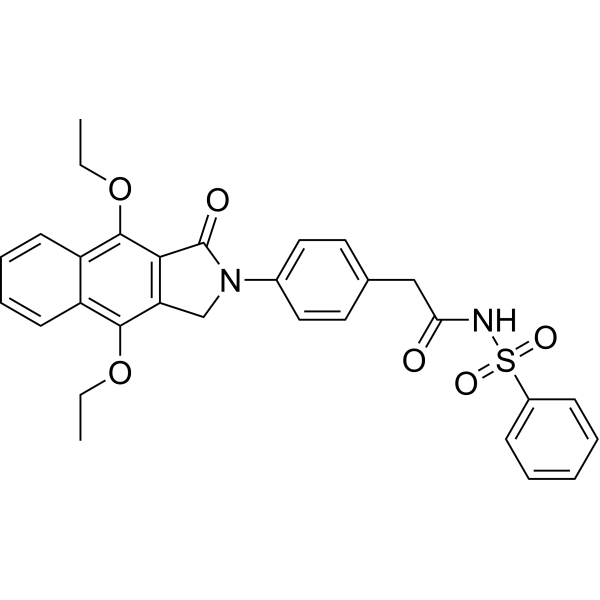
GW627368 (GW627368X) is a novel, potent and selective competitive antagonist of prostanoid EP4 receptor with additional human TP receptor affinity, with pKi values of 7.0 and 6.8 for human prostanoid EP4 and TP receptors respectively.
Nos produits utilisent uniquement pour la recherche. Nous ne vendons pas aux patients.
- Pureté : 99.95%
- CAS No.: 439288-66-1
- Formule: C30H28N2O6S
- Masse moléculaire:544.62
-
Stockage:Powder -20°C, 3 years , 4°C, 2 years ; In solvent -80°C, 2 years , -20°C, 1 year

To place orders, for customer services and technical support, please contact: MedChemExpress USA
Tel: 609-228-6898 E-mail: [email protected] [email protected]


-
 Activité biologique
-
Chemical Information
-
Solvant et solubilité
- Pureté et documentation
- Références
-
 Help & FAQs


-
HY-18966
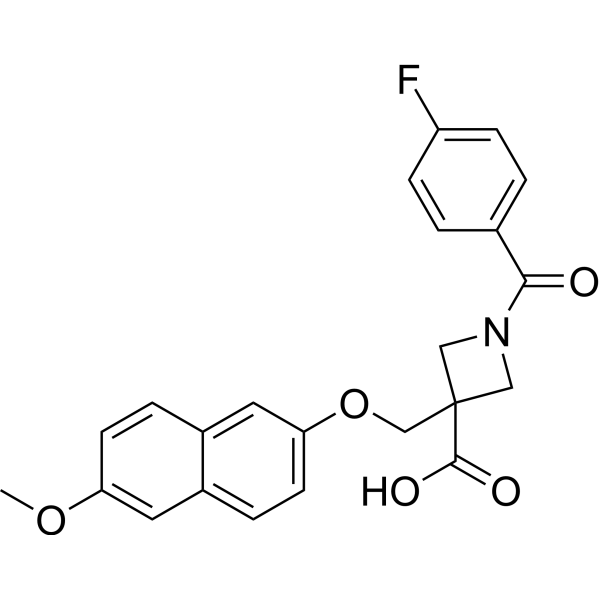
PF-04418948EP2 Receptor Antagonist -
HY-15274
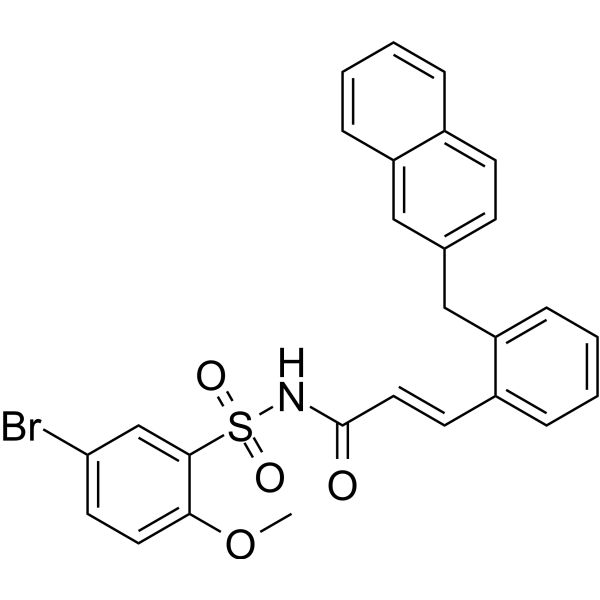
L-798106EP3 Receptor Antagonist -
HY-101952
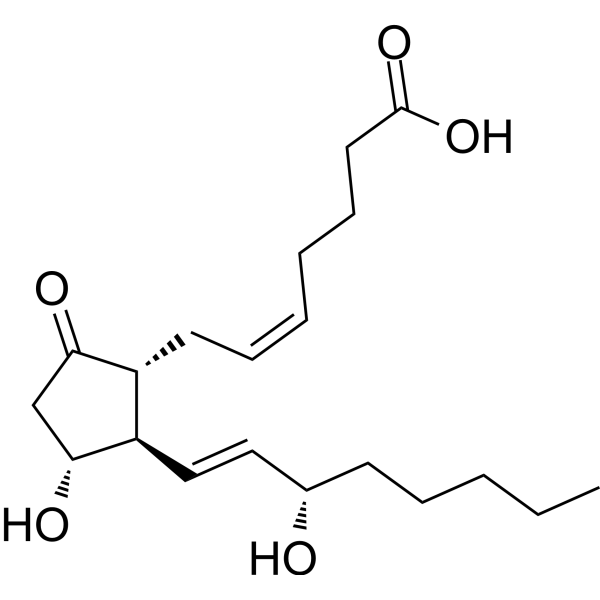
Prostaglandin E2Prostaglandin Receptor Agonist -
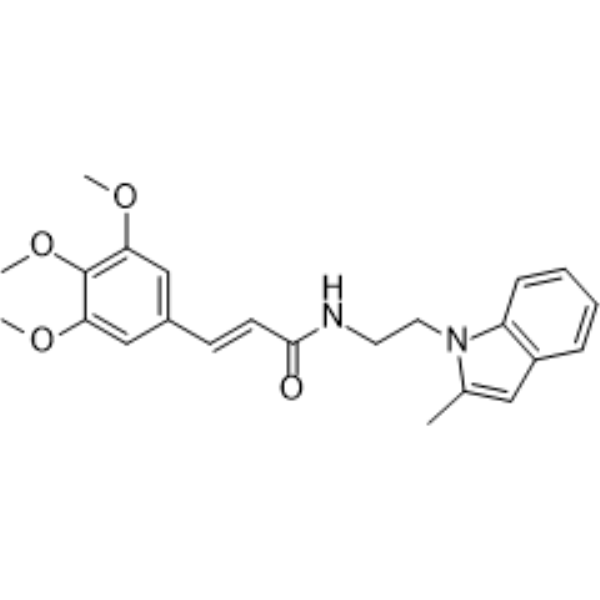
HY-18971
TG4-155EP2 Receptor Antagonist -
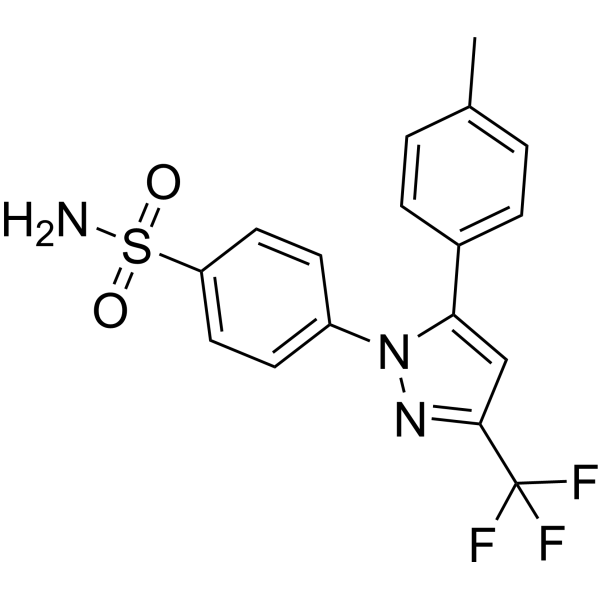
HY-14398
CelecoxibCOX-2inhibitor -
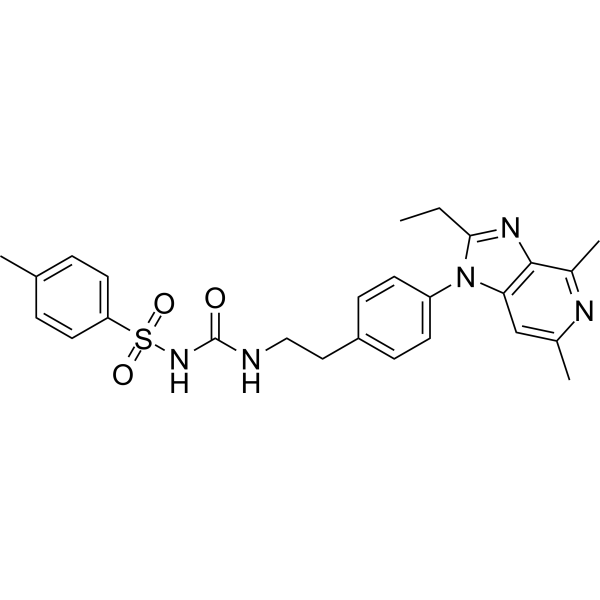
HY-16781
GrapiprantEP4 Receptor Antagonist -
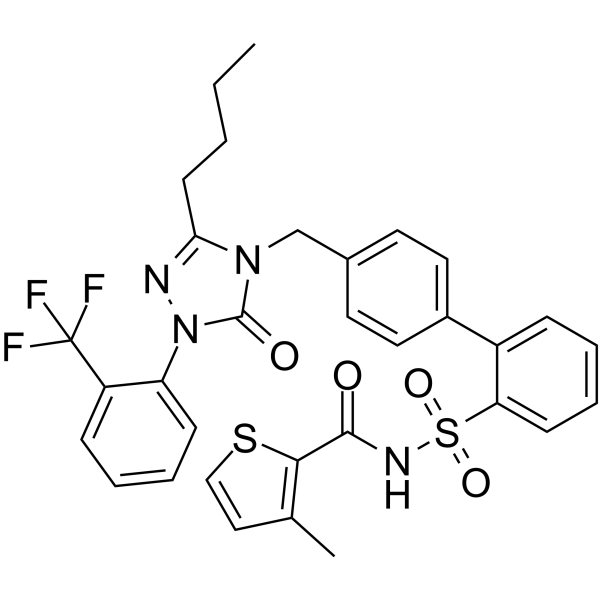
HY-108559
L-161982EP4 Receptor Antagonist -
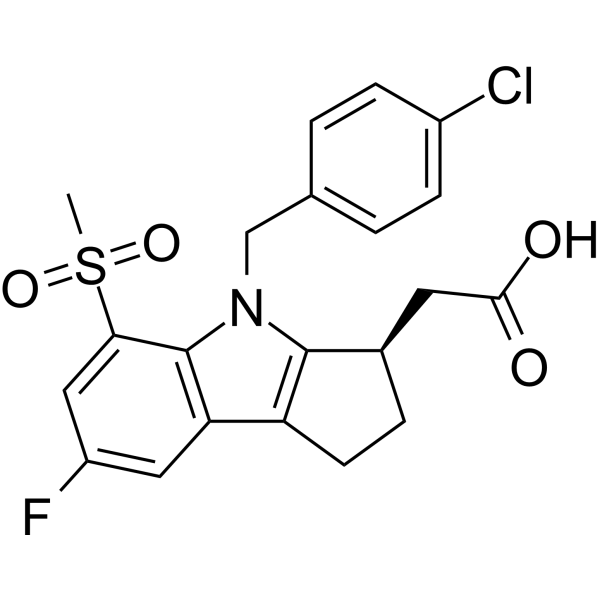
HY-50175
LaropiprantDP Receptor Antagonist -
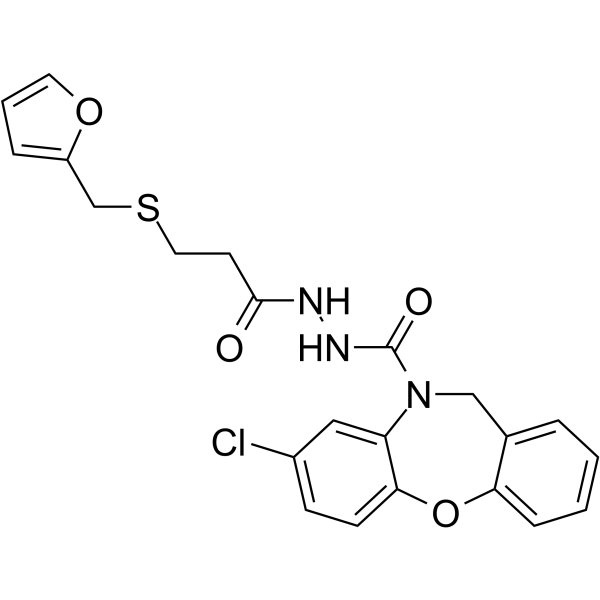
HY-108562
SC-51322EP1 Antagonist -
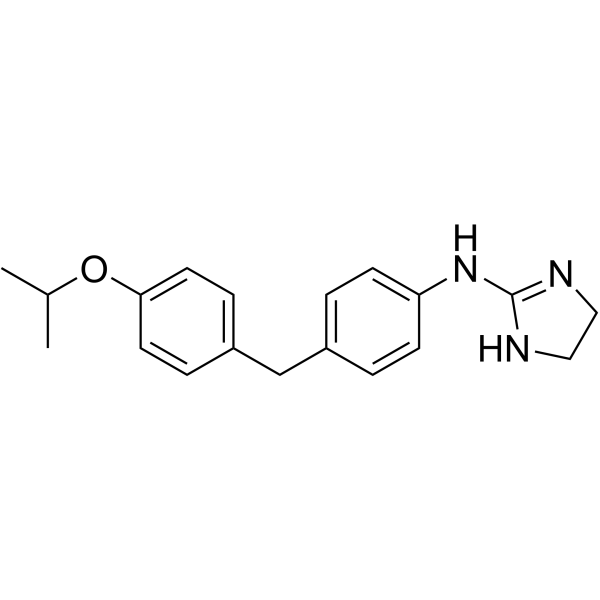
HY-108912
RO1138452Prostaglandin Receptor Antagonist -
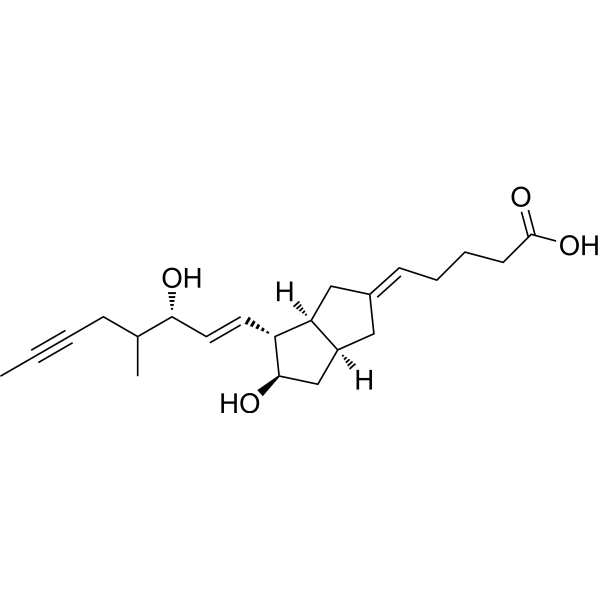
HY-A0096
IloprostPGI2 Analogue -
HY-14870
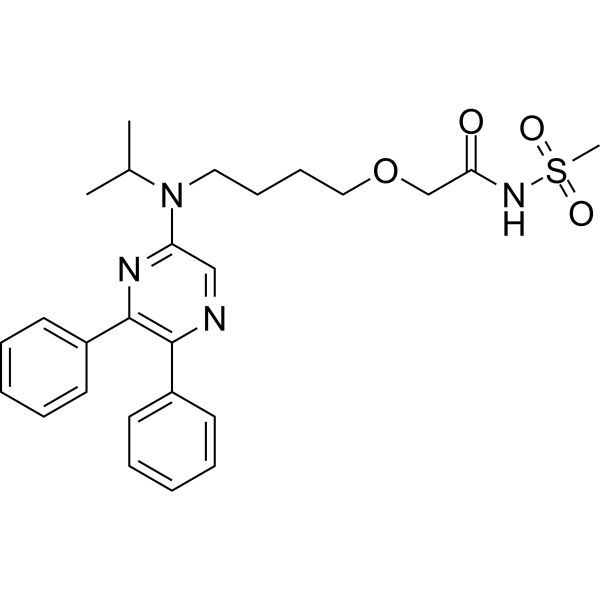
SelexipagProstaglandin Receptor Agonist
Publications Citing Use of MedChemExpress (MCE) GW627368
More- Nat Immunol. 2023 May;24(5):767-779. [Abstract]
- Nat Commun. 2019 Apr 23;10(1):1888. [Abstract]
- J Nanobiotechnology. 2025 Dec 12;23(1):765. [Abstract]
- Arterioscler Thromb Vasc Biol. 2018 May;38(5):1115-1124. [Abstract]
- Stem Cell Res Ther. 2025 Oct 10;16(1):556. [Abstract]
- Int J Mol Sci. 2024 Oct 21;25(20):11307. [Abstract]
- J Cell Physiol. 2018 Nov;233(11):8984-8995. [Abstract]
- Oncol Lett. 2018 Jan;15(1):552-558. [Abstract]
- Research Square Preprint. 2021 Jul.
 Customer Validation & Images

-
WB
-
WB


Activité biologique
Description
IC50 & Target
|
EP |
In Vitro
GW627368 (GW627368X) appears to bind to human prostanoid TP receptors but not the TP receptors of other species[1].
?
GW627368 (GW627368X) (10 μM) produces 100% inhibition of U-46619 (EC100)-induced aggregation (approximate pA2 approximately 7.0) in human washed platelets[1].
?
GW627368 (GW627368X) is devoid of agonist activity and actually produced a significant and concentration-related reduction in basal cAMP levels with pIC50 value of 6.3[1].
?
GW627368 (GW627368X) induces inhibition of proliferation and invasion of human SUM149 IBC tumor cells beginning at 0.1 μM, with inhibition of proliferation and invasion of MDA-MB-231 non-IBC cells at higher concentrations[2].
MedChemExpress (MCE) has not independently confirmed the accuracy of these methods. They are for reference only. .
In Vivo
MedChemExpress (MCE) has not independently confirmed the accuracy of these methods. They are for reference only.
-
Animal Model:6-8 weeks Swiss albino mice[3]
-
Dosage:0 mg/kg, 5 mg/kg, 10 mg/kg, 15 mg/kg, 15 mg/kg
-
Administration:Oral administration, every alternate day for 28 days
-
Result:Displayed anti-tumor and anti-proliferative potential in sarcoma 180 bearing mice.


Chemical Information
-
CAS No. 439288-66-1
-
Appearance Solid
-
Masse moléculaire 544.62
-
Formule C30H28N2O6S
-
Color White to off-white
-
SMILES
O=C(NS(=O)(C1=CC=CC=C1)=O)CC2=CC=C(N(CC3=C4C(OCC)=C(C=CC=C5)C5=C3OCC)C4=O)C=C2
-
Livraison
Room temperature in continental US; may vary elsewhere.
-
Stockage
Powder -20°C 3 years 4°C 2 years In solvent -80°C 2 years -20°C 1 year


Publications (9)
-
Journal Impact Factor
-
Most Recent
-
Nat Immunol
Neutrophils and emergency granulopoiesis drive immune suppression and an extreme response endotype during sepsis. [Abstract]2023 May;24(5):767-779. PMID: 37095375 -
Nat Commun
The cyclooxygenase-1/mPGES-1/endothelial prostaglandin EP4 receptor pathway constrains myocardial ischemia-reperfusion injury. [Abstract]2019 Apr 23;10(1):1888. PMID: 31015404 -
J Nanobiotechnology
Targeting pre-metastatic niche with inhalable dendritic cell vesicles to prevent breast cancer lung metastasis. [Abstract]2025 Dec 12;23(1):765. PMID: 41388289 -
Arterioscler Thromb Vasc Biol
Protective Role of mPGES-1 (Microsomal Prostaglandin E Synthase-1)-Derived PGE2 (Prostaglandin E2) and the Endothelial EP4 (Prostaglandin E Receptor) in Vascular Responses to Injury. [Abstract]2018 May;38(5):1115-1124. PMID: 29599139 -
Stem Cell Res Ther
Size-dependent immunomodulation by MSC secretome: soluble factors target innate pathways, components larger than 100 kDa regulate T cell proliferation. [Abstract]2025 Oct 10;16(1):556. PMID: 41074052 -
Int J Mol Sci
Proliferative Diabetic Retinopathy Microenvironment Drives Microglial Polarization and Promotes Angiogenesis and Fibrosis via Cyclooxygenase-2/Prostaglandin E2 Signaling. [Abstract]2024 Oct 21;25(20):11307. PMID: 39457089 -
J Cell Physiol
Promotion of the prehierarchical follicle growth by postovulatory follicles involving PGE2 -EP2 signaling in chickens. [Abstract]2018 Nov;233(11):8984-8995. PMID: 29923198
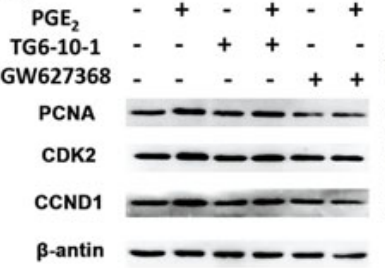
GW627368 purchased from MedChemExpress. Usage Cited in: J Cell Physiol. 2018 Nov;233(11):8984-8995. [Abstract]
Small white follicles (SWFs) are treated with TG6-10-1 or GW627368 and WB are used and gray analysis of PCNA, CDK2, and CCND1.
-
Oncol Lett
Activation of PGE2/EP2 and PGE2/EP4 signaling pathways positively regulate the level of PD-1 in infiltrating CD8+ T cells in patients with lung cancer. [Abstract]2018 Jan;15(1):552-558. PMID: 29285200
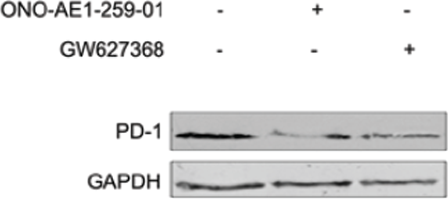
GW627368 purchased from MedChemExpress. Usage Cited in: Oncol Lett. 2018 Jan;15(1):552-558. [Abstract]
The level of PD 1 expression is subsequently detected by western blot analysis. Data is presented as the mean±standard deviation. P<0.05. The control group is treated with PGE2, but not with an antagonist.
-


Solvant et solubilité
In Vitro:
DMSO : 100 mg/mL (183.61 mM; Need ultrasonic; Hygroscopic DMSO has a significant impact on the solubility of product, please use newly opened DMSO)
Please refer to the solubility information to select the appropriate solvent. Once prepared, please aliquot and store the solution to prevent product inactivation from repeated freeze-thaw cycles.
Storage method and period of stock solution: -80°C, 2 years; -20°C, 1 year. When stored at -80°C, please use it within 2 years. When stored at -20°C, please use it within 1 year.
Please refer to the solubility information to select the appropriate solvent. Once prepared, please aliquot and store the solution to prevent product inactivation from repeated freeze-thaw cycles.
Storage method and period of stock solution: -80°C, 2 years; -20°C, 1 year. When stored at -80°C, please use it within 2 years. When stored at -20°C, please use it within 1 year.
Concentration (start) × Volume (start) = Concentration (final) × Volume (final)
In Vivo:
Select the appropriate dissolution method based on your experimental animal and administration route.
- For the following dissolution methods, please ensure to first prepare a clear stock solution using an In Vitro approach and then sequentially add co-solvents:
- To ensure reliable experimental results, the clarified stock solution can be appropriately stored based on storage conditions. As for the working solution for In Vivo experiments, it is recommended to prepare freshly and use it on the same day.
- The percentages shown for the solvents indicate their volumetric ratio in the final prepared solution. If precipitation or phase separation occurs during preparation, heat and/or sonication can be used to aid dissolution.
Add each solvent one by one: 10% DMSO 40% PEG300 5% Tween-80 45% Saline
Solubility: ≥ 2.5 mg/mL (4.59 mM); Clear solution
This protocol yields a clear solution of ≥ 2.5 mg/mL (saturation unknown).
Taking 1 mL working solution as an example, add 100 μL DMSO stock solution (25.0 mg/mL) to 400 μL PEG300, and mix evenly; then add 50 μL Tween-80 and mix evenly; then add 450 μL Saline to adjust the volume to 1 mL.
Preparation of Saline: Dissolve 0.9 g sodium chloride in ddH₂O and dilute to 100 mL to obtain a clear Saline solution.
In Vivo Dissolution Calculator
Please enter the basic information of animal experiments:
-
-
-
-
Recommended: Prepare an additional quantity of animals to account for potential losses during experiments.
Please enter your animal formula composition:
-
%DMSO +
Recommended: Keep the proportion of DMSO in working solution below 2% if your animal is weak.
-
%+
-
+%Tween-80 + +
-
%Saline +
The co-solvents required include: DMSO, . All of co-solvents are available by MedChemExpress (MCE). , Tween 80. All of co-solvents are available by MedChemExpress (MCE).
Working solution concentration: 0.22 mg/mL
Method for preparing stock solution: mg drug dissolved in μL DMSO. Stock solution concentration: mg/mL.
1. Take μL DMSO stock solution;
2. Add μL .
μL , mix evenly;
3. Then add μL Tween 80, mix evenly;
4. Then add μL
Please ensure that the stock solution in the first step is dissolved to a clear state, and add co-solvents in sequence. You can use ultrasonic heating (ultrasonic cleaner, recommended frequency 20-40 kHz), vortexing, etc. to assist dissolution.


Pureté et documentation
-
Fiche technique (278 KB)
-
SDS (393 KB)
- English - EN (393 KB)
- Français - FR (393 KB)
- Deutsch - DE (393 KB)
- Norwegian - NO (393 KB)
- Español - ES (393 KB)
- Swedish - SV (393 KB)
- Italian - IT (393 KB)
- Korean - KR (393 KB)
- Portuguese - PT (393 KB)
-
Instruction de manipulation (2659 KB)
Références
[1]. Wilson RJ, et al. GW627368X ((N-{2-[4-(4,9-diethoxy-1-oxo-1,3-dihydro-2H-benzo[f]isoindol-2-yl)phenyl]acetyl} benzene sulphonamide): a novel, potent and selective prostanoid EP4 receptor antagonist. Br J Pharmacol. 2006 Jun;148(3):326-39. [Content Brief]
[2]. Robertson FM, et al. Molecular and pharmacological blockade of the EP4 receptor selectively inhibits both proliferation and invasion of human inflammatory breast cancer cells. J Exp Ther Oncol. 2008;7(4):299-312. [Content Brief]
[3]. Parida S, et al. Molecular inhibition of prostaglandin E2 with GW627368X: Therapeutic potential and preclinical safety assessment in mouse sarcoma model. Cancer Biol Ther. 2015;16(6):922-32. [Content Brief]


Complete Stock Solution Preparation Table
Please refer to the solubility information to select the appropriate solvent. Once prepared, please aliquot and store the solution to prevent product inactivation from repeated freeze-thaw cycles.
Storage method and period of stock solution: -80°C, 2 years; -20°C, 1 year. When stored at -80°C, please use it within 2 years. When stored at -20°C, please use it within 1 year.
| Optional Solvent | Concentration Solvent Mass | 1 mg | 5 mg | 10 mg | 25 mg |
|---|---|---|---|---|---|
| DMSO | 1 mM | 1.8361 mL | 9.1807 mL | 18.3614 mL | 45.9036 mL |
| 5 mM | 0.3672 mL | 1.8361 mL | 3.6723 mL | 9.1807 mL | |
| 10 mM | 0.1836 mL | 0.9181 mL | 1.8361 mL | 4.5904 mL | |
| 15 mM | 0.1224 mL | 0.6120 mL | 1.2241 mL | 3.0602 mL | |
| 20 mM | 0.0918 mL | 0.4590 mL | 0.9181 mL | 2.2952 mL | |
| 25 mM | 0.0734 mL | 0.3672 mL | 0.7345 mL | 1.8361 mL | |
| 30 mM | 0.0612 mL | 0.3060 mL | 0.6120 mL | 1.5301 mL | |
| 40 mM | 0.0459 mL | 0.2295 mL | 0.4590 mL | 1.1476 mL | |
| 50 mM | 0.0367 mL | 0.1836 mL | 0.3672 mL | 0.9181 mL | |
| 60 mM | 0.0306 mL | 0.1530 mL | 0.3060 mL | 0.7651 mL | |
| 80 mM | 0.0230 mL | 0.1148 mL | 0.2295 mL | 0.5738 mL | |
| 100 mM | 0.0184 mL | 0.0918 mL | 0.1836 mL | 0.4590 mL |


GW627368 Related Classifications
HY-16963 Related Classifications
 Powered by Bioz