



Efmirenpase alfa
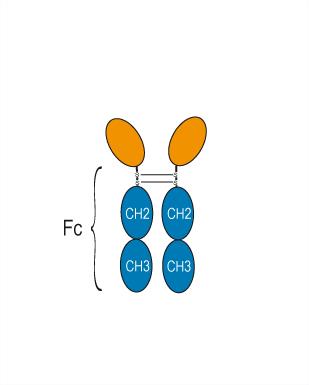
Efmirenpase alfa is an Fc-ENPP1 fusion protein (human IgG1 Fc domain linked to a modified human ENPP1). Efmirenpase alfa has prolonged half-life and enhanced receptor affinity compared with native human ENPP1. Efmirenpase alfa can be used as an enzyme replacement therapy for ENPP1 deficiency such as arterial calcification and hypophosphatemic rickets research.
Nos produits utilisent uniquement pour la recherche. Nous ne vendons pas aux patients.
- CAS No.: 2770242-54-9
-
Stockage:
Please store the product under the recommended conditions in the Certificate of Analysis.


To place orders, for customer services and technical support, please contact: MedChemExpress USA
Tel: 609-228-6898 E-mail: [email protected] [email protected]


-
 Activité biologique
-
Chemical Information
- Protocole
- Pureté et documentation
- Références
-
 Help & FAQs




Activité biologique
Description
Isotype
human E-NPP1 fused via peptide linker to a human immunoglobulin G1 (IgG1) Fc fragment
Species Reactivity
Human
Essai clinique
| NCT Number | Sponsor | Condition | Start Date |
Phase

|
|---|---|---|---|---|
| NCT01329991 | Plexxikon| | 2011-05 | PHASE1 |
Conjugated
Unconjugated
Reconsititution
The product can be reconstituted/diluted with sterile PBS or saline.
Format
-
FPIA_[PROTEIN]2-FC
Application
ELISA, FACS, Functional assay


Chemical Information
-
CAS No. 2770242-54-9
-
SMILES
N/A
-
Synonyms
INZ-701
-
Formulation
Please refer to the lot-specific COA for specific buffer information.
-
Stockage
Please store the product under the recommended conditions in the Certificate of Analysis.

Protocole
-
Protocol for Pharmacokinetic Study
Pharmacokinetic studies quantify how an organism handles a drug over time through absorption, distribution, metabolism, and excretion, and the core experimental readout is the concentration-time profile of parent drug and, when relevant, metabolites in biological matrices such as plasma, whole blood, urine, bile, or tissue. Pharmacokinetic analysis links dose, route, exposure, clearance, half-life, distribution, bioavailability, and systemic exposure to drug efficacy and toxicity hypotheses rather than measuring a signaling pathway directly. The literature links pharmacokinetics to drug-development phenotypes by showing that drug metabolism and pharmacokinetics influence compound progression, exposure-response interpretation, safety margins, dosing strategy, and failure risk during discovery and development. DMPK science contributes to compound optimization by integrating physicochemical properties, in vitro metabolism, transporter behavior, in vivo exposure, and pharmacodynamic contex


Pureté et documentation
Références

Calculators
Concentration (start) × Volume (start) = Concentration (final) × Volume (final)


Efmirenpase alfa Related Classifications
HY-P991677 Related Classifications
 Powered by Bioz