



138797-71-4
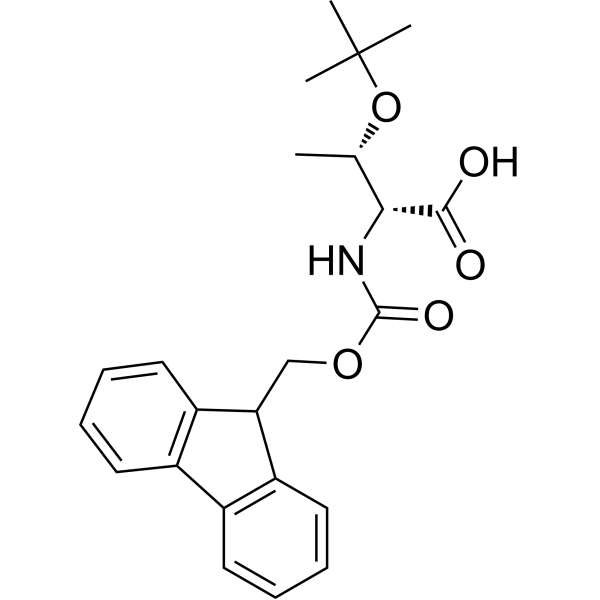
138797-71-4
Chemical Structure
Fmoc-D-Thr(tBu)-OH
- CAS No.: 138797-71-4
- Formula:C23H27NO5
- Molecular Weight:397.46
IUPAC Name: N-(((9H-fluoren-9-yl)methoxy)carbonyl)-O-(tert-butyl)-D-threonine
InChIKey: LZOLWEQBVPVDPR-VBKZILBWSA-N
SMILES: C[C@@H]([C@@H](NC(OCC1C2=C(C=CC=C2)C3=C1C=CC=C3)=O)C(O)=O)OC(C)(C)C
Biological Activity: Fmoc-D-Thr(tBu)-OH is a threonine derivative and an Fmoc-protected D-threonine tert-butyl ether amino acid building block. Fmoc-D-Thr(tBu)-OH is used in organic synthesis-related research[1][2][3].
| Cat. No. | Product Name | Purity | Description | Pricing | |||||||||||||||||||
|---|---|---|---|---|---|---|---|---|---|---|---|---|---|---|---|---|---|---|---|---|---|---|---|
|
|
Fmoc-D-Thr(tBu)-OH | 99.88% | Fmoc-D-Thr(tBu)-OH is a threonine derivative and an Fmoc-protected D-threonine tert-butyl ether amino acid building block. Fmoc-D-Thr(tBu)-OH is used in organic synthesis-related research. | ||||||||||||||||||||
|
loading...
/
|
|||||||||||||||||||||||
Structural Analogs
-
Similarity Score 1.00
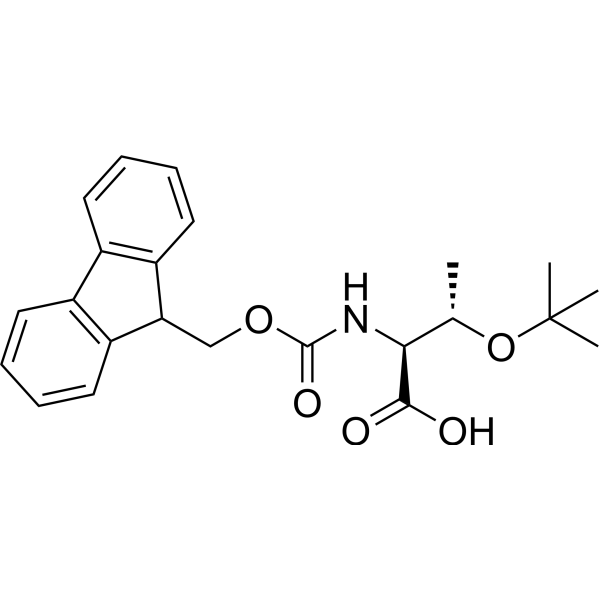 HY-W006923O-(tert-Butyl)-N-Fmoc-L-allothreonine
-
Similarity Score 1.00
 HY-W007706RFmoc-Thr(tBu)-OH (Standard)
-
Similarity Score 1.00
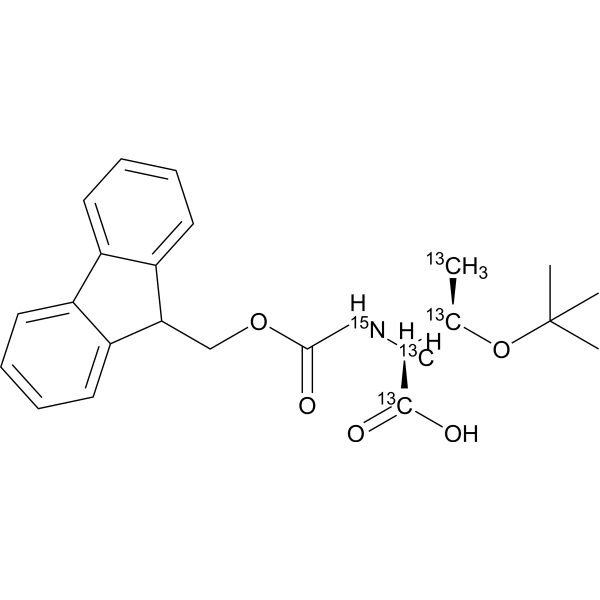 HY-W007706SFmoc-Thr(tBu)-OH-13C4,15N
-
Similarity Score 1.00
 HY-W007706S1Fmoc-Thr(tBu)-OH-15N
-
Similarity Score 1.00
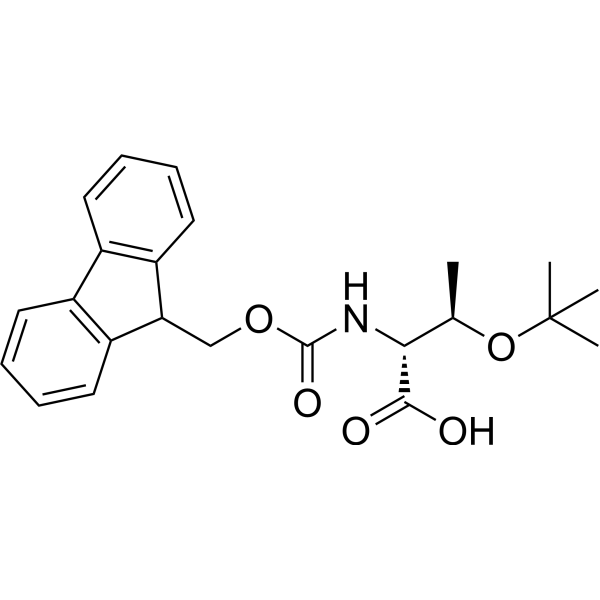 HY-W048700FMOC-D-Allo-THR(TBU)-OH
-
Similarity Score 0.86
 HY-159135Fmoc-Thr(OtBu)-OtBu
-
Similarity Score 0.86
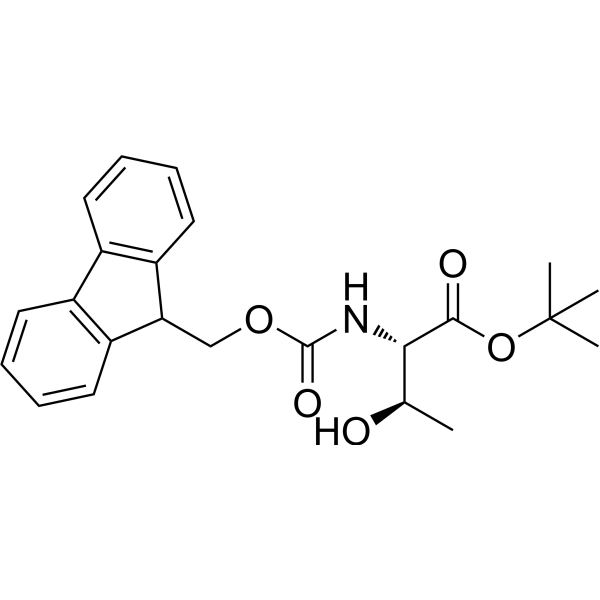 HY-22296Fmoc-Thr-OBu-t
-
Similarity Score 0.84
 HY-P4613Fmoc-D-allo-Thr-OH
-
Similarity Score 0.84
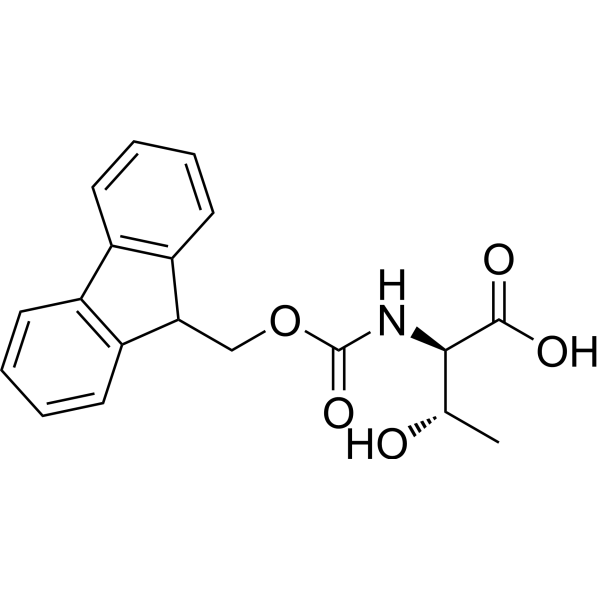 HY-W011186(((9H-Fluoren-9-yl)methoxy)carbonyl)-D-threonine
-

Explore the MedChemAI to find more analogs


References
- [1]. Pech A, et al. A thermostable d-polymerase for mirror-image PCR. Nucleic acids research. 2017 Apr 20;45(7):3997-4005.
- [2]. Laskowska AK, et al. Opioid Tripeptides Hybridized with trans-1-Cinnamylpiperazine as Proliferation Inhibitors of Pancreatic Cancer Cells in Two- and Three-Dimensional in vitro Models. ChemMedChem. 2017 Oct 09;12(19):1637-1644.
- [3]. Gardiner J, et al. The Enantiomer of Octreotate Binds to All Five Somatostatin Receptors with Almost Equal Micromolar Affinity – A Comparison with SANDOSTATIN®. Chemistry & Biodiversity, 2008.



