



452782-06-8

Chemical Structure
APP-018
Synonym(s): D-4F
- CAS No.: 452782-06-8
- Formula:C114H156N24O28
- Molecular Weight:2310.60
SMILES: C([C@H](C(N[C@H](CC1=CC=CC=C1)C(N[C@@H](C(N[C@@H](C(N[C@@H](C(N[C@H](CC2=CC=C(O)C=C2)C(N[C@@H](C(N[C@@H](C(N[C@@H](C(N[C@@H](C(N[C@@H](C(N[C@@H](C(N[C@H](CC3=CC=CC=C3)C(N[C@@H](C(N[C@@H](C(N[C@@H](C(N[C@H](CC4=CC=CC=C4)C(N)=O)=O)C)=O)CCC(O)=O)=O)CCCCN)=O)=O)CCCCN)=O)CCC(O)=O)=O)C)=O)C(C)C)=O)CCCCN)=O)CC(O)=O)=O)=O)CC5=CC=CC=C5)=O)C)=O)CCCCN)=O)=O)NC([C@@H](CC(O)=O)NC(C)=O)=O)C=6C=7C(NC6)=CC=CC7
Biological Activity: APP-018 (D-4F) is an orally active ApoA-I mimetic peptide. APP-018 enhances the anti-inflammatory activity of endothelial cells. APP-018 can be used for research on inflammation and cardiovascular diseases[1][2][3][4][5][6][7][8][9][10].
| Cat. No. | Product Name | Purity | Description | Pricing | |||||||||||||||||||
|---|---|---|---|---|---|---|---|---|---|---|---|---|---|---|---|---|---|---|---|---|---|---|---|
|
|
APP-018 | 99.52% | APP-018 (D-4F) is an orally active ApoA-I mimetic peptide. APP-018 enhances the anti-inflammatory activity of endothelial cells. APP-018 can be used for research on inflammation and cardiovascular diseases. | ||||||||||||||||||||
|
loading...
/
|
|||||||||||||||||||||||
-
Similarity Score 1.00
 HY-P6365AAPL180
-
Similarity Score 0.79
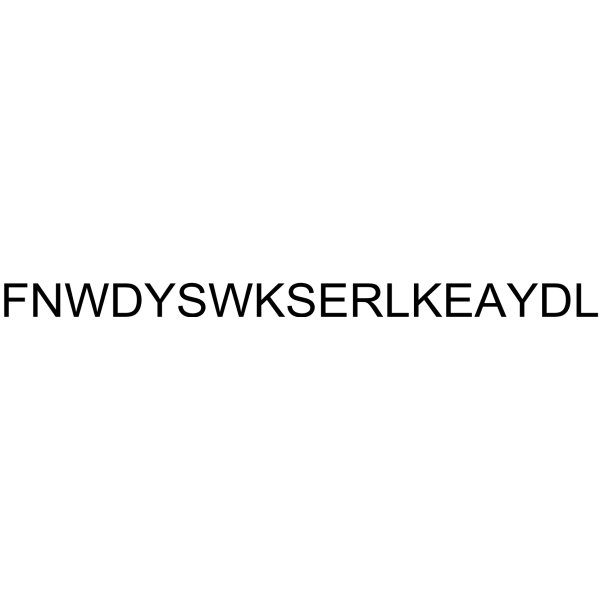 HY-P2474Human PD-L1 inhibitor I
-
Similarity Score 0.75
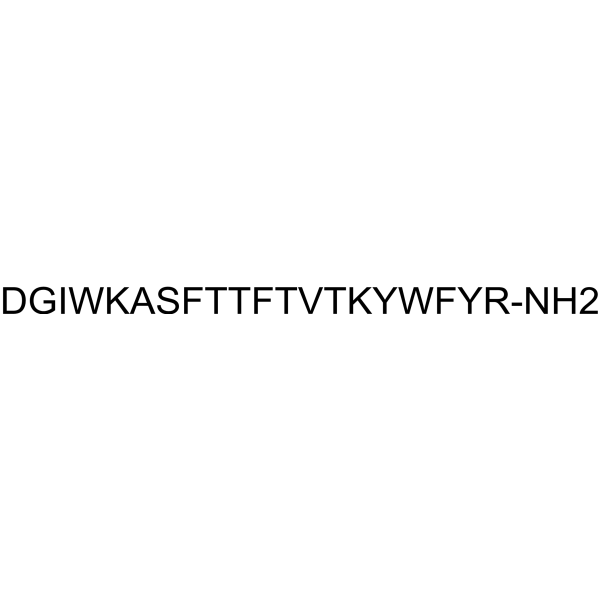 HY-P5904Caveolin-1 (82-101) amide (human, mouse, rat)
-
Similarity Score 0.74
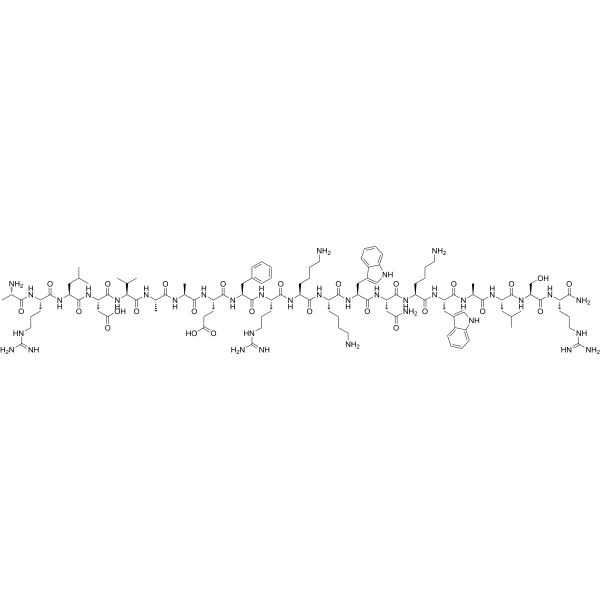 HY-P5876Proadrenomedullin (N-20) (bovine, porcine)
-
Similarity Score 0.74
 HY-P4090CPP2
-
Similarity Score 0.74
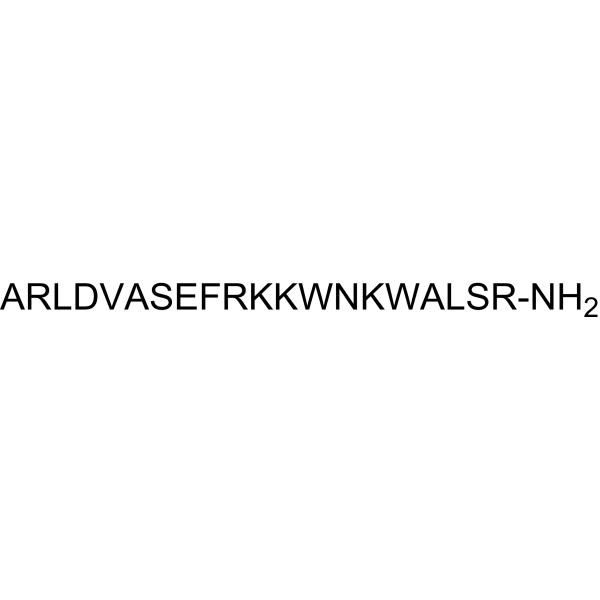 HY-P1831Proadrenomedullin (1-20), human
-
Similarity Score 0.73
 HY-P11353HA2 peptide
-
Similarity Score 0.73
 HY-P10653C5A
-
Similarity Score 0.72
 HY-P11239Gosteganan
-

Explore the MedChemAI to find more analogs


References
- [1]. Smith JD, et al. Apolipoprotein A-I and its mimetics for the treatment of atherosclerosis. Current opinion in investigational drugs (London, England : 2000). 2010 Sep;11(9):989-96.
- [2]. Bloedon LT, et al. Safety, pharmacokinetics, and pharmacodynamics of oral apoA-I mimetic peptide D-4F in high-risk cardiovascular patients. Journal of lipid research. 2008 Jun;49(6):1344-52. [Content Brief]
- [3]. Kruger AL, et al. D-4F induces heme oxygenase-1 and extracellular superoxide dismutase, decreases endothelial cell sloughing, and improves vascular reactivity in rat model of diabetes. Circulation. 2005 Jun 14;111(23):3126-34.
- [4]. Navab M, et al. Oral D-4F causes formation of pre-beta high-density lipoprotein and improves high-density lipoprotein-mediated cholesterol efflux and reverse cholesterol transport from macrophages in apolipoprotein E-null mice. Circulation. 2004 Jun 29;109(25):3215-20.
- [5]. Van Lenten BJ, et al. D-4F, an apolipoprotein A-I mimetic peptide, inhibits the inflammatory response induced by influenza A infection of human type II pneumocytes. Circulation. 2004 Nov 16;110(20):3252-8.
- [6]. Nandedkar SD, et al. D-4F, an apoA-1 mimetic, decreases airway hyperresponsiveness, inflammation, and oxidative stress in a murine model of asthma. J Lipid Res. 2011 Mar;52(3):499-508.
- [7]. Guo Y, et al. D-4F Ameliorates Contrast Media-Induced Oxidative Injuries in Endothelial Cells via the AMPK/PKC Pathway. Front Pharmacol. 2021 Feb 15;11:556074.
- [8]. Liu D, et al. The apolipoprotein A-I mimetic peptide, D-4F, alleviates ox-LDL-induced oxidative stress and promotes endothelial repair through the eNOS/HO-1 pathway. J Mol Cell Cardiol. 2017 Apr;105:77-88.
- [9]. Van Lenten BJ, et al. Influenza infection promotes macrophage traffic into arteries of mice that is prevented by D-4F, an apolipoprotein A-I mimetic peptide. Circulation. 2002 Aug 27;106(9):1127-32.
- [10]. Ou J, et al. Effects of D-4F on vasodilation and vessel wall thickness in hypercholesterolemic LDL receptor-null and LDL receptor/apolipoprotein A-I double-knockout mice on Western diet. Circulation research. 2005 Nov 25;97(11):1190-7.



