



Atractylenolide II
Based on 3 publication(s) in Google Scholar
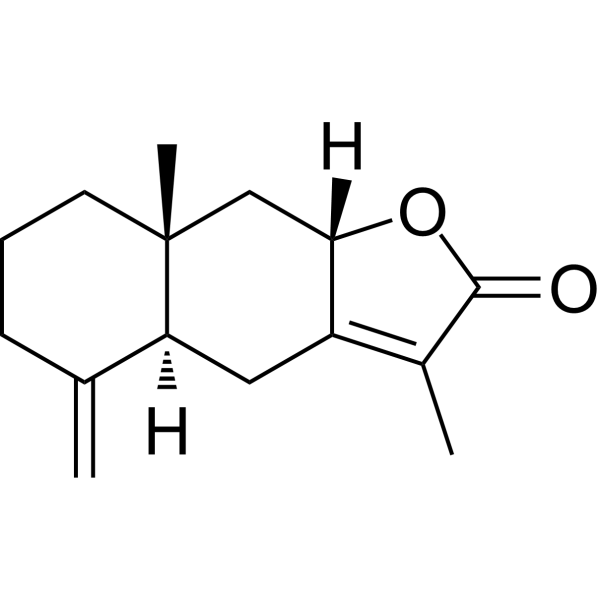
Atractylenolide II (Asterolide) is a sesquiterpenoid compound. Atractylenolide II can induce G1 phase cell cycle arrest and apoptosis in B16 melanoma cells. Atractylenolide II is an orally effective anticancer agent that can exert anti-melanoma effects by inhibiting the STAT3 signaling pathway. In addition, Atractylenolide II has been shown to ameliorate myocardial fibrosis, oxidative stress, and neuroprotective activity.
For research use only. We do not sell to patients.
- Purity: 99.89%
- CAS No.: 73069-14-4
- Formula: C15H20O2
- Molecular Weight:232.32
-
Storage:Powder -20°C, 3 years , 4°C, 2 years ; In solvent -80°C, 2 years , -20°C, 1 year

To place orders, for customer services and technical support, please contact: MedChemExpress USA
Tel: 609-228-6898 E-mail: [email protected] [email protected]


-
 Biological Activity
-
Chemical Information
-
Solvent & Solubility
- Purity & Documentation
- References
-
 Help & FAQs
-

Differentiation Inducing Compound Library
HY-L038
-
Reprogramming Compound Library
HY-L039
-
Oxygen Sensing Compound Library
HY-L045
-
Anti-Cardiovascular Disease Compound Library
HY-L046
-
Medicine Food Homology Compound Library
HY-L055
-
Terpenoids Library
HY-L056
-
Glycolysis Compound Library
HY-L058
-
Pyroptosis Compound Library
HY-L059
-
Cytoskeleton Compound Library
HY-L060
-
Orally Active Compound Library
HY-L061
-
Glutamine Metabolism Compound Library
HY-L064
-
Traditional Chinese Medicine Active Compound Library
HY-L065
-
Neuroprotective Compound Library
HY-L070
-
Anti-Breast Cancer Compound Library
HY-L074
-
Anti-Lung Cancer Compound Library
HY-L075
-
Anti-Pancreatic Cancer Compound Library
HY-L077
-
Anti-Blood Cancer Compound Library
HY-L079
-
Anti-Cancer Metabolism Compound Library
HY-L083
-
Anti-Parkinson's Disease Compound Library
HY-L085
-
Neurodegenerative Disease-related Compound Library
HY-L086
-
Anti-Obesity Compound Library
HY-L087
-
Angiogenesis-Related Compound Library
HY-L088
-
Transcription Factor-Targeted Library
HY-L090
-
Glucose Metabolism Compound Library
HY-L092
-
Anti-Liver Cancer Compound Library
HY-L101
-
Anti-Colorectal Cancer Compound Library
HY-L103
-
Anti-Cancer Natural Product Library
HY-L107
-
Anti-inflammatory Traditional Chinese Medicine Active Compound Library
HY-L114
-
Plant-Sourced Natural Product Library
HY-L115
-
Human Metabolite Library
HY-L123
-
Anti-Prostate Cancer Compound Library
HY-L124
-
Anti-Pulmonary Fibrosis Compound Library
HY-L125
-
Osteogenesis Compound Library
HY-L131
-
Cancer Stem Cells Compound Library
HY-L135
-
Pain-Related Compound Library
HY-L139
-
Membrane Protein-targeted Compound Library
HY-L149
-
Cell Death Library
HY-L162
-
Serine/Threonine Kinase Inhibitor Library
HY-L164
-
Anti-Hematopathy Compound Library
HY-L171
-
Anti-Ovarian Cancer Compound Library
HY-L173
-
Multi-Target Compound Library
HY-L176
-
Bioactive Compound Library Max
HY-L181
-
MCE Bioactive Compound Library
HY-L001V
-
Natural Product Library Plus
HY-L021P
-
Bioactive Compound Library
HY-L001
-
Anti-Gastric Cancer Compound Library
HY-L184
-
Anti-Fibrosis Compound Library
HY-L185
-
Miao Ethnicity Medicine Compound Library
HY-L190
-
Tibetan Medicine Compound Library
HY-L191
-
Protein Kinase Compound Library
HY-L196
-
Non-Alcoholic Fatty Liver Disease (NAFLD) Compound Library
HY-L199
-
RO5 Drug-like Natural Product Library
HY-L200
-
Cell Proliferation Compound Library
HY-L201
-
High-Throughput Bioactive Compound Library
HY-L205
-
High-Throughput Natural Product Library
HY-L206
-
Ancient Chinese Classical Formulas Traditional Chinese Medicine Active Compound Library
HY-L209
-
Mass Spectrometry Human Metabolite Library
HY-L215
-
Diarrhea-Related Traditional Chinese Medicine Active Compound Library
HY-L224
-
Posttranslational Modification Library
HY-L226
-
Mongolian Medicine Compound Library
HY-L238
-
Natural Product Diversity Scaffold Library
HY-L245
-
Tonifying Traditional Chinese Medicine Monomer Compound Library
HY-L246
-
Lactylation Compound Library
HY-L249
-
Mass Spectrometry Natural Product Library
HY-L262
-
Natural Product and Natural Product-Like Compound Library
HY-L021M
-
Apoptosis Compound Library
HY-L003
-
Immunology/Inflammation Compound Library
HY-L007
-
JAK/STAT Compound Library
HY-L008
-
Kinase Inhibitor Library
HY-L009
-
MAPK Compound Library
HY-L010
-
PI3K/Akt/mTOR Compound Library
HY-L015
-
Protein Tyrosine Kinase Compound Library
HY-L016
-
Stem Cell Signaling Compound Library
HY-L017
-
Natural Product Library
HY-L021
-
Anti-Cancer Compound Library
HY-L025
-
Autophagy Compound Library
HY-L029
-
Small Molecule Immuno-Oncology Compound Library
HY-L031
-
Anti-Aging Compound Library
HY-L034


Publications Citing Use of MedChemExpress (MCE) Atractylenolide II
More Customer Validation & Images

-
Cell Proliferation/Viability Assay
-
WB
-
IF
-
Flow Cytometry
-
ELISA


Biological Activity
|
p-STAT3 |
Atractylenolide II (50-100 μM; 48 h) can inhibit the proliferation of B16 cells (IC50: 82.3 μM), increase apoptosis and cause G1 phase cell cycle arrest, affect the expression or activity of cell cycle and apoptosation-related proteins, mainly involved in p38 activation and the inactivation of ERK and Akt[1].
Atractylenolide II (0.1-10 μM; 48 h) has protective effect on SH-SY5Y cells treated with MPP+[2].
Atractylenolide II (20-40 μM; 48 h) shows anti-melanoma effect in B16 and A375 melanoma cells by inhibiting STAT3 signaling pathway[3].
MedChemExpress (MCE) has not independently confirmed the accuracy of these methods. They are for reference only.
-
Cell Line:B16 cells
-
Concentration:50, 75 and 100 μM
-
Incubation Time:48 h
-
Result:Increased the phosphorylation level of p38.
Inhibited the phosphorylation levels of ERK and Akt.
-
Cell Line:B16 and A375 cells
-
Concentration:20 and 40 μM
-
Incubation Time:48 h
-
Result:Reduced protein expression levels of phospho-STAT3, phospho-Src, as well as STAT3-regulated Mcl-1 and Bcl-xL in a dose-dependent manner.
Atractylenolide II (10-60 mg/kg/d; Intraperitoneal injection; 8 weeks) improves myocardial fibrosis and oxidative stress in spontaneously hypertensive rats[4].
MedChemExpress (MCE) has not independently confirmed the accuracy of these methods. They are for reference only.
-
Animal Model:C57/BL6 mice with a B16 xenograft model[3]
-
Dosage:12.5 and 25 mg/kg
-
Administration:Oral gavage (i.g.); 14 days
-
Result:Significantly inhibited tumor growth.
Inhibited the activation/phosphorylation of STAT3 and Src.
-
Animal Model:Spontaneous hypertension rats[4]
-
Dosage:10, 30 and 60 mg/kg/d
-
Administration:Intraperitoneal injection (i.p.); 8 weeks
-
Result:Improved the body weight of spontaneous hypertension rats and enhanced myocardial function in a dose-dependent manner.
Effectively reduced cardiomyocyte apoptosis.
Inhibited the Collagen I, α-SMA, Fibronectin and Vimentin mRNA and protein expression levels.
Ameliorated oxidative stress by improving the activities of SOD and GSH-PX and lowering the contents of H2O2 and MDA, which reached about 80%.


Chemical Information
-
CAS No. 73069-14-4
-
Appearance Solid
-
Molecular Weight 232.32
-
Formula C15H20O2
-
Color White to off-white
-
SMILES
O=C1C(C)=C(C[C@@]23[H])[C@@](C[C@@]3(C)CCCC2=C)([H])O1
-
Synonyms
Asterolide
-
Structure Classification
-
Initial Source
-
Shipping
Room temperature in continental US; may vary elsewhere.
-
Storage
Powder -20°C 3 years 4°C 2 years In solvent -80°C 2 years -20°C 1 year


Publications (3)
-
Journal Impact Factor
-
Most Recent
-
Pharmacol Res
Cardamonin retards progression of autosomal dominant polycystic kidney disease via inhibiting renal cyst growth and interstitial fibrosis. [Abstract]2020 May:155:104751. PMID: 32151678 -
Naunyn Schmiedebergs Arch Pharmacol
Atractylenolide II regulates the proliferation, ferroptosis, and immune escape of hepatocellular carcinoma cells by inactivating the TRAF6/NF-κB pathway. [Abstract]2024 Oct;397(10):7697-7710. PMID: 38709266
Atractylenolide II purchased from MedChemExpress. Usage Cited in: Naunyn Schmiedebergs Arch Pharmacol. 2024 Oct;397(10):7697-7710. [Abstract]
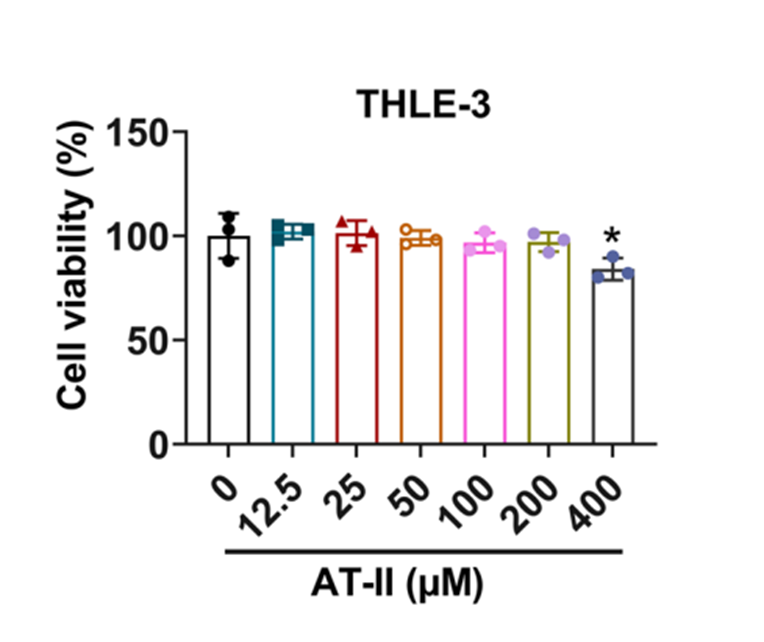
The cell viability of THLE-3 cells treated with 0, 12.5, 25, 50, 100, 200, and 400 μM Atractylenolide II (AT-II) for 48 h was examined by CCK-8 assays.
Atractylenolide II purchased from MedChemExpress. Usage Cited in: Naunyn Schmiedebergs Arch Pharmacol. 2024 Oct;397(10):7697-7710. [Abstract]
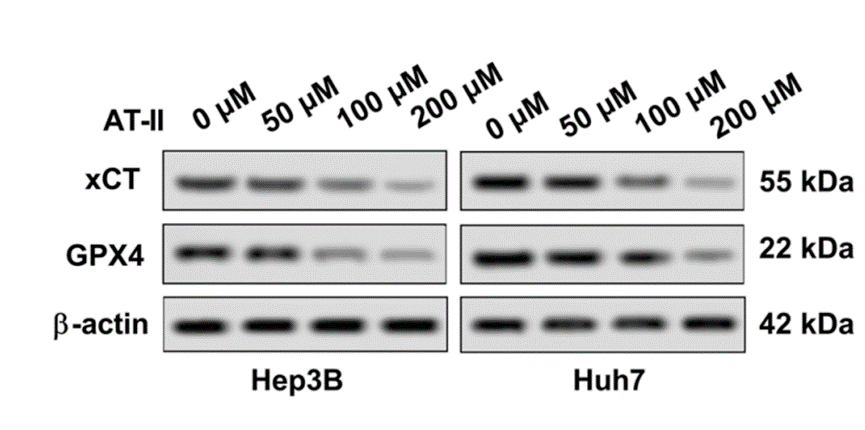
The relative protein expression of xCT and GPX4 was examined by western blot after Hep3B and Huh7 cells were treated with 50, 100, and 200 μM Atractylenolide II (AT-II) for 48 h.
Atractylenolide II purchased from MedChemExpress. Usage Cited in: Naunyn Schmiedebergs Arch Pharmacol. 2024 Oct;397(10):7697-7710. [Abstract]
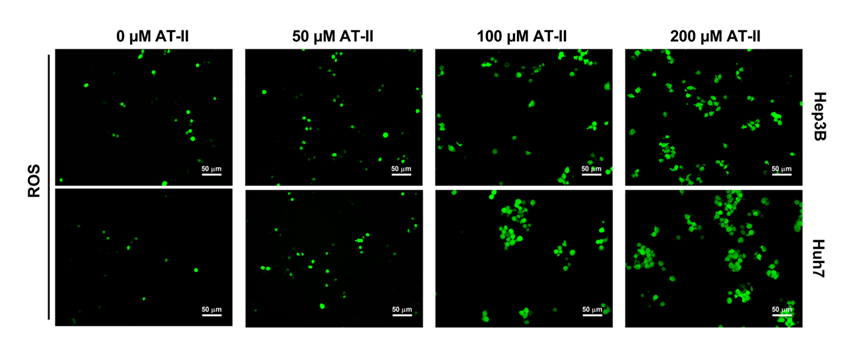
The relative lipid ROS level was examined after Hep3B and Huh7 cells were incubated with 50, 100, and 200 μM Atractylenolide II (AT-II) for 48 h.
Atractylenolide II purchased from MedChemExpress. Usage Cited in: Naunyn Schmiedebergs Arch Pharmacol. 2024 Oct;397(10):7697-7710. [Abstract]
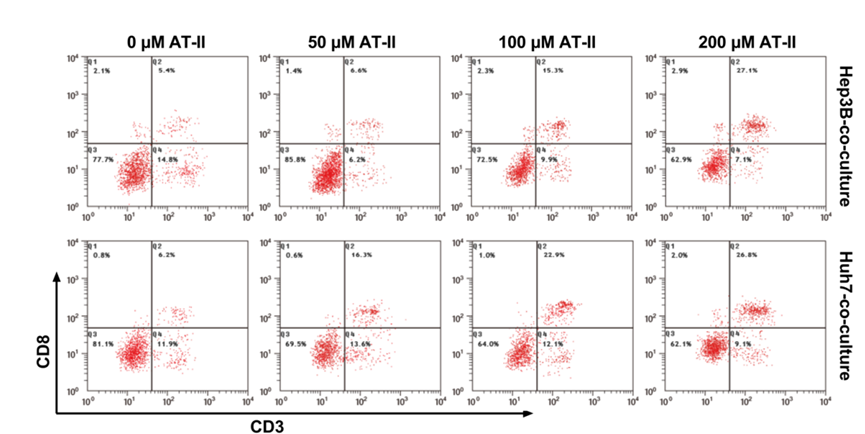
The percent of CD8+ T cells was detected by fow cytometry incubated with 50, 100, and 200 μM Atractylenolide II (AT-II) for 48 h.
Atractylenolide II purchased from MedChemExpress. Usage Cited in: Naunyn Schmiedebergs Arch Pharmacol. 2024 Oct;397(10):7697-7710. [Abstract]
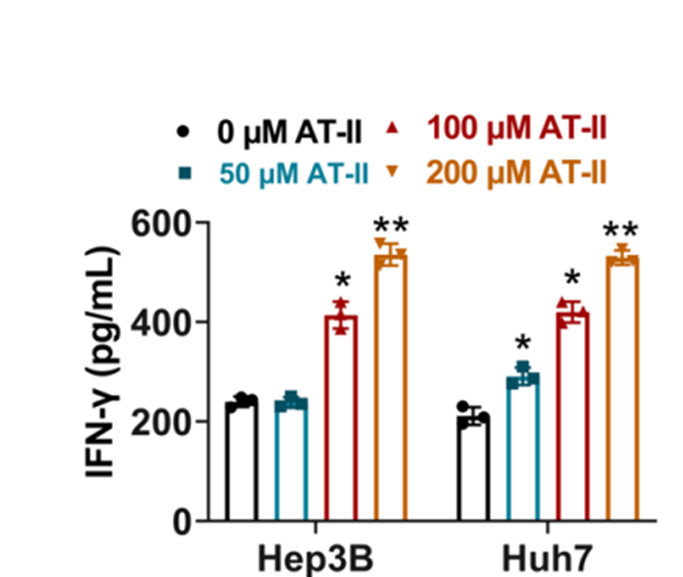
The concentrations of IFN-γ were measured by ELISA incubated with 50, 100, and 200 μM Atractylenolide II (AT-II) for 48 h.
-


Solvent & Solubility
DMSO : 100 mg/mL (430.44 mM; Need ultrasonic; Hygroscopic DMSO has a significant impact on the solubility of product, please use newly opened DMSO)
Please refer to the solubility information to select the appropriate solvent. Once prepared, please aliquot and store the solution to prevent product inactivation from repeated freeze-thaw cycles.
Storage method and period of stock solution: -80°C, 2 years; -20°C, 1 year. When stored at -80°C, please use it within 2 years. When stored at -20°C, please use it within 1 year.
Please refer to the solubility information to select the appropriate solvent. Once prepared, please aliquot and store the solution to prevent product inactivation from repeated freeze-thaw cycles.
Storage method and period of stock solution: -80°C, 2 years; -20°C, 1 year. When stored at -80°C, please use it within 2 years. When stored at -20°C, please use it within 1 year.
Concentration (start) × Volume (start) = Concentration (final) × Volume (final)
Select the appropriate dissolution method based on your experimental animal and administration route.
- For the following dissolution methods, please ensure to first prepare a clear stock solution using an In Vitro approach and then sequentially add co-solvents:
- To ensure reliable experimental results, the clarified stock solution can be appropriately stored based on storage conditions. As for the working solution for In Vivo experiments, it is recommended to prepare freshly and use it on the same day.
- The percentages shown for the solvents indicate their volumetric ratio in the final prepared solution. If precipitation or phase separation occurs during preparation, heat and/or sonication can be used to aid dissolution.
Add each solvent one by one: 10% DMSO 40% PEG300 5% Tween-80 45% Saline
Solubility: ≥ 2.5 mg/mL (10.76 mM); Clear solution
This protocol yields a clear solution of ≥ 2.5 mg/mL (saturation unknown).
Taking 1 mL working solution as an example, add 100 μL DMSO stock solution (25.0 mg/mL) to 400 μL PEG300, and mix evenly; then add 50 μL Tween-80 and mix evenly; then add 450 μL Saline to adjust the volume to 1 mL.
Preparation of Saline: Dissolve 0.9 g sodium chloride in ddH₂O and dilute to 100 mL to obtain a clear Saline solution.
Add each solvent one by one: 10% DMSO 90% (20% SBE-β-CD in Saline)
Solubility: ≥ 2.5 mg/mL (10.76 mM); Clear solution
This protocol yields a clear solution of ≥ 2.5 mg/mL (saturation unknown).
Taking 1 mL working solution as an example, add 100 μL DMSO stock solution (25.0 mg/mL) to 900 μL 20% SBE-β-CD in Saline, and mix evenly.
Preparation of 20% SBE-β-CD in Saline (4°C, storage for one week): 2 g SBE-β-CD powder is dissolved in 10 mL Saline, completely dissolve until clear.
Please enter the basic information of animal experiments:
-
-
-
-
Recommended: Prepare an additional quantity of animals to account for potential losses during experiments.
Please enter your animal formula composition:
-
%DMSO +
Recommended: Keep the proportion of DMSO in working solution below 2% if your animal is weak.
-
%+
-
+%Tween-80 + +
-
%Saline +
The co-solvents required include: DMSO, . All of co-solvents are available by MedChemExpress (MCE). , Tween 80. All of co-solvents are available by MedChemExpress (MCE).
Working solution concentration: 0.22 mg/mL
Method for preparing stock solution: mg drug dissolved in μL DMSO. Stock solution concentration: mg/mL.
1. Take μL DMSO stock solution;
2. Add μL .
μL , mix evenly;
3. Then add μL Tween 80, mix evenly;
4. Then add μL
Please ensure that the stock solution in the first step is dissolved to a clear state, and add co-solvents in sequence. You can use ultrasonic heating (ultrasonic cleaner, recommended frequency 20-40 kHz), vortexing, etc. to assist dissolution.


Purity & Documentation
-
Data Sheet (281 KB)
-
SDS (252 KB)
- English - EN (252 KB)
- Français - FR (252 KB)
- Deutsch - DE (252 KB)
- Norwegian - NO (252 KB)
- Español - ES (252 KB)
- Swedish - SV (252 KB)
- Italian - IT (252 KB)
- Korean - KR (252 KB)
- Portuguese - PT (252 KB)
-
Handling Instructions (2659 KB)
References
[1]. Ye Y, et al. Atractylenolide II induces G1 cell-cycle arrest and apoptosis in B16 melanoma cells. J Ethnopharmacol. 2011 Jun 14;136(1):279-82. [Content Brief]
[2]. Zhang N, et al. Two new compounds from Atractylodes macrocephala with neuroprotective activity. J Asian Nat Prod Res. 2017 Jan;19(1):35-41. [Content Brief]
[3]. Fu XQ, et al. Inhibition of STAT3 signalling contributes to the antimelanoma action of atractylenolide II. Exp Dermatol. 2014 Nov;23(11):855-7. [Content Brief]
[4]. Song X, et al. Atractylenolide II ameliorates myocardial fibrosis and oxidative stress in spontaneous hypertension rats. Technol Health Care. 2024;32(1):131-142. [Content Brief]


Complete Stock Solution Preparation Table
Please refer to the solubility information to select the appropriate solvent. Once prepared, please aliquot and store the solution to prevent product inactivation from repeated freeze-thaw cycles.
Storage method and period of stock solution: -80°C, 2 years; -20°C, 1 year. When stored at -80°C, please use it within 2 years. When stored at -20°C, please use it within 1 year.
| Optional Solvent | Concentration Solvent Mass | 1 mg | 5 mg | 10 mg | 25 mg |
|---|---|---|---|---|---|
| DMSO | 1 mM | 4.3044 mL | 21.5220 mL | 43.0441 mL | 107.6102 mL |
| 5 mM | 0.8609 mL | 4.3044 mL | 8.6088 mL | 21.5220 mL | |
| 10 mM | 0.4304 mL | 2.1522 mL | 4.3044 mL | 10.7610 mL | |
| 15 mM | 0.2870 mL | 1.4348 mL | 2.8696 mL | 7.1740 mL | |
| 20 mM | 0.2152 mL | 1.0761 mL | 2.1522 mL | 5.3805 mL | |
| 25 mM | 0.1722 mL | 0.8609 mL | 1.7218 mL | 4.3044 mL | |
| 30 mM | 0.1435 mL | 0.7174 mL | 1.4348 mL | 3.5870 mL | |
| 40 mM | 0.1076 mL | 0.5381 mL | 1.0761 mL | 2.6903 mL | |
| 50 mM | 0.0861 mL | 0.4304 mL | 0.8609 mL | 2.1522 mL | |
| 60 mM | 0.0717 mL | 0.3587 mL | 0.7174 mL | 1.7935 mL | |
| 80 mM | 0.0538 mL | 0.2690 mL | 0.5381 mL | 1.3451 mL | |
| 100 mM | 0.0430 mL | 0.2152 mL | 0.4304 mL | 1.0761 mL |


Atractylenolide II Related Classifications
HY-N0202 Related Classifications
 Powered by Bioz