



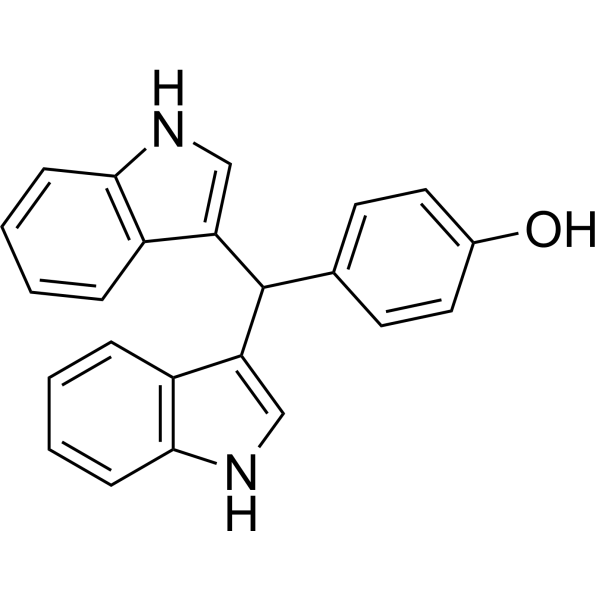
DIM-C-pPhOH
Based on 9 publication(s) in Google Scholar
DIM-C-pPhOH is a nuclear receptor 4A1 (NR4A1) antagonist. DIM-C-pPhOH inhibits cancer cell growth and mTOR signaling, induce apoptosis and cellular stress. DIM-C-pPhOH reduces cell proliferation with IC50 values of 13.6 μM and 13.0 μM for ACHN cells and 786-O cells, respectively.
For research use only. We do not sell to patients.
- Purity: 98.88%
- CAS No.: 151358-47-3
- Formula: C23H18N2O
- Molecular Weight:338.40
-
Storage:Powder -20°C, 3 years , 4°C, 2 years ; In solvent -80°C, 2 years , -20°C, 1 year

To place orders, for customer services and technical support, please contact: MedChemExpress USA
Tel: 609-228-6898 E-mail: [email protected] [email protected]


-
 Biological Activity
-
Chemical Information
-
Solvent & Solubility
- Purity & Documentation
- References
-
 Help & FAQs


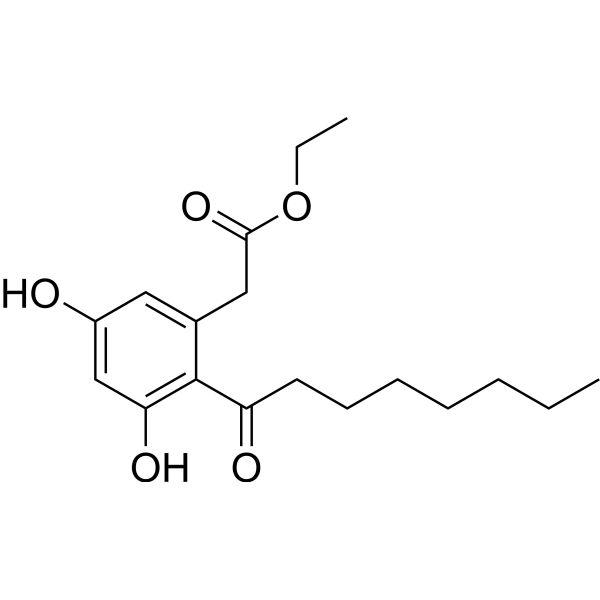
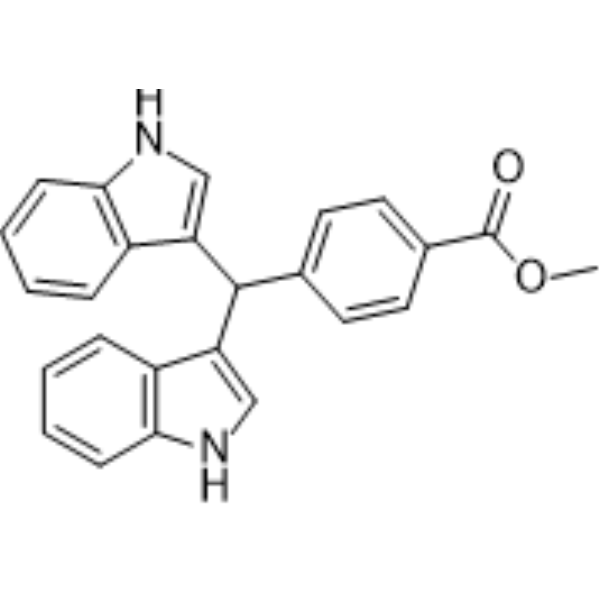
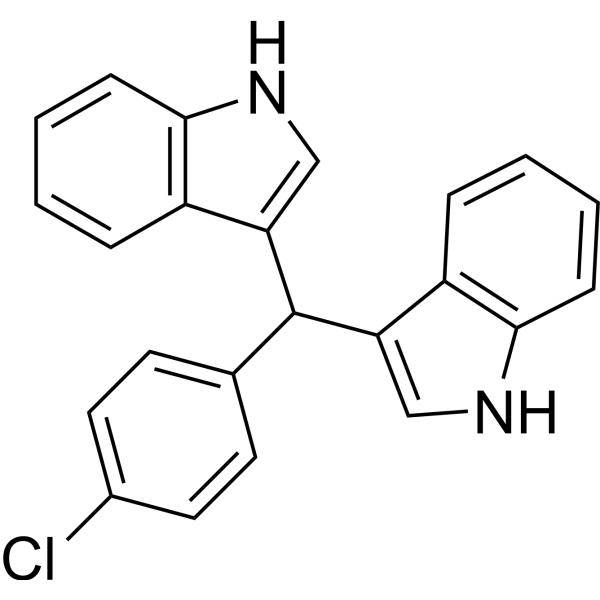

Publications Citing Use of MedChemExpress (MCE) DIM-C-pPhOH
More- Transl Neurodegener. 2025 Jun 4;14(1):29. [Abstract]
- J Adv Res. 2025 Sep 10:S2090-1232(25)00701-5. [Abstract]
- Redox Biol. 2021 Jan:38:101807. [Abstract]
- J Ethnopharmacol. 2024 Apr 6:323:117690. [Abstract]
- Mol Med Rep. 2025 Jan;31(1):3. [Abstract]
- Clin Transl Immunology. 2024 Apr 15;13(4):e1503. [Abstract]
- Arch Physiol Biochem. 2025 Nov 24:1-19. [Abstract]
- J Cardiovasc Transl Res. 2023 Oct;16(5):1050-1063. [Abstract]
- SSRN. 2025 Feb 6.
 Customer Validation & Images

-
In Vivo Efficacy Study
-
Histological Imaging/Staining
-
WB
-
In Vivo Imaging
-
RT-PCR
All Nuclear Hormone Receptor 4A/NR4A Isoforms
More

Biological Activity
|
Nur77/NR4A1 |
DIM-C-pPhOH (7.5-20 μM; 24 hours; ACHN and 786-O cells) treatment significantly decreases cell proliferation[1].
DIM-C-pPhOH (20 μM; 24 hours; ACHN and 786-O cells) treatment induces Annexin V staining in ACHN and 786-O cells, confirming that DIM-C-pPhOH induce apoptosis, and also induces cleavage of caspases 7 and 8[1].
DIM-C-pPhOH (15-20 μM; 24 hours; ACHN and 786-O cells) treatment inhibits NR4A1-regulated expression of survivin, bcl-2 and EGFR in ACHN and 786-O cells. And also induces sestrin 2, activates AMPKα and inhibits activation of mTOR and downstream kinases[1].
DIM-C-pPhOH decreases expression of β1-integrin protein and mRNA and β1-integrin-dependent responses in MCF7, MDA-MB-231, and SKBR3 cells and also inhibits migration of the latter two cell lines[2].
MedChemExpress (MCE) has not independently confirmed the accuracy of these methods. They are for reference only.
-
Cell Line:ACHN and 786-O cells
-
Concentration:7.5 μM, 15 μM, 20 μM
-
Incubation Time:24 hours
-
Result:Significantly decreased cell proliferation.
-
Cell Line:ACHN and 786-O cells
-
Concentration:20 μM
-
Incubation Time:24 hours
-
Result:Induced apoptosis in ACHN and 786-O cells.
-
Cell Line:ACHN and 786-O cells
-
Concentration:15 μM, 20 μM
-
Incubation Time:24 hours
-
Result:Inhibited NR4A1-regulated expression of survivin, bcl-2 and EGFR in ACHN and 786-O cells. And also induced sestrin 2, activated AMPKα and inhibited activation of mTOR and downstream kinases.
MedChemExpress (MCE) has not independently confirmed the accuracy of these methods. They are for reference only.
-
Animal Model:Male athymic nude mice (aged 6-7 weeks) injected with ACHN cells[1]
-
Dosage:30 mg/kg/day
-
Administration:Oral gavage; daily; for 50 days
-
Result:Resulted in a significant inhibition of tumor growth.


Chemical Information
-
CAS No. 151358-47-3
-
Appearance Solid
-
Molecular Weight 338.40
-
Formula C23H18N2O
-
Color Off-white to pink
-
SMILES
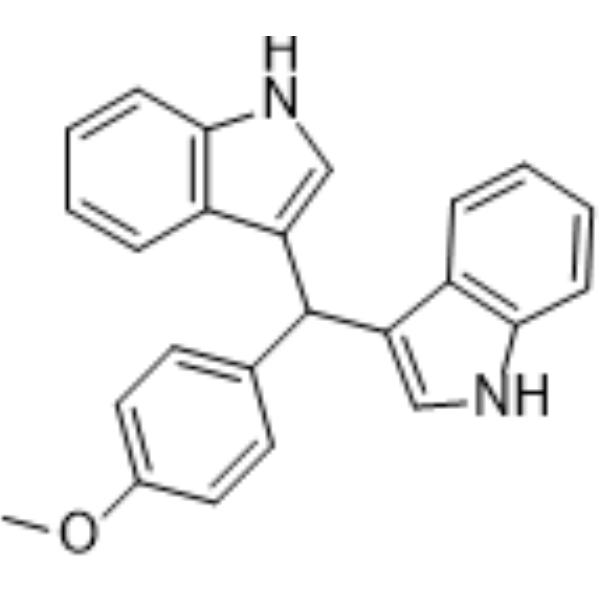
OC1=CC=C(C(C2=CNC3=C2C=CC=C3)C4=CNC5=C4C=CC=C5)C=C1
-
Shipping
Room temperature in continental US; may vary elsewhere.
-
Storage
Powder -20°C 3 years 4°C 2 years In solvent -80°C 2 years -20°C 1 year


Publications (9)
-
Journal Impact Factor
-
Most Recent
-
Transl Neurodegener
Aging-dependent YAP1 reduction contributes to AD pathology by upregulating the Nr4a1-AKT/GSK-3β axis. [Abstract]2025 Jun 4;14(1):29. PMID: 40468463
DIM-C-pPhOH purchased from MedChemExpress. Usage Cited in: Transl Neurodegener. 2025 Jun 4;14(1):29. [Abstract]
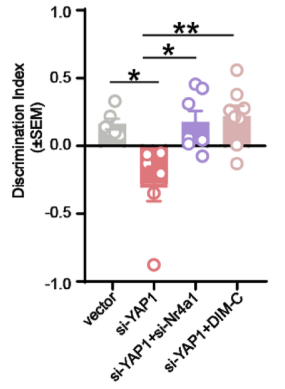
The recognition index for the new object recorded over a 24 h period in the NOR test (n = 6–8 animals/group). DIM-C-pPhOH (DIM-C, 50 mg/kg; i.p.; once daily for 1 week) treatment substantially increased the cognitive discrimination index of C57BL/6J mice compared to the AAV-siYAP1 group.
DIM-C-pPhOH purchased from MedChemExpress. Usage Cited in: Transl Neurodegener. 2025 Jun 4;14(1):29. [Abstract]
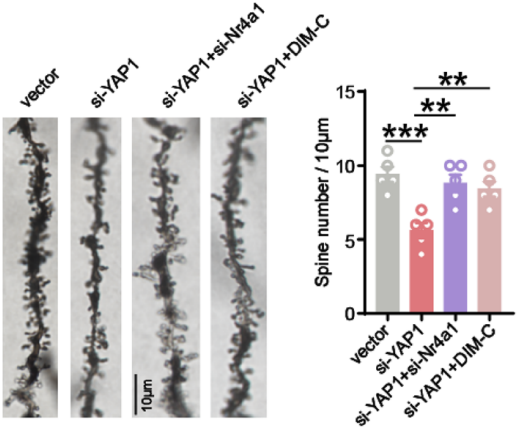
Golgi staining and quantitation of spine number in the dentate gyrus of the hippocampus (n = 5 animals/group).The results showed that DIM-C-pPhOH (DIM-C, 50 mg/kg; i.p.; once daily for 1 week) alleviated YAP1 deletion-triggered dendritic spine loss in C57BL/6J mice.
DIM-C-pPhOH purchased from MedChemExpress. Usage Cited in: Transl Neurodegener. 2025 Jun 4;14(1):29. [Abstract]
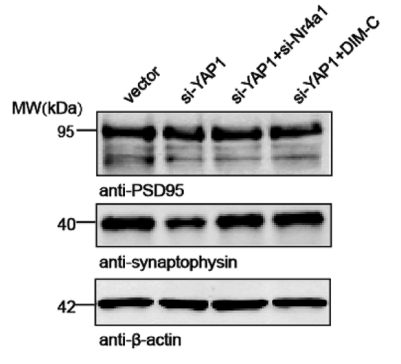
DIM-C-pPhOH (DIM-C, 50 mg/kg; i.p.; once daily for 1 week) partially reversed YAP1-induced reduction of synapse-related proteins (PSD95 and synaptophysin) in the hippocampus of C57BL/6J mice via inhibiting Nr4a1.
-
J Adv Res
SAMHD1 promotes cardiac repair post myocardial infarction by targeting NR4a1 to regulate macrophage metabolic reprogramming. [Abstract]2025 Sep 10:S2090-1232(25)00701-5. PMID: 40939891
DIM-C-pPhOH purchased from MedChemExpress. Usage Cited in: J Adv Res. 2025 Sep 10:S2090-1232(25)00701-5. [Abstract]
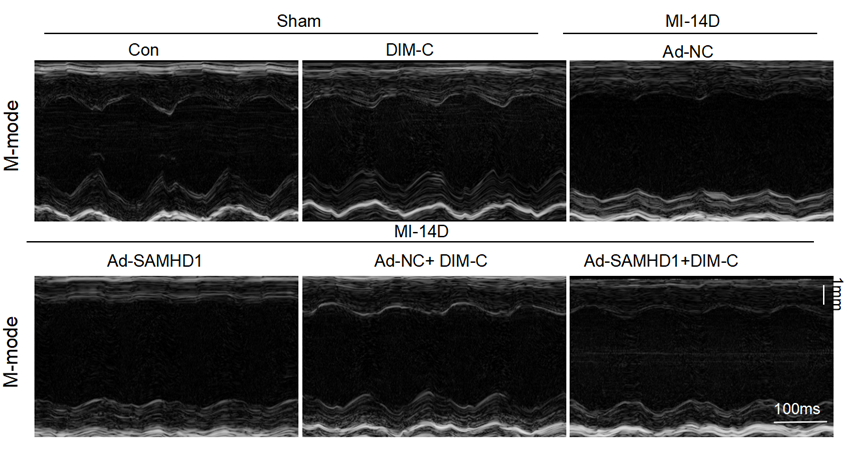
Echocardiography analysis of representative B-model sonography of different groups of mice on the 14th day after Sham and MI. The results demonstrated that NR4a1 inhibition by DIM-C-pPhOH (DIM-C; 50 mg/kg; i.p.) counteracted the detrimental effects of SAMHD1 overexpression on post-MI cardiac function.
DIM-C-pPhOH purchased from MedChemExpress. Usage Cited in: J Adv Res. 2025 Sep 10:S2090-1232(25)00701-5. [Abstract]
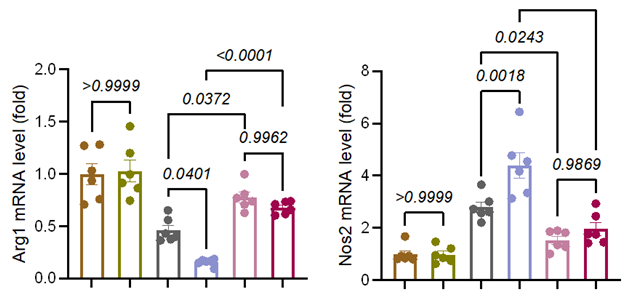
mRNA levels of Arg1 and Nos2 in heart tissues of different groups of mice on day 3 after Sham and MI (n=6). The results revealed that DIM-C-pPhOH (DIM-C; 50 mg/kg; i.p.) treatment reversed the SAMHD1 overexpression-induced suppression of the cardiac reparative factor Arg1 and reversed the upregulation of the proinflammatory factor Nos2.
-
Redox Biol
FBW7-NRA41-SCD1 axis synchronously regulates apoptosis and ferroptosis in pancreatic cancer cells. [Abstract]2021 Jan:38:101807. PMID: 33271455 -
J Ethnopharmacol
Shuangshen ningxin formula attenuates cardiac microvascular ischemia/reperfusion injury through improving mitochondrial function. [Abstract]2024 Apr 6:323:117690. PMID: 38195019 -
Mol Med Rep
Orphan nuclear receptor NR4A1 regulates both osteoblastogenesis and adipogenesis in human mesenchymal stem cells. [Abstract]2025 Jan;31(1):3. PMID: 39422036 -
Clin Transl Immunology
SARS-CoV-2-infected human airway epithelial cell cultures uniquely lack interferon and immediate early gene responses caused by other coronaviruses. [Abstract]2024 Apr 15;13(4):e1503. PMID: 38623540 -
Arch Physiol Biochem
Verbascoside attenuates angiotensin-induced hypertension by inhibiting endoplasmic reticulum stress via the Nur77/GFPT2/CHOP pathway. [Abstract]2025 Nov 24:1-19. PMID: 41284022 -
J Cardiovasc Transl Res
NR4A1 Aggravates Myocardial Ischaemia-Reperfusion Injury by Inhibiting OPA1-Mediated Mitochondrial Fusion. [Abstract]2023 Oct;16(5):1050-1063. PMID: 37249897 -


Solvent & Solubility
DMSO : 125 mg/mL (369.39 mM; ultrasonic and warming and heat to 60°C; Hygroscopic DMSO has a significant impact on the solubility of product, please use newly opened DMSO)
Please refer to the solubility information to select the appropriate solvent. Once prepared, please aliquot and store the solution to prevent product inactivation from repeated freeze-thaw cycles.
Storage method and period of stock solution: -80°C, 2 years; -20°C, 1 year. When stored at -80°C, please use it within 2 years. When stored at -20°C, please use it within 1 year.
Please refer to the solubility information to select the appropriate solvent. Once prepared, please aliquot and store the solution to prevent product inactivation from repeated freeze-thaw cycles.
Storage method and period of stock solution: -80°C, 2 years; -20°C, 1 year. When stored at -80°C, please use it within 2 years. When stored at -20°C, please use it within 1 year.
Concentration (start) × Volume (start) = Concentration (final) × Volume (final)
Select the appropriate dissolution method based on your experimental animal and administration route.
- For the following dissolution methods, please ensure to first prepare a clear stock solution using an In Vitro approach and then sequentially add co-solvents:
- To ensure reliable experimental results, the clarified stock solution can be appropriately stored based on storage conditions. As for the working solution for In Vivo experiments, it is recommended to prepare freshly and use it on the same day.
- The percentages shown for the solvents indicate their volumetric ratio in the final prepared solution. If precipitation or phase separation occurs during preparation, heat and/or sonication can be used to aid dissolution.
Add each solvent one by one: 10% DMSO 40% PEG300 5% Tween-80 45% Saline
Solubility: ≥ 2.08 mg/mL (6.15 mM); Clear solution
This protocol yields a clear solution of ≥ 2.08 mg/mL (saturation unknown).
Taking 1 mL working solution as an example, add 100 μL DMSO stock solution (20.8 mg/mL) to 400 μL PEG300, and mix evenly; then add 50 μL Tween-80 and mix evenly; then add 450 μL Saline to adjust the volume to 1 mL.
Preparation of Saline: Dissolve 0.9 g sodium chloride in ddH₂O and dilute to 100 mL to obtain a clear Saline solution.
Add each solvent one by one: 10% DMSO 90% (20% SBE-β-CD in Saline)
Solubility: ≥ 2.08 mg/mL (6.15 mM); Clear solution
This protocol yields a clear solution of ≥ 2.08 mg/mL (saturation unknown).
Taking 1 mL working solution as an example, add 100 μL DMSO stock solution (20.8 mg/mL) to 900 μL 20% SBE-β-CD in Saline, and mix evenly.
Preparation of 20% SBE-β-CD in Saline (4°C, storage for one week): 2 g SBE-β-CD powder is dissolved in 10 mL Saline, completely dissolve until clear.
Please enter the basic information of animal experiments:
-
-
-
-
Recommended: Prepare an additional quantity of animals to account for potential losses during experiments.
Please enter your animal formula composition:
-
%DMSO +
Recommended: Keep the proportion of DMSO in working solution below 2% if your animal is weak.
-
%+
-
+%Tween-80 + +
-
%Saline +
The co-solvents required include: DMSO, . All of co-solvents are available by MedChemExpress (MCE). , Tween 80. All of co-solvents are available by MedChemExpress (MCE).
Working solution concentration: 0.22 mg/mL
Method for preparing stock solution: mg drug dissolved in μL DMSO. Stock solution concentration: mg/mL.
1. Take μL DMSO stock solution;
2. Add μL .
μL , mix evenly;
3. Then add μL Tween 80, mix evenly;
4. Then add μL
Please ensure that the stock solution in the first step is dissolved to a clear state, and add co-solvents in sequence. You can use ultrasonic heating (ultrasonic cleaner, recommended frequency 20-40 kHz), vortexing, etc. to assist dissolution.


Purity & Documentation
-
Data Sheet (284 KB)
-
SDS (396 KB)
- English - EN (396 KB)
- Français - FR (396 KB)
- Deutsch - DE (396 KB)
- Norwegian - NO (396 KB)
- Español - ES (396 KB)
- Swedish - SV (396 KB)
- Italian - IT (396 KB)
- Korean - KR (396 KB)
- Portuguese - PT (396 KB)
-
Handling Instructions (2659 KB)
References
[1]. Hedrick E, et al. Nuclear Receptor 4A1 (NR4A1) as a Drug Target for Renal Cell Adenocarcinoma. PLoS One. 2015 Jun 2;10(6):e0128308. [Content Brief]
[2]. Hedrick E, et al. NR4A1 Antagonists Inhibit β1-Integrin-Dependent Breast Cancer Cell Migration. Mol Cell Biol. 2016 Apr 15;36(9):1383-94. [Content Brief]


Complete Stock Solution Preparation Table
Please refer to the solubility information to select the appropriate solvent. Once prepared, please aliquot and store the solution to prevent product inactivation from repeated freeze-thaw cycles.
Storage method and period of stock solution: -80°C, 2 years; -20°C, 1 year. When stored at -80°C, please use it within 2 years. When stored at -20°C, please use it within 1 year.
| Optional Solvent | Concentration Solvent Mass | 1 mg | 5 mg | 10 mg | 25 mg |
|---|---|---|---|---|---|
| DMSO | 1 mM | 2.9551 mL | 14.7754 mL | 29.5508 mL | 73.8771 mL |
| 5 mM | 0.5910 mL | 2.9551 mL | 5.9102 mL | 14.7754 mL | |
| 10 mM | 0.2955 mL | 1.4775 mL | 2.9551 mL | 7.3877 mL | |
| 15 mM | 0.1970 mL | 0.9850 mL | 1.9701 mL | 4.9251 mL | |
| 20 mM | 0.1478 mL | 0.7388 mL | 1.4775 mL | 3.6939 mL | |
| 25 mM | 0.1182 mL | 0.5910 mL | 1.1820 mL | 2.9551 mL | |
| 30 mM | 0.0985 mL | 0.4925 mL | 0.9850 mL | 2.4626 mL | |
| 40 mM | 0.0739 mL | 0.3694 mL | 0.7388 mL | 1.8469 mL | |
| 50 mM | 0.0591 mL | 0.2955 mL | 0.5910 mL | 1.4775 mL | |
| 60 mM | 0.0493 mL | 0.2463 mL | 0.4925 mL | 1.2313 mL | |
| 80 mM | 0.0369 mL | 0.1847 mL | 0.3694 mL | 0.9235 mL | |
| 100 mM | 0.0296 mL | 0.1478 mL | 0.2955 mL | 0.7388 mL |


DIM-C-pPhOH Related Classifications
HY-112055 Related Classifications
 Powered by Bioz