



Melperone

Based on 1 Customer Validation
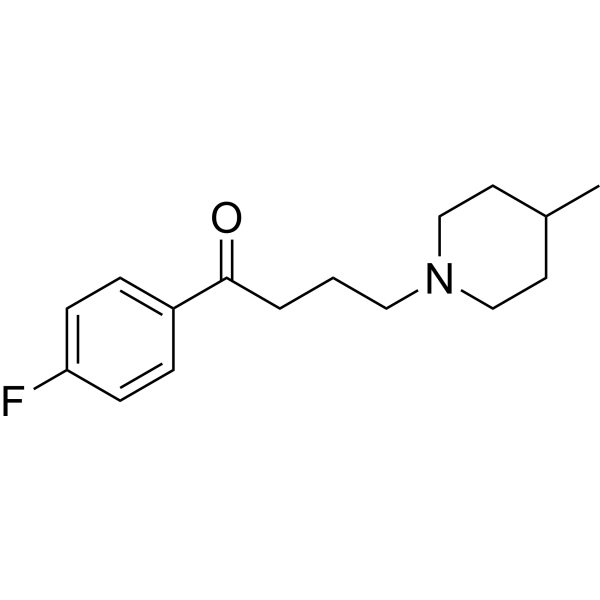
Melperone is a butyrophenone with atypical antipsychotic properties. Melperone is a multireceptor antagonist with Kds of 102 nM, 180 nM, 180 nM, and 150 nM for 5-HT2A, dopamine D2, α1-adrenergic, and α2-adrenergic receptors, respectively. Melperone has weak binding to histamine H1, 5-HT2C, 5-HT1A, 5-HT1D, and muscarinic receptors, with Kd values of 580 nM, 2100 nM, 2200 nM, 3400 nM, >10000 nM, respectively. Melperone is also a CYP2D6 inhibitor. Melperone can be used for the study of schizophrenia, and agitation in the elderly.
Nos produits utilisent uniquement pour la recherche. Nous ne vendons pas aux patients.
- Pureté : 99.84%
- CAS No.: 3575-80-2
- Formule: C16H22FNO
- Masse moléculaire:263.35
-
Stockage:Powder -20°C, 3 years , 4°C, 2 years ; In solvent -80°C, 2 years , -20°C, 1 year

To place orders, for customer services and technical support, please contact: MedChemExpress USA
Tel: 609-228-6898 E-mail: [email protected] [email protected]


-
 Activité biologique
-
Chemical Information
-
Solvant et solubilité
- Pureté et documentation
- Références
-
 Help & FAQs


-

HY-B2169R
Melperone (Standard)Standard of Melperone -
HY-B0444
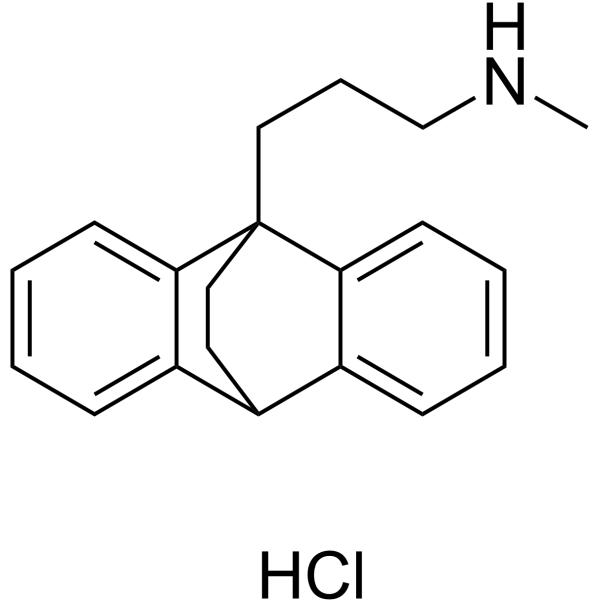
Maprotiline hydrochlorideAutophagy Inducer -
HY-B1184
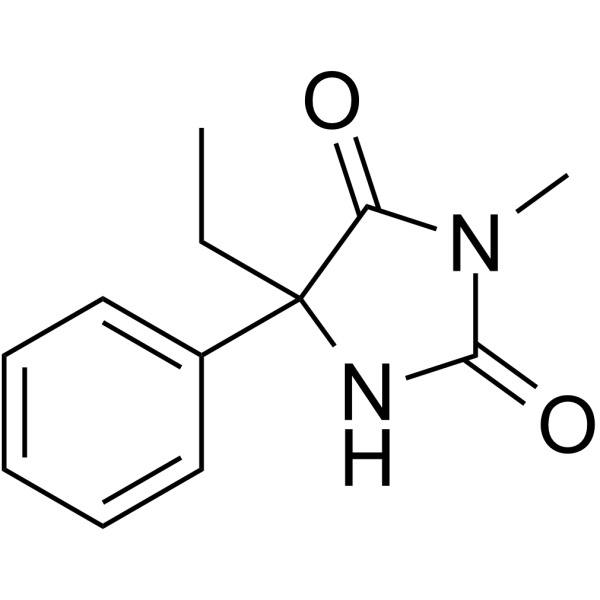
MephenytoinCytochrome P452 Substrate -

HY-B0807A
Prochlorperazine dimaleateD2R Antagonist -
HY-101094
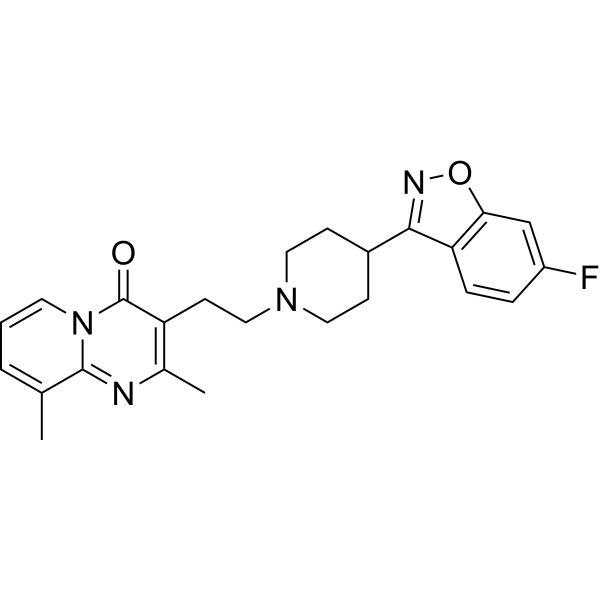
Ocaperidone5-HT2/Dopamine D2 Antagonist -
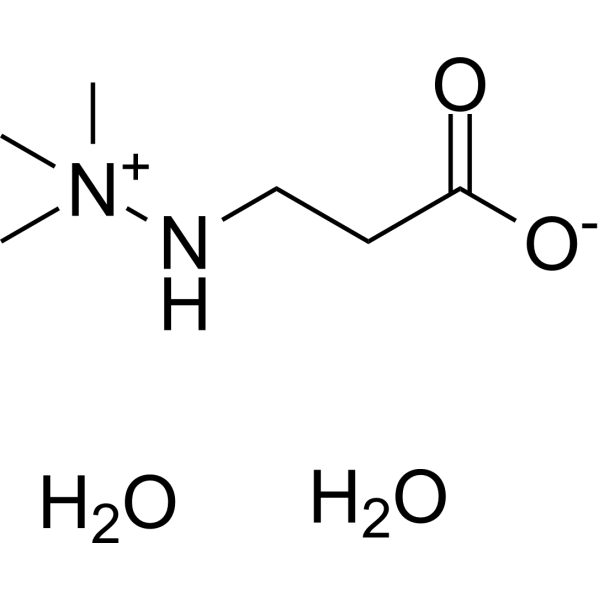
HY-B1836A
Meldonium dihydrateBBOX1/OCTN2 Inhibitor -
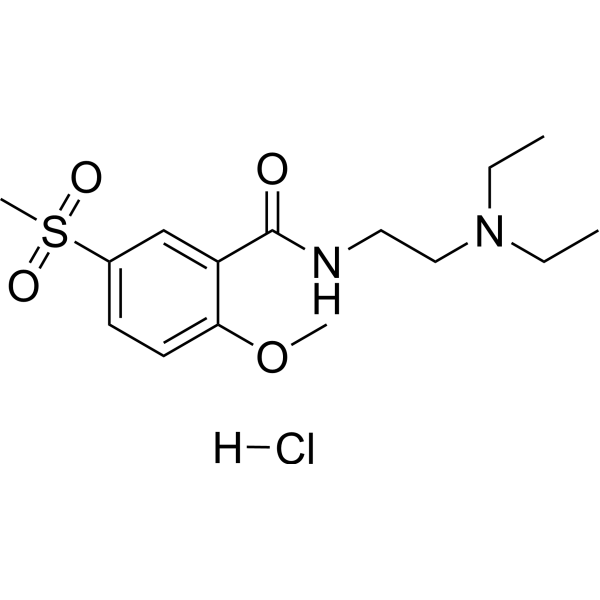
HY-B1196
Tiapride hydrochlorideD2/D3 Dopamine Receptor Antagonist -
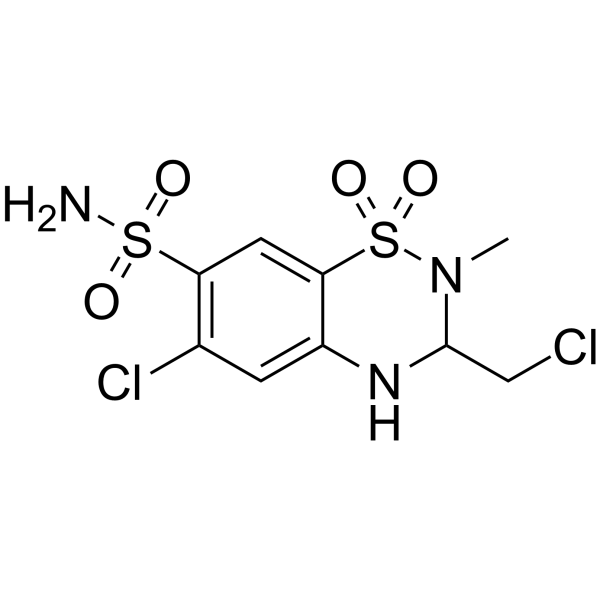
HY-B0562
MethyclothiazideAntihypertensive Agent -
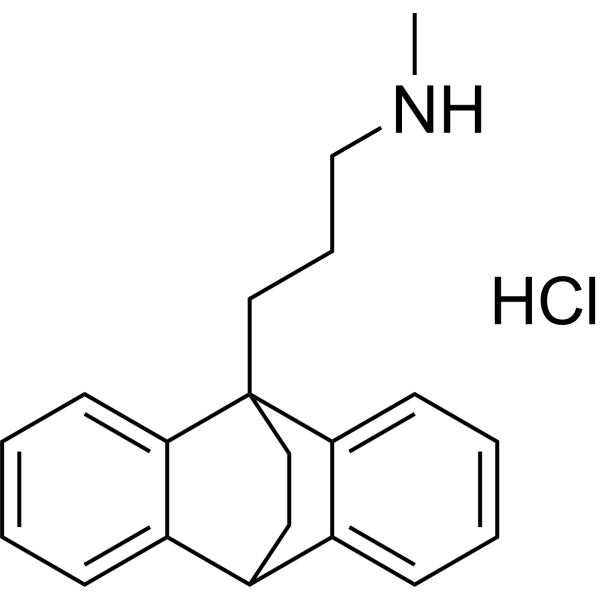
HY-B0444R
Maprotiline hydrochloride (Standard) -

HY-B0562R
Methyclothiazide (Standard)Antihypertensive Agent -

HY-101094R
Ocaperidone (Standard)5-HT2/Dopamine D2 Antagonist -

HY-B1184R
Mephenytoin (Standard)Cytochrome P452 Substrate
Voir tous les produits spécifiques à Isoform 5-HT Receptor
MoreVoir tous les produits spécifiques à Isoform Dopamine Receptor
MoreVoir tous les produits spécifiques à Isoform Adrenergic Receptor
More

Activité biologique
Description
|
Human D2 Receptor 180 nM (Kd) |
5-HT1A Receptor |
5-HT1D Receptor |
5-HT2A Receptor |
5-HT2C Receptor |
α1-adrenergic receptor 180 nM (Kd) |
α2-adrenergic receptor 150 nM (Kd) |
CYP2D6 |
In Vivo
MedChemExpress (MCE) has not independently confirmed the accuracy of these methods. They are for reference only.
-
Animal Model:Male Sprague-Dawley albino rats (180-200 g) was administered subcutaneously with D-Amphetamine sulfate (1.0 mg/kg)[1]
-
Dosage:2 mg/kg/day
-
Administration:Drinking water; changed in lightproof drinking bottles twice a week; for 21 days
-
Result:Increased basal extracellular DA and enhanced D-Amphetamine-induced DA release in the striatum.


Chemical Information
-
CAS No. 3575-80-2
-
Appearance Solid
-
Masse moléculaire 263.35
-
Formule C16H22FNO
-
Color White to off-white
-
SMILES
O=C(C1=CC=C(F)C=C1)CCCN2CCC(C)CC2
-
Livraison
Room temperature in continental US; may vary elsewhere.
-
Stockage
Powder -20°C 3 years 4°C 2 years In solvent -80°C 2 years -20°C 1 year


Solvant et solubilité
In Vitro:
DMSO : 41.67 mg/mL (158.23 mM; Need ultrasonic; Hygroscopic DMSO has a significant impact on the solubility of product, please use newly opened DMSO)
Please refer to the solubility information to select the appropriate solvent. Once prepared, please aliquot and store the solution to prevent product inactivation from repeated freeze-thaw cycles.
Storage method and period of stock solution: -80°C, 2 years; -20°C, 1 year. When stored at -80°C, please use it within 2 years. When stored at -20°C, please use it within 1 year.
Please refer to the solubility information to select the appropriate solvent. Once prepared, please aliquot and store the solution to prevent product inactivation from repeated freeze-thaw cycles.
Storage method and period of stock solution: -80°C, 2 years; -20°C, 1 year. When stored at -80°C, please use it within 2 years. When stored at -20°C, please use it within 1 year.
Concentration (start) × Volume (start) = Concentration (final) × Volume (final)
In Vivo:
Select the appropriate dissolution method based on your experimental animal and administration route.
- For the following dissolution methods, please ensure to first prepare a clear stock solution using an In Vitro approach and then sequentially add co-solvents:
- To ensure reliable experimental results, the clarified stock solution can be appropriately stored based on storage conditions. As for the working solution for In Vivo experiments, it is recommended to prepare freshly and use it on the same day.
- The percentages shown for the solvents indicate their volumetric ratio in the final prepared solution. If precipitation or phase separation occurs during preparation, heat and/or sonication can be used to aid dissolution.
Add each solvent one by one: 10% DMSO 40% PEG300 5% Tween-80 45% Saline
Solubility: ≥ 2.08 mg/mL (7.90 mM); Clear solution
This protocol yields a clear solution of ≥ 2.08 mg/mL (saturation unknown).
Taking 1 mL working solution as an example, add 100 μL DMSO stock solution (20.8 mg/mL) to 400 μL PEG300, and mix evenly; then add 50 μL Tween-80 and mix evenly; then add 450 μL Saline to adjust the volume to 1 mL.
Preparation of Saline: Dissolve 0.9 g sodium chloride in ddH₂O and dilute to 100 mL to obtain a clear Saline solution.
Add each solvent one by one: 10% DMSO 90% (20% SBE-β-CD in Saline)
Solubility: ≥ 2.08 mg/mL (7.90 mM); Clear solution
This protocol yields a clear solution of ≥ 2.08 mg/mL (saturation unknown).
Taking 1 mL working solution as an example, add 100 μL DMSO stock solution (20.8 mg/mL) to 900 μL 20% SBE-β-CD in Saline, and mix evenly.
Preparation of 20% SBE-β-CD in Saline (4°C, storage for one week): 2 g SBE-β-CD powder is dissolved in 10 mL Saline, completely dissolve until clear.
In Vivo Dissolution Calculator
Please enter the basic information of animal experiments:
-
-
-
-
Recommended: Prepare an additional quantity of animals to account for potential losses during experiments.
Please enter your animal formula composition:
-
%DMSO +
Recommended: Keep the proportion of DMSO in working solution below 2% if your animal is weak.
-
%+
-
+%Tween-80 + +
-
%Saline +
The co-solvents required include: DMSO, . All of co-solvents are available by MedChemExpress (MCE). , Tween 80. All of co-solvents are available by MedChemExpress (MCE).
Working solution concentration: 0.22 mg/mL
Method for preparing stock solution: mg drug dissolved in μL DMSO. Stock solution concentration: mg/mL.
1. Take μL DMSO stock solution;
2. Add μL .
μL , mix evenly;
3. Then add μL Tween 80, mix evenly;
4. Then add μL
Please ensure that the stock solution in the first step is dissolved to a clear state, and add co-solvents in sequence. You can use ultrasonic heating (ultrasonic cleaner, recommended frequency 20-40 kHz), vortexing, etc. to assist dissolution.


Pureté et documentation
-
Fiche technique (272 KB)
-
SDS (393 KB)
- English - EN (393 KB)
- Français - FR (393 KB)
- Deutsch - DE (393 KB)
- Norwegian - NO (393 KB)
- Español - ES (393 KB)
- Swedish - SV (393 KB)
- Italian - IT (393 KB)
- Korean - KR (393 KB)
- Portuguese - PT (393 KB)
-
Instruction de manipulation (2659 KB)
Références
[1]. Ichikawa J, et al. The effect of chronic atypical antipsychotic drugs and haloperidol on amphetamine-induced dopamine release in vivo. Brain Res. 1992 Mar 6;574(1-2):98-104. [Content Brief]
[2]. Richelson E, et al. Binding of antipsychotic drugs to human brain receptors focus on newer generation compounds. Life Sci. 2000 Nov 24;68(1):29-39. [Content Brief]
[3]. Hefner G, et al. Melperone but not bisoprolol or metoprolol is a clinically relevant inhibitor of CYP2D6: evidence from a therapeutic drug monitoring survey. J Neural Transm (Vienna). 2015 Nov;122(11):1609-17. [Content Brief]
[4]. Bobo WV, et al. Melperone, an aytpical antipsychotic drug with clozapine-like effect on plasma prolactin: contrast with typical neuroleptics. Hum Psychopharmacol. 2009 Jul;24(5):415-22. [Content Brief]


Complete Stock Solution Preparation Table
Please refer to the solubility information to select the appropriate solvent. Once prepared, please aliquot and store the solution to prevent product inactivation from repeated freeze-thaw cycles.
Storage method and period of stock solution: -80°C, 2 years; -20°C, 1 year. When stored at -80°C, please use it within 2 years. When stored at -20°C, please use it within 1 year.
| Optional Solvent | Concentration Solvent Mass | 1 mg | 5 mg | 10 mg | 25 mg |
|---|---|---|---|---|---|
| DMSO | 1 mM | 3.7972 mL | 18.9861 mL | 37.9723 mL | 94.9307 mL |
| 5 mM | 0.7594 mL | 3.7972 mL | 7.5945 mL | 18.9861 mL | |
| 10 mM | 0.3797 mL | 1.8986 mL | 3.7972 mL | 9.4931 mL | |
| 15 mM | 0.2531 mL | 1.2657 mL | 2.5315 mL | 6.3287 mL | |
| 20 mM | 0.1899 mL | 0.9493 mL | 1.8986 mL | 4.7465 mL | |
| 25 mM | 0.1519 mL | 0.7594 mL | 1.5189 mL | 3.7972 mL | |
| 30 mM | 0.1266 mL | 0.6329 mL | 1.2657 mL | 3.1644 mL | |
| 40 mM | 0.0949 mL | 0.4747 mL | 0.9493 mL | 2.3733 mL | |
| 50 mM | 0.0759 mL | 0.3797 mL | 0.7594 mL | 1.8986 mL | |
| 60 mM | 0.0633 mL | 0.3164 mL | 0.6329 mL | 1.5822 mL | |
| 80 mM | 0.0475 mL | 0.2373 mL | 0.4747 mL | 1.1866 mL | |
| 100 mM | 0.0380 mL | 0.1899 mL | 0.3797 mL | 0.9493 mL |


Melperone Related Classifications
HY-B2169 Related Classifications
 Powered by Bioz