



CMLD012612
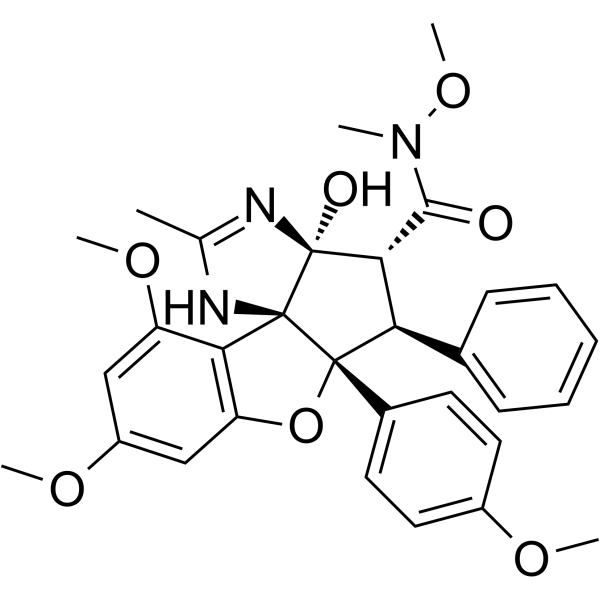
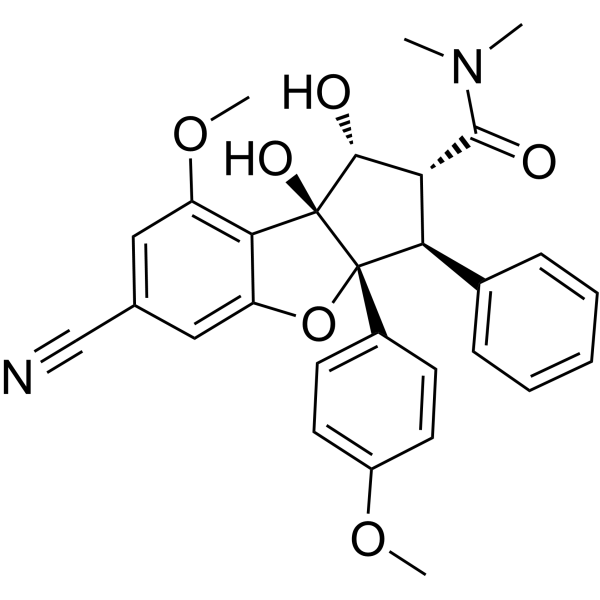
CMLD012612 is an amidino-rocaglate containing a hydroxamate group and is a potent eukaryotic initiation factor 4A (eIF4A) inhibitor. CMLD012612 inhibits cell translation and is cytotoxic to NIH/3T3 cells with an IC50 value of 2 nM. CMLD012612 inhibits eukaryotic translation initiation by modifying the behavior of the RNA helicase (eIF4A) and possesses potent anti-neoplastic activity.
For research use only. We do not sell to patients.
- CAS No.: 2368900-35-8
- Formula: C31H33N3O7
- Molecular Weight:559.61
-
Storage:Powder -20°C, 3 years ; In solvent -80°C, 6 months , -20°C, 1 month

To place orders, for customer services and technical support, please contact: MedChemExpress USA
Tel: 609-228-6898 E-mail: [email protected] [email protected]


-
 Biological Activity
-
Chemical Information
- Protocols
- Purity & Documentation
- References
-
 Help & FAQs


-
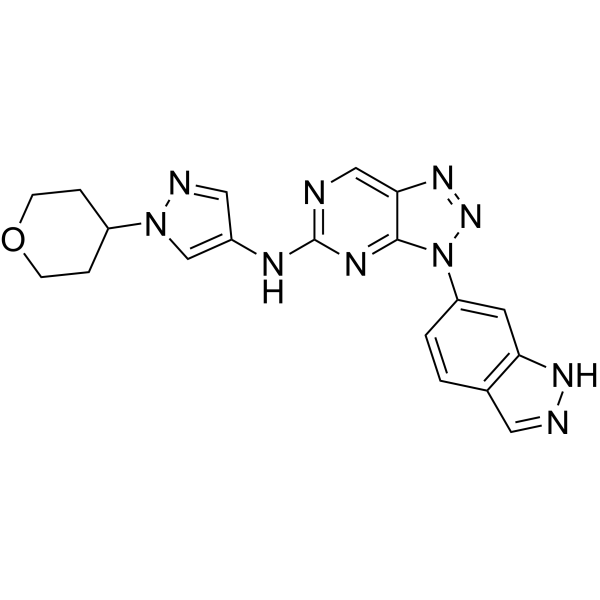
HY-100877
GCN2-IN-1GCN2 Inhibitor -
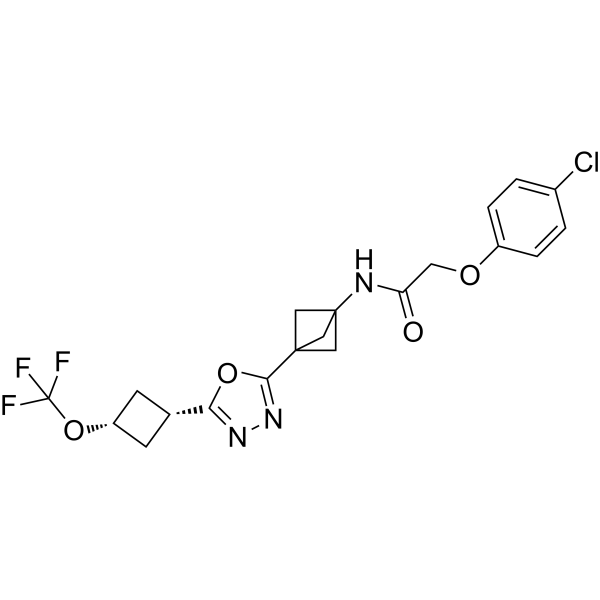
HY-149555
DNL343ISR Inhibitor -
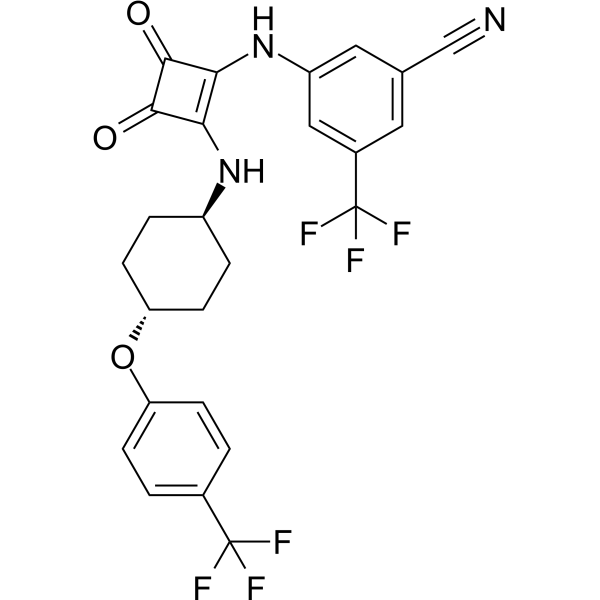
HY-147831
HR-19011EIF2α Activator -
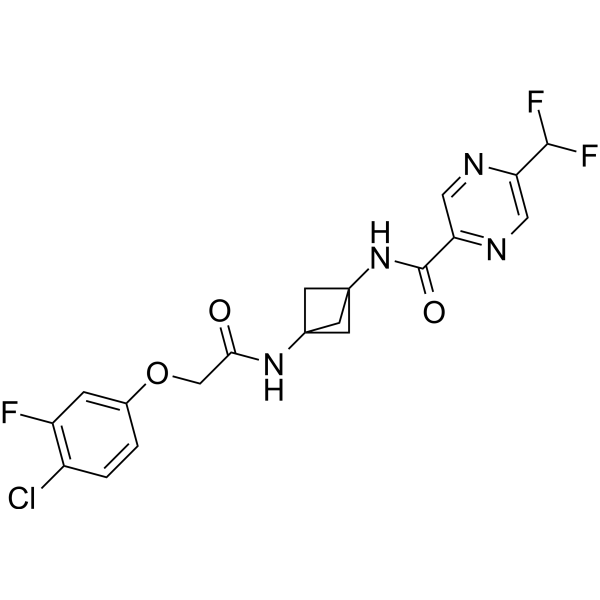
HY-125021
2BActeIF2B Activator -
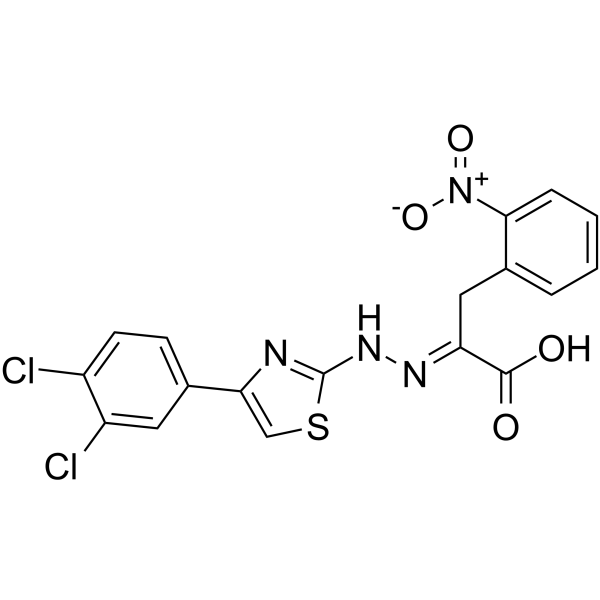
HY-19831A
(Z)-4EGI-1eIF4E/eIF4G Interaction Inhibitor -
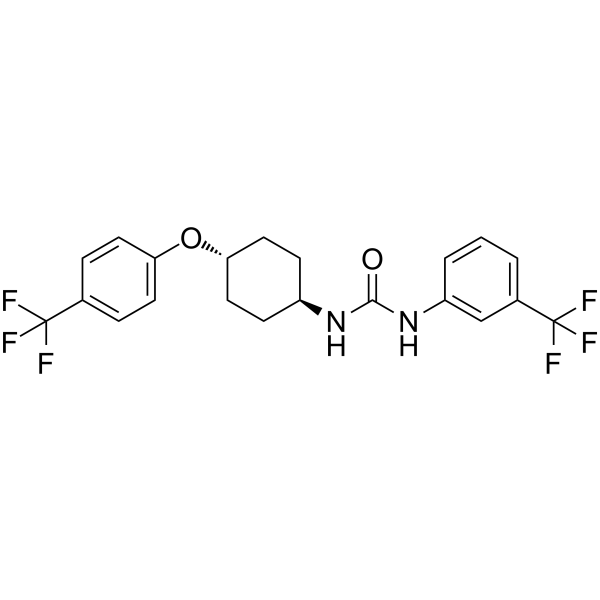
HY-147832
EIF2α activator 2EIF2α Activator -
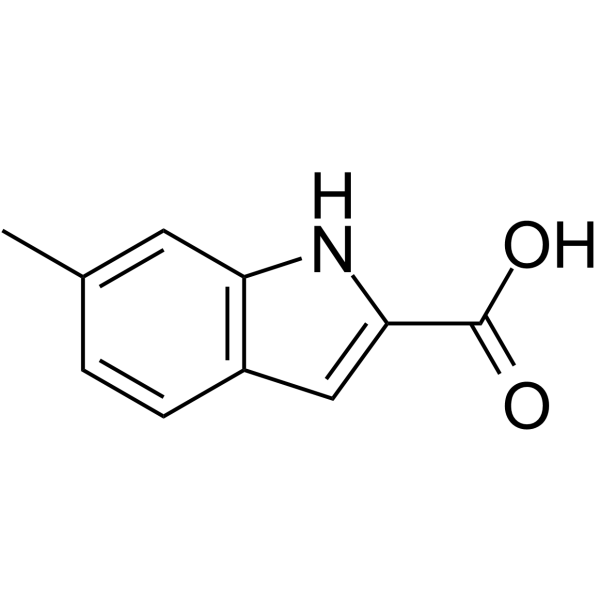
HY-33838
eIF4A3-IN-8eIF4A3 Negative Control -
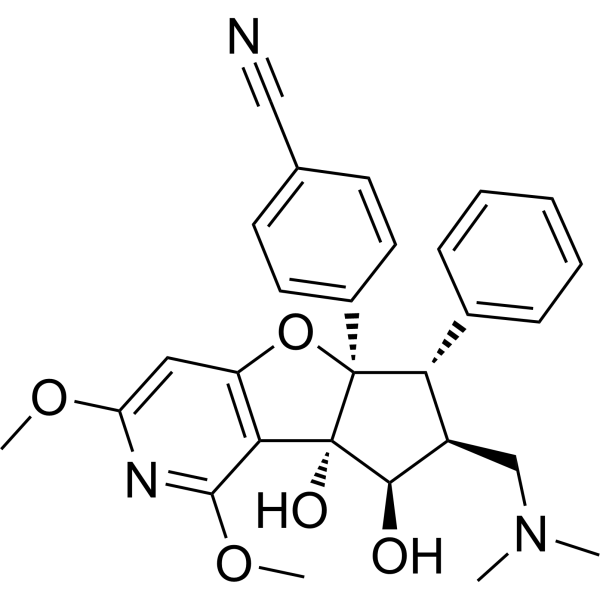
HY-112163
ZotatifineIF4A Inhibitor -
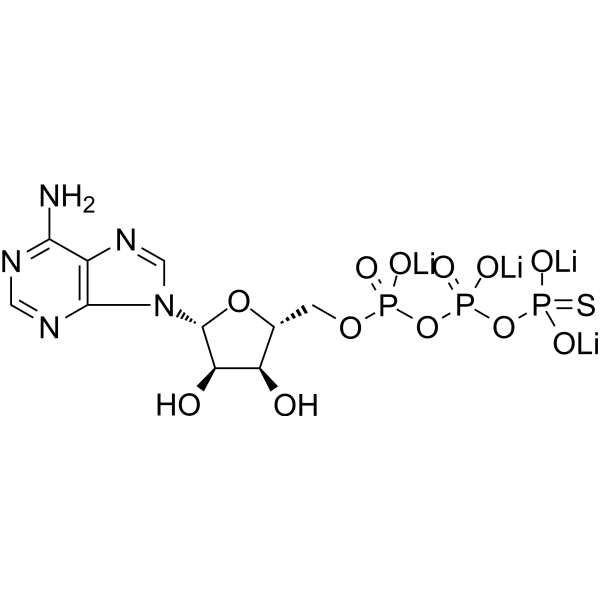
HY-108666
ATPγS tetralithium saltP2Y11 Receptor Agonist -
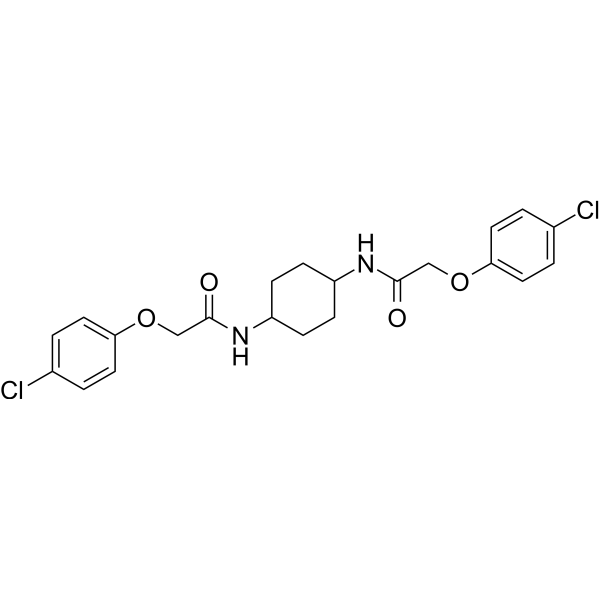
HY-12495A
ISRIBInhibitor of Integrated Stress Response -
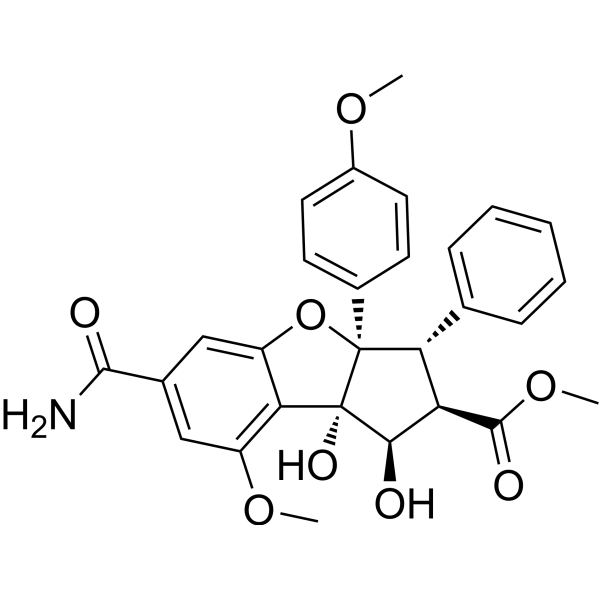
HY-148443
eIF4A3-IN-9eIF4F Inhibitor -
HY-148452
eIF4A3-IN-18eIF4F Inhibitor


Biological Activity
Description
IC50 & Target
|
eIF4 |
Cellular Effect
|
Cell Line

|
Type | Value | Description | References |
|---|---|---|---|---|
| NIH3T3 | IC50 |
2 nM
Compound: 10; CMLDO12612
|
Cytotoxicity against mouse NIH/3T3 cells assessed as reduction in cell viability incubated for 4 days by SRB assay
Cytotoxicity against mouse NIH/3T3 cells assessed as reduction in cell viability incubated for 4 days by SRB assay
|
[PMID: 33592144] |
In Vitro
The IC50 of CMLD012612 toward NIH/3T3 cells is 2 nM. The primary mechanism of action of CMLD012612 is dependent on eIF4A1, since eIF4A1em1jp cells are at least 10-fold more resistant than parental NIH/3T3 cells. The sensitivity of eIF4A1em1jp cells to CMLD012612 observed at higher concentrations may be due to the presence of wild-type eIF4A2 in the cells[1].
MedChemExpress (MCE) has not independently confirmed the accuracy of these methods. They are for reference only. Further protocols information, click here.
In Vivo
When administered to mice bearing myr-Akt/Em-Myc lymphomas, CMLD012612 (0.2 mg/kg; intraperitoneal injection; daily; for 5 days; female C57BL/6 mice) treatment effectively synergizes with Doxorubicin, leading to complete tumor loss[1].
MedChemExpress (MCE) has not independently confirmed the accuracy of these methods. They are for reference only.
-
Animal Model:Female C57BL/6 mice[1]
-
Dosage:0.5 mg/kg
-
Administration:Intraperitoneal injection; for 3 hours
-
Result:Effectively suppressed liver polysomes 3 hours after injection.


Chemical Information
-
CAS No. 2368900-35-8
-
Appearance Solid
-
Molecular Weight 559.61
-
Formula C31H33N3O7
-
Color White to light yellow
-
SMILES
CC1=N[C@@]2(O)[C@H](C(N(OC)C)=O)[C@@H](C3=CC=CC=C3)[C@]4(C5=CC=C(OC)C=C5)OC6=C(C(OC)=CC(OC)=C6)[C@@]42N1
-
Shipping
Room temperature in continental US; may vary elsewhere.
-
Storage
Powder -20°C 3 years In solvent -80°C 6 months -20°C 1 month

Protocols
-
Cell Cytotoxicity Assay
Cytotoxicity assays are usually based on the assessment of cell membrane damage, which can also be indirectly detected by measuring cell viability. Detection methods include MTT assay, CKK-8 assay, LDH assay and ATP assay, etc.
-
Cell Viability Determination by MTT Colorimetric Assay
The following protocol uses the MTT colorimetric assay as a classic literature-established method for assessing cell viability/metabolic activity in cultured mammalian cells. MTT[3-(4,5-dimethylthiazol-2-yl)-2,5-diphenyltetrazolium bromide] is reduced by metabolically active cells to a colored formazan product; the amount of formazan is quantified spectrophotometrically and provides an indirect measure of metabolically active viable cells. Importantly, MTT reduction reflects cellular oxidoreductase/metabolic activity rather than an absolute direct count of living cells, so changes in cellular metabolism can alter the signal independently of cell number.


Purity & Documentation
-
Data Sheet (284 KB)
-
SDS (251 KB)
- English - EN (251 KB)
- Français - FR (251 KB)
- Deutsch - DE (251 KB)
- Norwegian - NO (251 KB)
- Español - ES (251 KB)
- Swedish - SV (251 KB)
- Italian - IT (251 KB)
- Korean - KR (251 KB)
- Portuguese - PT (251 KB)
-
Handling Instructions (2659 KB)
References

Calculators
Concentration (start) × Volume (start) = Concentration (final) × Volume (final)


CMLD012612 Related Classifications
HY-129767 Related Classifications
 Powered by Bioz