



Cuminaldehyde
Based on 1 publication(s) in Google Scholar
Cuminaldehyde is the main component of Cuminum cyminum and has multiple biological activities, including anti-inflammatory, anti-cancer, anti-diabetic, anti-injury, anti-neuropathy and antibacterial effects. Cuminaldehyde is an inhibitor of aldose reductase (IC50= 0.00085 mg/mL), α-glucosidase (IC50=0.5 mg/mL) and lipoxygenase (IC50=1370 μM). Cuminaldehyde also inhibits the fibrillation of α-synuclein and prevents its aggregation. Cuminaldehyde has potential application value in the research of neurodegenerative diseases, cancer, diabetes and neuropathic pain diseases.
연구목적의 판매만을 진행합니다. 환자를 대상으로 한 판매는 하지 않습니다.
- Purity : 99.32%
- CAS No.: 122-03-2
- 화학식: C10H12O
- 분자량:148.21
-
보관:
4°C, stored under nitrogen
* In solvent : -80°C, 6 months; -20°C, 1 month (stored under nitrogen)

To place orders, for customer services and technical support, please contact: MedChemExpress USA
Tel: 609-228-6898 E-mail: [email protected] [email protected]


-
 Biological Activity
-
Chemical Information
-
용액&용해도
- Protocol
- 순도&문서
- References
-
 Help & FAQs


-
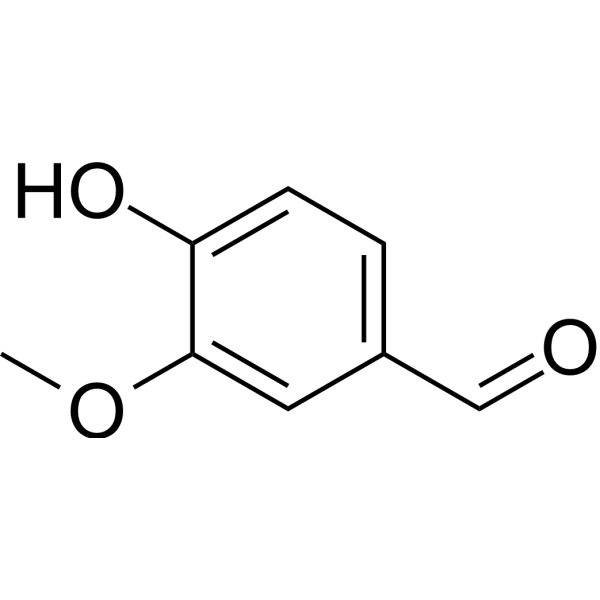
HY-N0098
VanillinPhenolic Aldehyde -
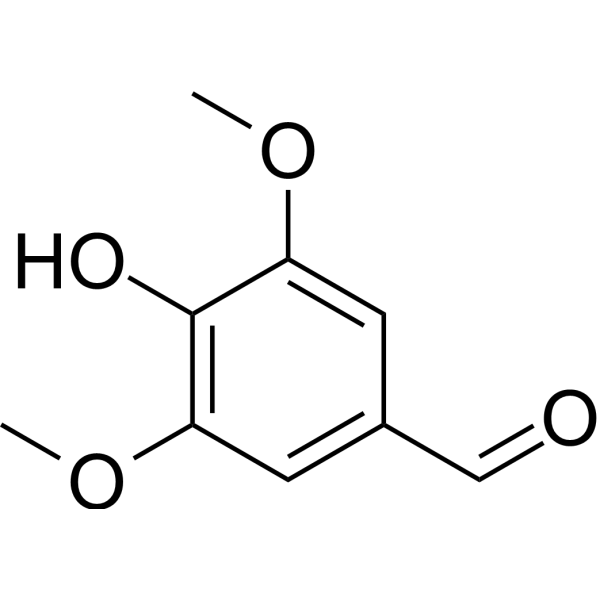
HY-N1390
SyringaldehydeCOX-2 Inhibitor -
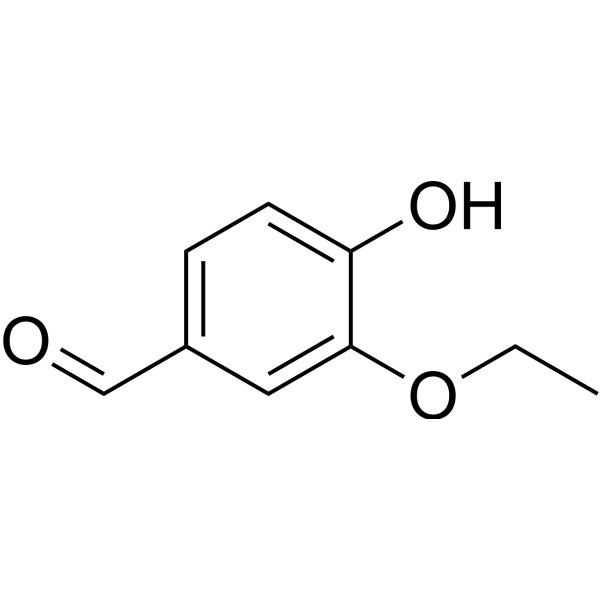
HY-B0940
EthylvanillinFlavouring Agent -
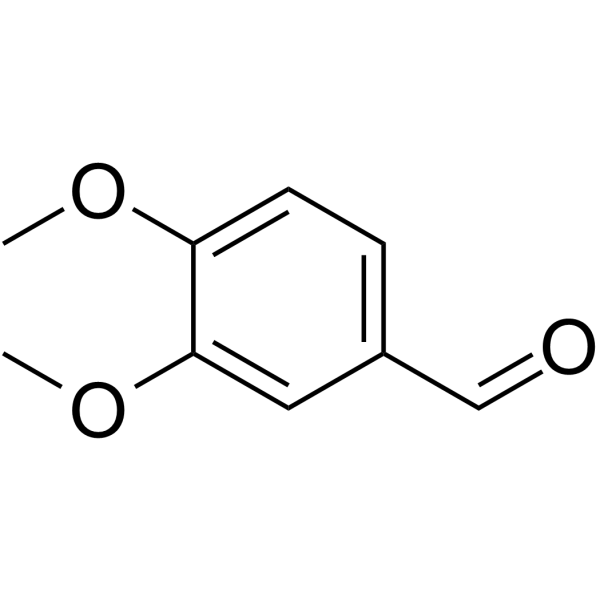
HY-N1096
VeratraldehydeAromatic Compound -

HY-Y0790R
Cuminaldehyde (Standard)Anti-inflammatory Compound -
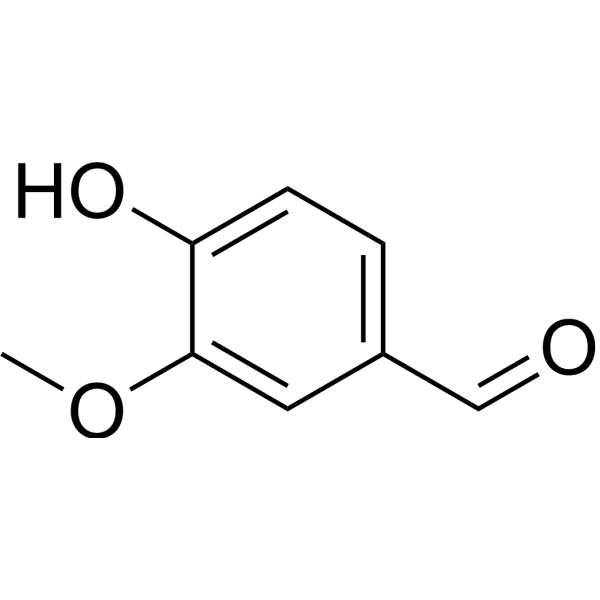
HY-N0098R
Vanillin (Standard) -
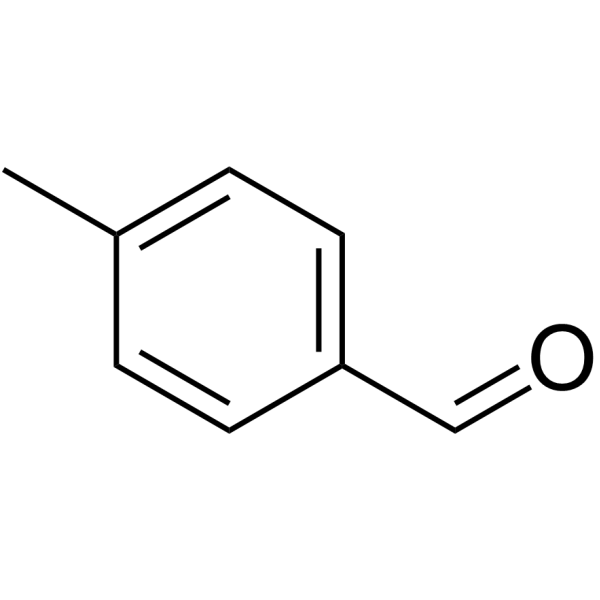
HY-W012860
p-TolualdehydeDrug Intermediate -
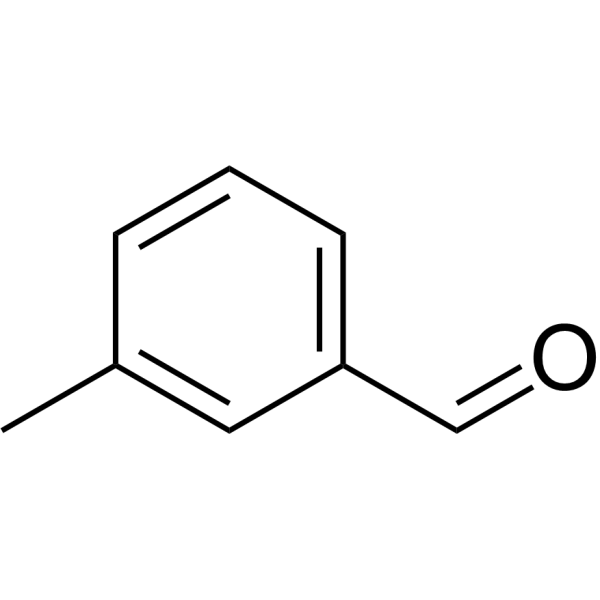
HY-78086
m-TolualdehydeNatural Product -
HY-W127398
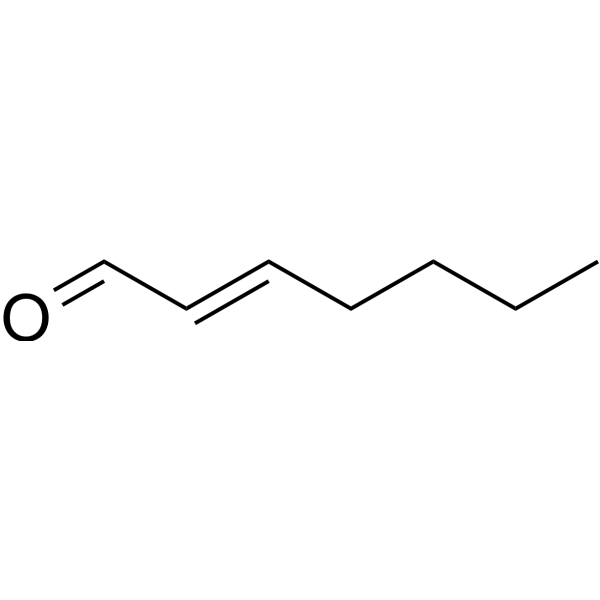
trans-2-HeptenalBiochemical Assay Reagent -
HY-B0940R
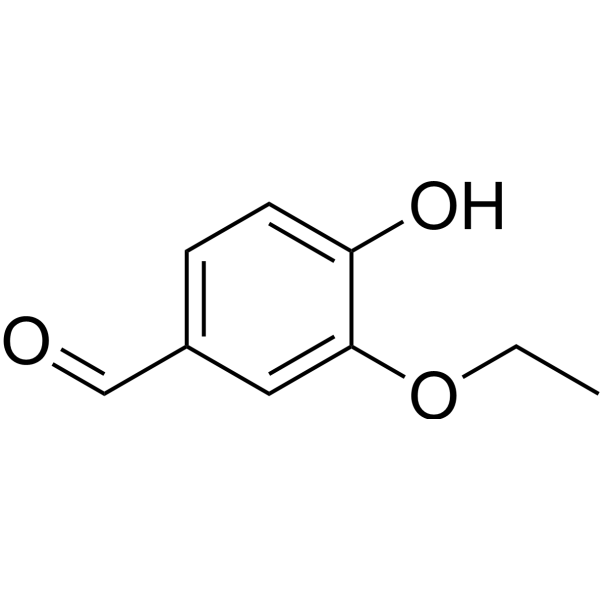
Ethylvanillin (Standard)Flavouring Agent -

HY-N1096R
Veratraldehyde (Standard)Synthesis Intermediate -

HY-N1390R
Syringaldehyde (Standard)COX-2 Inhibitor
Publications Citing Use of MedChemExpress (MCE) Cuminaldehyde
MoreAll α-synuclein Isoforms
More

Biological Activity
제품 설명
IC50 & Target
|
α-synuclein Aggregation |
In Vitro
Cuminaldehyde (1 mM; 24-96 h) can effectively inhibit α-synuclein (α-SN) fibrillation. The presence of α-SN fibrillation inducer Spermidine (HY-B1776) enhances the inhibitory effect, which is even stronger than the inhibitory effect of Baicalein (HY-N0196)[1]. Cuminaldehyde (0-160 μM; 12-48 h) inhibits the proliferation of human colon COLO 205 cells and induces cell apoptosis[2]. Cuminaldehyde (0.5 and 1.5 μM; 5 d) inhibits the growth of Aspergillus flavus (IC50=0.25 μL/mL) and induces necrosis of Aspergillus flavus[5]. Cuminaldehyde (0-0.8 μL/mL; 5 d) inhibits the synthesis of aflatoxin (AFB1), a secondary metabolite of Aspergillus flavus[5].
MedChemExpress (MCE) has not independently confirmed the accuracy of these methods. They are for reference only.
-
Cell Line:Human colon COLO 205 cells
-
Concentration:0, 10, 20, 40, 80 and 160 μM
-
Incubation Time:12-48 h
-
Result:Reduced mitochondrial membrane potential, leads to lysosomal vacuolization, upregulates acidic compartment volume and cytotoxicity.
-
Cell Line:Aspergillus flavus
-
Concentration:0, 0.1, 0.2, 0.3, 0.4, 0.5, 0.6, 0.7 and 0.8 μL/mL
-
Incubation Time:5 days
-
Result:Reduced the expression of genes related to AFB1 synthesis.
In Vivo
MedChemExpress (MCE) has not independently confirmed the accuracy of these methods. They are for reference only.
-
Animal Model:Human colorectal cancer COLO 205 xenograft mice[2]
-
Dosage:5, 10 and 20 mg/kg
-
Administration:Intratumoral injection
-
Result:Inhibited tumor growth in mice, with tumor volumes reduced by 48.9% and 69.4% at doses of 10 and 20 mg/kg, respectively.
-
Animal Model:Chronic constriction injury (CCI) model rat[6]
-
Dosage:25, 50 and 100 mg/kg
-
Administration:i.p.; 1 time per day for 14 days
-
Result:Reduced serum TNF-α and IL-1β levels.


Chemical Information
-
CAS No. 122-03-2
-
Appearance Liquid (Density: 0.977 g/cm3)
-
분자량 148.21
-
화학식 C10H12O
-
Color Colorless to light yellow
-
SMILES
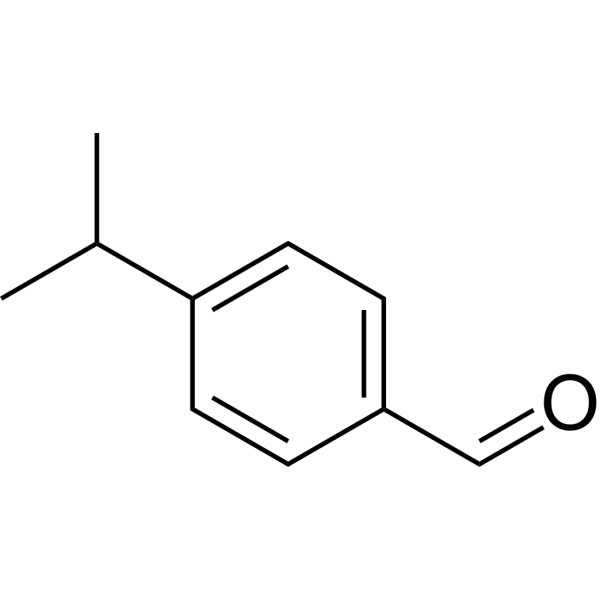
O=CC1=CC=C(C(C)C)C=C1
-
Synonyms
p-Isopropylbenzaldehyde
-
Structure Classification
-
선적
Room temperature in continental US; may vary elsewhere.
-
보관
4°C, stored under nitrogen
* In solvent : -80°C, 6 months; -20°C, 1 month (stored under nitrogen)


Publications (1)
-
Journal Impact Factor
-
Most Recent
-
Sci Rep
Network pharmacology and experimental validation to elucidate the pharmacological mechanisms of Guben Xiezhuo decoction against renal fibrosis. [Abstract]2025 Aug 20;15(1):30479. PMID: 40830226


용액&용해도
In Vitro:
DMSO : 100 mg/mL (674.72 mM; Need ultrasonic; Hygroscopic DMSO has a significant impact on the solubility of product, please use newly opened DMSO)
Please refer to the solubility information to select the appropriate solvent. Once prepared, please aliquot and store the solution to prevent product inactivation from repeated freeze-thaw cycles.
Storage method and period of stock solution: -80°C, 6 months; -20°C, 1 month (stored under nitrogen). When stored at -80°C, please use it within 6 months. When stored at -20°C, please use it within 1 month.
Please refer to the solubility information to select the appropriate solvent. Once prepared, please aliquot and store the solution to prevent product inactivation from repeated freeze-thaw cycles.
Storage method and period of stock solution: -80°C, 6 months; -20°C, 1 month (stored under nitrogen). When stored at -80°C, please use it within 6 months. When stored at -20°C, please use it within 1 month.
Concentration (start) × Volume (start) = Concentration (final) × Volume (final)
In Vivo:
Select the appropriate dissolution method based on your experimental animal and administration route.
- For the following dissolution methods, please ensure to first prepare a clear stock solution using an In Vitro approach and then sequentially add co-solvents:
- To ensure reliable experimental results, the clarified stock solution can be appropriately stored based on storage conditions. As for the working solution for In Vivo experiments, it is recommended to prepare freshly and use it on the same day.
- The percentages shown for the solvents indicate their volumetric ratio in the final prepared solution. If precipitation or phase separation occurs during preparation, heat and/or sonication can be used to aid dissolution.
Add each solvent one by one: 10% DMSO 40% PEG300 5% Tween-80 45% Saline
Solubility: ≥ 2.5 mg/mL (16.87 mM); Clear solution
This protocol yields a clear solution of ≥ 2.5 mg/mL (saturation unknown).
Taking 1 mL working solution as an example, add 100 μL DMSO stock solution (25.0 mg/mL) to 400 μL PEG300, and mix evenly; then add 50 μL Tween-80 and mix evenly; then add 450 μL Saline to adjust the volume to 1 mL.
Preparation of Saline: Dissolve 0.9 g sodium chloride in ddH₂O and dilute to 100 mL to obtain a clear Saline solution.
Add each solvent one by one: 10% DMSO 90% (20% SBE-β-CD in Saline)
Solubility: ≥ 2.5 mg/mL (16.87 mM); Clear solution
This protocol yields a clear solution of ≥ 2.5 mg/mL (saturation unknown).
Taking 1 mL working solution as an example, add 100 μL DMSO stock solution (25.0 mg/mL) to 900 μL 20% SBE-β-CD in Saline, and mix evenly.
Preparation of 20% SBE-β-CD in Saline (4°C, storage for one week): 2 g SBE-β-CD powder is dissolved in 10 mL Saline, completely dissolve until clear.
In Vivo Dissolution Calculator
Please enter the basic information of animal experiments:
-
-
-
-
Recommended: Prepare an additional quantity of animals to account for potential losses during experiments.
Please enter your animal formula composition:
-
%DMSO +
Recommended: Keep the proportion of DMSO in working solution below 2% if your animal is weak.
-
%+
-
+%Tween-80 + +
-
%Saline +
The co-solvents required include: DMSO, . All of co-solvents are available by MedChemExpress (MCE). , Tween 80. All of co-solvents are available by MedChemExpress (MCE).
Working solution concentration: 0.22 mg/mL
Method for preparing stock solution: mg drug dissolved in μL DMSO. Stock solution concentration: mg/mL. * In solvent : -80°C, 6 months; -20°C, 1 month (stored under nitrogen)
1. Take μL DMSO stock solution;
2. Add μL .
μL , mix evenly;
3. Then add μL Tween 80, mix evenly;
4. Then add μL
Please ensure that the stock solution in the first step is dissolved to a clear state, and add co-solvents in sequence. You can use ultrasonic heating (ultrasonic cleaner, recommended frequency 20-40 kHz), vortexing, etc. to assist dissolution.


순도&문서
-
Data Sheet (280 KB)
-
SDS (393 KB)
- English - EN (393 KB)
- Français - FR (393 KB)
- Deutsch - DE (393 KB)
- Norwegian - NO (393 KB)
- Español - ES (393 KB)
- Swedish - SV (393 KB)
- Italian - IT (393 KB)
- Korean - KR (393 KB)
- Portuguese - PT (393 KB)
-
Handling Instructions (2659 KB)
References
[1]. Morshedi D, et al. Cuminaldehyde as the Major Component of Cuminum cyminum, a Natural Aldehyde with Inhibitory Effect on Alpha-Synuclein Fibrillation and Cytotoxicity. J Food Sci. 2015 Oct;80(10):H2336-45. [Content Brief]
[2]. Tsai, et al. "Cuminaldehyde from Cinnamomum verum induces cell death through targeting topoisomerase 1 and 2 in human colorectal adenocarcinoma COLO 205 cells." Nutrients 8.6 (2016): 318. [Content Brief]
[3]. Tomy, et al. "Cuminaldehyde as a lipoxygenase inhibitor: in vitro and in silico validation." Applied biochemistry and biotechnology 174 (2014): 388-397. [Content Brief]
[4]. Wongkattiya, et al. "Antibacterial activity of cuminaldehyde on food-borne pathogens, the bioactive component of essential oil from Cuminum cyminum L. collected in Thailand." Journal of Complementary and Integrative Medicine 16.4 (2019). [Content Brief]
[6]. Koohsari, et al. "Antinociceptive and antineuropathic effects of cuminaldehyde, the major constituent of Cuminum cyminum seeds: Possible mechanisms of action." Journal of ethnopharmacology 255 (2020): 112786. [Content Brief]
[7]. Hoi-Seon Lee, et al. "Cuminaldehyde: aldose reductase and α-glucosidase inhibitor derived from Cuminum cyminum L. seeds." Journal of agricultural and food chemistry 53.7 (2005): 2446-2450. [Content Brief]


Complete Stock Solution Preparation Table
Please refer to the solubility information to select the appropriate solvent. Once prepared, please aliquot and store the solution to prevent product inactivation from repeated freeze-thaw cycles.
Storage method and period of stock solution: -80°C, 6 months; -20°C, 1 month (stored under nitrogen). When stored at -80°C, please use it within 6 months. When stored at -20°C, please use it within 1 month.
| Optional Solvent | Concentration Solvent Mass | 1 mg | 5 mg | 10 mg | 25 mg |
|---|---|---|---|---|---|
| DMSO | 1 mM | 6.7472 mL | 33.7359 mL | 67.4718 mL | 168.6796 mL |
| 5 mM | 1.3494 mL | 6.7472 mL | 13.4944 mL | 33.7359 mL | |
| 10 mM | 0.6747 mL | 3.3736 mL | 6.7472 mL | 16.8680 mL | |
| 15 mM | 0.4498 mL | 2.2491 mL | 4.4981 mL | 11.2453 mL | |
| 20 mM | 0.3374 mL | 1.6868 mL | 3.3736 mL | 8.4340 mL | |
| 25 mM | 0.2699 mL | 1.3494 mL | 2.6989 mL | 6.7472 mL | |
| 30 mM | 0.2249 mL | 1.1245 mL | 2.2491 mL | 5.6227 mL | |
| 40 mM | 0.1687 mL | 0.8434 mL | 1.6868 mL | 4.2170 mL | |
| 50 mM | 0.1349 mL | 0.6747 mL | 1.3494 mL | 3.3736 mL | |
| 60 mM | 0.1125 mL | 0.5623 mL | 1.1245 mL | 2.8113 mL | |
| 80 mM | 0.0843 mL | 0.4217 mL | 0.8434 mL | 2.1085 mL | |
| 100 mM | 0.0675 mL | 0.3374 mL | 0.6747 mL | 1.6868 mL |


Cuminaldehyde Related Classifications
HY-Y0790 Related Classifications
 Powered by Bioz