



D-Tartaric acid

Based on 1 Customer Validation
D-Tartaric acid (D-(-)-Tartaric acid) serves as an additive in beverages and other food products. When combined with pyrrole, D-Tartaric acid is used to construct a D-TA/polypyrrole-based bacterial imprinted polymer sensor for the detection of Vibrio parahaemolyticus. D-Tartaric acid enhances the sensitivity of polypyrrole-based bacterial imprinted polymer sensors for detecting Vibrio parahaemolyticus. D-Tartaric acid is applicable to research on Vibrio parahaemolyticus infection.
For research use only. We do not sell to patients.
- Purity : 99.79%
- CAS No.: 147-71-7
- Formula: C4H6O6
- Molecular Weight:150.09
-
Storage:Powder -20°C, 3 years , 4°C, 2 years ; In solvent -80°C, 6 months , -20°C, 1 month


To place orders, for customer services and technical support, please contact: MedChemExpress USA
Tel: 609-228-6898 E-mail: [email protected] [email protected]


-
 Biological Activity
-
Chemical Information
-
Solvent & Solubility
- Protocols
- Purity & Documentation
- References
-
 Help & FAQs


-
HY-20558
D-(+)-Malic acidEndogenous Metabolite -

HY-Y1134R
D-Tartaric acid (Standard)Standard Of D-Tartaric Acid -
HY-Y1311
Malic acidDicarboxylic Acid -
HY-W015883
Fumaric acidAnti-inflammatory agent -
HY-B1372
Tribromoethyl alcoholAvertin -
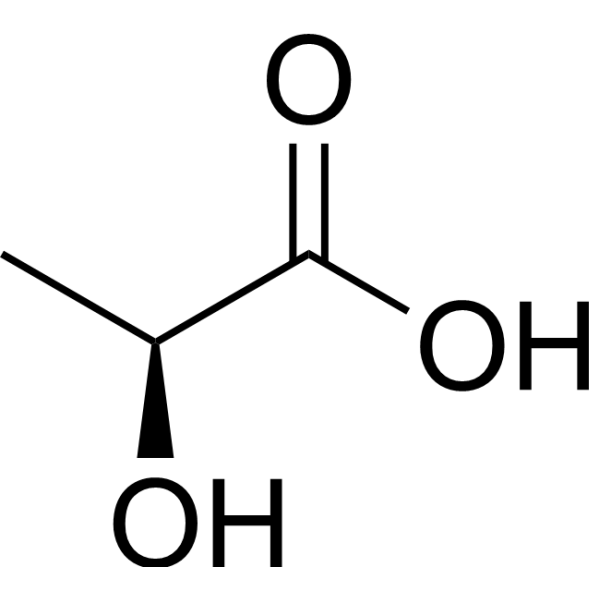
HY-Y0479
L-Lactic acidBuildiing Block -
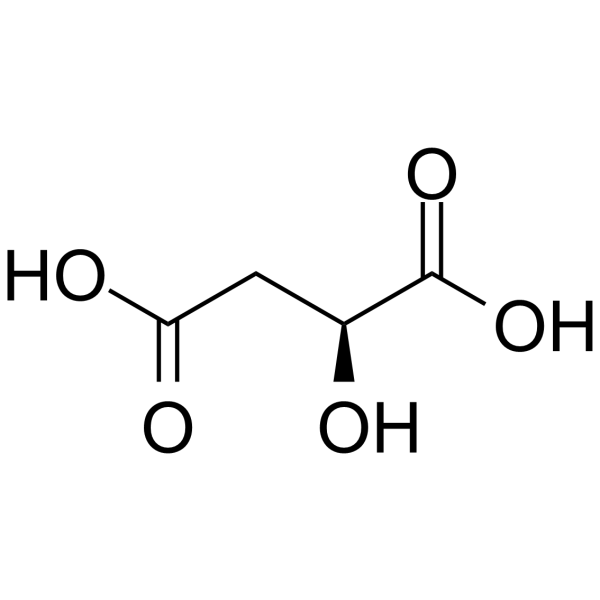
HY-Y1069
(S)-Malic acid -
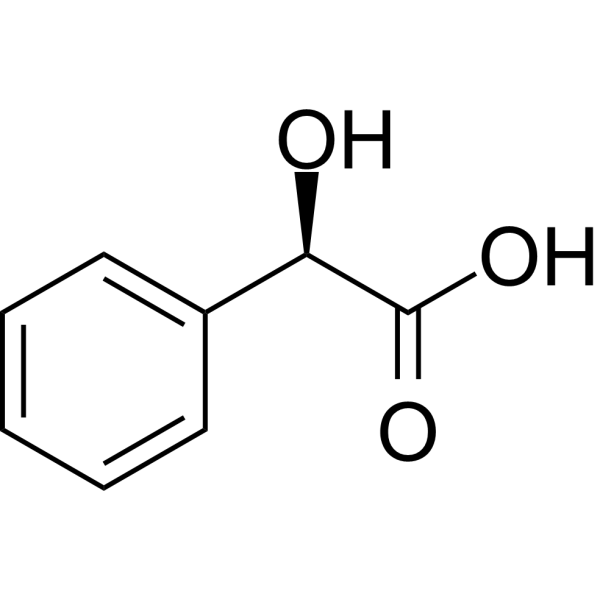
HY-Y0585
D-(-)-Mandelic acidAntioxidant -
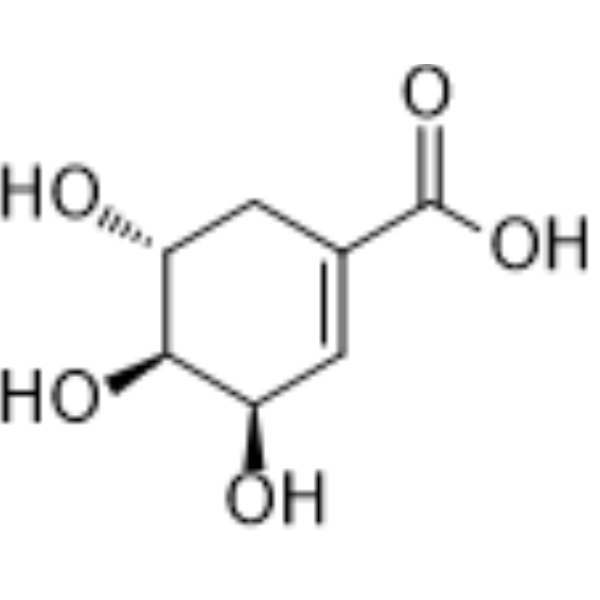
HY-N0130
Shikimic acidMetabolic Intermediate -

HY-W015883R
Fumaric acid (Standard)Reference Standard -
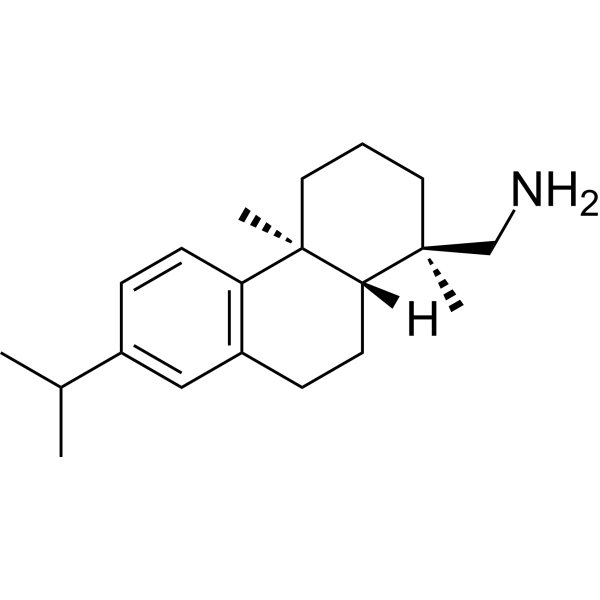
HY-W005629
LeelaminePDK Inhibitor, CB1/CB2 Agonist -

HY-Y1311R
Malic acid (Standard)


Biological Activity
Description
Cellular Effect
|
Cell Line

|
Type | Value | Description | References |
|---|---|---|---|---|
| MT2 | ED50 |
>1000 μM
Compound: L-tartaric acid
|
Concentration that inhibits Human Immunodeficiency Virus Type 1 (HIV-1)-induced death of MT-2 cells
Concentration that inhibits Human Immunodeficiency Virus Type 1 (HIV-1)-induced death of MT-2 cells
|
[PMID: 9986720] |
In Vitro


Chemical Information
-
CAS No. 147-71-7
-
Appearance Solid
-
Molecular Weight 150.09
-
Formula C4H6O6
-
Color White to off-white
-
SMILES
OC([C@@H](O)[C@H](O)C(O)=O)=O
-
Synonyms
D-(-)-Tartaric acid
-
Shipping
Room temperature in continental US; may vary elsewhere.
-
Storage
Powder -20°C 3 years 4°C 2 years In solvent -80°C 6 months -20°C 1 month


Solvent & Solubility
In Vitro:
DMSO : 200 mg/mL (1332.53 mM; Need ultrasonic; Hygroscopic DMSO has a significant impact on the solubility of product, please use newly opened DMSO)
H2O : 100 mg/mL (666.27 mM; Need ultrasonic)
Please refer to the solubility information to select the appropriate solvent. Once prepared, please aliquot and store the solution to prevent product inactivation from repeated freeze-thaw cycles.
Storage method and period of stock solution: -80°C, 6 months; -20°C, 1 month. When stored at -80°C, please use it within 6 months. When stored at -20°C, please use it within 1 month.
* Note: If you choose water as the stock solution, please dilute it to the working solution, then filter and sterilize it with a 0.22 μm filter before use.
Please refer to the solubility information to select the appropriate solvent. Once prepared, please aliquot and store the solution to prevent product inactivation from repeated freeze-thaw cycles.
Storage method and period of stock solution: -80°C, 6 months; -20°C, 1 month. When stored at -80°C, please use it within 6 months. When stored at -20°C, please use it within 1 month.
* Note: If you choose water as the stock solution, please dilute it to the working solution, then filter and sterilize it with a 0.22 μm filter before use.
Concentration (start) × Volume (start) = Concentration (final) × Volume (final)

Protocols
-
Research Protocol for Infectious Diseases
Infectious-disease experiments test how pathogens interact with host barriers, innate immune receptors, inflammatory signaling, pathogen replication, and tissue injury; pattern-recognition receptors such as TLRs, RIG-I-like receptors, NOD-like receptors, and inflammasomes detect microbial molecules and activate NF-κB, interferon, and cytokine responses. The central hypothesis is that infection severity reflects the balance between pathogen burden and host response: protective inflammation restricts pathogen growth, whereas excessive or mislocalized inflammation contributes to tissue damage and disease phenotype. Unresolved questions include which host pathways are protective versus pathogenic, why some infection models fail to translate to human disease, and which combined readouts best predict clinically relevant infection outcomes.


Purity & Documentation
-
Data Sheet (271 KB)
-
SDS (476 KB)
- English - EN (476 KB)
- Français - FR (476 KB)
- Deutsch - DE (476 KB)
- Norwegian - NO (476 KB)
- Español - ES (476 KB)
- Swedish - SV (476 KB)
- Italian - IT (476 KB)
- Korean - KR (476 KB)
- Portuguese - PT (476 KB)
-
Handling Instructions (2659 KB)
References


Complete Stock Solution Preparation Table
Please refer to the solubility information to select the appropriate solvent. Once prepared, please aliquot and store the solution to prevent product inactivation from repeated freeze-thaw cycles.
Storage method and period of stock solution: -80°C, 6 months; -20°C, 1 month. When stored at -80°C, please use it within 6 months. When stored at -20°C, please use it within 1 month.
| Optional Solvent | Concentration Solvent Mass | 1 mg | 5 mg | 10 mg | 25 mg |
|---|---|---|---|---|---|
| H2O / DMSO | 1 mM | 6.6627 mL | 33.3133 mL | 66.6267 mL | 166.5667 mL |
| 5 mM | 1.3325 mL | 6.6627 mL | 13.3253 mL | 33.3133 mL | |
| 10 mM | 0.6663 mL | 3.3313 mL | 6.6627 mL | 16.6567 mL | |
| 15 mM | 0.4442 mL | 2.2209 mL | 4.4418 mL | 11.1044 mL | |
| 20 mM | 0.3331 mL | 1.6657 mL | 3.3313 mL | 8.3283 mL | |
| 25 mM | 0.2665 mL | 1.3325 mL | 2.6651 mL | 6.6627 mL | |
| 30 mM | 0.2221 mL | 1.1104 mL | 2.2209 mL | 5.5522 mL | |
| 40 mM | 0.1666 mL | 0.8328 mL | 1.6657 mL | 4.1642 mL | |
| 50 mM | 0.1333 mL | 0.6663 mL | 1.3325 mL | 3.3313 mL | |
| 60 mM | 0.1110 mL | 0.5552 mL | 1.1104 mL | 2.7761 mL | |
| 80 mM | 0.0833 mL | 0.4164 mL | 0.8328 mL | 2.0821 mL | |
| 100 mM | 0.0666 mL | 0.3331 mL | 0.6663 mL | 1.6657 mL |
* Note: If you choose water as the stock solution, please dilute it to the working solution, then filter and sterilize it with a 0.22 μm filter before use.


D-Tartaric acid Related Classifications
HY-Y1134 Related Classifications
 Powered by Bioz