



K00135

Based on 1 Customer Validation
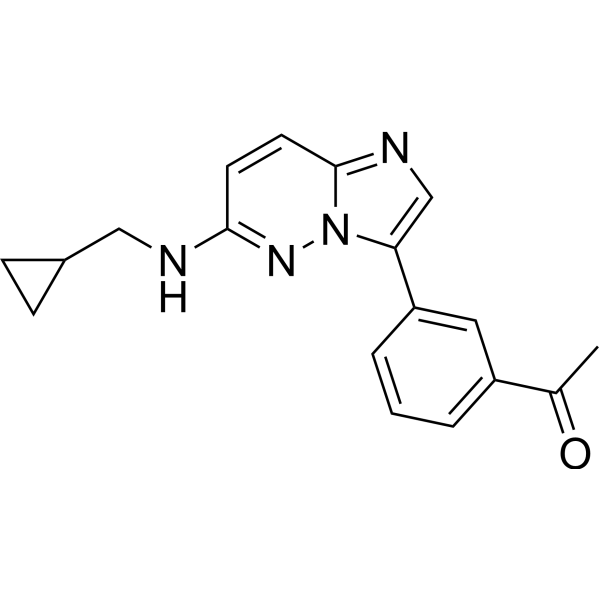
K00135 is a potent and selective inhibitor of PIM kinases. K00135 inhibits survival and clonogenic growth of acute leukemia cells. K00135 inhibits the phosphorylation of PIM downstream targets.
For research use only. We do not sell to patients.
- Purity : 98.03%
- CAS No.: 869650-21-5
- Formula: C18H18N4O
- Molecular Weight:306.36
-
Storage:Powder -20°C, 3 years ; In solvent -80°C, 6 months , -20°C, 1 month

To place orders, for customer services and technical support, please contact: MedChemExpress USA
Tel: 609-228-6898 E-mail: [email protected] [email protected]


-
 Biological Activity
-
Chemical Information
-
Solvent & Solubility
- Protocols
- Purity & Documentation
- References
-
 Help & FAQs


-
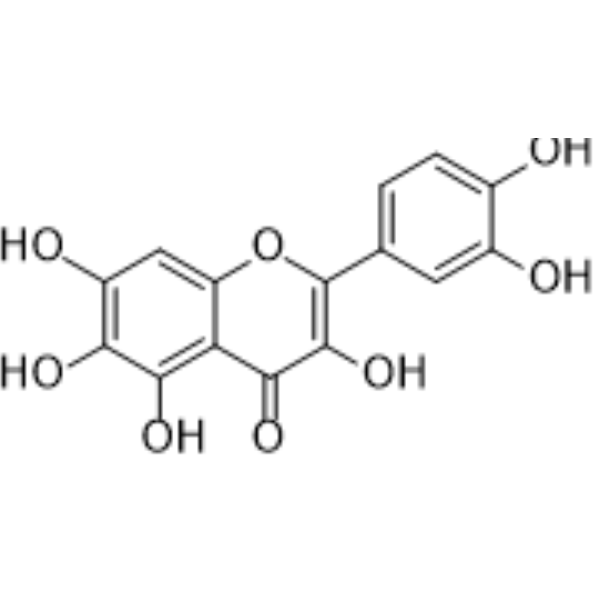
HY-N4149
QuercetagetinPim Inhibitor -
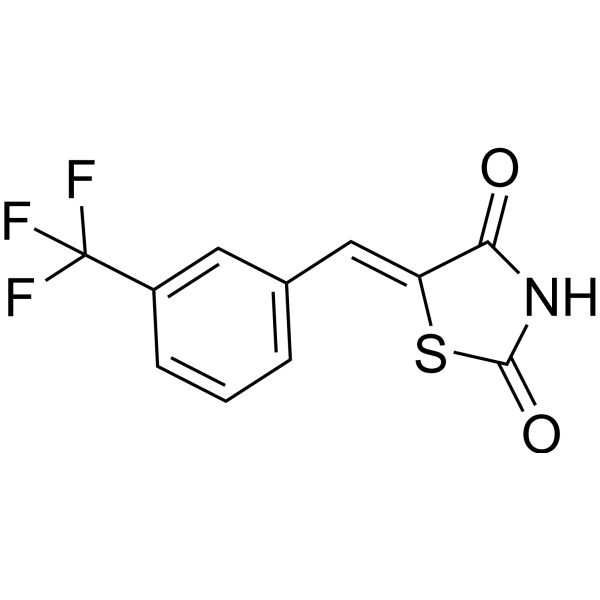
HY-16576A
SMI-4aPim-1 Inhibitor -
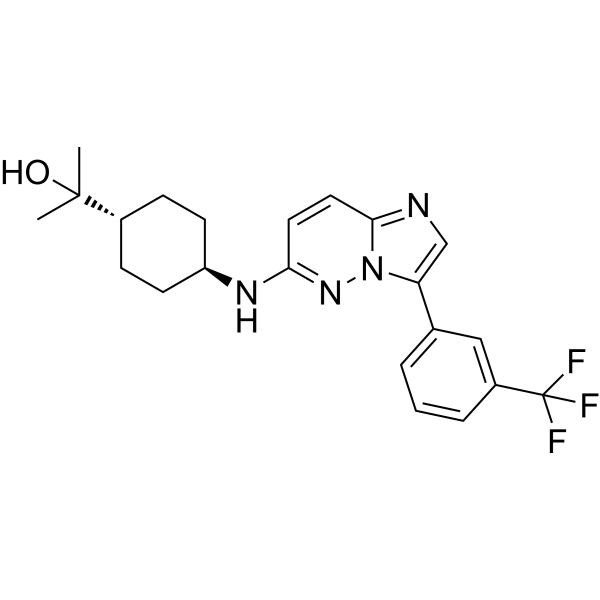
HY-101126
NuvisertibPIM Kinase Inhibitor -
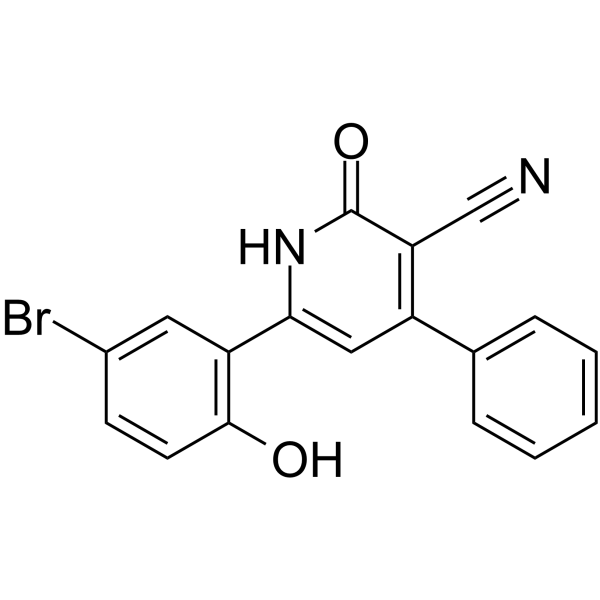
HY-18086
TCS PIM-1 1Pim-1 Inhibitor -
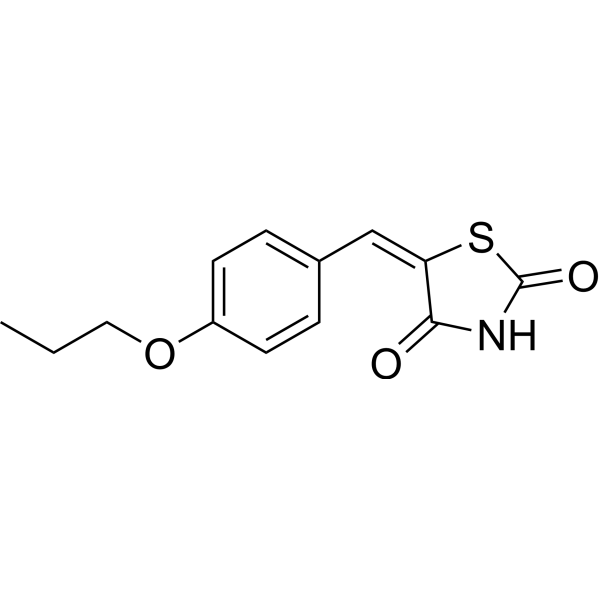
HY-101947
SMI-16aPim Kinase Inhibitor -
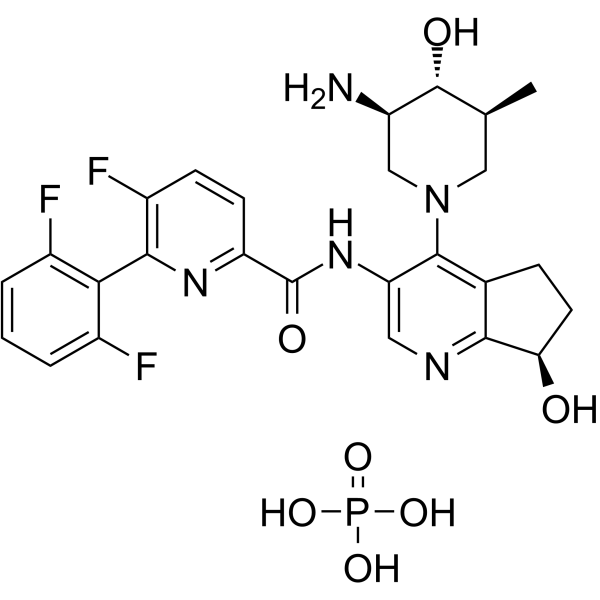
HY-101870B
Uzansertib phosphatePIM Inhibitor -
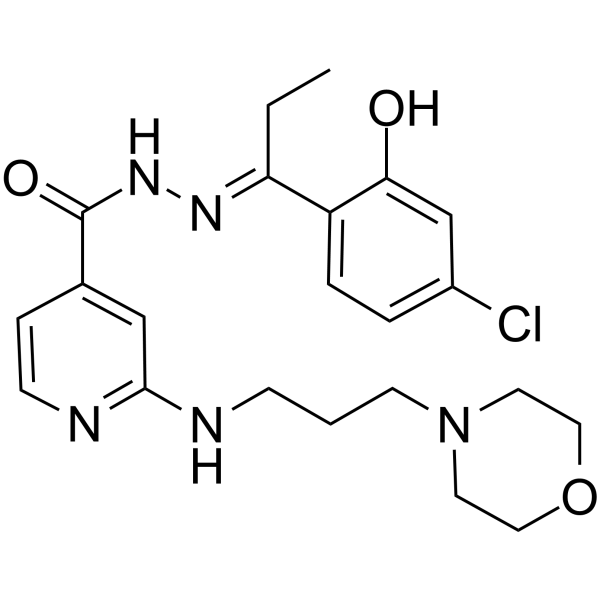
HY-12830
M-110PIM-3 Inhibitor -
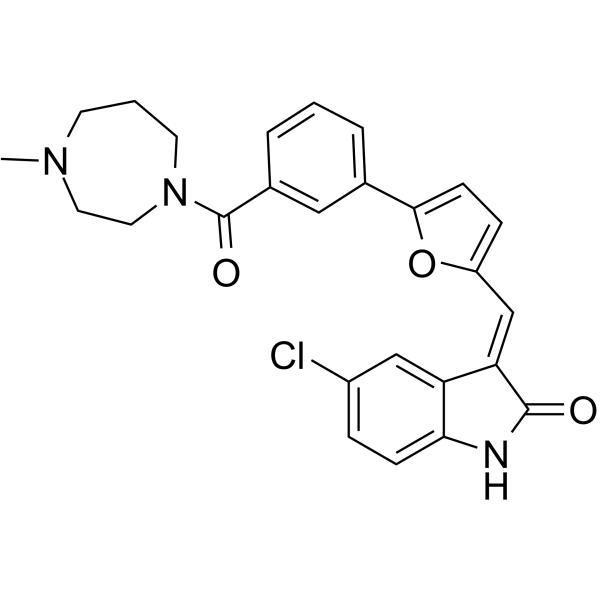
HY-18095
CX-6258Pim Kinases Inhibitor -
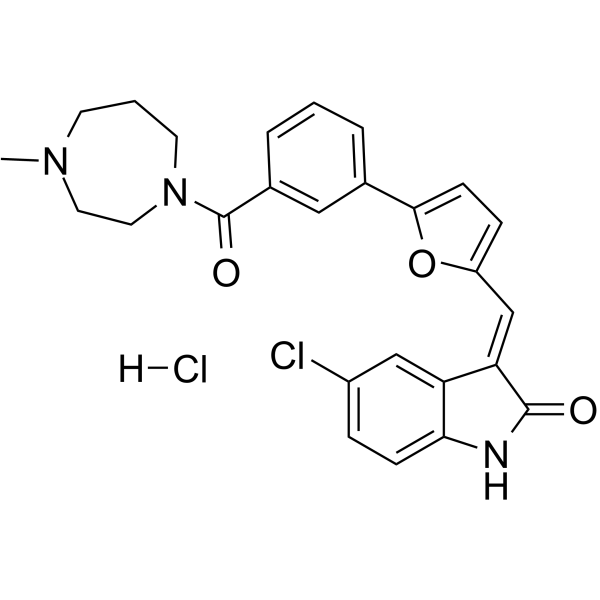
HY-18095B
CX-6258 hydrochloridePim Kinases Inhibitor -

HY-129163
HJ-PI01Pim-2 Inhibitor -
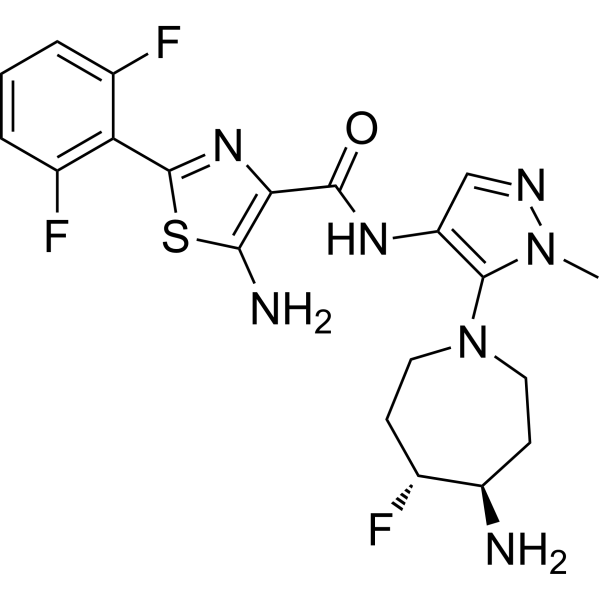
HY-16976
GDC-0339 -
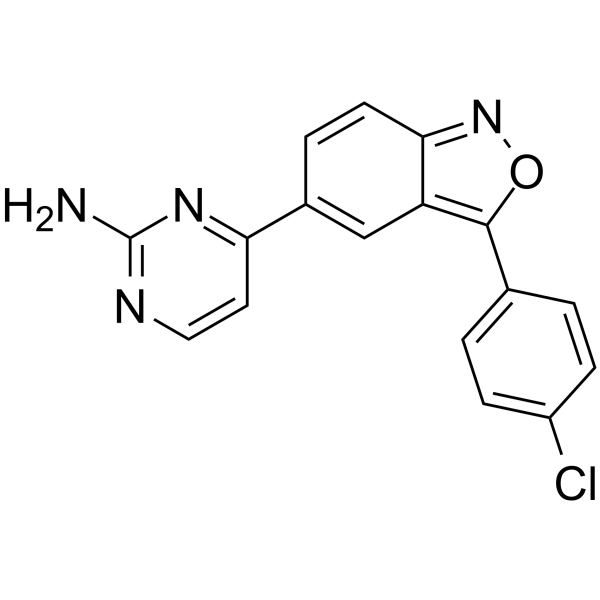
HY-108605
PIM1-IN-2Pim-1 Inhibitor


Biological Activity
Description
Cellular Effect
|
Cell Line

|
Type | Value | Description | References |
|---|---|---|---|---|
| K562 | IC50 |
8 μM
Compound: K00135
|
Growth inhibition of human K562 cells after 48 hrs by WST-1 assay
Growth inhibition of human K562 cells after 48 hrs by WST-1 assay
|
[PMID: 22136433] |
| MOLM-13 | IC50 |
0.3 μM
Compound: K00135
|
Growth inhibition of human MOLM13 cells after 48 hrs by WST-1 assay
Growth inhibition of human MOLM13 cells after 48 hrs by WST-1 assay
|
[PMID: 22136433] |
| MV4-11 | IC50 |
0.4 μM
Compound: K00135
|
Growth inhibition of human MV4-11 cells after 48 hrs by WST-1 assay
Growth inhibition of human MV4-11 cells after 48 hrs by WST-1 assay
|
[PMID: 22136433] |
| RS4-11 | IC50 |
8.8 μM
Compound: K00135
|
Growth inhibition of human RS4:11 cells after 48 hrs by WST-1 assay
Growth inhibition of human RS4:11 cells after 48 hrs by WST-1 assay
|
[PMID: 22136433] |
| SEM | IC50 |
6 μM
Compound: K00135
|
Growth inhibition of human SEM cells after 48 hrs by WST-1 assay
Growth inhibition of human SEM cells after 48 hrs by WST-1 assay
|
[PMID: 22136433] |


Chemical Information
-
CAS No. 869650-21-5
-
Appearance Solid
-
Molecular Weight 306.36
-
Formula C18H18N4O
-
Color Light yellow to light brown
-
SMILES
CC(C1=CC=CC(C2=CN=C3C=CC(NCC4CC4)=NN32)=C1)=O
-
Shipping
Room temperature in continental US; may vary elsewhere.
-
Storage
Powder -20°C 3 years In solvent -80°C 6 months -20°C 1 month


Solvent & Solubility
In Vitro:
DMSO : 11.67 mg/mL (38.09 mM; ultrasonic and warming and heat to 60°C; Hygroscopic DMSO has a significant impact on the solubility of product, please use newly opened DMSO)
Please refer to the solubility information to select the appropriate solvent. Once prepared, please aliquot and store the solution to prevent product inactivation from repeated freeze-thaw cycles.
Storage method and period of stock solution: -80°C, 6 months; -20°C, 1 month. When stored at -80°C, please use it within 6 months. When stored at -20°C, please use it within 1 month.
Please refer to the solubility information to select the appropriate solvent. Once prepared, please aliquot and store the solution to prevent product inactivation from repeated freeze-thaw cycles.
Storage method and period of stock solution: -80°C, 6 months; -20°C, 1 month. When stored at -80°C, please use it within 6 months. When stored at -20°C, please use it within 1 month.
Concentration (start) × Volume (start) = Concentration (final) × Volume (final)

Protocols
-
Kinase activity and phosphorylation assays
Kinase activity assays measure the ability of kinases to transfer phosphate groups from ATP to specific substrates, while phosphorylation assays detect the presence and levels of phosphorylated proteins. Common methods include radiolabeled ATP incorporation (e. g. ,), ADP release detection via bioluminescence (e. g. ,[3]), enzyme-linked immunosorbent assays (ELISA) for phospho-specific epitopes (e. g. ,[6]), and microtiter-based formats for high-throughput screening (e. g. ,[8]). The ADP-Glo assay quantifies kinase activity by measuring ADP produced during phosphorylation using a luciferase-based system. Radiometric assays involve autoradiography or scintillation counting after incorporation of 32P-labeled ATP into substrate proteins. ELISA-based approaches rely on phospho-specific antibodies to detect activated kinases in cell lysates or purified samples.
-
Western Blot
Western blotting (WB) is a commonly used experimental method in molecular biology, biochemistry, and immunogenetics for identifying and quantifying target proteins. It combines gel electrophoresis with immunoassay, enabling researchers to analyze protein expression, post-translational modifications, and molecular weight.
-
Soft Agar Colony Formation Assay
Soft agar colony formation assay measures anchorage-independent growth, in which transformed or tumorigenic cells proliferate as colonies in a semisolid agar matrix while many non-transformed adherent cells fail to proliferate without attachment; classic studies showed that growth in semisolid medium correlates with tumorigenicity in nude mice, and later protocol papers describe the method as a stringent in vitro assay for malignant transformation. The readout is the number, size, morphology, or signal intensity of colonies formed within agar after incubation; published formats include manual colony counting after staining, 96-well or 384-well quantitative formats, DNA-binding dye detection, MTT/tetrazolium-based detection, digital image analysis, and PCR-based marker detection from soft agar cultures.
-
Protocol for Kinase activity and phosphorylation assays
Kinase activity assays measure transfer of phosphate from ATP to a protein or peptide substrate, generating phosphorylated substrate, ADP, or incorporated radiolabeled phosphate as the readout; phosphorylation assays measure site-specific phosphorylation in cells or tissues as a proxy for kinase-pathway activation, inhibition, or substrate regulation. Phosphorylation can be detected by phospho-specific Western blot, immunoprecipitation kinase assay, phospho-immunofluorescence, phospho-flow cytometry, luminescent ADP detection, radiolabeled ATP incorporation, or reporter-based pathway assays, and these readouts can be applied to cancer cells, primary neurons, mouse tumors, organoids, inflammatory macrophages, ferroptosis studies, and mitophagy studies when the kinase target is biologically relevant.


Purity & Documentation
-
Data Sheet (269 KB)
-
SDS (251 KB)
- English - EN (251 KB)
- Français - FR (251 KB)
- Deutsch - DE (251 KB)
- Norwegian - NO (251 KB)
- Español - ES (251 KB)
- Swedish - SV (251 KB)
- Italian - IT (251 KB)
- Korean - KR (251 KB)
- Portuguese - PT (251 KB)
-
Handling Instructions (2659 KB)
References


Complete Stock Solution Preparation Table
Please refer to the solubility information to select the appropriate solvent. Once prepared, please aliquot and store the solution to prevent product inactivation from repeated freeze-thaw cycles.
Storage method and period of stock solution: -80°C, 6 months; -20°C, 1 month. When stored at -80°C, please use it within 6 months. When stored at -20°C, please use it within 1 month.
| Optional Solvent | Concentration Solvent Mass | 1 mg | 5 mg | 10 mg | 25 mg |
|---|---|---|---|---|---|
| DMSO | 1 mM | 3.2641 mL | 16.3207 mL | 32.6413 mL | 81.6033 mL |
| 5 mM | 0.6528 mL | 3.2641 mL | 6.5283 mL | 16.3207 mL | |
| 10 mM | 0.3264 mL | 1.6321 mL | 3.2641 mL | 8.1603 mL | |
| 15 mM | 0.2176 mL | 1.0880 mL | 2.1761 mL | 5.4402 mL | |
| 20 mM | 0.1632 mL | 0.8160 mL | 1.6321 mL | 4.0802 mL | |
| 25 mM | 0.1306 mL | 0.6528 mL | 1.3057 mL | 3.2641 mL | |
| 30 mM | 0.1088 mL | 0.5440 mL | 1.0880 mL | 2.7201 mL |


K00135 Related Classifications
HY-123141 Related Classifications
 Powered by Bioz