



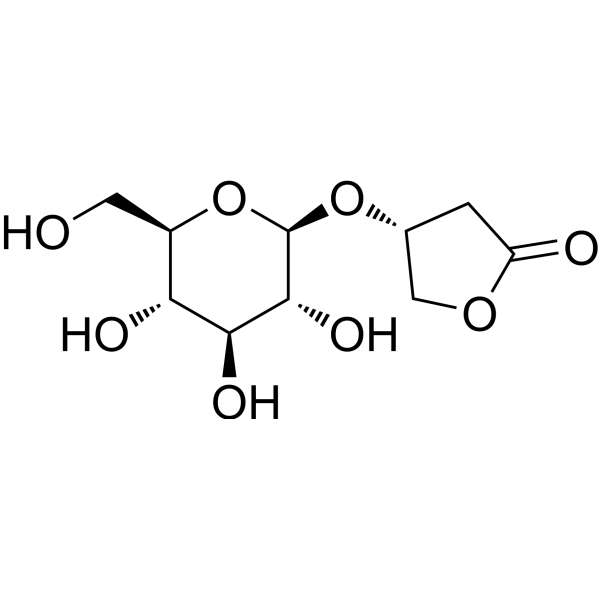
Kinsenoside
Based on 5 publication(s) in Google Scholar
Kinsenoside is the main active ingredient of the genus plant, and has various biological activities. Kinsenoside and Nrf2 depend on the protection of nuclear cells (NPCs), which significantly reduces their ability to survive. Kinsenoside Active NPC Medium AKT-ERK1/2-Nrf2 Signal passage, Prevent physical decline, aging, harmonious physical function impairment. Kinsenoside can improve the puncture guide model for intermediate vertebral wall discharge (IDD).
For research use only. We do not sell to patients.
- Purity : 99.92%
- CAS No.: 151870-74-5
- Formula: C10H16O8
- Molecular Weight:264.23
-
Storage:
4°C, protect from light
* In solvent : -80°C, 6 months; -20°C, 1 month (protect from light)

To place orders, for customer services and technical support, please contact: MedChemExpress USA
Tel: 609-228-6898 E-mail: [email protected] [email protected]


-
 Biological Activity
-
Chemical Information
-
Solvent & Solubility
- Protocols
- Purity & Documentation
- References
-
 Help & FAQs


-
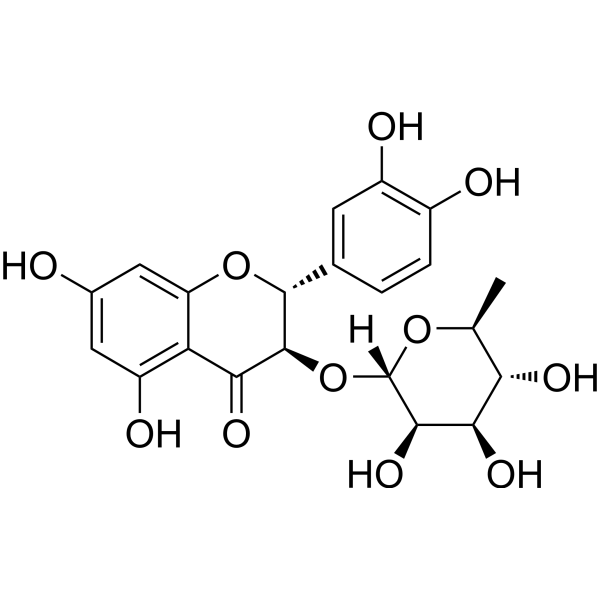
HY-N0509
AstilbinTNF Receptor Inhibitor -
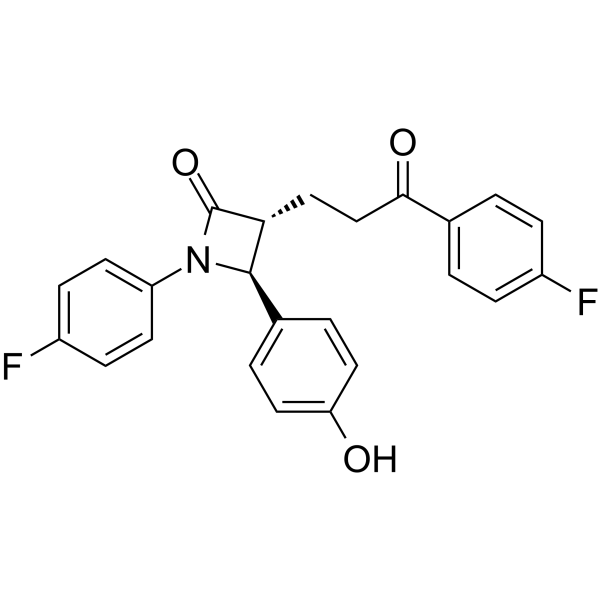
HY-133114
Ezetimibe ketoneNrf2 Activator/ROS Inhibitor -
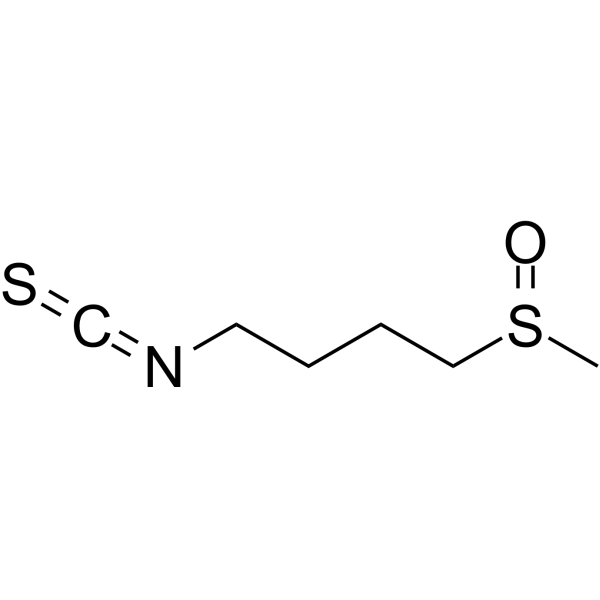
HY-13755
SulforaphaneKeap1/Nrf2/ARE Inducer -
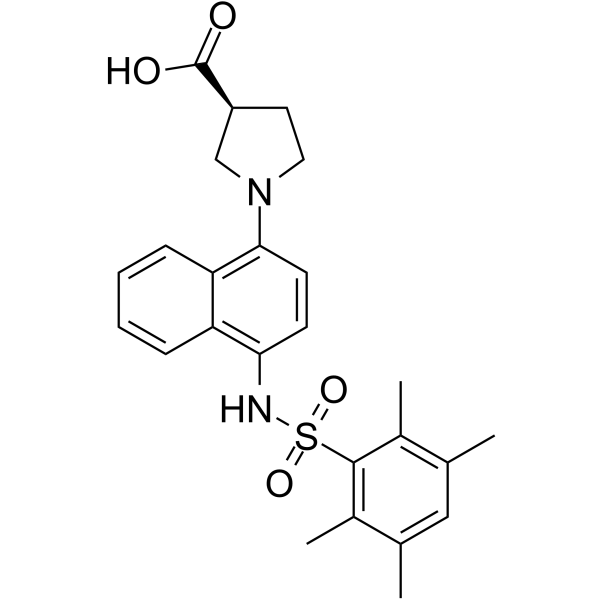
HY-110275
RA839Nrf2 Activator -

HY-N0509R
Astilbin (Standard)TNF Receptor Inhibitor -
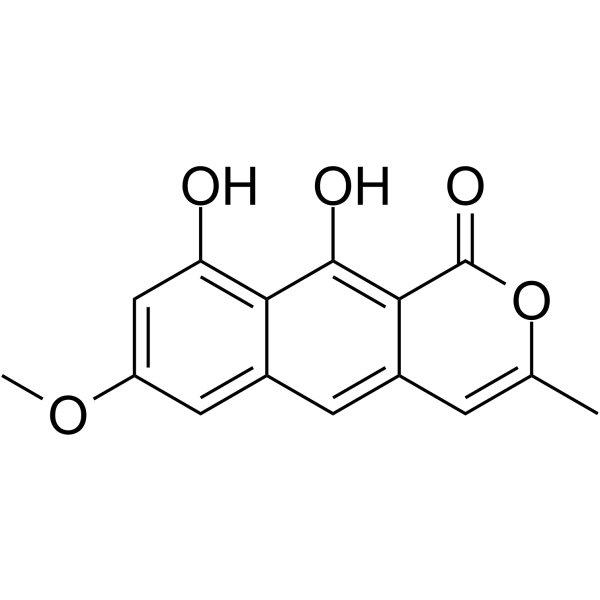
HY-N7617
ToralactoneKeap1-Nrf2 Inhibitor -
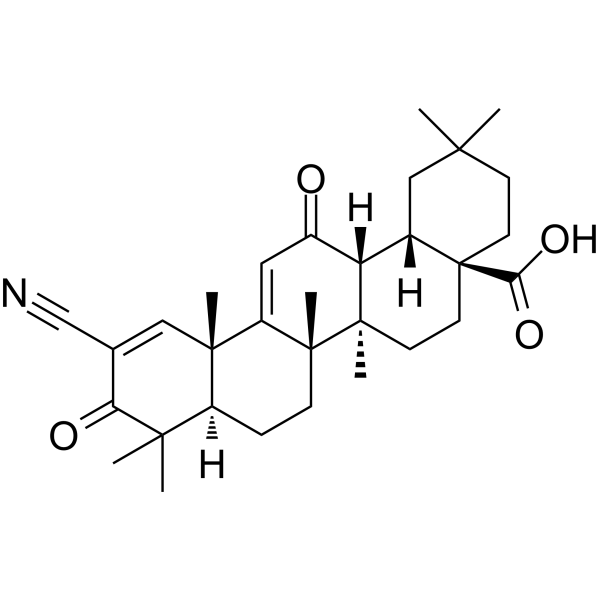
HY-14909
BardoxoloneNrf2 Activator -
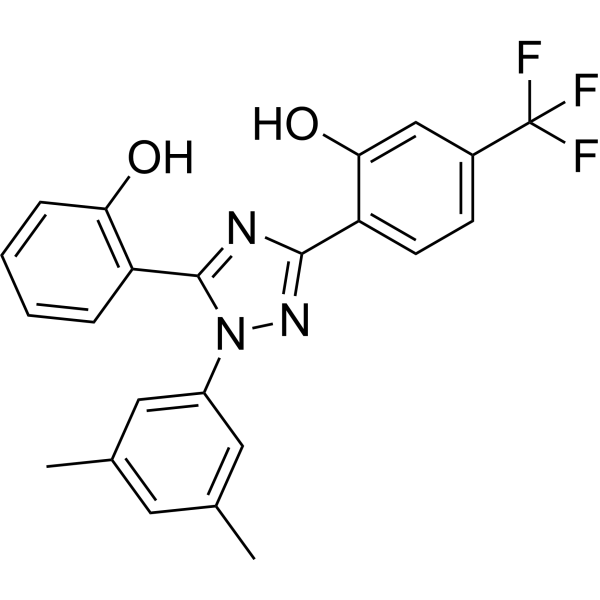
HY-143333
Nrf2 activator-3Nrf2 Activator -
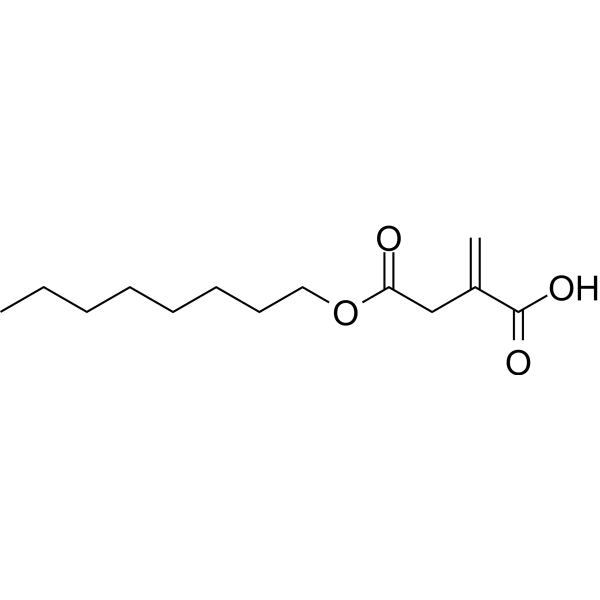
HY-112675
4-Octyl itaconateNrf2 Activator -
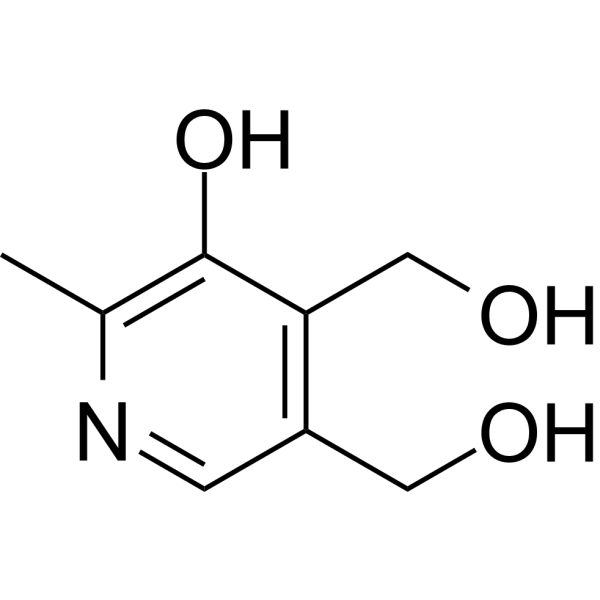
HY-B1328
PyridoxinePyridine Derivative -
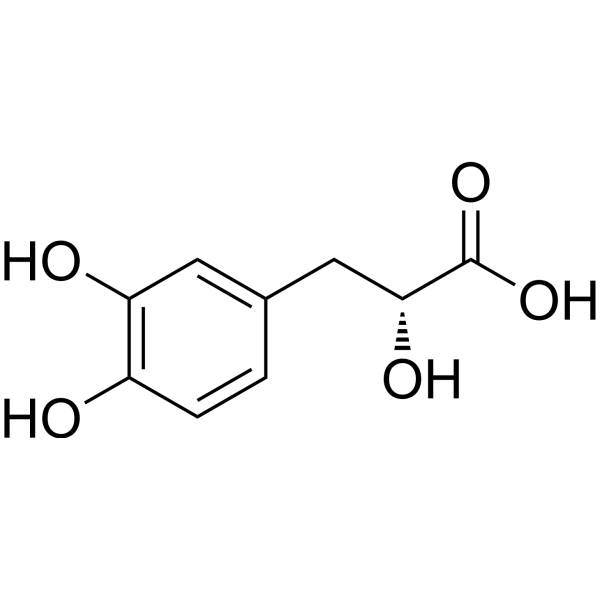
HY-N1913
DanshensuNrf2/HO-1 Activator -
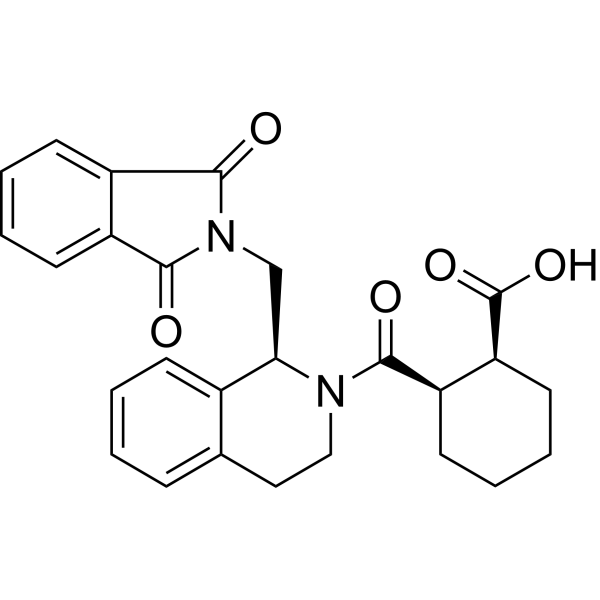
HY-110258
ML334NRF2 Activator
Publications Citing Use of MedChemExpress (MCE) Kinsenoside
More

Biological Activity
Description
Cellular Effect
|
Cell Line

|
Type | Value | Description | References |
|---|---|---|---|---|
| RAW264.7 | IC50 |
41.94 μM
Compound: 1
|
Antiinflammatory activity against mouse RAW 264.7 cells assessed as inhibition of LPS-induced NO production incubated for 24 hrs by Griess assay
Antiinflammatory activity against mouse RAW 264.7 cells assessed as inhibition of LPS-induced NO production incubated for 24 hrs by Griess assay
|
[PMID: 33223464] |
In Vitro
Kinsenoside (5-50 μg/mL; 24 h) suppresses NPC apoptosis and senescence under THBP (100 μM)-induced oxidative stresss in nucleus pulposus cells (NPCs), by dose-dependently inhibiting the protein levels of C-caspase3 and p16[1].
Kinsenoside activates the AKT-ERK1/2-Nrf2 signaling pathway through the phosphorylation of AKT and ERK1/2 in nucleus pulposus cells (NPCs)[1].
Kinsenoside (10-50 μM; 30 min) inhibits LPS (1 μg/mL)-induced the production of inflammatory mediators such as nitric oxide, TNF-α, IL-1β, monocyte chemoattractant protein 1, and macrophage migration inhibitory factor[3].
MedChemExpress (MCE) has not independently confirmed the accuracy of these methods. They are for reference only.
In Vivo
Kinsenoside (100 mg/kg, 300 mg/kg; ip; 1 h before LPS induction) inhibits LPS (40 mg/kg; ip)-induced inflammatory model in mice[3].
MedChemExpress (MCE) has not independently confirmed the accuracy of these methods. They are for reference only.


Chemical Information
-
CAS No. 151870-74-5
-
Appearance Solid
-
Molecular Weight 264.23
-
Formula C10H16O8
-
Color White to light yellow
-
SMILES
O=C1OC[C@H](O[C@H]2[C@@H]([C@H]([C@@H]([C@@H](CO)O2)O)O)O)C1
-
Structure Classification
-
Initial Source
-
Shipping
Room temperature in continental US; may vary elsewhere.
-
Storage
4°C, protect from light
* In solvent : -80°C, 6 months; -20°C, 1 month (protect from light)


Publications (5)
-
Journal Impact Factor
-
Most Recent
-
Phytomedicine
Astragaloside IV inhibits the growth of obesity-associated triple-negative breast cancer by activating FOXA1 transcription factor to regulate GAL3ST1-GalCer signaling and remodel sphingolipid metabolism. [Abstract]2025 Aug:144:156907. PMID: 40472617 -
J Ethnopharmacol
Kinsenoside alleviates experimental acute pancreatitis by suppressing M1 macrophage polarization via the TLR4/STAT1 signaling pathway. [Abstract]2025 Apr 9:345:119551. PMID: 39999939 -
Int Immunopharmacol
Kinsenoside alleviates retinal pigment epithelium cell injury in age-related macular degeneration-like retinal injury through exosome-associated modulation of JNK/MAPK signaling. [Abstract]2026 Oct 1:186:117139. PMID: 42468166 -
Int J Mol Sci
Kinsenoside Suppresses DGAT1-Mediated Lipid Droplet Formation to Trigger Ferroptosis in Triple-Negative Breast Cancer. [Abstract]2025 Mar 5;26(5):2322. PMID: 40076939 -
Oxid Med Cell Longev
The Activation of AMPK/NRF2 Pathway in Lung Epithelial Cells Is Involved in the Protective Effects of Kinsenoside on Lipopolysaccharide-Induced Acute Lung Injury. [Abstract]2022 Mar 18:2022:3589277. PMID: 35340214


Solvent & Solubility
In Vitro:
H2O : ≥ 100 mg/mL (378.46 mM)
DMSO : 50 mg/mL (189.23 mM; Need ultrasonic; Hygroscopic DMSO has a significant impact on the solubility of product, please use newly opened DMSO)
* "≥" means soluble, but saturation unknown.
Please refer to the solubility information to select the appropriate solvent. Once prepared, please aliquot and store the solution to prevent product inactivation from repeated freeze-thaw cycles.
Storage method and period of stock solution: -80°C, 6 months; -20°C, 1 month (protect from light). When stored at -80°C, please use it within 6 months. When stored at -20°C, please use it within 1 month.
* Note: If you choose water as the stock solution, please dilute it to the working solution, then filter and sterilize it with a 0.22 μm filter before use.
Please refer to the solubility information to select the appropriate solvent. Once prepared, please aliquot and store the solution to prevent product inactivation from repeated freeze-thaw cycles.
Storage method and period of stock solution: -80°C, 6 months; -20°C, 1 month (protect from light). When stored at -80°C, please use it within 6 months. When stored at -20°C, please use it within 1 month.
* Note: If you choose water as the stock solution, please dilute it to the working solution, then filter and sterilize it with a 0.22 μm filter before use.
Concentration (start) × Volume (start) = Concentration (final) × Volume (final)
In Vivo:
Select the appropriate dissolution method based on your experimental animal and administration route.
- For the following dissolution methods, please ensure to first prepare a clear stock solution using an In Vitro approach and then sequentially add co-solvents:
- To ensure reliable experimental results, the clarified stock solution can be appropriately stored based on storage conditions. As for the working solution for In Vivo experiments, it is recommended to prepare freshly and use it on the same day.
- The percentages shown for the solvents indicate their volumetric ratio in the final prepared solution. If precipitation or phase separation occurs during preparation, heat and/or sonication can be used to aid dissolution.
Add each solvent one by one: 10% DMSO 40% PEG300 5% Tween-80 45% Saline
Solubility: ≥ 2.5 mg/mL (9.46 mM); Clear solution
This protocol yields a clear solution of ≥ 2.5 mg/mL (saturation unknown).
Taking 1 mL working solution as an example, add 100 μL DMSO stock solution (25.0 mg/mL) to 400 μL PEG300, and mix evenly; then add 50 μL Tween-80 and mix evenly; then add 450 μL Saline to adjust the volume to 1 mL.
Preparation of Saline: Dissolve 0.9 g sodium chloride in ddH₂O and dilute to 100 mL to obtain a clear Saline solution.
In Vivo Dissolution Calculator
Please enter the basic information of animal experiments:
-
-
-
-
Recommended: Prepare an additional quantity of animals to account for potential losses during experiments.
Working solution concentration: 0.22 mg/mL
This product has good water solubility, please refer to the measured solubility data in water/PBS/Saline for details.


Purity & Documentation
-
Data Sheet (276 KB)
-
SDS (393 KB)
- English - EN (393 KB)
- Français - FR (393 KB)
- Deutsch - DE (393 KB)
- Norwegian - NO (393 KB)
- Español - ES (393 KB)
- Swedish - SV (393 KB)
- Italian - IT (393 KB)
- Korean - KR (393 KB)
- Portuguese - PT (393 KB)
-
Handling Instructions (2659 KB)
References
[1]. Qi CX, et al. Kinsenoside: A Promising Bioactive Compound from Anoectochilus Species. Curr Med Sci. 2018 Feb;38(1):11-18. [Content Brief]
[2]. Wang Y, et al. Kinsenoside ameliorates intervertebral disc degeneration through the activation of AKT-ERK1/2-Nrf2 signaling pathway. Aging (Albany NY). 2019 Sep 23;11(18):7961-7977. [Content Brief]


Complete Stock Solution Preparation Table
Please refer to the solubility information to select the appropriate solvent. Once prepared, please aliquot and store the solution to prevent product inactivation from repeated freeze-thaw cycles.
Storage method and period of stock solution: -80°C, 6 months; -20°C, 1 month (protect from light). When stored at -80°C, please use it within 6 months. When stored at -20°C, please use it within 1 month.
| Optional Solvent | Concentration Solvent Mass | 1 mg | 5 mg | 10 mg | 25 mg |
|---|---|---|---|---|---|
| DMSO / H2O | 1 mM | 3.7846 mL | 18.9229 mL | 37.8458 mL | 94.6145 mL |
| 5 mM | 0.7569 mL | 3.7846 mL | 7.5692 mL | 18.9229 mL | |
| 10 mM | 0.3785 mL | 1.8923 mL | 3.7846 mL | 9.4615 mL | |
| 15 mM | 0.2523 mL | 1.2615 mL | 2.5231 mL | 6.3076 mL | |
| 20 mM | 0.1892 mL | 0.9461 mL | 1.8923 mL | 4.7307 mL | |
| 25 mM | 0.1514 mL | 0.7569 mL | 1.5138 mL | 3.7846 mL | |
| 30 mM | 0.1262 mL | 0.6308 mL | 1.2615 mL | 3.1538 mL | |
| 40 mM | 0.0946 mL | 0.4731 mL | 0.9461 mL | 2.3654 mL | |
| 50 mM | 0.0757 mL | 0.3785 mL | 0.7569 mL | 1.8923 mL | |
| 60 mM | 0.0631 mL | 0.3154 mL | 0.6308 mL | 1.5769 mL | |
| 80 mM | 0.0473 mL | 0.2365 mL | 0.4731 mL | 1.1827 mL | |
| 100 mM | 0.0378 mL | 0.1892 mL | 0.3785 mL | 0.9461 mL |
* Note: If you choose water as the stock solution, please dilute it to the working solution, then filter and sterilize it with a 0.22 μm filter before use.


Kinsenoside Related Classifications
HY-N2292 Related Classifications
 Powered by Bioz