



Pinealon

Based on 1 Customer Validation
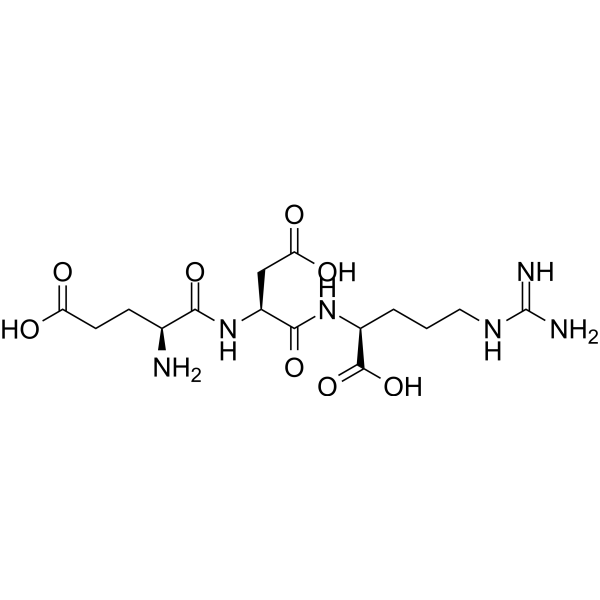
Pinealon is a 3-amino acid peptide and shows neuroprotective properties. Pinealon prevents reactive oxygen species (ROS) accumulation and suppresses the activation of ERK 1/2. Pinealon stimulates the functional activity of the main cellular elements of brain tissue, reduces the level of spontaneous cell death. Pinealon protects the rat offspring from prenatal hyperhomocysteinemia.
For research use only. We do not sell to patients.
- Purity : 99.51%
- CAS No.: 175175-23-2
- Formula: C15H26N6O8
- Molecular Weight:418.40
-
Storage:
Sealed storage, away from moisture.
Powder -80°C, 2 years , -20°C, 1 year* In solvent : -80°C, 6 months; -20°C, 1 month (sealed storage, away from moisture)

To place orders, for customer services and technical support, please contact: MedChemExpress USA
Tel: 609-228-6898 E-mail: [email protected] [email protected]


-
 Biological Activity
-
Chemical Information
-
Solvent & Solubility
- Protocols
- Purity & Documentation
- References
-
 Help & FAQs


-
HY-B0445
NAD+Endogenous Metabolite -
HY-100579
Ferrostatin-1Ferroptosis Inhibitor -
HY-131042
NNMTiNNMT Inhibitor -
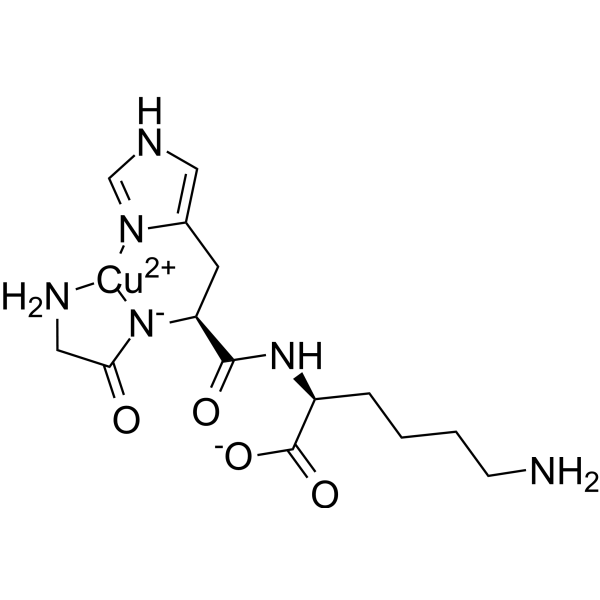
HY-P0063
Copper tripeptideTripeptide -
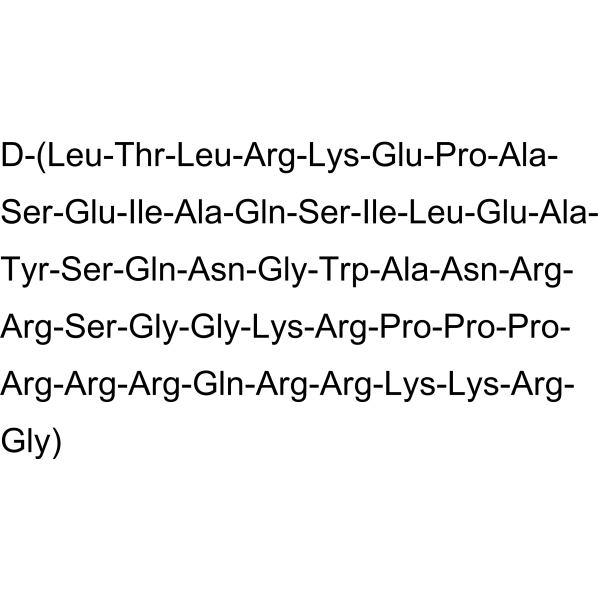
HY-P4157
FOXO4-DRIFOXO4/p53 Interaction Blocker -
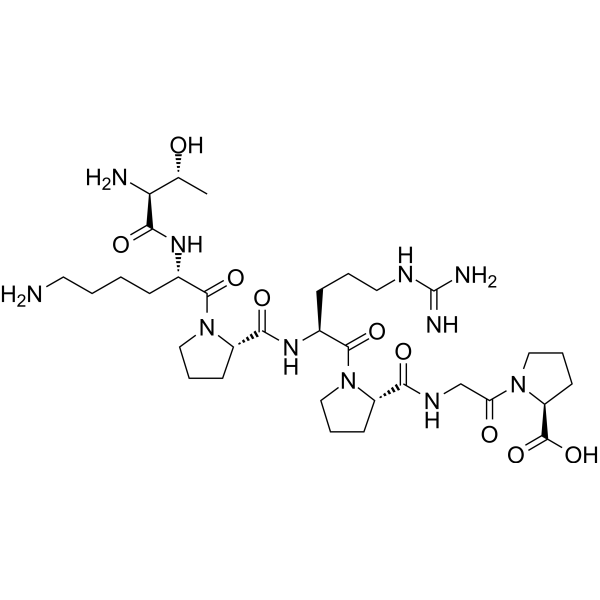
HY-105042
SelankGABAA receptor Modulator -
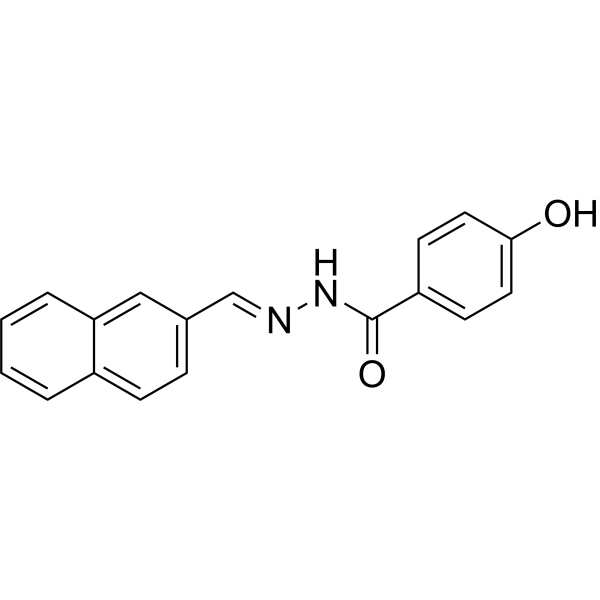
HY-155673
SLU-PP-332ERR Agonist -
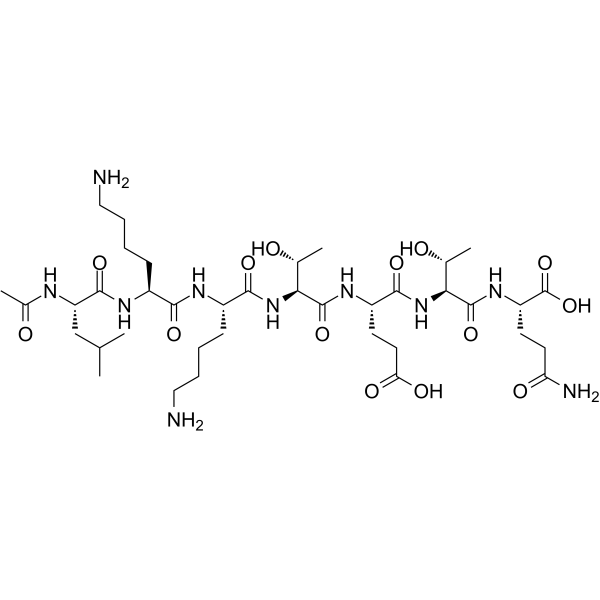
HY-P0170
TB500Thymosin β 4 Synthetic Molecule


Biological Activity
Description
In Vitro
Pinealon (10, 50, 100 nM; 30 min) in a dose-dependent manner prevents an increase in the ROS accumulation induced by ouabain in cerebellar granule cells[1].
Pinealon (10 nM; 0, 2.5, 5, 10, 20, 30 min) suppresses the activation of ERK 1/2 in rat cerebellar granule cells exposed to 500 mM homo-cysteine (HC)[1].
MedChemExpress (MCE) has not independently confirmed the accuracy of these methods. They are for reference only.
In Vivo
Pinealon (10 µg/kg; daily for 5 days) protects the rat offspring from prenatal hyperhomocysteinemia[3].
MedChemExpress (MCE) has not independently confirmed the accuracy of these methods. They are for reference only.
-
Animal Model:200-250 g, white male rats[2]
-
Dosage:50, 100, 200 ng/kg
-
Administration:Injection; for 5 days
-
Result:Showed dose-dependent effects on the maintenance of a previously acquired skill in the Morris maze.
-
Animal Model:180-200 g, Female Wistar rats[3]
-
Dosage:10 µg/kg
-
Administration:I.p.; daily for 5 days
-
Result:Protected the rat offspring from prenatal hyperhomocysteinemia.


Chemical Information
-
CAS No. 175175-23-2
-
Appearance Solid
-
Molecular Weight 418.40
-
Formula C15H26N6O8
-
Color White to off-white
-
Sequence Shortening
EDR
-
Shipping
Room temperature in continental US; may vary elsewhere.
-
Storage
Sealed storage, away from moisture
Powder -80°C 2 years -20°C 1 year * In solvent : -80°C, 6 months; -20°C, 1 month (sealed storage, away from moisture)


Solvent & Solubility
In Vitro:
H2O : ≥ 100 mg/mL (239.01 mM)
* "≥" means soluble, but saturation unknown.
Please refer to the solubility information to select the appropriate solvent. Once prepared, please aliquot and store the solution to prevent product inactivation from repeated freeze-thaw cycles.
Storage method and period of stock solution: -80°C, 6 months; -20°C, 1 month (sealed storage, away from moisture). When stored at -80°C, please use it within 6 months. When stored at -20°C, please use it within 1 month.
* Note: If you choose water as the stock solution, please dilute it to the working solution, then filter and sterilize it with a 0.22 μm filter before use.
Please refer to the solubility information to select the appropriate solvent. Once prepared, please aliquot and store the solution to prevent product inactivation from repeated freeze-thaw cycles.
Storage method and period of stock solution: -80°C, 6 months; -20°C, 1 month (sealed storage, away from moisture). When stored at -80°C, please use it within 6 months. When stored at -20°C, please use it within 1 month.
* Note: If you choose water as the stock solution, please dilute it to the working solution, then filter and sterilize it with a 0.22 μm filter before use.
Concentration (start) × Volume (start) = Concentration (final) × Volume (final)


Purity & Documentation
-
Data Sheet (272 KB)
-
SDS (254 KB)
- English - EN (254 KB)
- Français - FR (254 KB)
- Deutsch - DE (254 KB)
- Norwegian - NO (254 KB)
- Español - ES (254 KB)
- Swedish - SV (254 KB)
- Italian - IT (254 KB)
- Korean - KR (254 KB)
- Portuguese - PT (254 KB)
-
Handling Instructions (2659 KB)
References
[1]. Khavinson V, et al. Pinealon increases cell viability by suppression of free radical levels and activating proliferative processes. Rejuvenation Res. 2011 Oct;14(5):535-41. [Content Brief]
[3]. Arutjunyan A, et al. Pinealon protects the rat offspring from prenatal hyperhomocysteinemia. Int J Clin Exp Med. 2012;5(2):179-85. [Content Brief]


Complete Stock Solution Preparation Table
Please refer to the solubility information to select the appropriate solvent. Once prepared, please aliquot and store the solution to prevent product inactivation from repeated freeze-thaw cycles.
Storage method and period of stock solution: -80°C, 6 months; -20°C, 1 month (sealed storage, away from moisture). When stored at -80°C, please use it within 6 months. When stored at -20°C, please use it within 1 month.
| Optional Solvent | Concentration Solvent Mass | 1 mg | 5 mg | 10 mg | 25 mg |
|---|---|---|---|---|---|
| H2O | 1 mM | 2.3901 mL | 11.9503 mL | 23.9006 mL | 59.7514 mL |
| 5 mM | 0.4780 mL | 2.3901 mL | 4.7801 mL | 11.9503 mL | |
| 10 mM | 0.2390 mL | 1.1950 mL | 2.3901 mL | 5.9751 mL | |
| 15 mM | 0.1593 mL | 0.7967 mL | 1.5934 mL | 3.9834 mL | |
| 20 mM | 0.1195 mL | 0.5975 mL | 1.1950 mL | 2.9876 mL | |
| 25 mM | 0.0956 mL | 0.4780 mL | 0.9560 mL | 2.3901 mL | |
| 30 mM | 0.0797 mL | 0.3983 mL | 0.7967 mL | 1.9917 mL | |
| 40 mM | 0.0598 mL | 0.2988 mL | 0.5975 mL | 1.4938 mL | |
| 50 mM | 0.0478 mL | 0.2390 mL | 0.4780 mL | 1.1950 mL | |
| 60 mM | 0.0398 mL | 0.1992 mL | 0.3983 mL | 0.9959 mL | |
| 80 mM | 0.0299 mL | 0.1494 mL | 0.2988 mL | 0.7469 mL | |
| 100 mM | 0.0239 mL | 0.1195 mL | 0.2390 mL | 0.5975 mL |
* Note: If you choose water as the stock solution, please dilute it to the working solution, then filter and sterilize it with a 0.22 μm filter before use.


Pinealon Related Classifications
HY-P4052 Related Classifications
 Powered by Bioz