



Elvucitabine
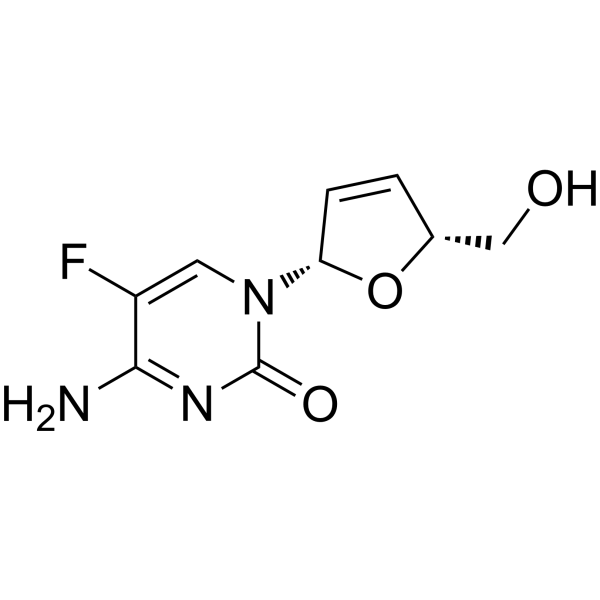
Elvucitabine is an L-nucleoside analogue. Elvucitabine is a potent nucleoside reverse transcriptase (RT) inhibitor. Elvucitabine can be used in research of viral infection.
For research use only. We do not sell to patients.
- CAS No.: 181785-84-2
- Formula: C9H10FN3O3
- Molecular Weight:227.19
-
Storage:
Please store the product under the recommended conditions in the Certificate of Analysis.

To place orders, for customer services and technical support, please contact: MedChemExpress USA
Tel: 609-228-6898 E-mail: [email protected] [email protected]


-
 Biological Activity
-
Chemical Information
- Protocols
- Purity & Documentation
- References
-
 Help & FAQs


-
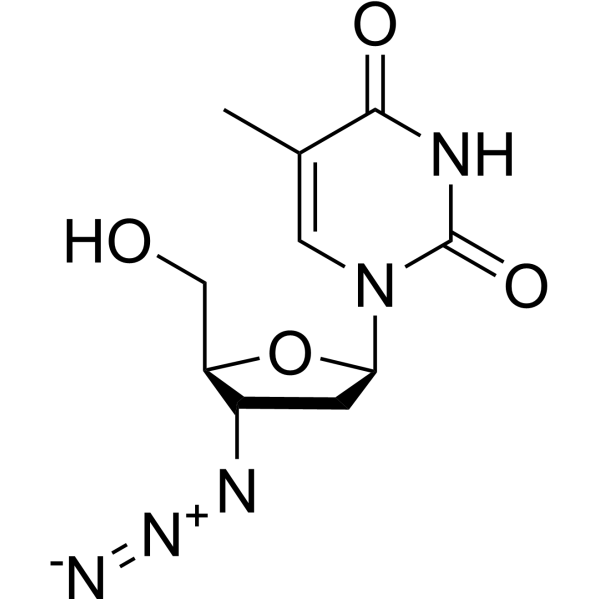
HY-17413
ZidovudineNucleoside Reverse Transcriptase Inhibitor -
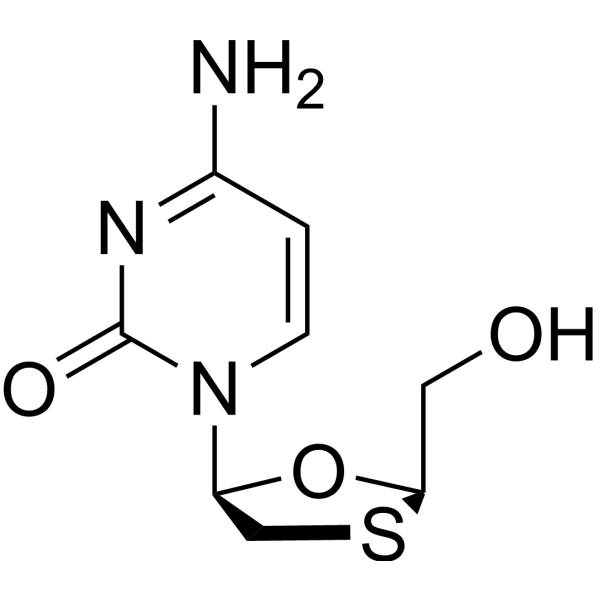
HY-B0250
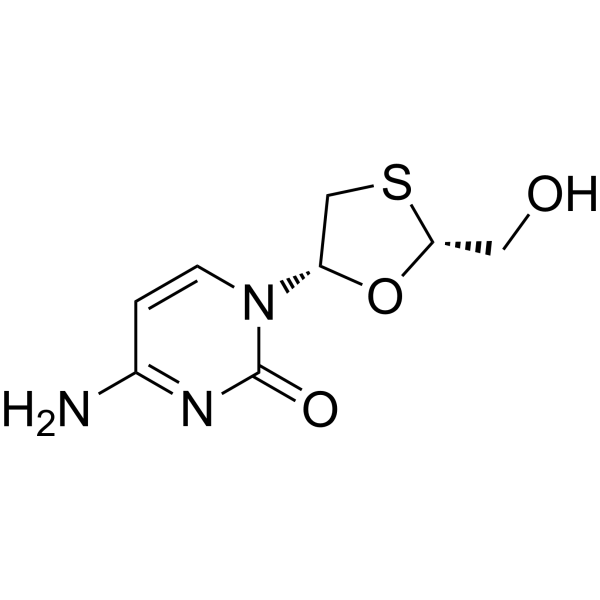
LamivudineReverse Transcriptase Inhibitor -
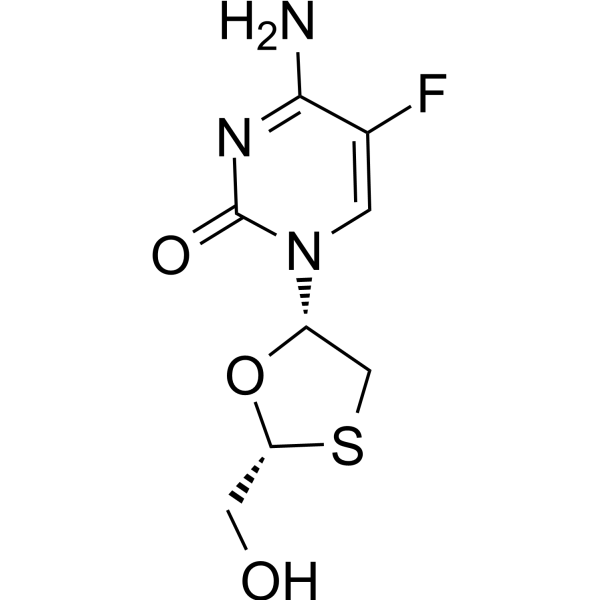
HY-17427
EmtricitabineNRT Inhibitor -
HY-10570
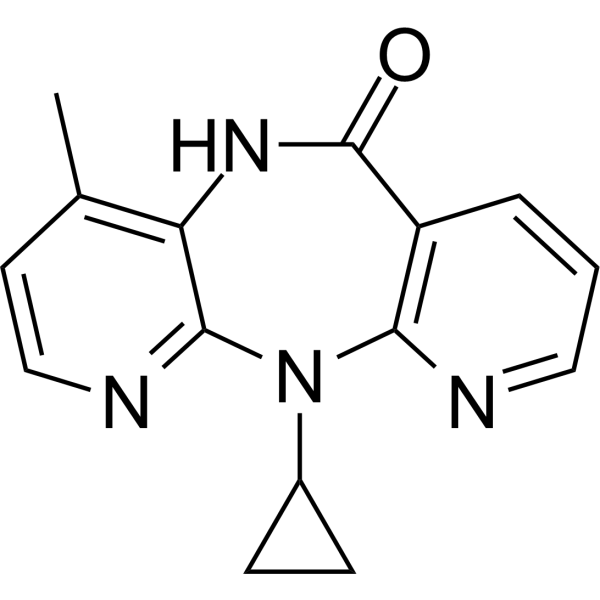
NevirapineHIV-1 Reverse Transcriptase Inhibitor -
HY-13782
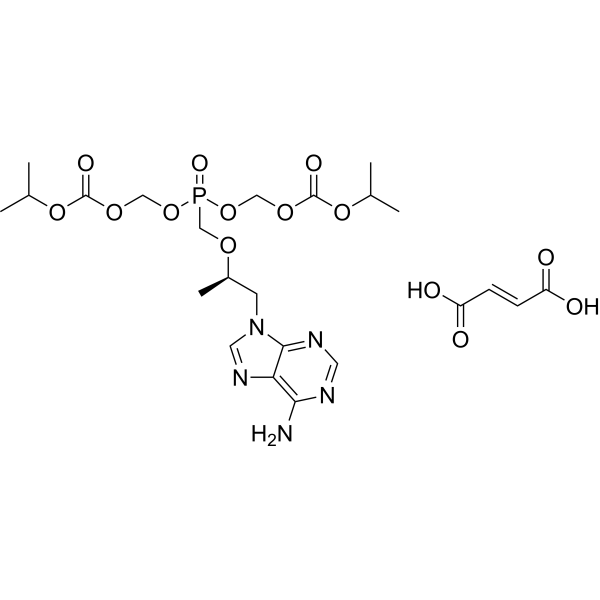
Tenofovir Disoproxil fumarateNucleotide Reverse Transcriptase Inhibitor -
HY-13782A
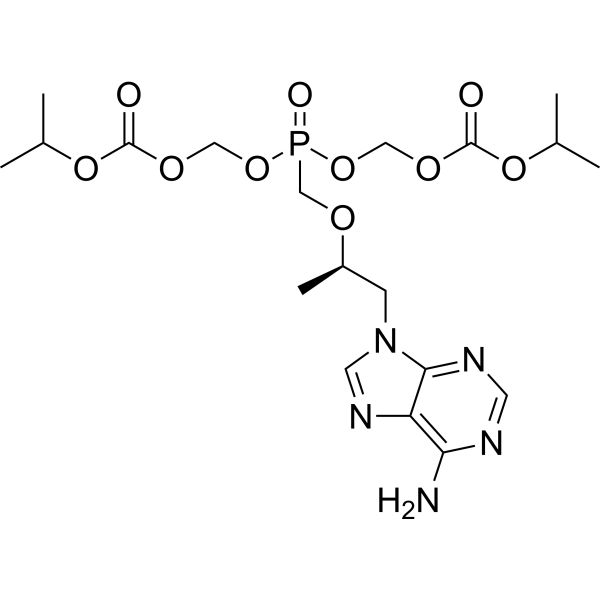
Tenofovir DisoproxilReverse Transcriptase Inhibitor -
HY-B0250R
Lamivudine (Standard)Reverse Transcriptase Inhibitor -

HY-17413R
Zidovudine (Standard)Standard of Zidovudine -
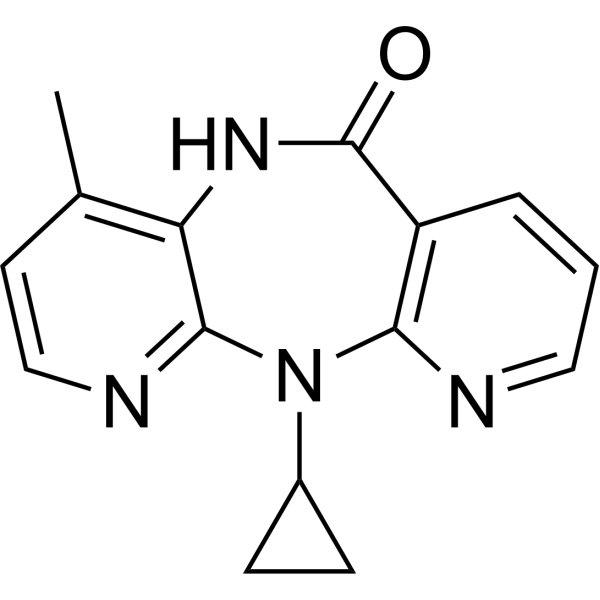
HY-10570R
Nevirapine (Standard)HIV-1 Reverse Transcriptase Inhibitor -
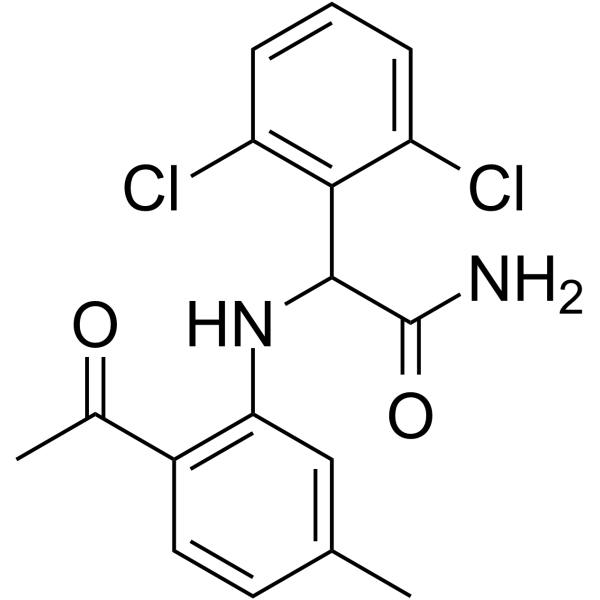
HY-15355
LovirideNNRTI -
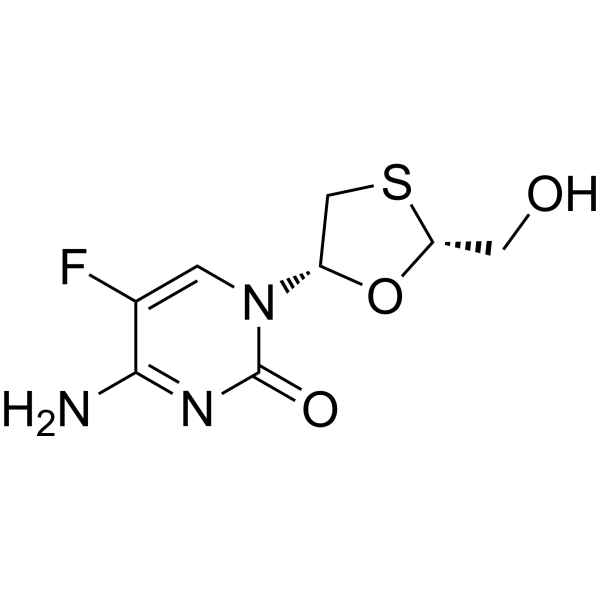
HY-17427R
Emtricitabine (Standard)NRT Inhibitor -
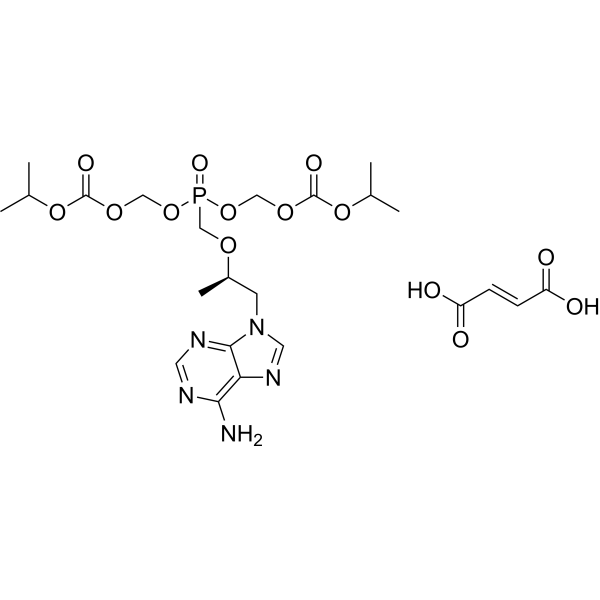
HY-13782R
Tenofovir Disoproxil fumarate (Standard)Nucleotide Reverse Transcriptase Inhibitor


Biological Activity
Description
Cellular Effect
|
Cell Line

|
Type | Value | Description | References |
|---|---|---|---|---|
| B16 | IC50 |
>200 μM
Compound: 1
|
In vitro inhibitory activity against growth of HIV infected B16 cell line
In vitro inhibitory activity against growth of HIV infected B16 cell line
|
[PMID: 9873711] |
| CCRF-CEM | ED50 |
>100 μM
Compound: 2
|
In vitro concentration required to decrease 50% of mitochondrial DNA content in CEM cells
In vitro concentration required to decrease 50% of mitochondrial DNA content in CEM cells
|
[PMID: 8627596] |
| CCRF-CEM | ED50 |
7 μM
Compound: 2
|
In vitro concentration required to inhibit 50% of CEM cell growth
In vitro concentration required to inhibit 50% of CEM cell growth
|
[PMID: 8627596] |
| CCRF-CEM | IC50 |
>100 μM
Compound: RVT
|
Cytotoxicity was determined in CEM cells, relative to RVT
Cytotoxicity was determined in CEM cells, relative to RVT
|
[PMID: 15081000] |
| CCRF-CEM | IC50 |
0.46 μM
Compound: beta-L-D4FC
|
Tested in vitro for anticancer activity against CEM cells
Tested in vitro for anticancer activity against CEM cells
|
[PMID: 10072683] |
| CCRF-CEM | IC50 |
13 μM
Compound: 4
|
Tested for cytotoxicity in human T-cell lymphoblastic leukemia cell line (CEM)
Tested for cytotoxicity in human T-cell lymphoblastic leukemia cell line (CEM)
|
[PMID: 9871628] |
| CCRF-CEM | IC50 |
24 μM
Compound: 1
|
In vitro inhibitory activity against growth of HIV infected CEM cells combined with murine CTLL-2T lymphoblast cell line
In vitro inhibitory activity against growth of HIV infected CEM cells combined with murine CTLL-2T lymphoblast cell line
|
[PMID: 9873711] |
| CCRF-CEM | IC50 |
6.5 μM
Compound: 1
|
In vitro inhibitory activity against growth of HIV infected CEM cell line
In vitro inhibitory activity against growth of HIV infected CEM cell line
|
[PMID: 9873711] |
| DLD-1 | IC50 |
>200 μM
Compound: 1
|
In vitro inhibitory activity against growth of HIV infected DLD-1 cell line
In vitro inhibitory activity against growth of HIV infected DLD-1 cell line
|
[PMID: 9873711] |
| HepG2 | EC50 |
17 nM
Compound: 4
|
Tested for effective concentration against HBV treated with drug every 3 days for 9 days using human hepatoblastoma cell line HepG2 2.2.15
Tested for effective concentration against HBV treated with drug every 3 days for 9 days using human hepatoblastoma cell line HepG2 2.2.15
|
[PMID: 9871628] |
| HepG2 | ED50 |
2 nM
Compound: 2
|
Concentration required to inhibit 50% of extracellular circular replication of HBV DNA using 2215 cell line
Concentration required to inhibit 50% of extracellular circular replication of HBV DNA using 2215 cell line
|
[PMID: 8627596] |
| HepG2 | ED50 |
2 nM
Compound: 2
|
Concentration required to inhibit 50% of intracellular circular replication of HBV DNA using 2215 cell line
Concentration required to inhibit 50% of intracellular circular replication of HBV DNA using 2215 cell line
|
[PMID: 8627596] |
| HepG2 | IC50 |
>200 μM
Compound: 1
|
In vitro inhibitory activity against growth of HIV infected HepG2 cell line
In vitro inhibitory activity against growth of HIV infected HepG2 cell line
|
[PMID: 9873711] |
| HepG2 | IC50 |
118 μM
Compound: beta-L-D4FC
|
Tested in vitro for anticancer activity against HepG2 cells
Tested in vitro for anticancer activity against HepG2 cells
|
[PMID: 10072683] |
| LNCaP | IC50 |
55.2 μM
Compound: beta-L-D4FC
|
Tested in vitro for anticancer activity against LNCaP cells
Tested in vitro for anticancer activity against LNCaP cells
|
[PMID: 10072683] |
| MCF7 | IC50 |
82.8 μM
Compound: beta-L-D4FC
|
Tested in vitro for anticancer activity against MCF-7 cells
Tested in vitro for anticancer activity against MCF-7 cells
|
[PMID: 10072683] |
| MT2 | ED50 |
0.09 μM
Compound: 2
|
Concentration required to inhibit 50% of HIV activity in MT-2 cells
Concentration required to inhibit 50% of HIV activity in MT-2 cells
|
[PMID: 8627596] |
| MT2 | IC50 |
9 μM
Compound: 1
|
In vitro inhibitory activity against growth of HIV infected MT-2/IIIB cell line
In vitro inhibitory activity against growth of HIV infected MT-2/IIIB cell line
|
[PMID: 9873711] |
| PC-3 | IC50 |
>100 μM
Compound: beta-L-D4FC
|
Tested in vitro for anticancer activity against PC-3 cells
Tested in vitro for anticancer activity against PC-3 cells
|
[PMID: 10072683] |
| Rat1 | IC50 |
>200 μM
Compound: 1
|
In vitro inhibitory activity against growth of HIV infected Rat-1 cell line
In vitro inhibitory activity against growth of HIV infected Rat-1 cell line
|
[PMID: 9873711] |
| SK-MEL-28 | IC50 |
>100 μM
Compound: beta-L-D4FC
|
Tested in vitro for anticancer activity against SK-MEL-28 cells
Tested in vitro for anticancer activity against SK-MEL-28 cells
|
[PMID: 10072683] |
| SK-MES-1 | IC50 |
99.1 μM
Compound: beta-L-D4FC
|
Tested in vitro for anticancer activity against SK-MES-1 cells
Tested in vitro for anticancer activity against SK-MES-1 cells
|
[PMID: 10072683] |
| Vero | IC50 |
>100 μM
Compound: RVT
|
Cytotoxicity was determined in Vero cells, relative to RVT
Cytotoxicity was determined in Vero cells, relative to RVT
|
[PMID: 15081000] |
| Vero | IC50 |
9.4 μM
Compound: beta-L-D4FC
|
Tested in vitro for cytotoxicity against Vero cells
Tested in vitro for cytotoxicity against Vero cells
|
[PMID: 10072683] |
Clinical Trial
| NCT Number | Sponsor | Condition | Start Date |
Phase
|
|---|---|---|---|---|
| NCT01329991 | Plexxikon| | 2011-05 | PHASE1 |


Chemical Information
-
CAS No. 181785-84-2
-
Molecular Weight 227.19
-
Formula C9H10FN3O3
-
SMILES
O=C1N=C(C(F)=CN1[C@H]2O[C@H](C=C2)CO)N
-
Shipping
Room temperature in continental US; may vary elsewhere.
-
Storage
Please store the product under the recommended conditions in the Certificate of Analysis.

Protocols
-
Research Protocol for Infectious Diseases
Infectious-disease experiments test how pathogens interact with host barriers, innate immune receptors, inflammatory signaling, pathogen replication, and tissue injury; pattern-recognition receptors such as TLRs, RIG-I-like receptors, NOD-like receptors, and inflammasomes detect microbial molecules and activate NF-κB, interferon, and cytokine responses. The central hypothesis is that infection severity reflects the balance between pathogen burden and host response: protective inflammation restricts pathogen growth, whereas excessive or mislocalized inflammation contributes to tissue damage and disease phenotype. Unresolved questions include which host pathways are protective versus pathogenic, why some infection models fail to translate to human disease, and which combined readouts best predict clinically relevant infection outcomes.


Purity & Documentation
References

Calculators
Concentration (start) × Volume (start) = Concentration (final) × Volume (final)


Elvucitabine Related Classifications
HY-117582 Related Classifications
 Powered by Bioz