



Galactosylceramide

Based on 1 Customer Validation
Galactosylceramide (GalC) is a galactosylceramide that has been implicated in many physiological and pathological phenomena. For example, important lysosomal storage disorders such as Gaucher disease (GD) and neurodegenerative diseases are characterized by GlcCer accumulation.
For research use only. We do not sell to patients.
- Purity : 98%
- CAS No.: 85305-88-0
-
Storage:
-20°C, protect from light
* In solvent : -80°C, 6 months; -20°C, 1 month (protect from light)


To place orders, for customer services and technical support, please contact: MedChemExpress USA
Tel: 609-228-6898 E-mail: [email protected] [email protected]


-
 Biological Activity
-
Chemical Information
-
Solvent & Solubility
- Protocols
- Purity & Documentation
- References
-
 Help & FAQs


-
HY-113498
SphingomyelinEndogenous Metabolite -

HY-165035
Glucosylceramide (gaucher's spleen)Sphingolipid/Gaucher Disease Biomarker -
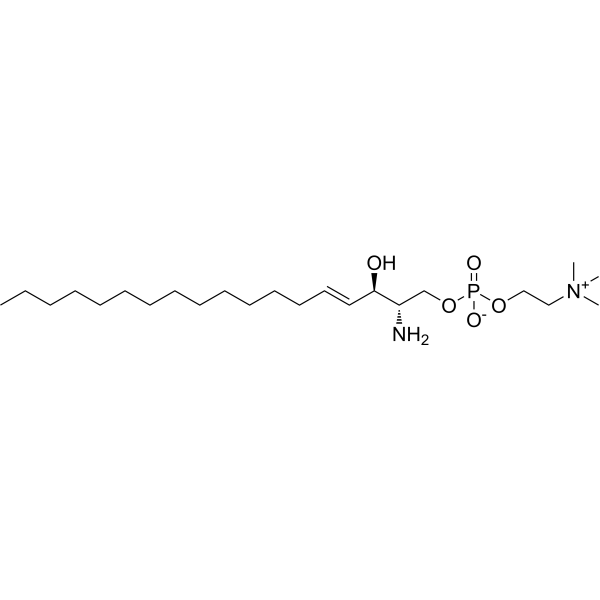
HY-132187
SphingosylphosphorylcholineBioactive Lipid -
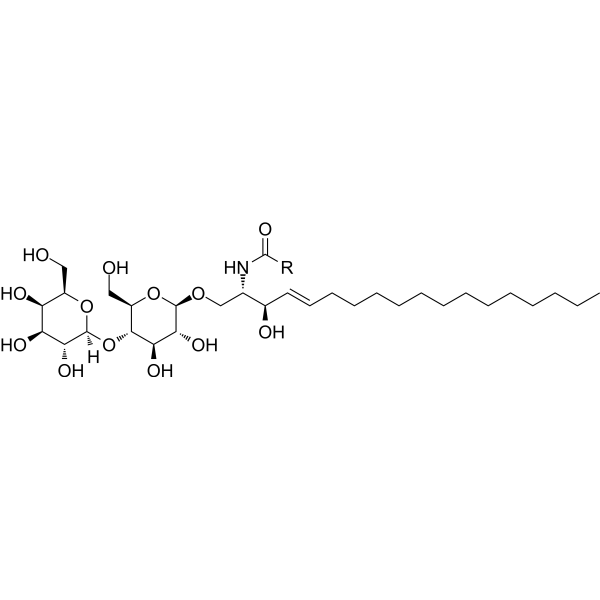
HY-154921
Lactosylceramide (bovine buttermilk)Glycosphingolipid -

HY-165892
Dodecanoyl-galactosylceramideEster Product -
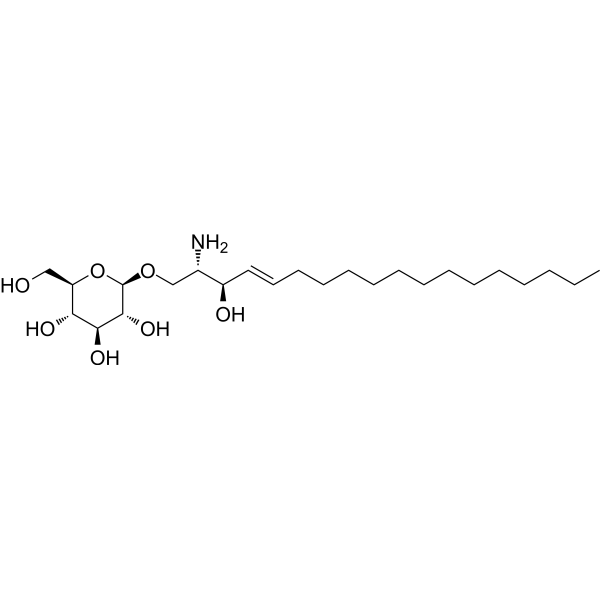
HY-N7745
GlucosylsphingosineGlucocerebrosidase Inhibitor -
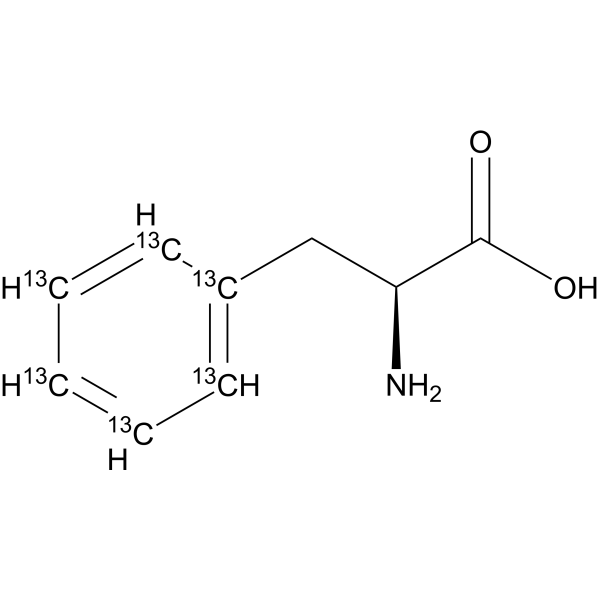
HY-N0215S8
L-Phenylalanine-13C6Stable Isotope -
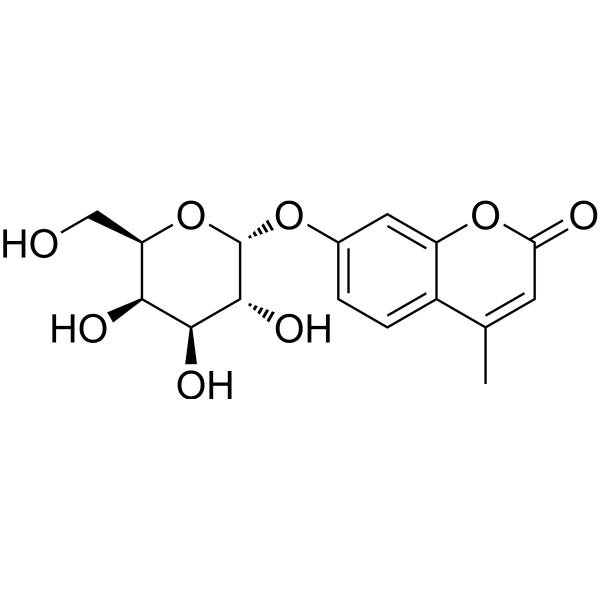
HY-118135
4-Methylumbelliferyl-α-D-galactopyranosideGLA Pro-fluorogenic Substrate -
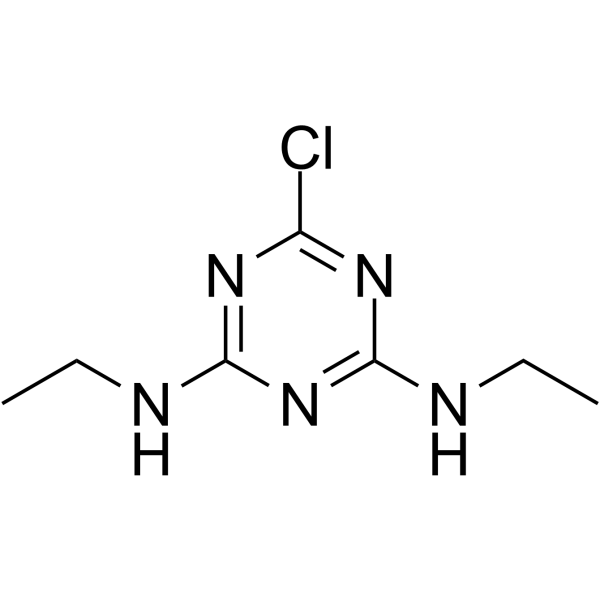
HY-B2046
SimazineHerbicide -

HY-165135
Rac-SphingosylphosphorylcholineRacemate of Sphingosylphosphorylcholine -
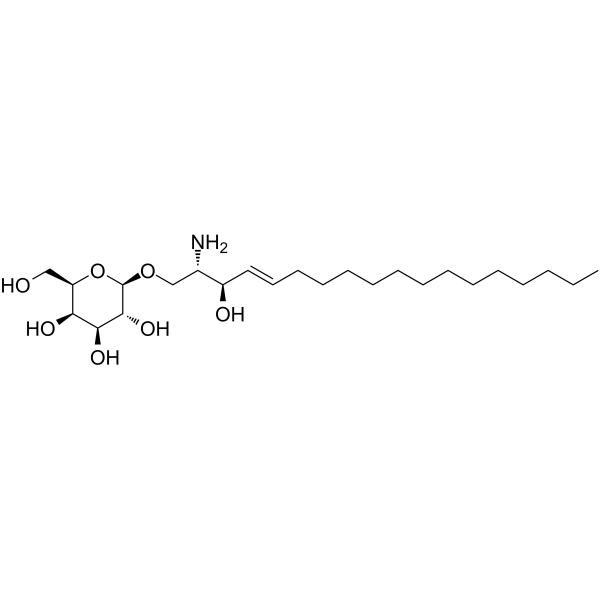
HY-136490
PsychosineCytotoxic Lipid -

HY-155789
C17 Globotriaosylceramide (d18:1/17:0)Sphygosine lipid
All Endogenous Metabolite Isoforms
More

Biological Activity
Description


Chemical Information
-
CAS No. 85305-88-0
-
Appearance Solid
-
Color White to off-white
-
SMILES
[Galactosylceramide]
-
Shipping
Room temperature in continental US; may vary elsewhere.
-
Storage
-20°C, protect from light
* In solvent : -80°C, 6 months; -20°C, 1 month (protect from light)


Solvent & Solubility
In Vitro:
Ethanol : 1 mg/mL (Need ultrasonic)

Protocols
-
Lysosome and acidic-vesicle live-cell staining
Lysosome and acidic-vesicle live-cell staining detects acidic intracellular compartments by using membrane-permeant acidotropic probes that accumulate in low-pH vesicles, including lysosomes, late endosomes, autolysosomes, and acidic phagosomes. LysoTracker staining is commonly used as an intensity-based readout of acidic lysosomal compartment abundance or enlargement, while acridine orange produces green fluorescence in less concentrated compartments and red fluorescence after concentration-dependent accumulation in acidic vesicular organelles. Loss or reduction of acridine-orange red signal can be used as a readout of lysosomal membrane permeabilization or reduced acidic-vesicle integrity. This protocol is designed for live cultured cells and can be adapted for fluorescence microscopy, high-content imaging, plate-reader readout, or flow cytometry when the selected literature supports the readout. Because these dyes report acidotropic accumulation rather than lysosome identity alone,


Purity & Documentation
-
Data Sheet (270 KB)
-
SDS (251 KB)
- English - EN (251 KB)
- Français - FR (251 KB)
- Deutsch - DE (251 KB)
- Norwegian - NO (251 KB)
- Español - ES (251 KB)
- Swedish - SV (251 KB)
- Italian - IT (251 KB)
- Korean - KR (251 KB)
- Portuguese - PT (251 KB)
-
Handling Instructions (2659 KB)
References

Calculators
Concentration (start) × Volume (start) = Concentration (final) × Volume (final)


Galactosylceramide Related Classifications
HY-151240 Related Classifications
 Powered by Bioz