



Bepridil
Based on 9 publication(s) in Google Scholar
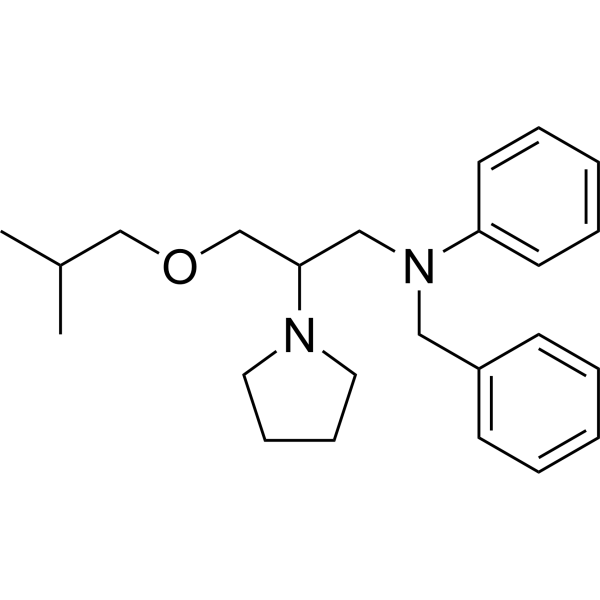
Bepridil (CERM 1978 (free base); Org 5730) is an orally active non-selective calcium channel antagonist with multi-ion channel blocking activity. Bepridil modulates Calmodulin, the 20S proteasome, T-type/L-type calcium channels, cardiac sodium channels, multiple potassium channels, γ-secretase, β-secretase, and mitoKATP/sarcKATP channels. Bepridil acts as a hydroxyl radical scavenger, regulates mitochondrial and intracellular calcium handling, and exerts antiarrhythmic, antianginal, and cardioprotective effects. Bepridil alters amyloid precursor protein processing, reduces β-amyloid and thalamic calcium levels, restores seladin-1/DHCR24 expression, and improves sensorimotor recovery after cerebral ischemia. Bepridil also exhibits potent inhibitory effects on SARS-CoV-2 replication. Bepridil is used in studies related to stable angina, arrhythmias, cerebral ischemia, Alzheimer's disease, and SARS-CoV-2 infection.
For research use only. We do not sell to patients.
- Purity: 99.93%
- CAS No.: 64706-54-3
- Formula: C24H34N2O
- Molecular Weight:366.54
-
Storage:Powder -20°C, 3 years , 4°C, 2 years ; In solvent -80°C, 6 months , -20°C, 1 month

To place orders, for customer services and technical support, please contact: MedChemExpress USA
Tel: 609-228-6898 E-mail: [email protected] [email protected]


-
 Biological Activity
-
Chemical Information
-
Solvent & Solubility
- Purity & Documentation
- References
-
 Help & FAQs


Publications Citing Use of MedChemExpress (MCE) Bepridil
More- Autophagy. 2026 Mar 5. [Abstract]
- Acta Pharmacol Sin. 2025 May;46(5):1190-1204. [Abstract]
- Eur J Pharm Sci. 2023 Aug 1:187:106475. [Abstract]
- Eur J Pharm Sci. 2021 Sep 1:164:105889. [Abstract]
- Virology. 2020 Jan 2:539:38-48. [Abstract]
- Biochem Biophys Res Commun. 2025 Oct 30:786:152756. [Abstract]
- bioRxiv. 2025 Nov 21:2025.11.20.689520. [Abstract]
- Research Square Preprint. 2024 Feb 9.
- Università Vita-Salute San Raffaele. 2022 Apr 08. 34.
All Calcium Channel Isoforms
More

Biological Activity
Description
IC50 & Target
[2]|
Nav1.5 |
T-type calcium channel |
L-type calcium channel |
Cellular Effect
|
Cell Line

|
Type | Value | Description | References |
|---|---|---|---|---|
| Astrocyte | EC50 |
4.724 μM
Compound: 28
|
Antiproliferative activity against mouse astrocyte cells by MTT assay
Antiproliferative activity against mouse astrocyte cells by MTT assay
|
[PMID: 17417631] |
| CHO | IC50 |
1 μM
Compound: bepridil
|
Inhibition of Cav1.2 current measured using QPatch automatic path clamp system in CHO cells expressing Cav1.2, beta-2 and alpha-2/delta-1 subunits
Inhibition of Cav1.2 current measured using QPatch automatic path clamp system in CHO cells expressing Cav1.2, beta-2 and alpha-2/delta-1 subunits
|
[PMID: 23812503] |
| COS-7 | IC50 |
550 nM
Compound: 16 (Bepridil)
|
K+ channel blocking activity in COS-7 African green monkey kidney derived cells expressing HERG Kv11.1
K+ channel blocking activity in COS-7 African green monkey kidney derived cells expressing HERG Kv11.1
|
[PMID: 12190308] |
| HEK293 | IC50 |
3700 nM
Compound: Bepridil
|
Inhibition of sodium current measured using whole-cell patch clamp experiments in HEK-293 cells stably transfected with hNaV1.5 cDNA
Inhibition of sodium current measured using whole-cell patch clamp experiments in HEK-293 cells stably transfected with hNaV1.5 cDNA
|
[PMID: 21300721] |
| HEK293 | IC50 |
1.4 μM
Compound: Bepridil
|
Inhibition of L-type calcium channel measured using 2-electrode voltage-clamp in human embryonic kidney cells heterologically expressing alpha-1C subunit
Inhibition of L-type calcium channel measured using 2-electrode voltage-clamp in human embryonic kidney cells heterologically expressing alpha-1C subunit
|
[PMID: 22761000] |
| HEK293 | IC50 |
1.4 μM
Compound: Bepridil
|
Inhibition of human ERG expressed in HEK293 cells measured after 30 mins by FluxOR dye based FLIPR TETRA assay
Inhibition of human ERG expressed in HEK293 cells measured after 30 mins by FluxOR dye based FLIPR TETRA assay
|
[PMID: 32392053] |
| RAW264.7 | IC50 |
4.8 μM
Compound: Bepridil
|
Protection against Bacillus anthracis lethal toxin-mediated cytotoxicity in mouse RAW264.7 cells assessed as change in viability after 24 hrs by WST1 dye reduction assay
Protection against Bacillus anthracis lethal toxin-mediated cytotoxicity in mouse RAW264.7 cells assessed as change in viability after 24 hrs by WST1 dye reduction assay
|
[PMID: 17485504] |
| Ventricular myocyte | IC50 |
211 nM
Compound: Bepridil
|
Inhibition of calcium current (ICaL) measured using whole-cell patch clamp experiments in isolated guinea pig ventricular myocytes
Inhibition of calcium current (ICaL) measured using whole-cell patch clamp experiments in isolated guinea pig ventricular myocytes
|
[PMID: 21300721] |
| Vero E6 | IC50 |
5.08 μM
Compound: Bepridil
|
Antiviral activity against Ebolavirus infected in african green monkey Vero E6 cells assessed as reduction in virus entry after 48 hrs by by Celltiter-Glo luminescent assay
Antiviral activity against Ebolavirus infected in african green monkey Vero E6 cells assessed as reduction in virus entry after 48 hrs by by Celltiter-Glo luminescent assay
|
[PMID: 29272110] |
In Vitro
Bepridil accumulates extensively in cat ileal smooth muscle, chick ventricular muscle, rabbit papillary muscle, and rat ventricular myocytes; it inhibits ATP-dependent calcium uptake in isolated rat and rabbit heart mitochondria; and it exhibits potent hydroxyl radical scavenging activity in cell-free in vitro assays[1].
Bepridil exerts bidirectional regulation on sodium currents in neonatal rat cardiomyocytes: short-term exposure inhibits INa (IC50 = 96.3 mM), while long-term exposure (EC50 = 9.5 mM) upregulates Na+ currents by inhibiting 20S proteasome-mediated degradation of Nav1.5 protein[2].
Bepridil directly inhibits purified 20S proteasome activity in a concentration-dependent manner in vitro; HEK‑Nav1.5 cell experiments confirm that its effect of upregulating Na+ current does not depend on the expression of cardiomyocyte-specific Ca2+ channels[2].
Bepridil blocks Kir6.2+SUR2A sarcKATP channel currents in HEK-293 cells and opens mitoKATP channels in a concentration-dependent manner (EC50 = 27.5 nM), leading to flavoprotein oxidation, attenuation of Ouabain (HY-B1457)-induced mitochondrial Ca2+ overload, and improvement of post-ischemic contractile function recovery in guinea pig cardiac preparations[4].
Bepridil reduces myocardial contractility, heart rate, and oxygen consumption in isolated perfused rabbit hearts, and its coronary vasodilatory effect occurs only at low flow rates[1].
Bepridil reduces the electrical activity of rabbit sinoatrial node cells by inhibiting the slow inward current, and at concentrations of 4-6 mmol/L, it decreases the automaticity of isolated rabbit sinoatrial node tissue, slows conduction, and prolongs the refractory period[1].
Bepridil exerts differential repolarization effects on myocardial tissues of rabbits and dogs: it shortens the action potential duration of Purkinje fibers while prolonging that of ventricular muscle, and this effect is dose-dependent within the range of 0.1 to 10 mg/L; it also restores ATP content and cell viability in hypoxic rat ventricular myocytes[1].
Bepridil accelerates the recovery of ischemia-induced end-diastolic contracture during reperfusion in isolated perfused rat hearts via coronary vasodilation, an effect independent of its negative inotropic activity[1].
MedChemExpress (MCE) has not independently confirmed the accuracy of these methods. They are for reference only.
-
Cell Line:neonatal rat cardiomyocytes
-
Concentration:10 mM
-
Incubation Time:24, 48 h
-
Result:Did not modify the mRNA levels of Na_v1.5 and all tested Na_v β subunits (β1, β2, β3, β4).
-
Cell Line:neonatal rat cardiomyocytes
-
Concentration:10 mM (protein expression)
10 mM + 10 μg/mL Cycloheximide (HY-12320) (protein degradation assay; INa with Cycloheximide) -
Incubation Time:24 h (protein expression; INa with Cycloheximide)
3, 6, 12 h (protein degradation assay) -
Result:Increased Na_v1.5 protein expression by 54% after treatment with 10 mM for 24 h.
Did not significantly affect Na_vβ protein expression after treatment with 10 mM for 24 h.
Augmented INa by 64.6% in the presence of Cycloheximide after 24 h.
Significantly slowed the time course of Na_v1.5 protein degradation.
In Vivo
Bepridil (1.25-5 mg/kg; i.v.; single dose) exerts negative chronotropic and negative dromotropic effects in anesthetized and conscious dogs, reducing heart rate in intact or denervated canine hearts, increasing coronary blood flow and oxygenation levels; in conscious dogs with chronic heart block, it produces a biphasic chronotropic response that includes an initial reflex tachycardia, while in anesthetized dogs it induces direct negative chronotropic and transient vasodilatory hemodynamic effects, with sustained reductions in heart rate and myocardial oxygen consumption[1].
Bepridil exhibits potent hydroxyl radical scavenging activity in alloxan-induced diabetic mice[1].
Bepridil (50 mg/kg; p.o.; once daily; for 27 consecutive days) reduces soluble Aβ42 by 57% and calcium levels by 71% in the ipsilateral thalamus of rats after transient middle cerebral artery occlusion, restores seladin-1 expression, and improves forelimb sensorimotor function in rats[3].
MedChemExpress (MCE) has not independently confirmed the accuracy of these methods. They are for reference only.
-
Animal Model:Wistar (male; 2-3 months old; 295-344 g; transient middle cerebral artery occlusion induced by intraluminal filament technique with 120 min occlusion)[3]
-
Dosage:50 mg/kg
-
Administration:p.o.; once daily; 27 days (starting 2 days post-MCAO)
-
Result:Reduced soluble Aβ40 (by 46 %) and soluble Aβ42 (by 57 %), insoluble guanidine‑soluble Aβ42, and calcium (by 71 %) in the ipsilateral thalamus versus vehicle‑treated MCAO rats, mitigated MCAO‑provoked APP‑processing disturbances, restrained APP C‑terminal fragment elevation and total‑APP decline, and blunted the rise of total soluble APP to ~1.8‑fold.
Restored seladin‑1/DHCR24 mRNA and protein, lowered HMOX1 mRNA by an average of 30 %, improved impaired contralateral‑forelimb performance at postoperative day 28 in the cylinder test.
Showed no significant alterations in limb‑placing and beam‑walking test results.
Failed to reverse the ~10‑fold GFAP protein elevation and ~3.5‑fold TNF‑α mRNA up‑regulation in the ipsilateral thalamus of MCAO rats.


Chemical Information
-
CAS No. 64706-54-3
-
Appearance Solid
-
Molecular Weight 366.54
-
Formula C24H34N2O
-
Color White to light yellow
-
SMILES
CC(COCC(CN(C1=CC=CC=C1)CC2=CC=CC=C2)N3CCCC3)C
-
Synonyms
CERM 1978 free base; Org 5730
-
Shipping
Room temperature in continental US; may vary elsewhere.
-
Storage
Powder -20°C 3 years 4°C 2 years In solvent -80°C 6 months -20°C 1 month


Publications (9)
-
Journal Impact Factor
-
Most Recent
-
Autophagy
2026 Mar 5. PMID: 41787744 -
Acta Pharmacol Sin
Electrophysiological characterization of human KCNT1 channel modulators and the therapeutic potential of hydroquinine and tipepidine in KCNT1 mutation-associated epilepsy mouse model. [Abstract]2025 May;46(5):1190-1204. PMID: 39870847 -
Eur J Pharm Sci
Investigating the relevance of CYP2J2 inhibition for drugs known to cause intermediate to high risk torsades de pointes. [Abstract]2023 Aug 1:187:106475. PMID: 37225005 -
Eur J Pharm Sci
Atypical kinetics of cytochrome P450 2J2: Epoxidation of arachidonic acid and reversible inhibition by xenobiotic inhibitors. [Abstract]2021 Sep 1:164:105889. PMID: 34044117 -
Virology
2020 Jan 2:539:38-48. PMID: 31670218 -
Biochem Biophys Res Commun
Dual-cardiotoxicity evaluation of torsadogenic risk drugs using human iPSC-derived cardiomyocytes. [Abstract]2025 Oct 30:786:152756. PMID: 41043280 -
bioRxiv
2025 Nov 21:2025.11.20.689520. PMID: 41332603 -
-


Solvent & Solubility
In Vitro:
DMSO : 100 mg/mL (272.82 mM; Need ultrasonic; Hygroscopic DMSO has a significant impact on the solubility of product, please use newly opened DMSO)
Please refer to the solubility information to select the appropriate solvent. Once prepared, please aliquot and store the solution to prevent product inactivation from repeated freeze-thaw cycles.
Storage method and period of stock solution: -80°C, 6 months; -20°C, 1 month. When stored at -80°C, please use it within 6 months. When stored at -20°C, please use it within 1 month.
Please refer to the solubility information to select the appropriate solvent. Once prepared, please aliquot and store the solution to prevent product inactivation from repeated freeze-thaw cycles.
Storage method and period of stock solution: -80°C, 6 months; -20°C, 1 month. When stored at -80°C, please use it within 6 months. When stored at -20°C, please use it within 1 month.
Concentration (start) × Volume (start) = Concentration (final) × Volume (final)
In Vivo:
Select the appropriate dissolution method based on your experimental animal and administration route.
- For the following dissolution methods, please ensure to first prepare a clear stock solution using an In Vitro approach and then sequentially add co-solvents:
- To ensure reliable experimental results, the clarified stock solution can be appropriately stored based on storage conditions. As for the working solution for In Vivo experiments, it is recommended to prepare freshly and use it on the same day.
- The percentages shown for the solvents indicate their volumetric ratio in the final prepared solution. If precipitation or phase separation occurs during preparation, heat and/or sonication can be used to aid dissolution.
Add each solvent one by one: 10% DMSO 40% PEG300 5% Tween-80 45% Saline
Solubility: ≥ 2.5 mg/mL (6.82 mM); Clear solution
This protocol yields a clear solution of ≥ 2.5 mg/mL (saturation unknown).
Taking 1 mL working solution as an example, add 100 μL DMSO stock solution (25.0 mg/mL) to 400 μL PEG300, and mix evenly; then add 50 μL Tween-80 and mix evenly; then add 450 μL Saline to adjust the volume to 1 mL.
Preparation of Saline: Dissolve 0.9 g sodium chloride in ddH₂O and dilute to 100 mL to obtain a clear Saline solution.
Add each solvent one by one: 10% DMSO 90% (20% SBE-β-CD in Saline)
Solubility: 2.5 mg/mL (6.82 mM); Suspended solution; Need ultrasonic
This protocol yields a suspended solution of 2.5 mg/mL. Suspended solution can be used for oral and intraperitoneal injection.
Taking 1 mL working solution as an example, add 100 μL DMSO stock solution (25.0 mg/mL) to 900 μL 20% SBE-β-CD in Saline, and mix evenly.
Preparation of 20% SBE-β-CD in Saline (4°C, storage for one week): 2 g SBE-β-CD powder is dissolved in 10 mL Saline, completely dissolve until clear.
In Vivo Dissolution Calculator
Please enter the basic information of animal experiments:
-
-
-
-
Recommended: Prepare an additional quantity of animals to account for potential losses during experiments.
Please enter your animal formula composition:
-
%DMSO +
Recommended: Keep the proportion of DMSO in working solution below 2% if your animal is weak.
-
%+
-
+%Tween-80 + +
-
%Saline +
The co-solvents required include: DMSO, . All of co-solvents are available by MedChemExpress (MCE). , Tween 80. All of co-solvents are available by MedChemExpress (MCE).
Working solution concentration: 0.22 mg/mL
Method for preparing stock solution: mg drug dissolved in μL DMSO. Stock solution concentration: mg/mL.
1. Take μL DMSO stock solution;
2. Add μL .
μL , mix evenly;
3. Then add μL Tween 80, mix evenly;
4. Then add μL
Please ensure that the stock solution in the first step is dissolved to a clear state, and add co-solvents in sequence. You can use ultrasonic heating (ultrasonic cleaner, recommended frequency 20-40 kHz), vortexing, etc. to assist dissolution.


Purity & Documentation
-
Data Sheet (320 KB)
-
SDS (393 KB)
- English - EN (393 KB)
- Français - FR (393 KB)
- Deutsch - DE (393 KB)
- Norwegian - NO (393 KB)
- Español - ES (393 KB)
- Swedish - SV (393 KB)
- Italian - IT (393 KB)
- Korean - KR (393 KB)
- Portuguese - PT (393 KB)
-
Handling Instructions (2659 KB)
References
[2]. Kang L, et al. Bepridil up-regulates cardiac Na+ channels as a long-term effect by blunting proteasome signals through inhibition of calmodulin activity. British journal of pharmacology. 2009 Jun;157(3):404-14. [Content Brief]
[4]. Sato T, et al. Bepridil, an antiarrhythmic drug, opens mitochondrial KATP channels, blocks sarcolemmal KATP channels, and confers cardioprotection. The Journal of pharmacology and experimental therapeutics. 2006 Jan;316(1):182-8. [Content Brief]


Complete Stock Solution Preparation Table
Please refer to the solubility information to select the appropriate solvent. Once prepared, please aliquot and store the solution to prevent product inactivation from repeated freeze-thaw cycles.
Storage method and period of stock solution: -80°C, 6 months; -20°C, 1 month. When stored at -80°C, please use it within 6 months. When stored at -20°C, please use it within 1 month.
| Optional Solvent | Concentration Solvent Mass | 1 mg | 5 mg | 10 mg | 25 mg |
|---|---|---|---|---|---|
| DMSO | 1 mM | 2.7282 mL | 13.6411 mL | 27.2822 mL | 68.2054 mL |
| 5 mM | 0.5456 mL | 2.7282 mL | 5.4564 mL | 13.6411 mL | |
| 10 mM | 0.2728 mL | 1.3641 mL | 2.7282 mL | 6.8205 mL | |
| 15 mM | 0.1819 mL | 0.9094 mL | 1.8188 mL | 4.5470 mL | |
| 20 mM | 0.1364 mL | 0.6821 mL | 1.3641 mL | 3.4103 mL | |
| 25 mM | 0.1091 mL | 0.5456 mL | 1.0913 mL | 2.7282 mL | |
| 30 mM | 0.0909 mL | 0.4547 mL | 0.9094 mL | 2.2735 mL | |
| 40 mM | 0.0682 mL | 0.3410 mL | 0.6821 mL | 1.7051 mL | |
| 50 mM | 0.0546 mL | 0.2728 mL | 0.5456 mL | 1.3641 mL | |
| 60 mM | 0.0455 mL | 0.2274 mL | 0.4547 mL | 1.1368 mL | |
| 80 mM | 0.0341 mL | 0.1705 mL | 0.3410 mL | 0.8526 mL | |
| 100 mM | 0.0273 mL | 0.1364 mL | 0.2728 mL | 0.6821 mL |


Bepridil Related Classifications
HY-16952 Related Classifications
 Powered by Bioz
Keywords
- Bepridil
- 64706-54-3
- CERM 1978
- Org 5730
- CERM1978
- CERM-1978
- Org5730
- Org 5730
- Org-5730
- Calcium Channel
- Sodium Channel
- Potassium Channel
- SARS-CoV
- Beta-secretase
- Amyloid-β
- Proteasome
- γ-secretase
- Calmodulin
- T-type/L-type calcium channels
- sodium-calcium exchanger
- β-secretase
- Na_v1.5
- cardiac sodium channels
- 20S proteasome
- mitoKATP/sarcKATP channels
- calcium channel modulator
- calmodulin
- Inhibitor
- inhibitor
- inhibit