103 Results for "

human PPAR-

" in MedChemExpress (MCE) Product Catalog:
Products (103)

103 Results for "human PPAR-" in MCE Product Catalog:

  • Targets Recommended:
53
53 Publications Verification
Cat. No.: HY-13956
CAS No.: 111025-46-8
Purity:  99.89%
Synonyms: U 72107
Target:  

PPAR Ferroptosis

Research Areas:  

Metabolic Disease Cancer

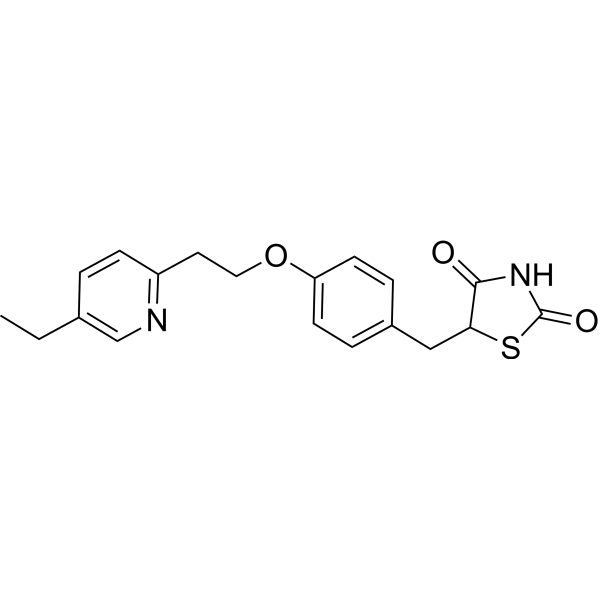
Pioglitazone (U 72107) is an orally active and selective PPARγ (peroxisome proliferator-activated receptor) agonist with high affinity binding to the PPARγ ligand-binding domain with EC50 of 0.93 and 0.99 μM for human and mouse PPARγ, respectively. Pioglitazone can be used in diabetes research .
loading...
    loading...
53
53 Publications Verification
Cat. No.: HY-14601
CAS No.: 112529-15-4
Purity:  99.97%
Synonyms: U 72107A; AD 4833
Target:  

PPAR Ferroptosis

Research Areas:  

Metabolic Disease Cancer

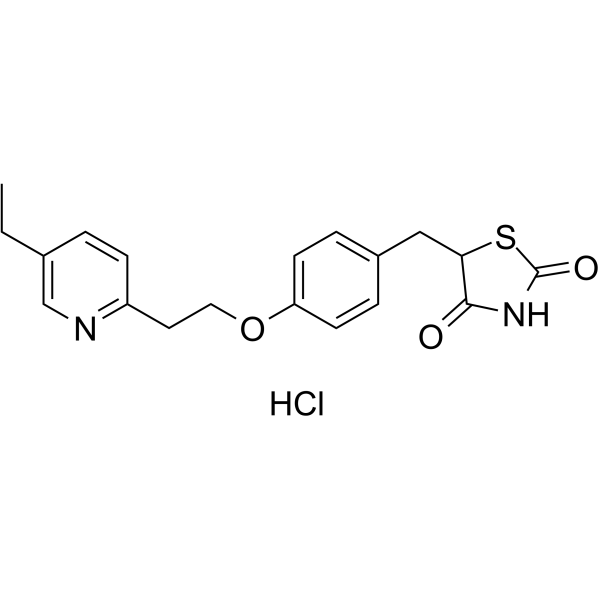
Pioglitazone hydrochloride is a potent and selective PPARγ agonist with EC50s of 0.93 and 0.99 μM for human and mouse PPARγ, respectively.
loading...
    loading...
38
38 Cited Publications
Cat. No.: HY-16995
CAS No.: 50892-23-4
Synonyms: Wy-14643
Target:  

PPAR

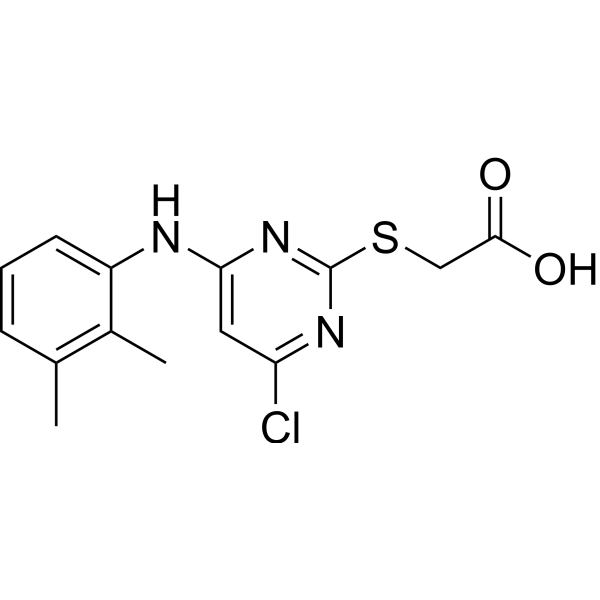
Pirinixic acid (Wy-14643) is a potent agonist of PPARα, with EC50s of 0.63 μM, 32 μM for murine PPARα and PPARγ, and 5.0 μM, 60 μM, 35 μM for human PPARα, PPARγ and PPARδ, respectively.
loading...
    loading...
36
36 Cited Publications
Cat. No.: HY-50935
CAS No.: 97322-87-7
Synonyms: CS-045
Research Areas:  

Metabolic Disease Cancer

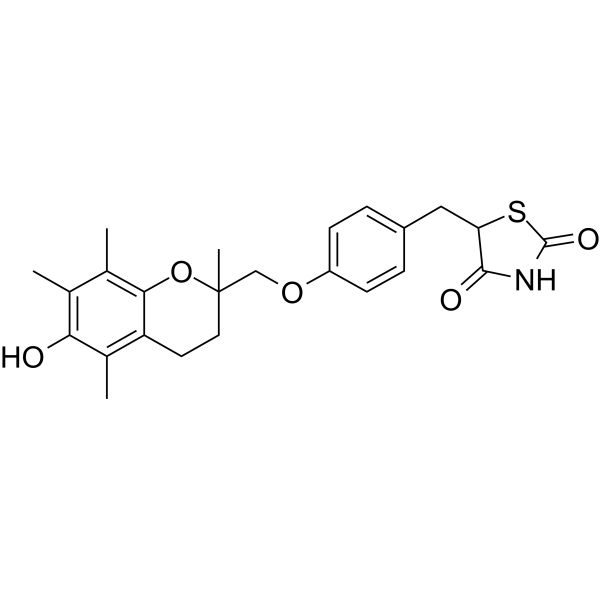
Troglitazone is an orally active PPARγ agonist, with EC50s of 550 nM and 780 nM for human and murine PPARγ receptor, respectively. Troglitazone has anticancer activity, prevents and inhibits the development of type 2 diabetes.
loading...
    loading...
36
36 Cited Publications
Cat. No.: HY-17356
CAS No.: 49562-28-9
Research Areas:  

Cardiovascular Disease Cancer

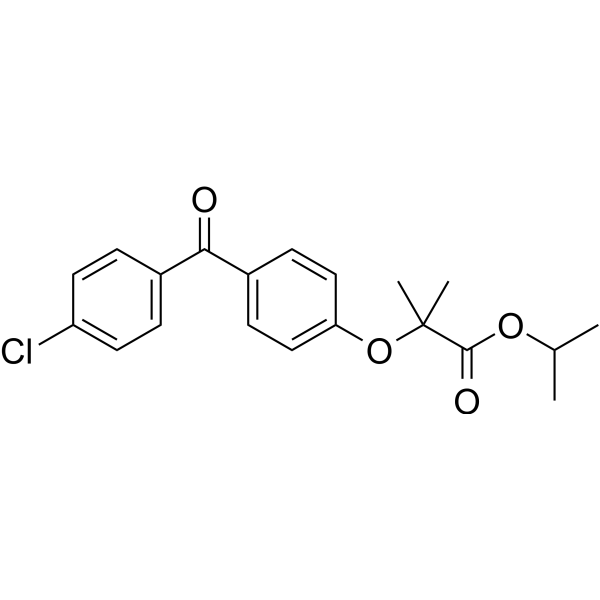
Fenofibrate is a selective PPARα agonist with an EC50 of 30 μM. Fenofibrate also inhibits human cytochrome P450 isoforms, with IC50s of 0.2, 0.7, 9.7, 4.8 and 142.1 μM for CYP2C19, CYP2B6, CYP2C9, CYP2C8, and CYP3A4, respectively.
loading...
    loading...
25
25 Cited Publications
Cat. No.: HY-13861
CAS No.: 265129-71-3
Purity:  99.45%
Target:  

PPAR

Research Areas:  

Cardiovascular Disease

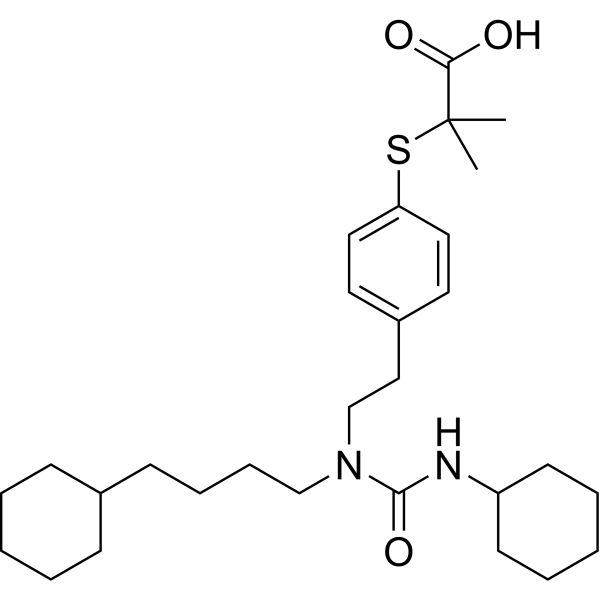
GW7647 is a potent PPARα agonist, with EC50s of 6 nM, 1.1 μM, and 6.2 μM for human PPARα, PPARγ and PPARδ, respectively.
loading...
    loading...
18
18 Cited Publications
Cat. No.: HY-13928
CAS No.: 317318-84-6
Purity:  99.94%
Synonyms: GW610742
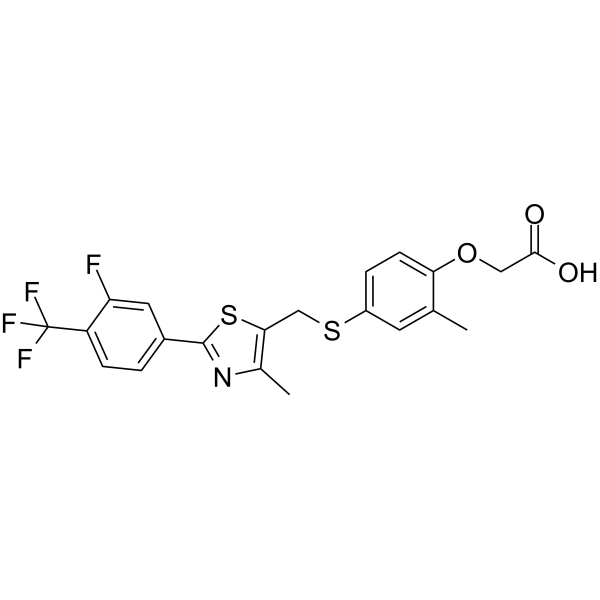
GW0742 is a potent PPARβ and PPARδ agonist, with an IC50 of 1 nM for human PPARδ in binding assay, and EC50s of 1 nM, 1.1 μM and 2 μM for human PPARδ, PPARα, and PPARγ, respectively.
loading...
    loading...
15
15 Cited Publications
Cat. No.: HY-B0637
CAS No.: 41859-67-0
Synonyms: BM15075
Target:  

PPAR

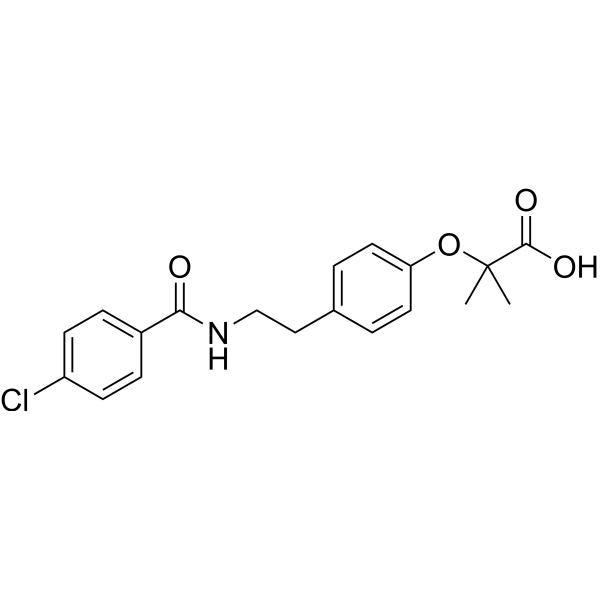
Bezafibrate is an agonist of PPAR, with EC50s of 50 μM, 60 μM, 20 μM for human PPARα, PPARγ and PPARδ, and 90 μM, 55 μM, 110 μM for murine PPARα, PPARγ and PPARδ, respectively; Bezafibrate is used as an hypolipidemic agent.
loading...
    loading...
14
14 Cited Publications
Cat. No.: HY-14166
CAS No.: 118414-82-7
Purity:  99.87%
Synonyms: L 663536
Research Areas:  

Cancer

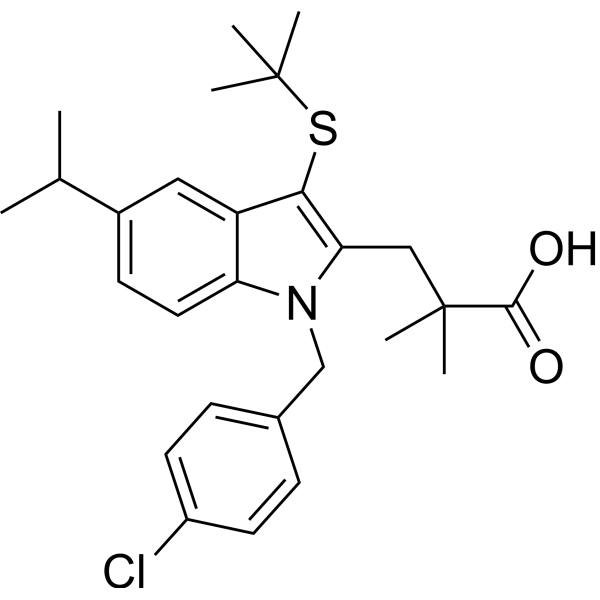
MK-886 (L 663536) is a potent, cell-permeable and orally active FLAP (IC50 of 30 nM) and leukotriene biosynthesis (IC50s of 3 nM and 1.1 μM in intact leukocytes and human whole blood, respectively) inhibitor. MK-886 is also a non-competitive PPARα antagonist and can induce apoptosis .
loading...
    loading...
13
13 Cited Publications
Cat. No.: HY-15655
CAS No.: 196808-24-9
Purity:  99.93%
Target:  

PPAR

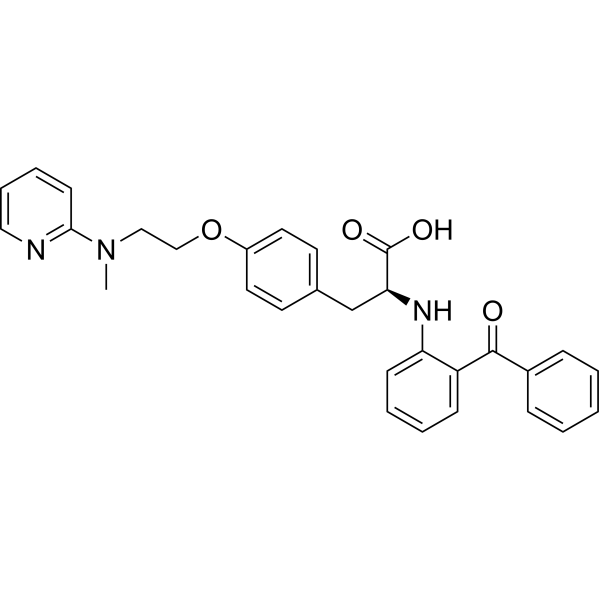
GW 1929 is an orally active peroxisome proliferator-activated receptor-γ (PPARγ) agonist with a pKi of 8.84 for human PPAR-γ, and pEC50s of 8.56 and 8.27 for human PPAR-γ and murine PPAR-γ, respectively. GW 1929 (hydrochloride) has antidiabetic efficacy and neuroprotective potential .
loading...
    loading...
8
8 Cited Publications
Cat. No.: HY-P7999
Purity:  ≥ 90%, as determined by reducing SDS-PAGE.
Synonyms: PPARG; PPARG5; Peroxisome Proliferator Activated Receptor Gamma; Peroxisome Proliferator-Activated Receptor-Gamma Splicing; NR1C3; Peroxisome Proliferative Activated Receptor, Gamma; Peroxisome Proliferator-Activated Receptor Gamma; Peroxisome Proliferato
Species:  
Human
Source:  
E. coli
loading...
    loading...
6
6 Cited Publications
Cat. No.: HY-114263
CAS No.: 1454925-59-7
Purity:  99.07%
Target:  

PPAR

Research Areas:  

Cancer

NXT629 is a potent, selective, and competitive PPAR-α antagonist, with an IC50 of 77 nM for human PPARα, shows high selectivity over other nuclear hormone receptor, such as PPARδ, PPARγ, ERβ, GR and TRβ, IC50s are 6.0, 15, 15.2, 32.5 and >100 μM, respectively . NXT629 has potent anti-tumor activity and inhibits experimental metastasis of cancer cell in animal models .
loading...
    loading...
4
4 Cited Publications
Cat. No.: HY-B0287
CAS No.: 637-07-0
Target:  

PPAR

Research Areas:  

Metabolic Disease

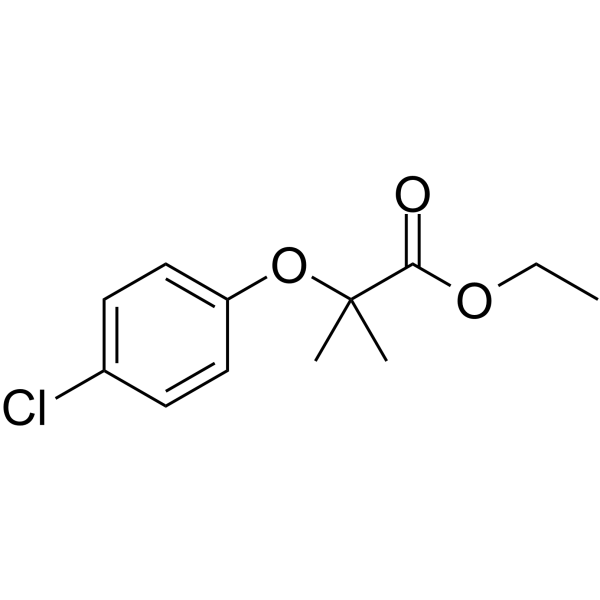
Clofibrate is an agonist of PPAR, with EC50s of 50 μM, ~500 μM for murine PPARα and PPARγ, and 55 μM, ~500 μM for human PPARα and PPARγ, respectively.
loading...
    loading...
3
3 Cited Publications
Cat. No.: HY-15697
CAS No.: 1402601-82-4
Purity:  99.07%
Research Areas:  

Metabolic Disease

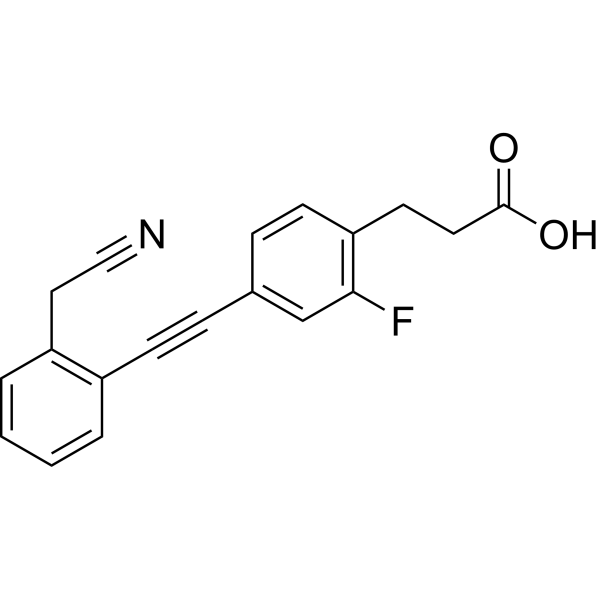
TUG-770 is a potent, selective and orally active GPR40/FFA1 agonist with an EC50 of 6 nM for human FFA1. TUG-770 shows a high selectivity for FFA1 over FFA2, FFA3, FFA4, PPARγ, other receptors, transporters, and enzymes. TUG-770 can be uesd for type 2 diabetes research . TUG-770 is a click chemistry reagent, it contains an Alkyne group and can undergo copper-catalyzed azide-alkyne cycloaddition (CuAAc) with molecules containing Azide groups.
loading...
    loading...
3
3 Cited Publications
Cat. No.: HY-10678
CAS No.: 1000998-59-3
Purity:  99.31%
Target:  

PPAR

Research Areas:  

Cardiovascular Disease

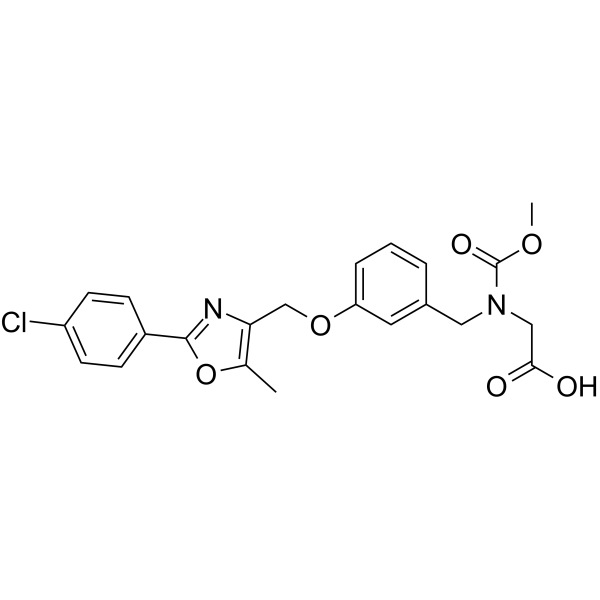
BMS-687453 is a potent and selective PPARα agonist, with an EC50 and IC50 of 10 nM and 260 nM for human PPARα and 4100 nM and >15000 nM for PPARγ in PPAR-GAL4 transactivation assays.
loading...
    loading...
2
2 Cited Publications
Cat. No.: HY-N0515
CAS No.: 945619-74-9
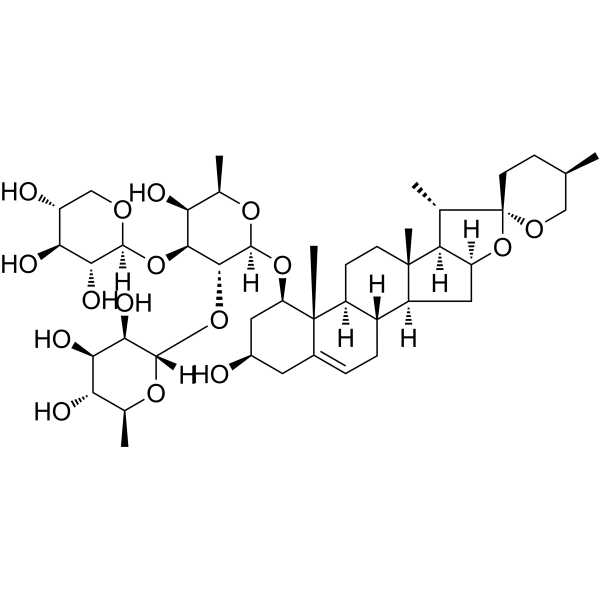
Ophiopogonin D can be isolated from the tubers of Ophiopogon japonicus, is a rare naturally occurring C29 steroidal glycoside. Ophiopogonin D is a CYP2J3 inducer that significantly inhibits Ang II induced NF-κB nuclear translocation, IκBα down-regulation, intracellular Ca 2+ overload and activation of pro-inflammatory cytokines by increasing the expression of CYP2J2/EETs and PPARα in human umbilical vein endothelial cells (HUVECs). Ophiopogonin D can inhibit isteoclastic differentiation in RAW264.7 cells. Ophiopogonin D has protective effect as an antioxidant in H2O2-induced endothelial injury. Ophiopogonin D blocks ERK signaling cascades. Ophiopogonin D alleviates high-fat diet-induced metabolic syndrome and changes the structure of gut microbiota in mice. Ophiopogonin D has been used against inflammatory, metabolic and cardiovascular diseases .
loading...
    loading...
2
2 Cited Publications
Cat. No.: HY-N1990
CAS No.: 94987-08-3
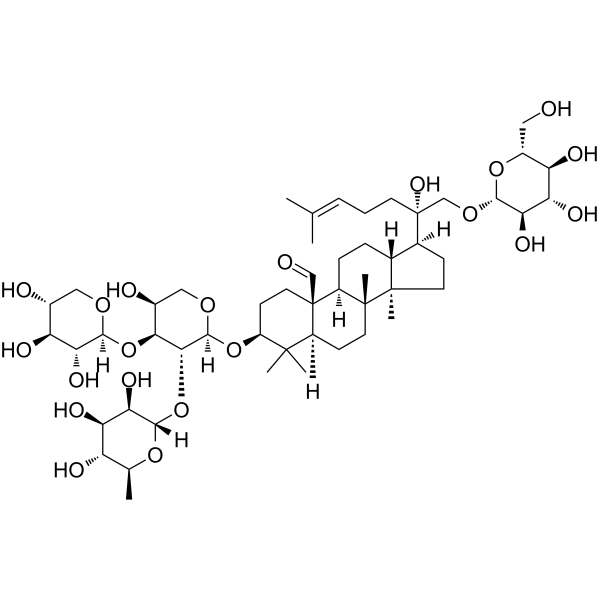
Gypenoside XLIX is a multifunctional bioactive compound that can be isolated from Gynostemma pentaphyllum, with a Ka value of 1.58 μM for its binding to SIRT1. Gypenoside XLIX acts as a PPAR-α agonist. It inhibits the activation of TLR4-mediated NF-κB signaling pathway by activating the Sirt1/Nrf2 signaling pathway, reduces ROS accumulation, and alleviates hepatic inflammatory injury in mice with sepsis-induced liver disease. Gypenoside XLIX targets SIRT1 to block YAP-NLRP3 activation and improve sepsis-induced cardiomyopathy. Gypenoside XLIX inhibits apoptosis (Apoptosis), pyroptosis (Pyroptosis), autophagy (Autophagy), lipid peroxidation, pro-inflammatory cytokines and anti-inflammatory cytokines. Gypenoside XLIX alleviates sepsis-induced splenic injury by inhibiting inflammation and oxidative stress, and mitigates sepsis-associated encephalopathy by targeting PPAR-α. Gypenoside XLIX prevents acute kidney injury by inhibiting IGFBP7/IGF1R-mediated programmed cell death and inflammation. Gypenoside XLIX inhibits the expression and activity of vascular cell adhesion molecule-1 in cytokine-induced human endothelial cells. Gypenoside XLIX is applicable to research related to acute liver injury, lung injury, cardiomyopathy, acute splenic injury, sepsis-associated encephalopathy, acute kidney injury, atherosclerosis and chronic inflammation .
loading...
    loading...
2
2 Cited Publications
Cat. No.: HY-A0087
CAS No.: 6197-30-4
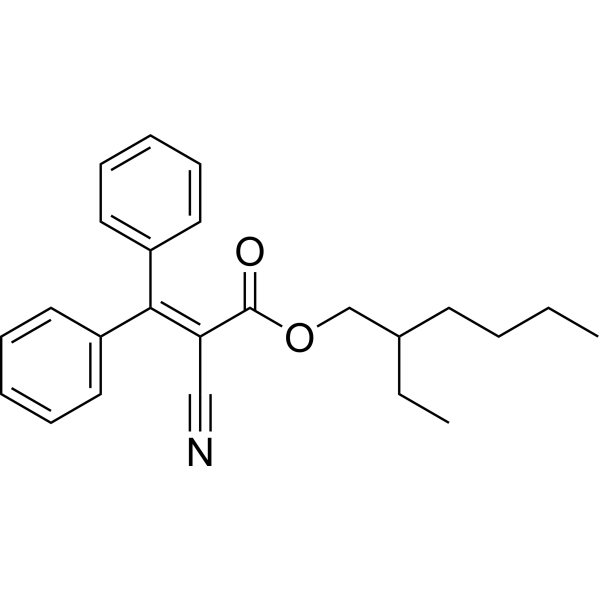
Octocrylene is an organic ultraviolet (UV) filter that absorbs mainly UVB radiation and shorter UVA wavelengths. Octocrylene acts as a partial agonist of PPARγ, which alters the gene transcription profile of lipid metabolism enzymes. In addition, Octocrylene is cytotoxic and genotoxic to human skin fibroblasts and mediates the biosynthesis of estrogens such as estriol in zebrafish larvae, while affecting antioxidant pathways including glutathione transferase and peroxisomes .
loading...
    loading...
2
2 Cited Publications
Cat. No.: HY-W014589
CAS No.: 96-76-4
Synonyms: 2,4-DTBP
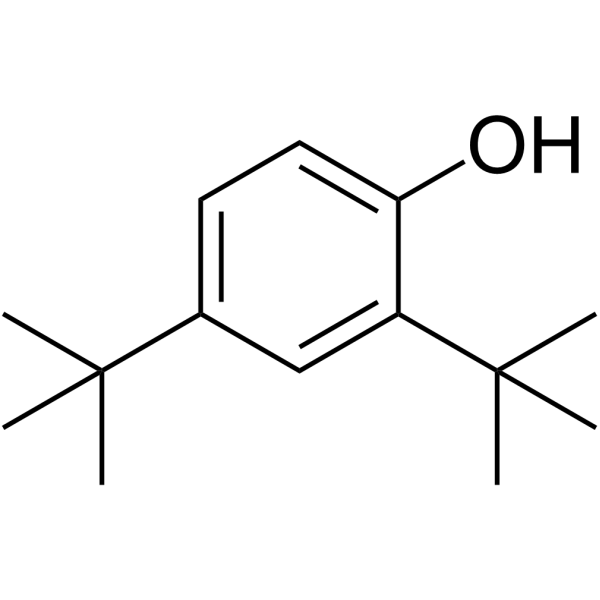
2,4-Di-tert-butylphenol (2,4-DTBP) is an orally active RXRα activator and a human estrogen receptor ligand with anti-inflammatory and antioxidant activities, which can induce apoptosis in tumor cells. 2,4-Di-tert-butylphenol can activate the RXRα subtype in LXRα/RXRα, PPARγ/RXRα, and hormone receptor β/RXRα. 2,4-Di-tert-butylphenol also has antiviral and antifungal activities and has the potential to inhibit -induced neurotoxicity. 2,4-Di-tert-butylphenol can be used as an intermediate in the preparation of antioxidants and UV stabilizers, and is also used in the manufacture of drugs and fragrances .
loading...
    loading...
2
2 Cited Publications
Cat. No.: HY-P7996
Purity:  ≥ 90%, as determined by reducing SDS-PAGE.
Synonyms: PPARA; HPPAR; Prev. PPAR; PPAR-Alpha; Peroxisome Proliferator-Activated Receptor Alpha; Alternative Protein PPARA; NR1C1; PPARalpha; Nuclear Receptor Subfamily 1 Group C Member 1; Peroxisome Proliferator Activated Receptor Alpha; Peroxisome Proliferative Activated Receptor, Alpha
Species:  
Human
Source:  
E. coli
loading...
    loading...

