



CB-6644
Based on 17 publication(s) in Google Scholar
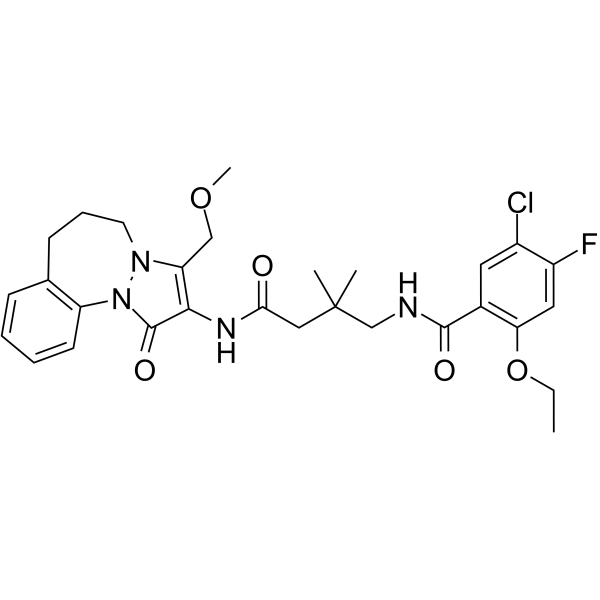
CB-6644 is a selective inhibitor of RUVBL1/2 complex with anti-cancer activity. CB-6644 blocks the ATPase activity of RUVBL1/2 with an IC50 of 15 nM.
Para uso exclusivo en investigación. No vendemos a pacientes.
- Pureza : 99.91%
- No. CAS: 2316817-88-4
- Fòrmula: C29H34ClFN4O5
- Peso molecular:573.06
-
Almacenamiento:
-20°C, stored under nitrogen
* In solvent : -80°C, 6 months; -20°C, 1 month (stored under nitrogen)

To place orders, for customer services and technical support, please contact: MedChemExpress USA
Tel: 609-228-6898 E-mail: [email protected] [email protected]


-
 Actividad biológica
-
Chemical Information
-
Solvente y solubilidad
- Pureza y Documentación
- Referencias
-
 Help & FAQs


-
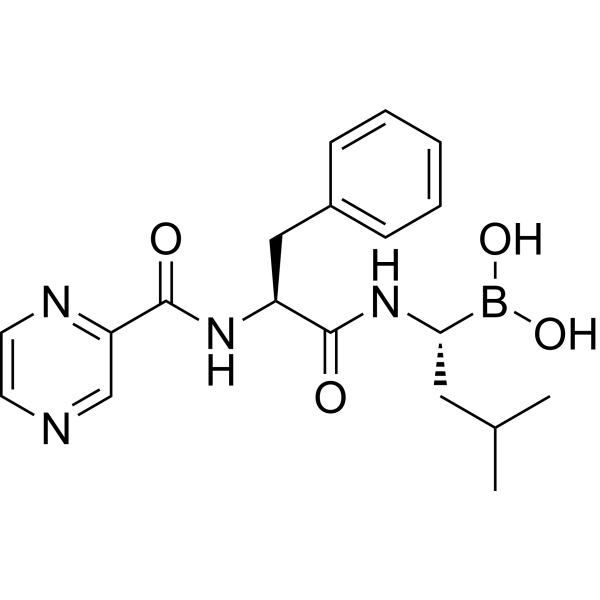
HY-10227
BortezomibProteasome Inhibitor -
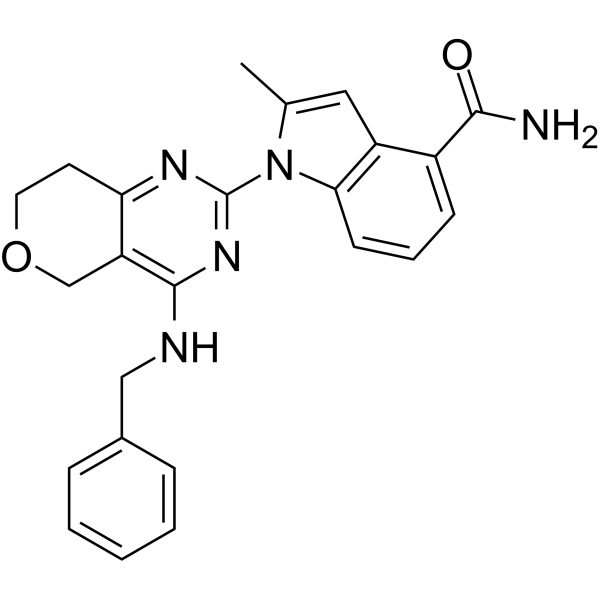
HY-12861
CB-5083p97 AAA ATPase/VCP Inhibitor -
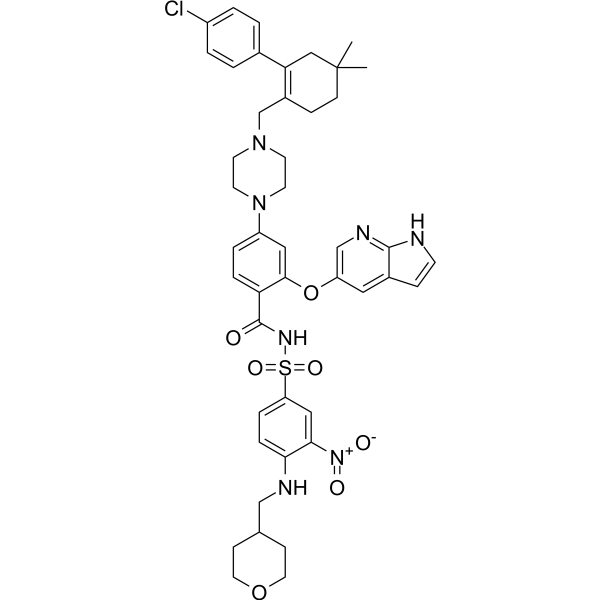
HY-15531
VenetoclaxBCL-2 Inhibitor -
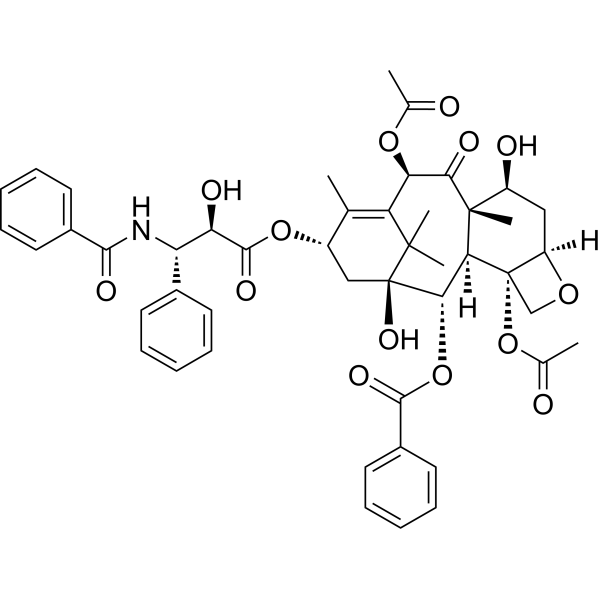
HY-B0015
PaclitaxelAntitumor Agent -
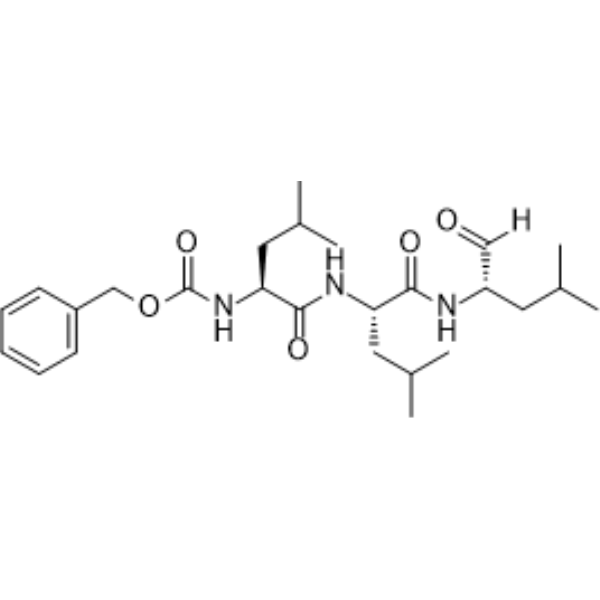
HY-13259
MG-132Proteasome Inhibitor -
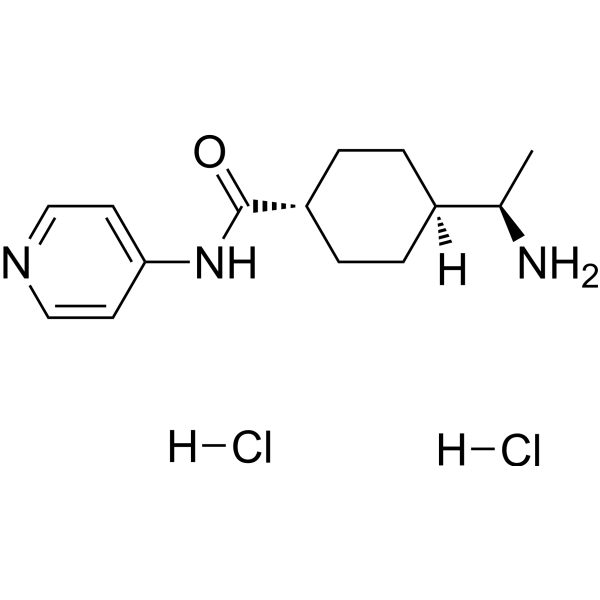
HY-10583
Y-27632 dihydrochlorideROCK Inhibitor -
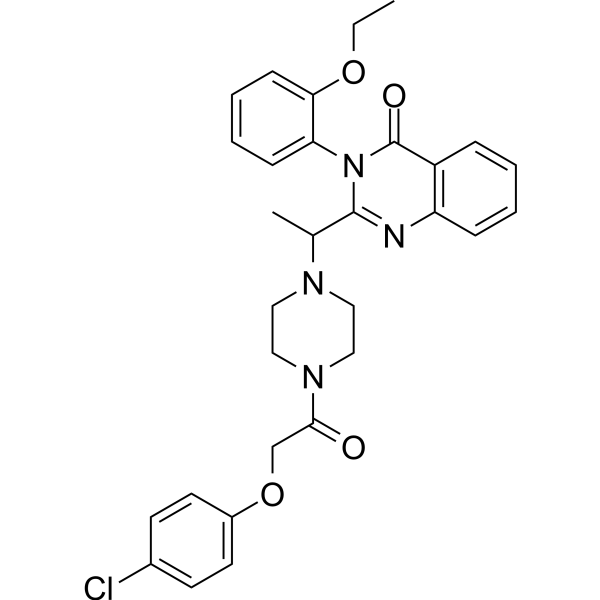
HY-15763
ErastinFerroptosis Inducer -
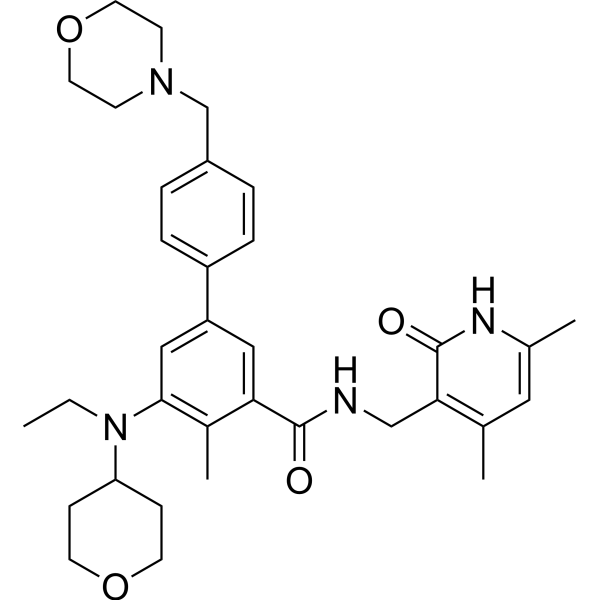
HY-13803
TazemetostatEZH2 Inhibitor -
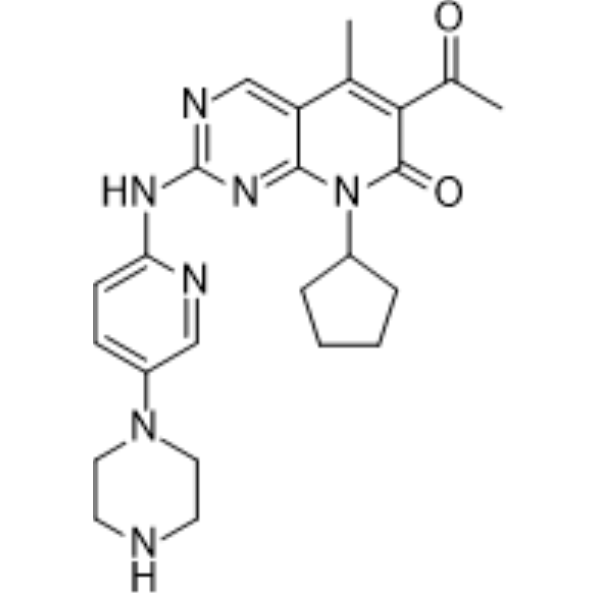
HY-50767
PalbociclibCDK4/6 Inhibitor -
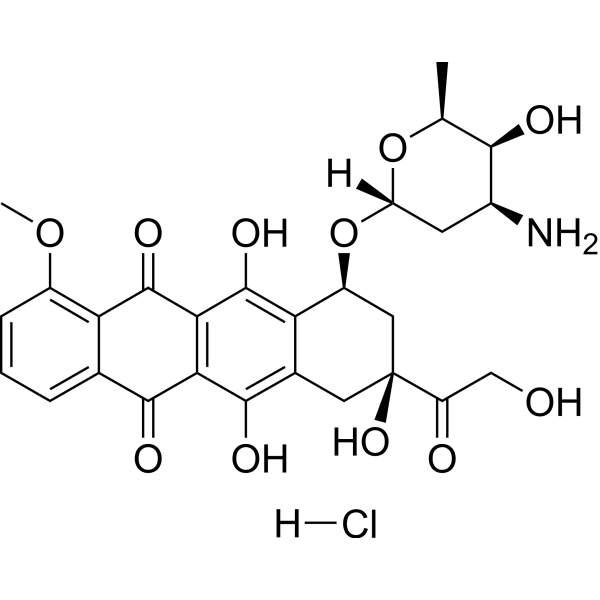
HY-15142
Doxorubicin hydrochlorideTopoisomerase Inhibitor -
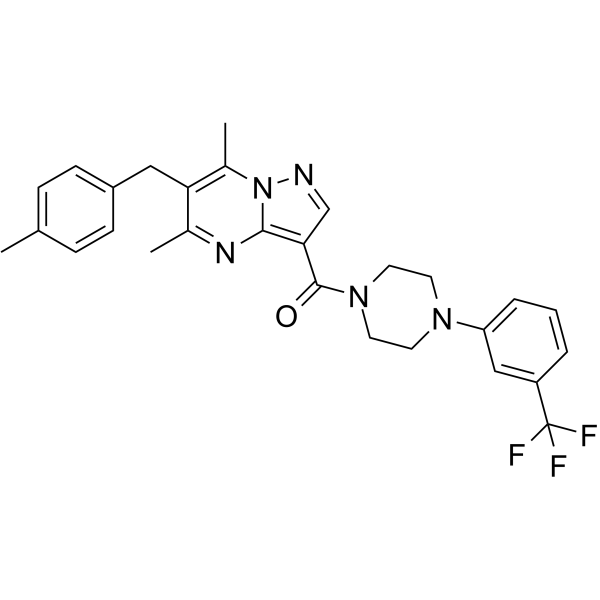
HY-146074
RUVBL1/2 ATPase-IN-1RUVBL1/2 Inhibitor -
HY-N0488
Vincristine sulfateAntineoplastic Agent
Publications Citing Use of MedChemExpress (MCE) CB-6644
More- Nature. 2025 Jun;642(8066):165-173. [Abstract]
- Gut. 2024 May 31:gutjnl-2023-331519. [Abstract]
- Cell Host Microbe. 2023 Nov 8;31(11):1820-1836.e10. [Abstract]
- Cell Death Dis. 2024 Aug 31;15(8):638. [Abstract]
- Oncogene. 2022 Jun;41(23):3239-3250. [Abstract]
- Cell Rep. 2022 May 24;39(8):110846. [Abstract]
- Front Immunol. 2021 Jun 4:12:679184. [Abstract]
- Cell Rep Phys Sci. 2024 May 13.
- Int J Mol Sci. 2024 Aug 20;25(16):9022. [Abstract]
- Mol Oncol. 2026 Jun 5. [Abstract]
- iScience. 2026 Mar 4;29(4).
- bioRxiv. 2026 May 14.
- bioRxiv. 2025 Dec 18.
- bioRxiv. 2025 Dec 23.
- bioRxiv. 2023 Dec 21.
- Research Square Preprint. 2023 Nov 20.
- bioRxiv. July 11, 2021.
 Customer Validation & Images

-
Bio/Physico-chemical Assay
-
Bio/Physico-chemical Assay
-
In Vivo Efficacy Study
-
In Vivo Efficacy Study
-
In Vivo Efficacy Study
Ver todos los productos específicos de isoformas DNA/RNA Synthesis
More

Actividad biológica
Descripciòn
Cellular Effect
|
Cell Line

|
Type | Value | Description | References |
|---|---|---|---|---|
| A549 | IC50 |
0.3 μM
Compound: 9; CB-6644
|
Anti-proliferative activity against human A549 assessed as cell growth inhibition measured after 48 hrs by Cell Titre Glo Luminescent Cell viability assay
Anti-proliferative activity against human A549 assessed as cell growth inhibition measured after 48 hrs by Cell Titre Glo Luminescent Cell viability assay
|
[PMID: 35364523] |
| HCT-116 | IC50 |
0.08 μM
Compound: 9; CB-6644
|
Anti-proliferative activity against human HCT-116 assessed as cell growth inhibition measured after 48 hrs by Cell Titre Glo Luminescent Cell viability assay
Anti-proliferative activity against human HCT-116 assessed as cell growth inhibition measured after 48 hrs by Cell Titre Glo Luminescent Cell viability assay
|
[PMID: 35364523] |
| MDA-MB-231 | IC50 |
0.7 μM
Compound: 9; CB-6644
|
Anti-proliferative activity against human MDA-MB-231 assessed as cell growth inhibition measured after 48 hrs by Cell Titre Glo Luminescent Cell viability assay
Anti-proliferative activity against human MDA-MB-231 assessed as cell growth inhibition measured after 48 hrs by Cell Titre Glo Luminescent Cell viability assay
|
[PMID: 35364523] |
In Vitro
CB-6644 (20 μM) interacts with the RUVBL1/2 complex in Ramos cells[1].
CB-6644 (0.001-10 μM; 72 hours) potently kills 123 cell lines (including HCT116, NCI-1975, and HT29 cells) with an EC50 range of 41 to 785 nM[1].
MedChemExpress (MCE) has not independently confirmed the accuracy of these methods. They are for reference only.
-
Cell Line:123 cell lines such as HCT116, NCI-1975, and HT29 cells
-
Concentration:0.001, 0.01, 0.1, 1, and 10 μM
-
Incubation Time:72 hours
-
Result:Potently killed cells with an EC50 range of 41 to 785 nM.
In Vivo
MedChemExpress (MCE) has not independently confirmed the accuracy of these methods. They are for reference only.
-
Animal Model:SCID-beige mice bearing human tumor xenografts derived from either Burkitt’s lymphoma (Ramos) or multiple myeloma (RPMI8226) cell lines[1]
-
Dosage:150 mg/kg
-
Administration:Oral gavage once (qd) or twice (BID) daily, 10 days of treatment for Ramos, 30 days of treatment for RPMI8226
-
Result:There was no significant bodyweight loss in mice. TGI of 68 and 81% in Ramos and RPMI8226, respectively.


Chemical Information
-
No. CAS 2316817-88-4
-
Appearance Solid
-
Peso molecular 573.06
-
Fòrmula C29H34ClFN4O5
-
Color White to light yellow
-
SMILES
COCC1=C(NC(CC(C)(C)CNC(C2=C(OCC)C=C(F)C(Cl)=C2)=O)=O)C(N(N1CCC3)C4=C3C=CC=C4)=O
-
Envío
Room temperature in continental US; may vary elsewhere.
-
Almacenamiento
-20°C, stored under nitrogen
* In solvent : -80°C, 6 months; -20°C, 1 month (stored under nitrogen)


Publications (17)
-
Journal Impact Factor
-
Most Recent
-
Nature
2025 Jun;642(8066):165-173. PMID: 40140583
CB-6644 purchased from MedChemExpress. Usage Cited in: Nature. 2025 Jun;642(8066):165-173. [Abstract]
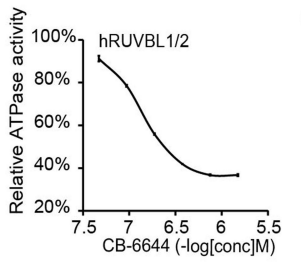
The inhibitory effects of CB-6644 on the ATPase activity of human RUVBL1/2.
CB-6644 purchased from MedChemExpress. Usage Cited in: Nature. 2025 Jun;642(8066):165-173. [Abstract]
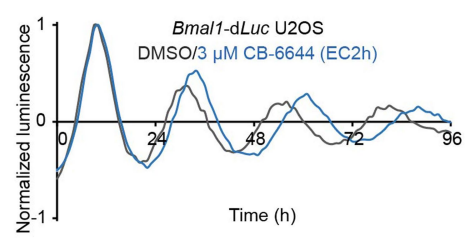
Normalized luminescence rhythm of Bmal1-dLuc U2OS cells shows the period lengthening for 2 h in the presence of CB-6644 (3 μM), n = 3 biologically independent cells.
CB-6644 purchased from MedChemExpress. Usage Cited in: Nature. 2025 Jun;642(8066):165-173. [Abstract]
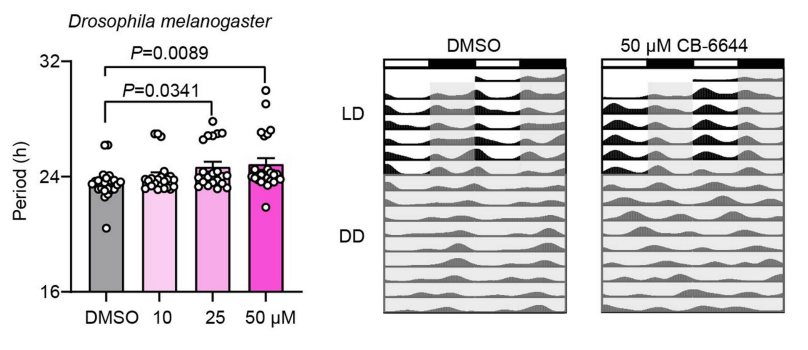
Left panel: statistical analysis of the period length changes of Drosophila melanogaster. Right panel: represents of double-plotted averaged actogram of Drosophila melanogaster with CB-6644 or control treatment.
CB-6644 purchased from MedChemExpress. Usage Cited in: Nature. 2025 Jun;642(8066):165-173. [Abstract]
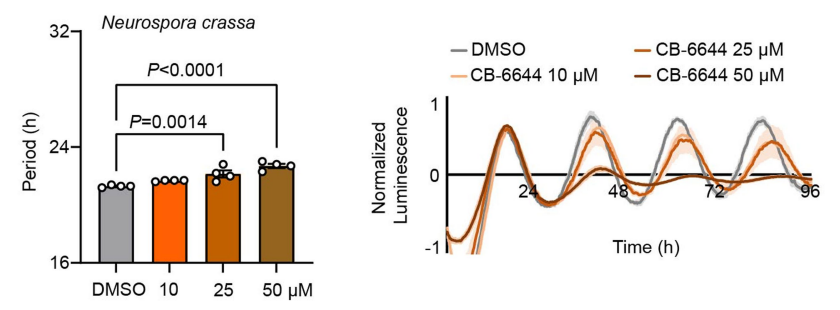
Left panel: statistical analysis of the period length of Neurospora crassa with CB-6644 treatment. Right panel: normalized luminescence rhythm of Neurospora crassa treated by CB-6644.
CB-6644 purchased from MedChemExpress. Usage Cited in: Nature. 2025 Jun;642(8066):165-173. [Abstract]
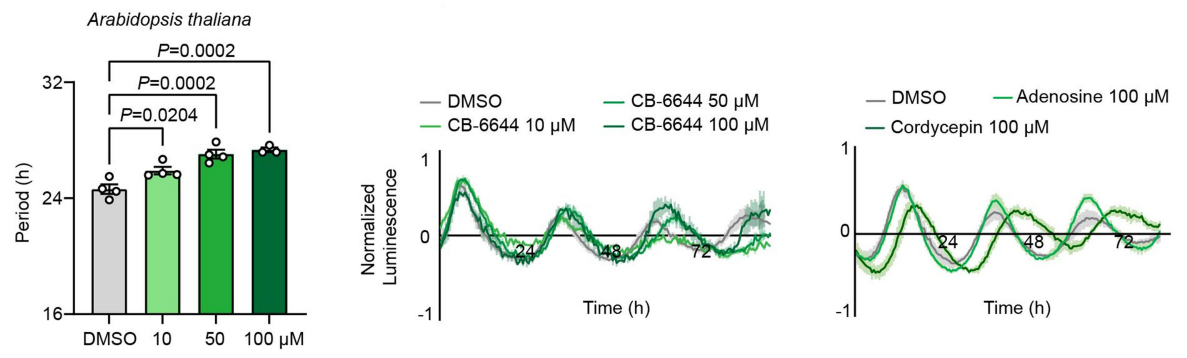
Left panel: statistical analysis of the period length of Arabidopsis thaliana with CB-6644 treatment. Right panel: normalized luminescence rhythm of Arabidopsis thaliana treated by CB-6644, cordycepin, and adenosine.
-
Gut
2024 May 31:gutjnl-2023-331519. PMID: 38821858 -
Cell Host Microbe
Mycobacterium tuberculosis suppresses host DNA repair to boost its intracellular survival. [Abstract]2023 Nov 8;31(11):1820-1836.e10. PMID: 37848028 -
Cell Death Dis
A common druggable signature of oncogenic c-Myc, mutant KRAS and mutant p53 reveals functional redundancy and competition among oncogenes in cancer. [Abstract]2024 Aug 31;15(8):638. PMID: 39217152 -
Oncogene
RUVBL1 promotes enzalutamide resistance of prostate tumors through the PLXNA1-CRAF-MAPK pathway. [Abstract]2022 Jun;41(23):3239-3250. PMID: 35508542 -
Cell Rep
Regionally defined proteomic profiles of human cerebral tissue and organoids reveal conserved molecular modules of neurodevelopment. [Abstract]2022 May 24;39(8):110846. PMID: 35613588 -
Front Immunol
RUVBL1/2 Complex Regulates Pro-Inflammatory Responses in Macrophages via Regulating Histone H3K4 Trimethylation. [Abstract]2021 Jun 4:12:679184. PMID: 34276666 -
-
Int J Mol Sci
2024 Aug 20;25(16):9022. PMID: 39201707 -
Mol Oncol
Patient therapy outcome modeling in cancer organoids is improved by cancer-associated fibroblasts and organoid assembly convolution. [Abstract]2026 Jun 5. PMID: 42246237 -
-
-
-
-
-
-


Solvente y solubilidad
In Vitro:
DMSO : 100 mg/mL (174.50 mM; Need ultrasonic; Hygroscopic DMSO has a significant impact on the solubility of product, please use newly opened DMSO)
Please refer to the solubility information to select the appropriate solvent. Once prepared, please aliquot and store the solution to prevent product inactivation from repeated freeze-thaw cycles.
Storage method and period of stock solution: -80°C, 6 months; -20°C, 1 month (stored under nitrogen). When stored at -80°C, please use it within 6 months. When stored at -20°C, please use it within 1 month.
Please refer to the solubility information to select the appropriate solvent. Once prepared, please aliquot and store the solution to prevent product inactivation from repeated freeze-thaw cycles.
Storage method and period of stock solution: -80°C, 6 months; -20°C, 1 month (stored under nitrogen). When stored at -80°C, please use it within 6 months. When stored at -20°C, please use it within 1 month.
Concentration (start) × Volume (start) = Concentration (final) × Volume (final)
In Vivo:
Select the appropriate dissolution method based on your experimental animal and administration route.
- For the following dissolution methods, please ensure to first prepare a clear stock solution using an In Vitro approach and then sequentially add co-solvents:
- To ensure reliable experimental results, the clarified stock solution can be appropriately stored based on storage conditions. As for the working solution for In Vivo experiments, it is recommended to prepare freshly and use it on the same day.
- The percentages shown for the solvents indicate their volumetric ratio in the final prepared solution. If precipitation or phase separation occurs during preparation, heat and/or sonication can be used to aid dissolution.
Add each solvent one by one: 10% DMSO 40% PEG300 5% Tween-80 45% Saline
Solubility: ≥ 2.08 mg/mL (3.63 mM); Clear solution
This protocol yields a clear solution of ≥ 2.08 mg/mL (saturation unknown).
Taking 1 mL working solution as an example, add 100 μL DMSO stock solution (20.8 mg/mL) to 400 μL PEG300, and mix evenly; then add 50 μL Tween-80 and mix evenly; then add 450 μL Saline to adjust the volume to 1 mL.
Preparation of Saline: Dissolve 0.9 g sodium chloride in ddH₂O and dilute to 100 mL to obtain a clear Saline solution.
Add each solvent one by one: 10% DMSO 90% (20% SBE-β-CD in Saline)
Solubility: ≥ 2.08 mg/mL (3.63 mM); Clear solution
This protocol yields a clear solution of ≥ 2.08 mg/mL (saturation unknown).
Taking 1 mL working solution as an example, add 100 μL DMSO stock solution (20.8 mg/mL) to 900 μL 20% SBE-β-CD in Saline, and mix evenly.
Preparation of 20% SBE-β-CD in Saline (4°C, storage for one week): 2 g SBE-β-CD powder is dissolved in 10 mL Saline, completely dissolve until clear.
In Vivo Dissolution Calculator
Please enter the basic information of animal experiments:
-
-
-
-
Recommended: Prepare an additional quantity of animals to account for potential losses during experiments.
Please enter your animal formula composition:
-
%DMSO +
Recommended: Keep the proportion of DMSO in working solution below 2% if your animal is weak.
-
%+
-
+%Tween-80 + +
-
%Saline +
The co-solvents required include: DMSO, . All of co-solvents are available by MedChemExpress (MCE). , Tween 80. All of co-solvents are available by MedChemExpress (MCE).
Working solution concentration: 0.22 mg/mL
Method for preparing stock solution: mg drug dissolved in μL DMSO. Stock solution concentration: mg/mL. * In solvent : -80°C, 6 months; -20°C, 1 month (stored under nitrogen)
1. Take μL DMSO stock solution;
2. Add μL .
μL , mix evenly;
3. Then add μL Tween 80, mix evenly;
4. Then add μL
Please ensure that the stock solution in the first step is dissolved to a clear state, and add co-solvents in sequence. You can use ultrasonic heating (ultrasonic cleaner, recommended frequency 20-40 kHz), vortexing, etc. to assist dissolution.


Pureza y Documentación
-
Ficha de datos (275 KB)
-
SDS (394 KB)
- English - EN (394 KB)
- Français - FR (394 KB)
- Deutsch - DE (394 KB)
- Norwegian - NO (394 KB)
- Español - ES (394 KB)
- Swedish - SV (394 KB)
- Italian - IT (394 KB)
- Korean - KR (394 KB)
- Portuguese - PT (394 KB)
-
Instrucciones de manejo (2659 KB)
Referencias


Complete Stock Solution Preparation Table
Please refer to the solubility information to select the appropriate solvent. Once prepared, please aliquot and store the solution to prevent product inactivation from repeated freeze-thaw cycles.
Storage method and period of stock solution: -80°C, 6 months; -20°C, 1 month (stored under nitrogen). When stored at -80°C, please use it within 6 months. When stored at -20°C, please use it within 1 month.
| Optional Solvent | Concentration Solvent Mass | 1 mg | 5 mg | 10 mg | 25 mg |
|---|---|---|---|---|---|
| DMSO | 1 mM | 1.7450 mL | 8.7251 mL | 17.4502 mL | 43.6254 mL |
| 5 mM | 0.3490 mL | 1.7450 mL | 3.4900 mL | 8.7251 mL | |
| 10 mM | 0.1745 mL | 0.8725 mL | 1.7450 mL | 4.3625 mL | |
| 15 mM | 0.1163 mL | 0.5817 mL | 1.1633 mL | 2.9084 mL | |
| 20 mM | 0.0873 mL | 0.4363 mL | 0.8725 mL | 2.1813 mL | |
| 25 mM | 0.0698 mL | 0.3490 mL | 0.6980 mL | 1.7450 mL | |
| 30 mM | 0.0582 mL | 0.2908 mL | 0.5817 mL | 1.4542 mL | |
| 40 mM | 0.0436 mL | 0.2181 mL | 0.4363 mL | 1.0906 mL | |
| 50 mM | 0.0349 mL | 0.1745 mL | 0.3490 mL | 0.8725 mL | |
| 60 mM | 0.0291 mL | 0.1454 mL | 0.2908 mL | 0.7271 mL | |
| 80 mM | 0.0218 mL | 0.1091 mL | 0.2181 mL | 0.5453 mL | |
| 100 mM | 0.0175 mL | 0.0873 mL | 0.1745 mL | 0.4363 mL |


CB-6644 Related Classifications
HY-114429 Related Classifications
 Powered by Bioz