



GW-803430

Based on 1 Customer Validation
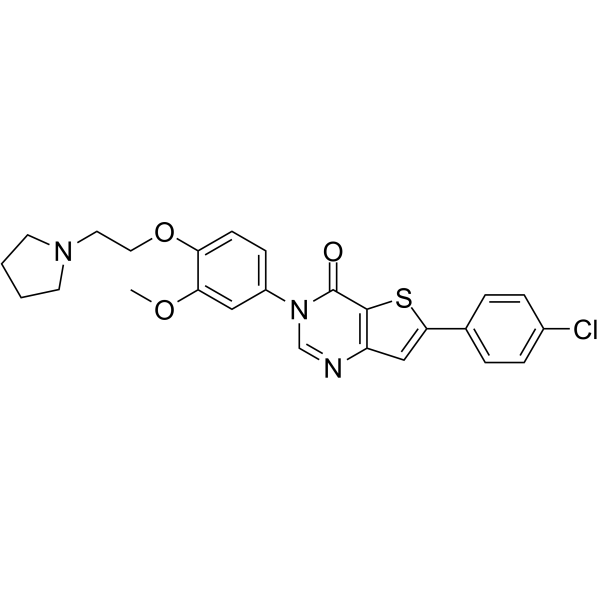
GW-803430 (GW-3430) is a potent and selective melanin-concentrating hormone receptor 1 (MCH R1) antagonist with a pIC50 of 9.3. GW-803430 is orally active in an animal model of obesity.
For research use only. We do not sell to patients.
- Purity : 98.53%
- CAS No.: 515141-51-2
- Formula: C25H24ClN3O3S
- Molecular Weight:481.99
-
Storage:Powder -20°C, 3 years ; In solvent -80°C, 6 months , -20°C, 1 month

To place orders, for customer services and technical support, please contact: MedChemExpress USA
Tel: 609-228-6898 E-mail: [email protected] [email protected]


-
 Biological Activity
-
Chemical Information
-
Solvent & Solubility
- Protocols
- Purity & Documentation
- References
-
 Help & FAQs


-
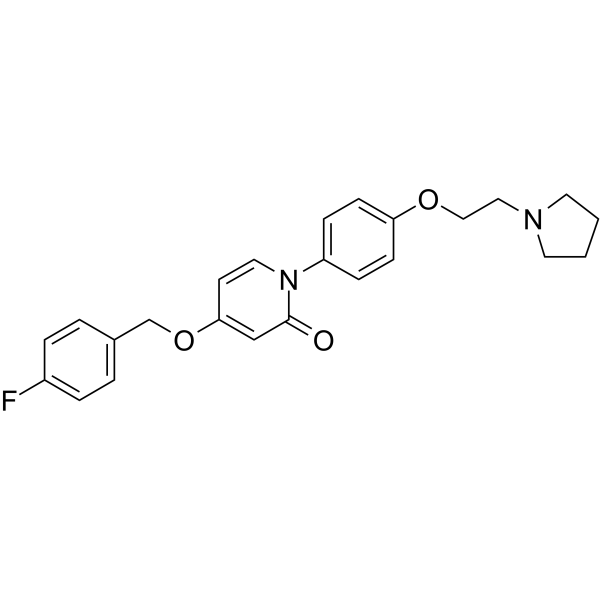
HY-107623
TC-MCH 7cSelective MCH1R Antagonist -
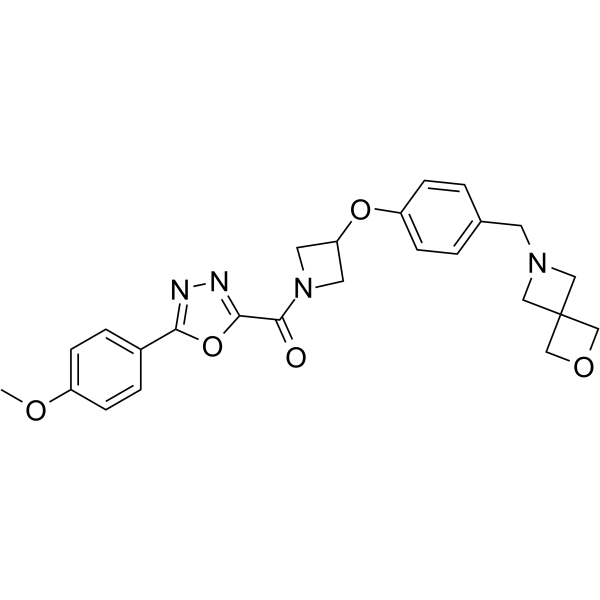
HY-U00257
AZD1979 -
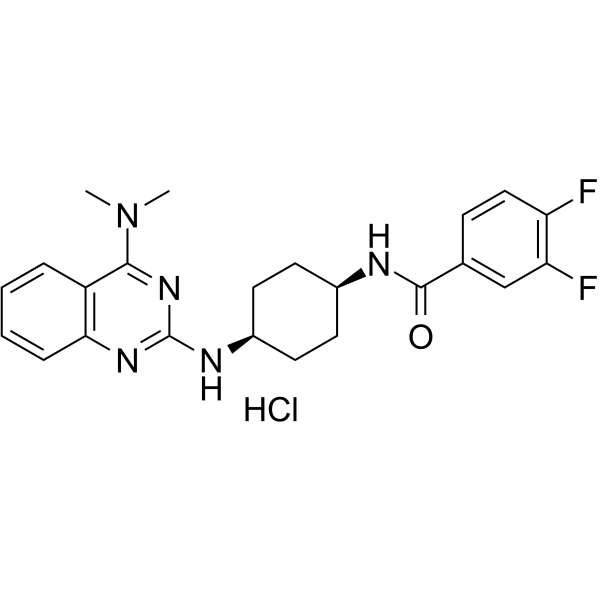
HY-107624
ATC0175MCH1R Antagonist -
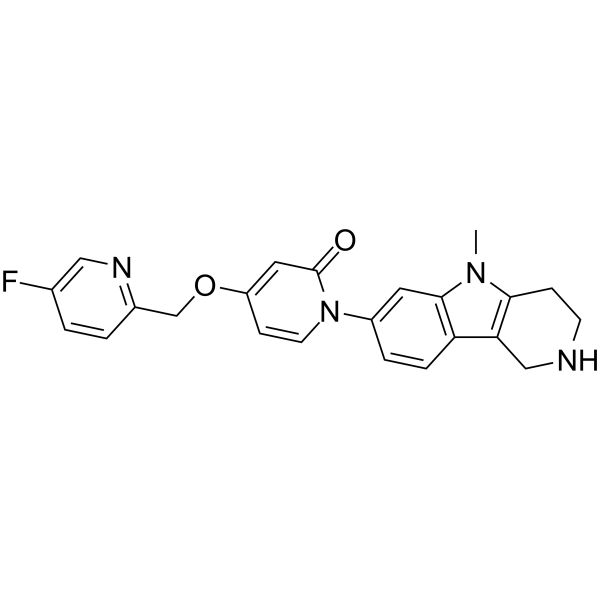
HY-111398
ALB-127158(a)MCH1 Receptor Antagonist -
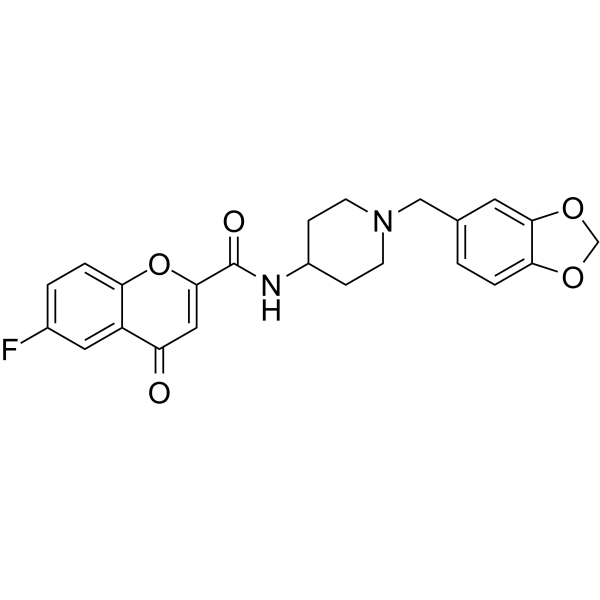
HY-100321
MCHR1 antagonist 2MCHR1 Antagonist -
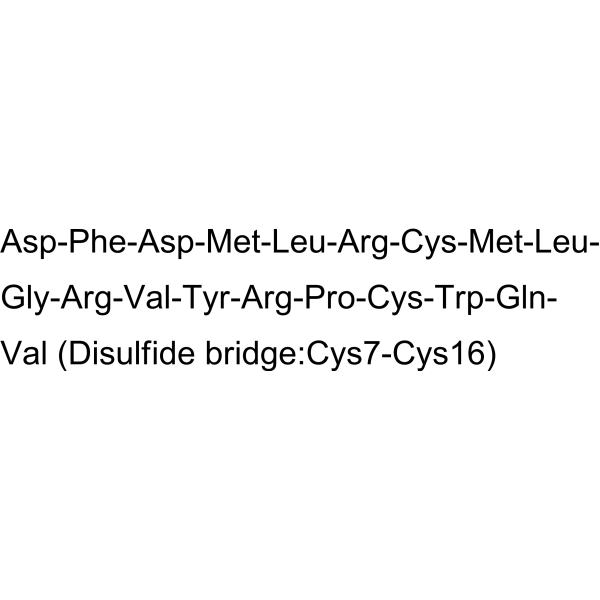
HY-P1205
MCH(human, mouse, rat)MCH-R Ligand -
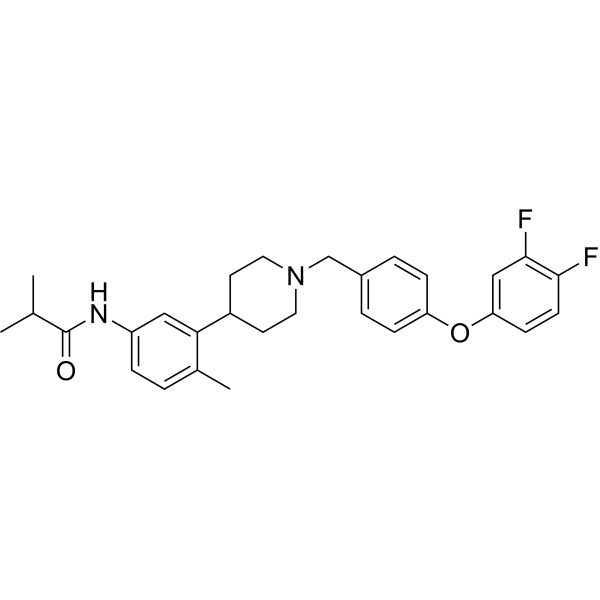
HY-107625
SNAP 94847MCHR1 Antagonist -
![[Ala17]-MCH](https://file.medchemexpress.com/product_pic/hy-p1204.gif)
HY-P1204
[Ala17]-MCHMCHR1 Ligand -
HY-107625A
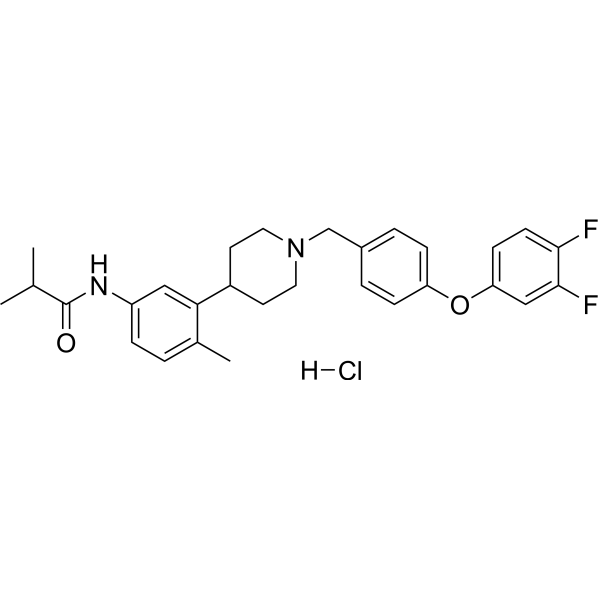
SNAP 94847 hydrochlorideMCHR1 Antagonist -
HY-100318
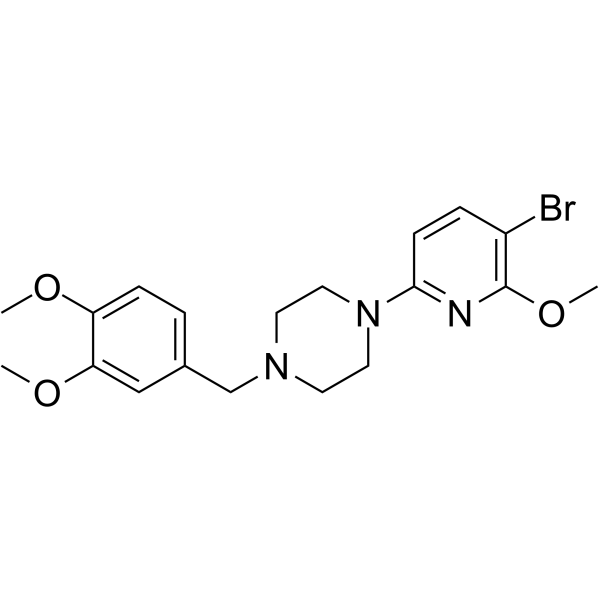
MCHR1 antagonist 5MCHR1 Antagonist -

HY-107624R
ATC0175 (Standard)Reference Standard -

HY-107625AR
SNAP 94847 hydrochloride (Standard)Reference Standard


Biological Activity
Description
IC50 & Target
pIC50: 9.3 (MCH R1)[1]
Cellular Effect
|
Cell Line

|
Type | Value | Description | References |
|---|---|---|---|---|
| HEK293 | IC50 |
1.17 μM
Compound: 2
|
Displacement of [3H]astemizole from human ERG expressed in HEK293 cells
Displacement of [3H]astemizole from human ERG expressed in HEK293 cells
|
[PMID: 19290642] |
| HEK293 | IC50 |
16 nM
Compound: 43
|
Antagonist activity at human MCHR1 expressed in HEK293 cells assessed as inhibition of MCH-stimulated Ca2+ influx preincubated for 120 mins followed by MCH challenge by FLIPR assay
Antagonist activity at human MCHR1 expressed in HEK293 cells assessed as inhibition of MCH-stimulated Ca2+ influx preincubated for 120 mins followed by MCH challenge by FLIPR assay
|
[PMID: 26022839] |
In Vitro
In Vivo
GW-803430 is a suitable compound for its good pharmacokinetic properties (bioavailability=31%, t1/2=11 h) and brain penetration (6:1 brain:plasma concentration) in mice[1].
MedChemExpress (MCE) has not independently confirmed the accuracy of these methods. They are for reference only.
-
Animal Model:High fat diet-induced obese AKR/J mice[1]
-
Dosage:0.3, 3, and 15 mg/kg
-
Administration:Orally, qd,12 days
-
Result:Caused a sustained dose-dependent weight loss of -6.2%, -12.1%, and -13.1%, respectively, relative to vehicle controls.


Chemical Information
-
CAS No. 515141-51-2
-
Appearance Solid
-
Molecular Weight 481.99
-
Formula C25H24ClN3O3S
-
Color Off-white to yellow
-
SMILES
O=C1C2=C(C=C(C3=CC=C(Cl)C=C3)S2)N=CN1C4=CC=C(OCCN5CCCC5)C(OC)=C4
-
Synonyms
GW-3430
-
Shipping
Room temperature in continental US; may vary elsewhere.
-
Storage
Powder -20°C 3 years In solvent -80°C 6 months -20°C 1 month


Solvent & Solubility
In Vitro:
DMSO : 12.5 mg/mL (25.93 mM; ultrasonic and warming and heat to 60°C; Hygroscopic DMSO has a significant impact on the solubility of product, please use newly opened DMSO)
Please refer to the solubility information to select the appropriate solvent. Once prepared, please aliquot and store the solution to prevent product inactivation from repeated freeze-thaw cycles.
Storage method and period of stock solution: -80°C, 6 months; -20°C, 1 month. When stored at -80°C, please use it within 6 months. When stored at -20°C, please use it within 1 month.
Please refer to the solubility information to select the appropriate solvent. Once prepared, please aliquot and store the solution to prevent product inactivation from repeated freeze-thaw cycles.
Storage method and period of stock solution: -80°C, 6 months; -20°C, 1 month. When stored at -80°C, please use it within 6 months. When stored at -20°C, please use it within 1 month.
Concentration (start) × Volume (start) = Concentration (final) × Volume (final)

Protocols
-
Research Protocol for Endocrine Diseases
Endocrine diseases often arise from disrupted hormone production, hormone signaling, or target-tissue responsiveness; for diabetes-focused endocrine disease models, insulin signaling regulates glucose uptake, hepatic glucose output, lipid metabolism, and β-cell compensation. Type 2 diabetes develops through interacting defects in insulin resistance, β-cell dysfunction, adipose inflammation, hepatic glucose overproduction, altered incretin signaling, and ectopic lipid metabolism. A major unresolved question is whether endocrine dysfunction is driven primarily by target-tissue insulin resistance, intrinsic β-cell failure, immune/inflammatory stress, or combined multi-organ failure that differs by disease stage.
-
Research Protocol for Metabolic Diseases
AMP-activated protein kinase, AMPK, is a conserved cellular energy sensor that responds to reduced cellular energy status and coordinates metabolism by increasing ATP-generating catabolic pathways while suppressing ATP-consuming anabolic processes. In metabolic disease research, the AMPK pathway is experimentally relevant because it regulates hepatic lipid synthesis, fatty acid oxidation, glucose production, skeletal-muscle glucose disposal, mTORC1-linked biosynthesis, autophagy, mitochondrial homeostasis, and whole-body energy balance. The central pathway logic is that energy stress, metformin, exercise-like stimulation, or direct AMPK activators increase AMPKα Thr172 phosphorylation and downstream substrate phosphorylation, including ACC and RAPTOR. Phosphorylation of ACC suppresses lipogenesis and supports fatty acid oxidation, whereas phosphorylation of RAPTOR suppresses mTORC1 signaling and links cellular energy status to growth and protein synthesis control. The pathway is linked
-
How to Choose the Right Model Animal
Choosing the right model animal is a validity-driven decision in which the species, strain, sex, age, genetic background, disease-induction method, outcome measures, and welfare burden must match the scientific question rather than laboratory tradition or convenience. A model should be selected by judging face validity, construct validity, and predictive validity: whether it resembles the human phenotype, whether it reproduces relevant mechanisms, and whether results are likely to predict human biology or treatment response. Animal studies often fail to translate because of species differences, weak disease resemblance, poor experimental design, inadequate reporting, publication bias, and underuse of randomization, blinding, and sample-size justification. Unresolved questions include how to rank competing models objectively, how much human-disease complexity must be reproduced for a given objective, and when non-animal systems such as organoids, ex vivo tissue, or computational models


Purity & Documentation
-
Data Sheet (271 KB)
-
SDS (393 KB)
- English - EN (393 KB)
- Français - FR (393 KB)
- Deutsch - DE (393 KB)
- Norwegian - NO (393 KB)
- Español - ES (393 KB)
- Swedish - SV (393 KB)
- Italian - IT (393 KB)
- Korean - KR (393 KB)
- Portuguese - PT (393 KB)
-
Handling Instructions (2659 KB)
References
[1]. Hertzog DL, et al. The discovery and optimization of pyrimidinone-containing MCH R1 antagonists. Bioorg Med Chem Lett. 2006 Sep 15;16(18):4723-7. [Content Brief]
[2]. Velusami CC, et al. Effect of Nelumbo nucifera Petal Extracts on Lipase, Adipogenesis, Adipolysis, and Central Receptors of Obesity. Evid Based Complement Alternat Med. 2013;2013:145925. [Content Brief]


Complete Stock Solution Preparation Table
Please refer to the solubility information to select the appropriate solvent. Once prepared, please aliquot and store the solution to prevent product inactivation from repeated freeze-thaw cycles.
Storage method and period of stock solution: -80°C, 6 months; -20°C, 1 month. When stored at -80°C, please use it within 6 months. When stored at -20°C, please use it within 1 month.
| Optional Solvent | Concentration Solvent Mass | 1 mg | 5 mg | 10 mg | 25 mg |
|---|---|---|---|---|---|
| DMSO | 1 mM | 2.0747 mL | 10.3737 mL | 20.7473 mL | 51.8683 mL |
| 5 mM | 0.4149 mL | 2.0747 mL | 4.1495 mL | 10.3737 mL | |
| 10 mM | 0.2075 mL | 1.0374 mL | 2.0747 mL | 5.1868 mL | |
| 15 mM | 0.1383 mL | 0.6916 mL | 1.3832 mL | 3.4579 mL | |
| 20 mM | 0.1037 mL | 0.5187 mL | 1.0374 mL | 2.5934 mL | |
| 25 mM | 0.0830 mL | 0.4149 mL | 0.8299 mL | 2.0747 mL |


GW-803430 Related Classifications
HY-11083 Related Classifications
 Powered by Bioz