



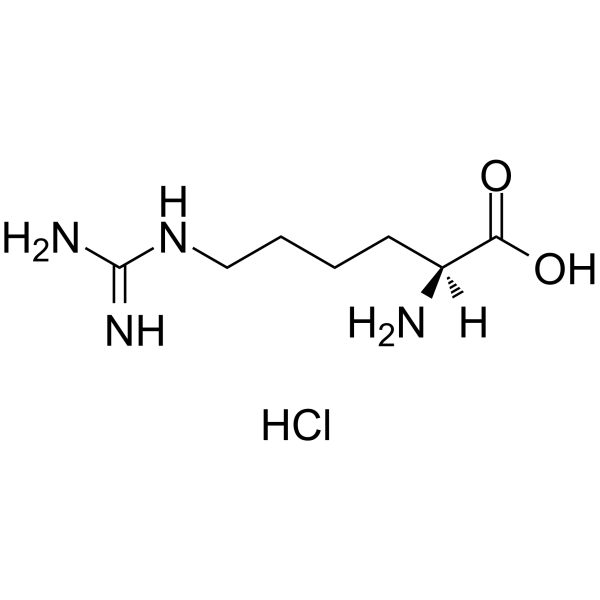
H-HomoArg-OH hydrochloride

Based on 1 Customer Validation
H-HomoArg-OH hydrochloride (L-Homoarginine hydrochloride) is an orally active endogenous non-protein amino acid. H-HomoArg-OH hydrochloride acts as a weak alternative substrate for NOS and interferes with NO production, selectively inhibits tissue-nonspecific alkaline phosphatase (TNAP), and suppresses the uptake of arginine by y+-type transporters (system y+). H-HomoArg-OH hydrochloride increases tissue hArg concentrations in vivo, regulates amino acid homeostasis, and improves renal function and pathological features of diabetic nephropathy. H-HomoArg-OH hydrochloride can be used in studies related to diabetes and cardiomyopathy.
For research use only. We do not sell to patients.
- Purity : 98.0%
- CAS No.: 1483-01-8
- Formula: C7H17ClN4O2
- Molecular Weight:224.69
-
Storage:
4°C, sealed storage, away from moisture
* In solvent : -80°C, 6 months; -20°C, 1 month (sealed storage, away from moisture)

To place orders, for customer services and technical support, please contact: MedChemExpress USA
Tel: 609-228-6898 E-mail: [email protected] [email protected]


-
 Biological Activity
-
Chemical Information
-
Solvent & Solubility
- Purity & Documentation
- References
-
 Help & FAQs


-

HY-W012340R
H-HomoArg-OH hydrochloride (Standard) -
HY-N0832
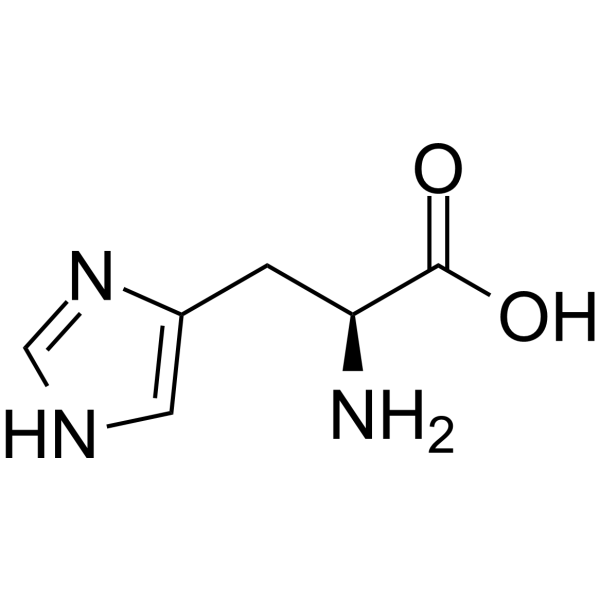
L-Histidine -
HY-N0391
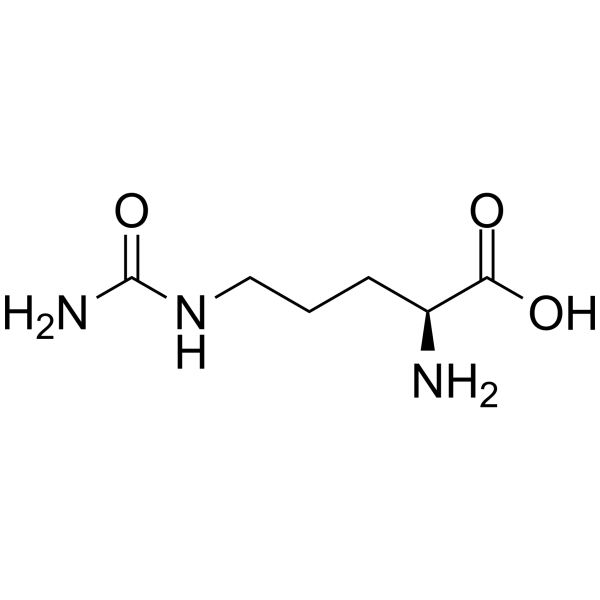
L-Citrulline -
HY-N0230
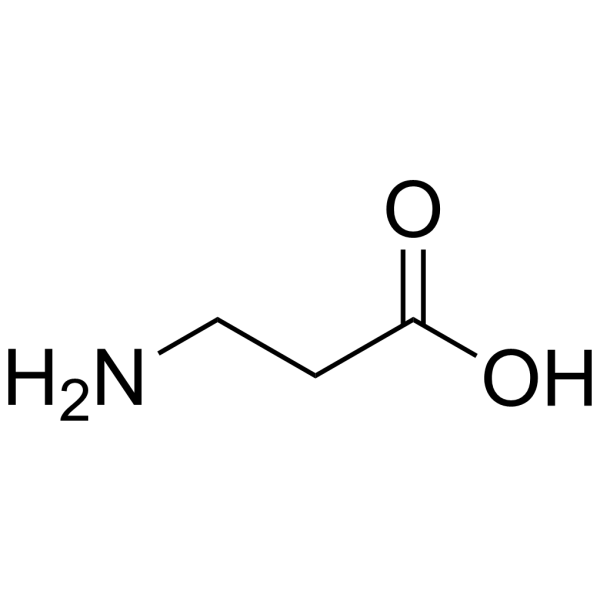
β-Alanine -

HY-N0391R
L-Citrulline (Standard) -

HY-N0832R
L-Histidine (Standard) -
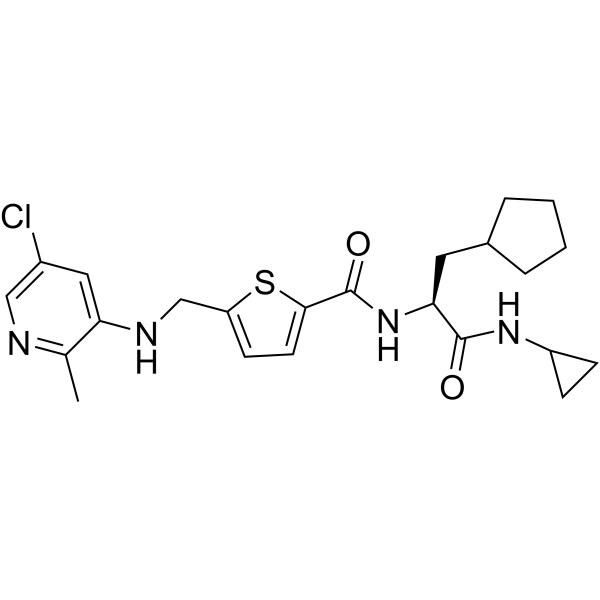
HY-15832
GSK 2830371 -
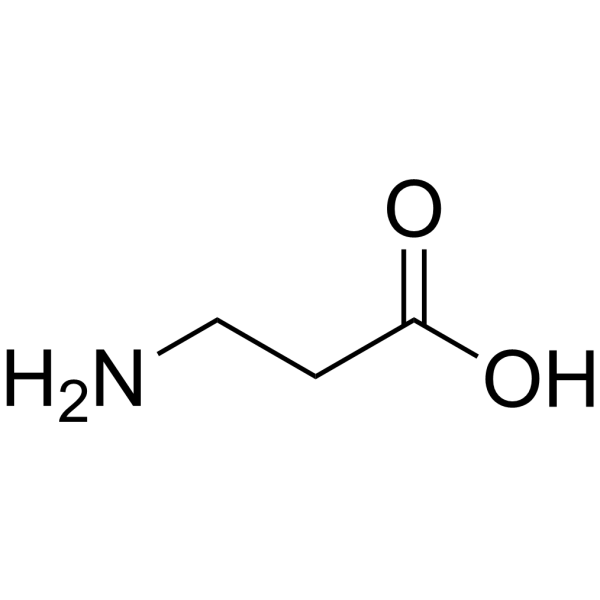
HY-N0230R
β-Alanine (Standard) -
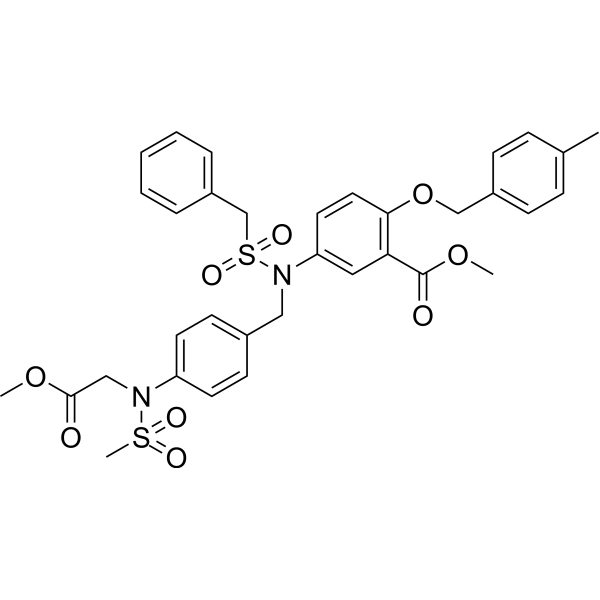
HY-100462
PTP1B-IN-2 -
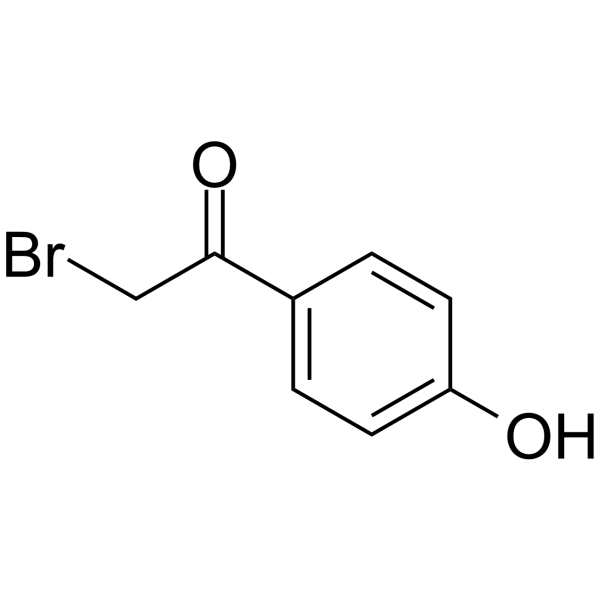
HY-W002314
2-Bromo-4'-hydroxyacetophenone -
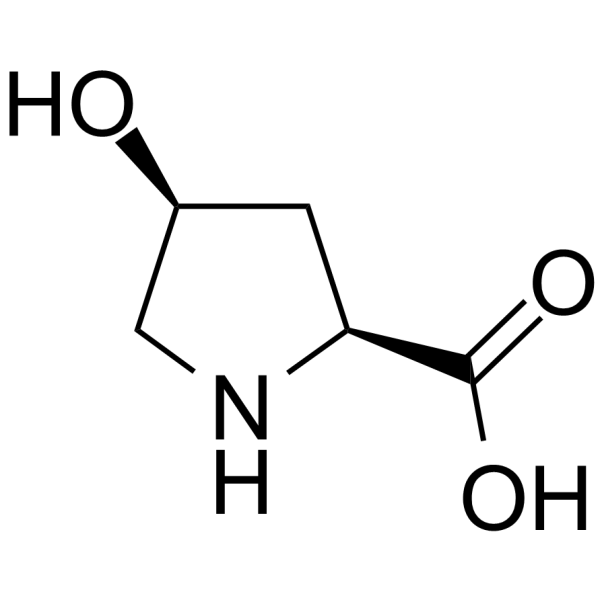
HY-40136
cis-4-Hydroxy-L-proline -
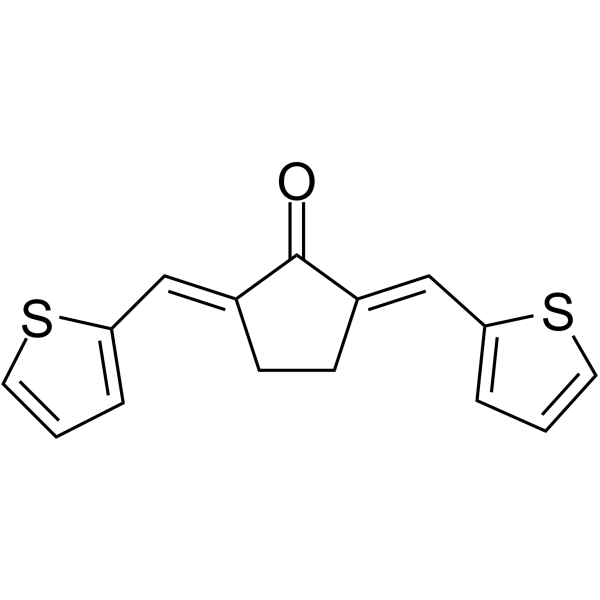
HY-15880
CCT007093
All Endogenous Metabolite Isoforms
More

Biological Activity
Description
In Vitro
H-HomoArg-OH.HCl (5-50 µM; 1 h) is not degraded by slices from male and female pig and rat tissues including small intestine, large intestine, liver, pancreas, spleen, heart, brain, kidney, skeletal muscle, white adipose tissue, thymus, mesenteric lymph nodes, skin, testes, and ovaries when incubated in the presence of physiological amino acid concentrations (excluding lysine)[3].
MedChemExpress (MCE) has not independently confirmed the accuracy of these methods. They are for reference only.
In Vivo
H-HomoArg-OH (10 mg/rat; i.p.; single bolus administration) hydrochloride causes an immediate and transient decrease in exocrine pancreatic secretion parameters in BPJ shunt rats, but exerts no effect on normal rats[1].
H-HomoArg-OH (19 g/kg diet; oral administration; daily; for 4 consecutive days) hydrochloride inhibits exocrine pancreatic hypertrophy and protease production in biliopancreatic jejunostomy (BPJ)-diverted rats induced by a high-protein diet[1].
The recovery rate of H-HomoArg-OH hydrochloride (1-10 mg/kg; p.o.; single administration) in the urine of healthy pigs and rats is approximately 95-96% of the oral dosage, indicating that the compound undergoes limited catabolism in vivo[3].
Supplementation with H-HomoArg-OH (50 mg/L; oral administration; ad libitum drinking; 12 weeks) or (0.72 mg/kg/day; subcutaneous injection; continuous infusion via mini-osmotic pump; 12 weeks) hydrochloride alleviates specific features of diabetic nephropathy in Ins2Akita mice, including reduction of albuminuria, improvement of glomerular injury, attenuation of inflammation and oxidative stress, and restoration of renal nitrate + nitrite levels[2].
H-HomoArg-OH hydrochloride (20-440 mg/kg; intraperitoneal injection; single bolus) dose-dependently increases tissue free hArg concentrations, regulates amino acid homeostasis, and shifts the reaction equilibrium catalyzed by AGAT without integrating into tissue proteins in isoproterenol-induced stress cardiomyopathy Sprague-Dawley rats[5].
MedChemExpress (MCE) has not independently confirmed the accuracy of these methods. They are for reference only.
-
Animal Model:Sprague-Dawley (male, 8 weeks old, 200-250 g, BPJ-diverted model)[1]
-
Dosage:10 mg/rat
-
Administration:i.p.; single bolus injection
-
Result:Produced an immediate, transient reduction in BPJ volume, protein secretion, chymotrypsin secretion, and trypsin secretion at 15 min post-injection in BPJ-diverted rats; values returned to baseline by 60-90 min post-injection.
Showed no effect on any pancreatic secretion parameters in normal rats.
-
Animal Model:Sprague-Dawley (male, ~220 g, BPJ-diverted model)[1]
-
Dosage:19 g/kg diet
-
Administration:p.o.; daily; 4 days
-
Result:Inhibited the high-protein (45% casein) diet-induced increase in pancreatic dry weight, pancreatic protein content, protein-DNA ratio, pancreatic chymotrypsin activity, and pancreatic trypsin activity; values for all these parameters were comparable to or lower than those seen in rats fed the 25% casein control diet.
Showed no effect on food intake, final body weight, or pancreatic DNA content.
-
Animal Model:Ins2Akita (DBA background; 6-week-old, type 1 diabetes model)[2]
-
Dosage:50 mg/L (p.o.); 0.72 mg/kg/day (s.c.)
-
Administration:p.o.; ad libitum in drinking water; 12 weeks; s.c.; continuous infusion via mini osmotic pump, pump changed after 6 weeks; 12 weeks
-
Result:Significantly reduced urinary albumin excretion rate at weeks 9 and 12.
Increased kidney L-homoarginine levels.
Reduced glomerular histological changes, with glomerular cellularity and mesangial expansion scores reduced from 1.5 to 0.625 (oral) and 0.375 (s.c.).
Reduced glomerular macrophage recruitment.
Reduced urinary thiobarbituric acid reactive substances excretion.
Increased kidney nitrate + nitrite levels.
Reduced kidney KC-GRO/CXCL1 levels (oral route only).
Did not alter elevated blood glucose, body weight, water consumption, or kidney weight/body weight ratio.
Did not restore plasma or kidney L-arginine levels.
-
Animal Model:Yorkshire × Landrace dams × Duroc × Hampshire sires (male and female, 3 months of age, 44 kg males, 40 kg females)[3]
-
Dosage:1 mg H-HomoArg-OH/kg body weight
-
Administration:p.o.; single dose
-
Result:Recovered 96.4% of the administered reagent in male pig urine.
Recovered 96.1% of the administered reagent in female pig urine.
Reached plasma concentrations of 2.25 μM in males and 2.17 μM in females.
Did not affect plasma or urine concentrations of arginine, creatinine, agmatine, methylarginines, or NOx, nor urinary excretion of these metabolites.
-
Animal Model:Sprague-Dawley (male and female, 3 months of age, 365 g males, 240 g females)[3]
-
Dosage:10 mg H-HomoArg-OH/kg body weight
-
Administration:p.o.; single dose
-
Result:Recovered 95.2% of the administered reagent in male rat urine.
Recovered 95.4% of the administered reagent in female rat urine.
Reached plasma concentrations of 2.14 μM in males and 2.19 μM in females.
Did not affect plasma or urine concentrations of arginine, creatinine, agmatine, methylarginines, or NOx, nor urinary excretion of these metabolites.
-
Animal Model:Sprague-Dawley (10 weeks old, ~250 g body weight, isoprenaline-induced model)[5]
-
Dosage:20 mg/kg; 220 mg/kg; 440 mg/kg
-
Administration:i.p.; single bolus
-
Result:Correlated strongly with administered dose, with tissue-free hArg concentrations ranging from 3.8-444 µM across organs, showing strongest correlations in kidney, lung, and liver.
Showed free Lys concentrations ranging from 96-1138 µM across organs, with inverse dose-dependent changes between heart and kidney/liver; free Lys concentrations in heart decreased linearly over time, with estimated cardiac half-life of 69 min.
Showed free Arg concentrations ranging from 7.3-767 µM across organs, with linear decrease over time in heart and estimated cardiac half-life of 65 min.
Demonstrated free hArg and total (free + proteinic) hArg concentrations were nearly identical (21.2 [8-188] µM vs. 20.1 [9.4-164] µM) with strong correlation, indicating no incorporation into tissue proteins.
Changed equilibrium constants for AGAT-catalyzed reactions with dose and time: KhArg (Arg + Lys ↔ hArg + Orn) ranged from 0.002-20.3 across organs, highest in liver; KGAA (Arg + Gly ↔ GAA + Orn) ranged from 0.023-13.9 across organs, with antidromic changes in KhArg and KGAA observed in heart during 15-90 min window of isoprenaline presence.
Increased free GAA concentrations nearly 100-fold in heart and kidney, paralleling changes in free Lys.
Showed positive correlation between free hArg and sarcosine in heart.


Chemical Information
-
CAS No. 1483-01-8
-
Appearance Solid
-
Molecular Weight 224.69
-
Formula C7H17ClN4O2
-
Color White to off-white
-
SMILES
N[C@@](C(O)=O)([H])CCCCNC(N)=N.Cl
-
Synonyms
L-Homoarginine hydrochloride
-
Structure Classification
-
Initial Source
-
Shipping
Room temperature in continental US; may vary elsewhere.
-
Storage
4°C, sealed storage, away from moisture
* In solvent : -80°C, 6 months; -20°C, 1 month (sealed storage, away from moisture)


Solvent & Solubility
In Vitro:
H2O : 100 mg/mL (445.06 mM; Need ultrasonic)
DMSO : < 1 mg/mL (insoluble or slightly soluble)
Please refer to the solubility information to select the appropriate solvent. Once prepared, please aliquot and store the solution to prevent product inactivation from repeated freeze-thaw cycles.
Storage method and period of stock solution: -80°C, 6 months; -20°C, 1 month (sealed storage, away from moisture). When stored at -80°C, please use it within 6 months. When stored at -20°C, please use it within 1 month.
* Note: If you choose water as the stock solution, please dilute it to the working solution, then filter and sterilize it with a 0.22 μm filter before use.
Please refer to the solubility information to select the appropriate solvent. Once prepared, please aliquot and store the solution to prevent product inactivation from repeated freeze-thaw cycles.
Storage method and period of stock solution: -80°C, 6 months; -20°C, 1 month (sealed storage, away from moisture). When stored at -80°C, please use it within 6 months. When stored at -20°C, please use it within 1 month.
* Note: If you choose water as the stock solution, please dilute it to the working solution, then filter and sterilize it with a 0.22 μm filter before use.
Concentration (start) × Volume (start) = Concentration (final) × Volume (final)
In Vivo:
For the following dissolution methods, please prepare the working solution directly:
It is recommended to prepare fresh solutions and use them promptly within a short period of time.
The percentages shown for the solvents indicate their volumetric ratio in the final prepared solution. If precipitation or phase separation occurs during preparation, heat and/or sonication can be used to aid dissolution.
Add each solvent one by one: PBS
Solubility: 100 mg/mL (445.06 mM); Clear solution; Need ultrasonic


Purity & Documentation
-
Data Sheet (288 KB)
-
SDS (394 KB)
- English - EN (394 KB)
- Français - FR (394 KB)
- Deutsch - DE (394 KB)
- Norwegian - NO (394 KB)
- Español - ES (394 KB)
- Swedish - SV (394 KB)
- Italian - IT (394 KB)
- Korean - KR (394 KB)
- Portuguese - PT (394 KB)
-
Handling Instructions (2659 KB)
References


Complete Stock Solution Preparation Table
Please refer to the solubility information to select the appropriate solvent. Once prepared, please aliquot and store the solution to prevent product inactivation from repeated freeze-thaw cycles.
Storage method and period of stock solution: -80°C, 6 months; -20°C, 1 month (sealed storage, away from moisture). When stored at -80°C, please use it within 6 months. When stored at -20°C, please use it within 1 month.
| Optional Solvent | Concentration Solvent Mass | 1 mg | 5 mg | 10 mg | 25 mg |
|---|---|---|---|---|---|
| H2O | 1 mM | 4.4506 mL | 22.2529 mL | 44.5058 mL | 111.2644 mL |
| 5 mM | 0.8901 mL | 4.4506 mL | 8.9012 mL | 22.2529 mL | |
| 10 mM | 0.4451 mL | 2.2253 mL | 4.4506 mL | 11.1264 mL | |
| 15 mM | 0.2967 mL | 1.4835 mL | 2.9671 mL | 7.4176 mL | |
| 20 mM | 0.2225 mL | 1.1126 mL | 2.2253 mL | 5.5632 mL | |
| 25 mM | 0.1780 mL | 0.8901 mL | 1.7802 mL | 4.4506 mL | |
| 30 mM | 0.1484 mL | 0.7418 mL | 1.4835 mL | 3.7088 mL | |
| 40 mM | 0.1113 mL | 0.5563 mL | 1.1126 mL | 2.7816 mL | |
| 50 mM | 0.0890 mL | 0.4451 mL | 0.8901 mL | 2.2253 mL | |
| 60 mM | 0.0742 mL | 0.3709 mL | 0.7418 mL | 1.8544 mL | |
| 80 mM | 0.0556 mL | 0.2782 mL | 0.5563 mL | 1.3908 mL | |
| 100 mM | 0.0445 mL | 0.2225 mL | 0.4451 mL | 1.1126 mL |
* Note: If you choose water as the stock solution, please dilute it to the working solution, then filter and sterilize it with a 0.22 μm filter before use.


H-HomoArg-OH hydrochloride Related Classifications
HY-W012340 Related Classifications
 Powered by Bioz
Keywords