



Icatibant acetate (Standard)
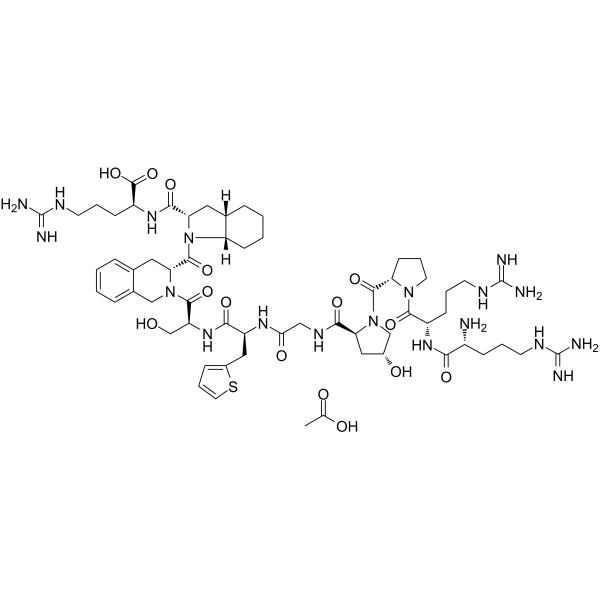
Icatibant (acetate) (Standard) is the analytical standard of Icatibant (acetate). This product is intended for research and analytical applications. Icatibant acetate (HOE-140 acetate) is a potent and specific peptide antagonist of bradykinin B2 receptor with an IC50 and Ki of 1.07 nM and 0.798 nM respectively.
For research use only. We do not sell to patients.
- Purity : 98%
- CAS No.: 138614-30-9
- Formula: C61H93N19O15S
- Molecular Weight:1364.57
-
Storage:
Please store the product under the recommended conditions in the Certificate of Analysis.


To place orders, for customer services and technical support, please contact: MedChemExpress USA
Tel: 609-228-6898 E-mail: [email protected] [email protected]


-
 Product Information
-
Chemical Information
- Purity & Documentation
-
 Help & FAQs


-
HY-108896
Icatibant acetateBradykinin B2 Antagonist -
HY-P0206
BradykininBradykinin Receptor Modulator -
HY-17446
IcatibantBradykinin Receptor Antagonist -
HY-15043
ELN-441958Bradykinin B1 Receptor Antagonist -
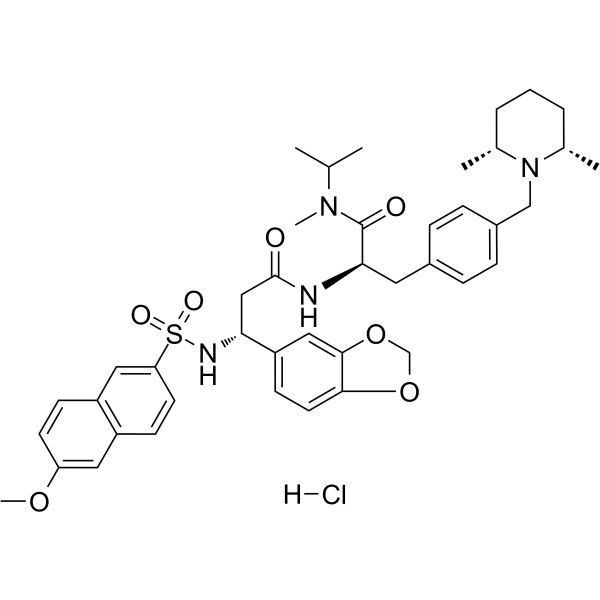
HY-15039
SSR240612 -
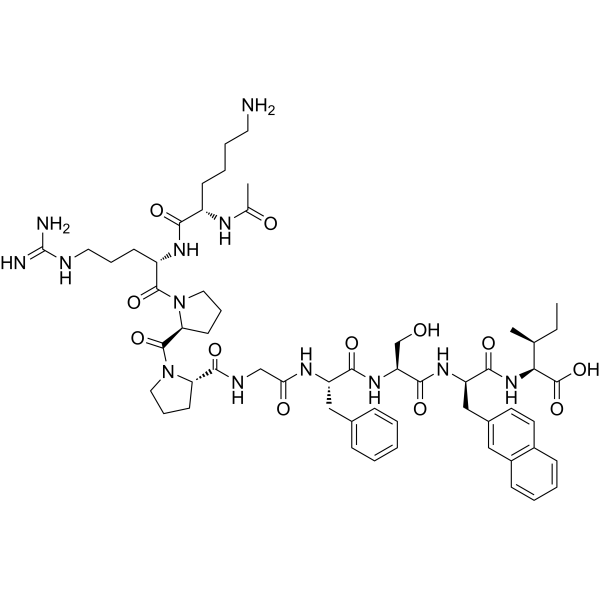
HY-103290
R715Bradykinin B1 Receptor Antagonist -
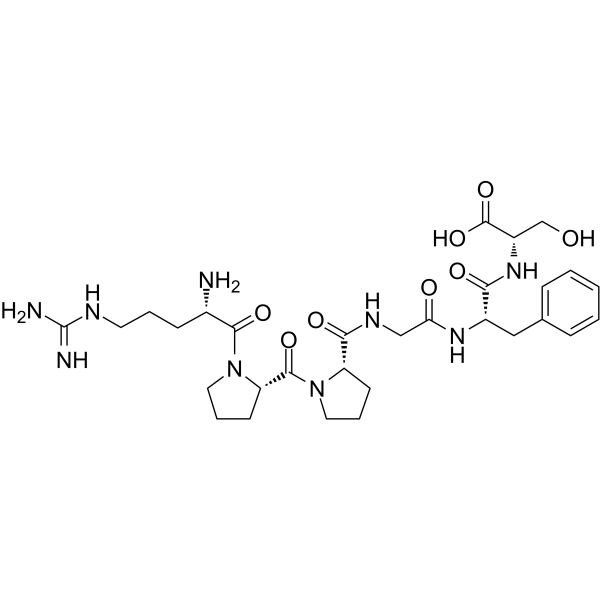
HY-P1469
Bradykinin (1-6)Bradykinin Receptor Modulator -
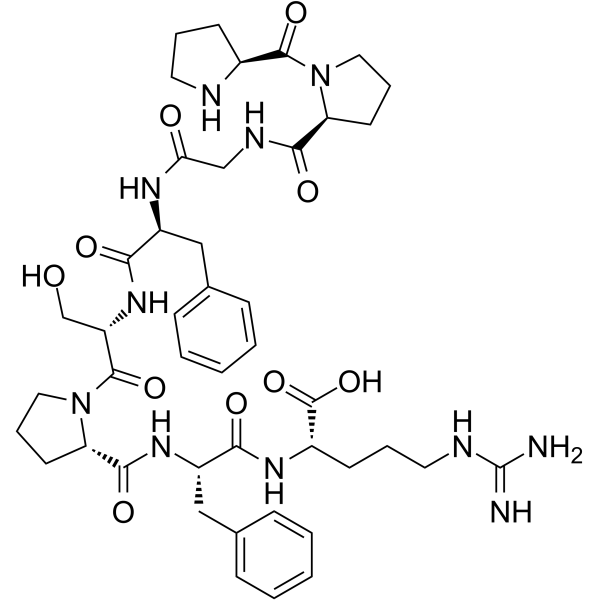
HY-P1490
Bradykinin (2-9)Peptide -
![Sar-[D-Phe8]-des-Arg9-Bradykinin](https://file.medchemexpress.com/product_pic/hy-103291.gif)
HY-103291
Sar-[D-Phe8]-des-Arg9-BradykininB1 Receptor Agonist -
![[Des-Arg9]-Bradykinin acetate](https://file.medchemexpress.com/product_pic/hy-p0298a.gif)
HY-P0298A
[Des-Arg9]-Bradykinin acetateBradykinin Receptor Agonist -
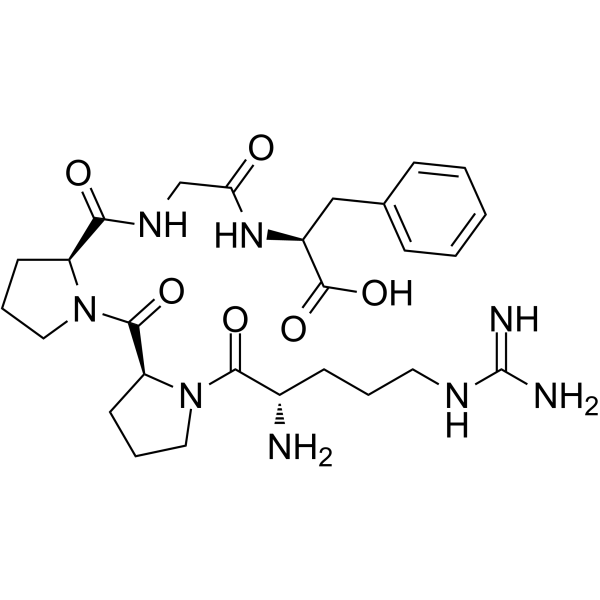
HY-P1488
Bradykinin (1-5)PAR-1/PAR-4 Inhibitor -
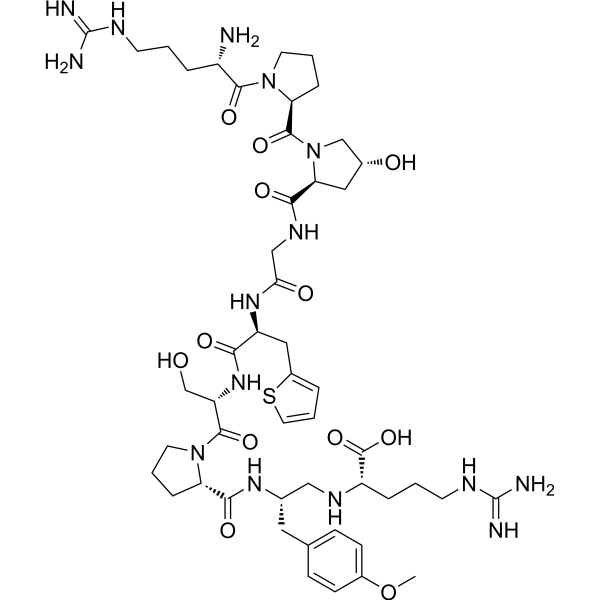
HY-105155
LobradimilBradykinin B2 Receptor Agonist


Product Information
Information
Application
The compound is the grade of analytical standard, which is the reference standard supplied assay. It is commonly used in qualitative, quantitative and methodological research experiments in HPLC, GC and MS.


Chemical Information
-
CAS No. 138614-30-9
-
Molecular Weight 1364.57
-
Formula C61H93N19O15S
-
SMILES
CC(O)=O.O=C([C@@H]1N(CC2=CC=CC=C2C1)C([C@H](CO)NC([C@@H](NC(CNC([C@H]3N(C[C@H](O)C3)C([C@H]4N(CCC4)C([C@H](CCCNC(N)=N)NC([C@H](N)CCCNC(N)=N)=O)=O)=O)=O)=O)CC5=CC=CS5)=O)=O)N6[C@]7([H])[C@](CCCC7)([H])C[C@H]6C(N[C@H](C(O)=O)CCCNC(N)=N)=O
-
Synonyms
HOE 140 acetate (Standard)
-
Shipping
Room temperature in continental US; may vary elsewhere.
-
Storage
Please store the product under the recommended conditions in the Certificate of Analysis.


Purity & Documentation
References
[1]. Hock FJ, et al. Hoe 140 a new potent and long acting bradykinin-antagonist: in vitro studies. Br J Pharmacol. 1991 Mar;102(3):769-73. [Content Brief]
[2]. Y Arai, et al. Effect of Icatibant, a Bradykinin B2 Receptor Antagonist, on the Development of Experimental Ulcerative Colitis in Mice. Dig Dis Sci. 1999 Apr;44(4):845-51. [Content Brief]
[3]. Marie-Thérèse Bawolak, et al The Bradykinin B2 Receptor Antagonist Icatibant (Hoe 140) Blocks Aminopeptidase N at Micromolar Concentrations: Off-Target Alterations of Signaling Mediated by the Bradykinin B1 and Angiotensin Receptors. Eur J Pharmacol. 2006 Dec 3;551(1-3):108-11. [Content Brief]

Calculators
Concentration (start) × Volume (start) = Concentration (final) × Volume (final)


Icatibant acetate (Standard) Related Classifications
HY-108896R Related Classifications
 Powered by Bioz