



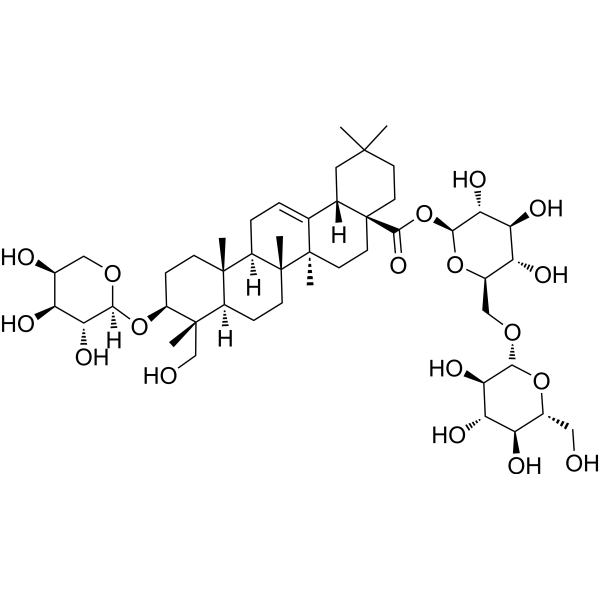
Asperosaponin VI
Based on 3 publication(s) in Google Scholar
Asperosaponin VI is a saponin component from Dipsacus asper. Asperosaponin VI induces osteoblast differentiation through the BMP-2/p38 and ERK1/2 signaling pathways. Asperosaponin VI protects against hypoxia-induced cardiomyocyte apoptosis by activating the PI3K/Akt and CREB pathways. Additionally, Asperosaponin VI also has antidepressant and wound-healing-promoting activities.
商品は「研究用試薬」です。人や動物の医療用・臨床診断用・食品用の製品ではありません。
研究用途以外に使用した場合、当社は一切の責任を負いかねます。
- 純度: 99.62%
- CAS 番号: 39524-08-8
- 分子式: C47H76O18
- 分子量:929.10
-
保管条件:
-20°C, protect from light
* In solvent : -80°C, 6 months; -20°C, 1 month (protect from light)


-
 生物活性
生物活性
-
化学情報
-
溶剤 & 溶解度
- 純度とドキュメンテーション
- 参考文献
-
 Help & FAQs
-

Apoptosis Compound Library
HY-L003
-
Cell Cycle/DNA Damage Compound Library
HY-L004
-
Epigenetics Compound Library
HY-L005
-
Immunology/Inflammation Compound Library
HY-L007
-
MAPK Compound Library
HY-L010
-
Metabolism/Protease Compound Library
HY-L012
-
PI3K/Akt/mTOR Compound Library
HY-L015
-
Stem Cell Signaling Compound Library
HY-L017
-
Natural Product Library
HY-L021
-
Anti-Cancer Compound Library
HY-L025
-
Autophagy Compound Library
HY-L029
-
Anti-Aging Compound Library
HY-L034
-
Glycoside Compound Library
HY-L042
-
Oxygen Sensing Compound Library
HY-L045
-
Endoplasmic Reticulum Stress Compound Library
HY-L054
-
Medicine Food Homology Compound Library
HY-L055
-
Terpenoids Library
HY-L056
-
Glycolysis Compound Library
HY-L058
-
Pyroptosis Compound Library
HY-L059
-
Cytoskeleton Compound Library
HY-L060
-
Glutamine Metabolism Compound Library
HY-L064
-
Traditional Chinese Medicine Active Compound Library
HY-L065
-
Anti-Breast Cancer Compound Library
HY-L074
-
Anti-Lung Cancer Compound Library
HY-L075
-
Anti-Pancreatic Cancer Compound Library
HY-L077
-
Anti-Cancer Metabolism Compound Library
HY-L083
-
Neurodegenerative Disease-related Compound Library
HY-L086
-
Anti-Obesity Compound Library
HY-L087
-
Angiogenesis-Related Compound Library
HY-L088
-
Transcription Factor-Targeted Library
HY-L090
-
Glucose Metabolism Compound Library
HY-L092
-
Anti-Cancer Natural Product Library
HY-L107
-
Antidepressant Compound Library
HY-L108
-
Anti-inflammatory Traditional Chinese Medicine Active Compound Library
HY-L114
-
Plant-Sourced Natural Product Library
HY-L115
-
Anti-Prostate Cancer Compound Library
HY-L124
-
Anti-Pulmonary Fibrosis Compound Library
HY-L125
-
Nuclear Receptor Compound Library
HY-L126
-
Osteogenesis Compound Library
HY-L131
-
Pain-Related Compound Library
HY-L139
-
Metabolic Enzyme Compound Library
HY-L146
-
Protease Inhibitor Library
HY-L147
-
Highly Selective Inhibitors Library
HY-L158
-
Cell Death Library
HY-L162
-
Multi-Target Compound Library
HY-L176
-
Bioactive Compound Library Max
HY-L181
-
MCE Bioactive Compound Library
HY-L001V
-
Natural Product Library Plus
HY-L021P
-
Natural Product and Natural Product-Like Compound Library
HY-L021M
-
Bioactive Compound Library
HY-L001
-
Miao Ethnicity Medicine Compound Library
HY-L190
-
Heat-Clearing and Detoxification Traditional Chinese Medicine Compound Library
HY-L194
-
Protein Kinase Compound Library
HY-L196
-
Non-Alcoholic Fatty Liver Disease (NAFLD) Compound Library
HY-L199
-
Cell Proliferation Compound Library
HY-L201
-
Lactic Acid Metabolic Compound Library
HY-L204
-
High-Throughput Bioactive Compound Library
HY-L205
-
High-Throughput Natural Product Library
HY-L206
-
Ancient Chinese Classical Formulas Traditional Chinese Medicine Active Compound Library
HY-L209
-
Diarrhea-Related Traditional Chinese Medicine Active Compound Library
HY-L224
-
Mongolian Medicine Compound Library
HY-L238
-
Natural Product Diversity Scaffold Library
HY-L245
-
Tonifying Traditional Chinese Medicine Monomer Compound Library
HY-L246
-
Lactylation Compound Library
HY-L249
-
Mass Spectrometry Natural Product Library
HY-L262


MedChemExpress(MCE)の使用を引用している文献 Asperosaponin VI
MoreCaspase アイソフォーム固有の製品をすべて表示
More

生物活性
|
Caspase 3 |
|
Cell Line

|
Type | Value | Description | References |
|---|---|---|---|---|
| RAW264.7 | IC50 |
>50 μM
Compound: 14
|
Anti-inflammatory activity in mouse RAW264.7 cells assessed as inhibition of LPS-induced NO production preincubated for 1 hr followed by LPS-stimulation and measured after 18 hrs by Griess reagent-based assay
Anti-inflammatory activity in mouse RAW264.7 cells assessed as inhibition of LPS-induced NO production preincubated for 1 hr followed by LPS-stimulation and measured after 18 hrs by Griess reagent-based assay
|
[PMID: 30808589] |
| RAW264.7 | IC50 |
>50 μM
Compound: 24
|
Antiinflammatory activity in mouse RAW264.7 cells assessed as inhibition of LPS-induced nitirc oxide production preincubated for 1 hr followed by LPS-stimulation and measured after 18 hrs by Griess assay
Antiinflammatory activity in mouse RAW264.7 cells assessed as inhibition of LPS-induced nitirc oxide production preincubated for 1 hr followed by LPS-stimulation and measured after 18 hrs by Griess assay
|
[PMID: 31301930] |
Asperosaponin VI (0.1 nM-10 μM; 24-48 h) can promote the proliferation of MC3T3-E1 cells and primary rat osteoblasts, increase intracellular ALP activity, upregulate the protein level of BMP-2, and increase the phosphorylation of p38 and ERK1/2 to induce the maturation and differentiation of osteoblasts[1].
Asperosaponin VI (15-60 μg/mL; 24 h) can inhibit apoptosis and improve cell viability in hypoxia-treated H9C2 cells by reducing intracellular LDH and CK activities, increasing the phosphorylation levels of Akt and CREB, increasing the Bcl-2/Bax ratio, and reducing caspase-3 activity[2].
Asperosaponin VI (0-160 μg/mL; 0-48 h) promotes angiogenesis of HUVECs by upregulating the HIF-1α/VEGF signaling pathway[3].
MedChemExpress (MCE) has not independently confirmed the accuracy of these methods. They are for reference only.
-
Cell Line:MC3T3-E1 and primary osteoblastic cells
-
Concentration:0.1, 1, 10, 100, 1000 and 10000 nM
-
Incubation Time:24 and 48 h
-
Result:Exhibited significant effects on stimulating cell proliferation in MC3T3-E1 and primary rat osteoblasts.
-
Cell Line:MC3T3-E1 and primary osteoblastic cells
-
Concentration:0.1,1 and 10 μM
-
Incubation Time:48 h
-
Result:Significantly increased BMP-2 protein levels in a concentration-dependent manner.
Increased the phosphorylation levels of p38 and ERK1/2.
-
Cell Line:Hypoxia treated H9C2 cardiomyocytes
-
Concentration:60 μg/mL
-
Incubation Time:24 h
-
Result:Increased the phosphorylation levels of AKT and CREB.
Asperosaponin VI (40 mg/kg; intraperitoneal injection; 3 weeks) has antidepressant effects in mice with chronic mild stress[4].
MedChemExpress (MCE) has not independently confirmed the accuracy of these methods. They are for reference only.
-
Animal Model:Male 8-week-old C57BL/6 mice treated chronic mild stress (CMS)[4]
-
Dosage:40 mg/kg
-
Administration:Intraperitoneal injection (i.p.); 3 weeks
-
Result:Significantly improved depression-like behaviors in CMS-induced mice, as shown by increased sucrose preference, prolonged latency in the forced swimming test and feeding latency in the novelty-suppressed feeding test, and shortened immobility time in the tail suspension test and forced swimming test.
Partially reversed CMS-induced weight loss.
Induced hippocampal microglia to switch from a pro-inflammatory to a neuroprotective phenotype, and regulated the levels of pro-inflammatory and anti-inflammatory cytokines.
Exerted anti-inflammatory and antidepressant effects through PPAR-γ pathway.
Promoted microglia-neuron crosstalk and prevented CMS-induced synaptic dysfunction of hippocampal neurons.


化学情報
-
CAS 番号 39524-08-8
-
性状 Solid
-
分子量 929.10
-
分子式 C47H76O18
-
Color White to off-white
-
SMILES
O[C@@H]1[C@H](O)[C@@H](O)[C@]([H])(O[C@@H]2[C@@](C)(CO)[C@@](CC[C@]3(C)[C@]4([H])CC=C5[C@@]3(C)CC[C@]6(C(O[C@@H]7O[C@H](CO[C@H]8[C@H](O)[C@@H](O)[C@H](O)[C@@H](CO)O8)[C@@H](O)[C@H](O)[C@H]7O)=O)[C@@]5([H])CC(C)(C)CC6)([H])[C@]4(C)CC2)OC1
-
別名
Akebia saponin D
-
Structure Classification
-
Initial Source
-
輸送条件
Room temperature in continental US; may vary elsewhere.
-
保管条件
-20°C, protect from light
* In solvent : -80°C, 6 months; -20°C, 1 month (protect from light)


Publications (3)
-
Journal Impact Factor
-
Most Recent
-
Diabetes
Lactate Is a Key Mediator That Links Obesity to Insulin Resistance via Modulating Cytokine Production From Adipose Tissue. [Abstract]2022 Apr 1;71(4):637-652. PMID: 35044451 -
Int J Mol Med
Synergistic effects of Akebia saponin D and Semaglutide on diabetic nephropathy and osteoporosis via the Klotho‑p53 signaling axis. [Abstract]2026 Jan;57(1):25. PMID: 41268608 -
Int Immunopharmacol
ASA VI controls osteoarthritis in mice by maintaining mitochondrial homeostasis through Sirtuin 3. [Abstract]2024 Aug 6:140:112858. PMID: 39111145


溶剤 & 溶解度
DMSO : ≥ 25 mg/mL (26.91 mM; Hygroscopic DMSO has a significant impact on the solubility of product, please use newly opened DMSO)
* "≥" means soluble, but saturation unknown.
Please refer to the solubility information to select the appropriate solvent. Once prepared, please aliquot and store the solution to prevent product inactivation from repeated freeze-thaw cycles.
Storage method and period of stock solution: -80°C, 6 months; -20°C, 1 month (protect from light). When stored at -80°C, please use it within 6 months. When stored at -20°C, please use it within 1 month.
Please refer to the solubility information to select the appropriate solvent. Once prepared, please aliquot and store the solution to prevent product inactivation from repeated freeze-thaw cycles.
Storage method and period of stock solution: -80°C, 6 months; -20°C, 1 month (protect from light). When stored at -80°C, please use it within 6 months. When stored at -20°C, please use it within 1 month.
濃度 (開始) × 体積 (開始) = 濃度 (終了) × 体積 (終了)
Select the appropriate dissolution method based on your experimental animal and administration route.
- For the following dissolution methods, please ensure to first prepare a clear stock solution using an In Vitro approach and then sequentially add co-solvents:
- To ensure reliable experimental results, the clarified stock solution can be appropriately stored based on storage conditions. As for the working solution for In Vivo experiments, it is recommended to prepare freshly and use it on the same day.
- The percentages shown for the solvents indicate their volumetric ratio in the final prepared solution. If precipitation or phase separation occurs during preparation, heat and/or sonication can be used to aid dissolution.
Add each solvent one by one: 10% DMSO 40% PEG300 5% Tween-80 45% Saline
Solubility: ≥ 2.5 mg/mL (2.69 mM); Clear solution
This protocol yields a clear solution of ≥ 2.5 mg/mL (saturation unknown).
Taking 1 mL working solution as an example, add 100 μL DMSO stock solution (25.0 mg/mL) to 400 μL PEG300, and mix evenly; then add 50 μL Tween-80 and mix evenly; then add 450 μL Saline to adjust the volume to 1 mL.
Preparation of Saline: Dissolve 0.9 g sodium chloride in ddH₂O and dilute to 100 mL to obtain a clear Saline solution.
Add each solvent one by one: 10% DMSO 90% (20% SBE-β-CD in Saline)
Solubility: ≥ 2.5 mg/mL (2.69 mM); Clear solution
This protocol yields a clear solution of ≥ 2.5 mg/mL (saturation unknown).
Taking 1 mL working solution as an example, add 100 μL DMSO stock solution (25.0 mg/mL) to 900 μL 20% SBE-β-CD in Saline, and mix evenly.
Preparation of 20% SBE-β-CD in Saline (4°C, storage for one week): 2 g SBE-β-CD powder is dissolved in 10 mL Saline, completely dissolve until clear.
For the following dissolution methods, please prepare the working solution directly:
It is recommended to prepare fresh solutions and use them promptly within a short period of time.
The percentages shown for the solvents indicate their volumetric ratio in the final prepared solution. If precipitation or phase separation occurs during preparation, heat and/or sonication can be used to aid dissolution.
Add each solvent one by one: PBS
Solubility: 25 mg/mL (26.91 mM); Clear solution; Need ultrasonic
Please enter the basic information of animal experiments:
-
-
-
-
Recommended: Prepare an additional quantity of animals to account for potential losses during experiments.
Please enter your animal formula composition:
-
%DMSO +
Recommended: Keep the proportion of DMSO in working solution below 2% if your animal is weak.
-
%+
-
+%Tween-80 + +
-
%Saline +
The co-solvents required include: DMSO, . All of co-solvents are available by MedChemExpress (MCE). , Tween 80. All of co-solvents are available by MedChemExpress (MCE).
Working solution concentration: 0.22 mg/mL
Method for preparing stock solution: mg drug dissolved in μL DMSO. Stock solution concentration: mg/mL. * In solvent : -80°C, 6 months; -20°C, 1 month (protect from light)
1. Take μL DMSO stock solution;
2. Add μL .
μL , mix evenly;
3. Then add μL Tween 80, mix evenly;
4. Then add μL
Please ensure that the stock solution in the first step is dissolved to a clear state, and add co-solvents in sequence. You can use ultrasonic heating (ultrasonic cleaner, recommended frequency 20-40 kHz), vortexing, etc. to assist dissolution.


純度とドキュメンテーション
-
データシート (286 KB)
-
SDS (394 KB)
- English - EN (394 KB)
- Français - FR (394 KB)
- Deutsch - DE (394 KB)
- Norwegian - NO (394 KB)
- Español - ES (394 KB)
- Swedish - SV (394 KB)
- Italian - IT (394 KB)
- Portuguese - PT (394 KB)
-
取扱説明書 (2659 KB)
参考文献
[1]. Niu Y, et al. Asperosaponin VI, a saponin component from Dipsacus asper wall, induces osteoblast differentiation through bone morphogenetic protein-2/p38 and extracellular signal-regulated kinase 1/2 pathway. Phytother Res. 2011 Nov;25(11):1700-6. [Content Brief]
[2]. Li C, et al. Asperosaponin VI protects cardiac myocytes from hypoxia-induced apoptosis via activation of the PI3K/Akt and CREB pathways. Eur J Pharmacol. 2010 Dec 15;649(1-3):100-7. [Content Brief]
[3]. Wang CG, et al. Asperosaponin VI promotes angiogenesis and accelerates wound healing in rats via up-regulating HIF-1α/VEGF signaling. Acta Pharmacol Sin. 2018 Mar;39(3):393-404. [Content Brief]
[4]. Jiang X, et al. Asperosaponin VI ameliorates the CMS-induced depressive-like behaviors by inducing a neuroprotective microglial phenotype in hippocampus via PPAR-γ pathway. J Neuroinflammation. 2022 May 24;19(1):115. [Content Brief]


Complete Stock Solution Preparation Table
Please refer to the solubility information to select the appropriate solvent. Once prepared, please aliquot and store the solution to prevent product inactivation from repeated freeze-thaw cycles.
Storage method and period of stock solution: -80°C, 6 months; -20°C, 1 month (protect from light). When stored at -80°C, please use it within 6 months. When stored at -20°C, please use it within 1 month.
| Optional Solvent | Concentration Solvent Mass | 1 mg | 5 mg | 10 mg | 25 mg |
|---|---|---|---|---|---|
| DMSO | 1 mM | 1.0763 mL | 5.3816 mL | 10.7631 mL | 26.9078 mL |
| 5 mM | 0.2153 mL | 1.0763 mL | 2.1526 mL | 5.3816 mL | |
| 10 mM | 0.1076 mL | 0.5382 mL | 1.0763 mL | 2.6908 mL | |
| 15 mM | 0.0718 mL | 0.3588 mL | 0.7175 mL | 1.7939 mL | |
| 20 mM | 0.0538 mL | 0.2691 mL | 0.5382 mL | 1.3454 mL | |
| 25 mM | 0.0431 mL | 0.2153 mL | 0.4305 mL | 1.0763 mL |


 Powered by Bioz