



(Pro3) GIP, human
(Pro3) GIP, human ((Pro3) Gastric Inhibitory Peptide, human) is an efficacious, stable and specific human GIP receptor (hGIPR) full agonist. (Pro3) GIP, human has high binding affinity for human GIPR with Ki/ Kd values of 0.90 nM. (Pro3) GIP, human can be used for the research of obesity-related diabetes.
商品は「研究用試薬」です。人や動物の医療用・臨床診断用・食品用の製品ではありません。
研究用途以外に使用した場合、当社は一切の責任を負いかねます。
- CAS 番号: 299898-52-5
- 分子式: C226H338N60O64S
- 分子量:4951.53
-
保管条件:
Sealed storage, away from moisture and light.
Powder -80°C, 2 years , -20°C, 1 year* In solvent : -80°C, 6 months; -20°C, 1 month (sealed storage, away from moisture and light)


To place orders, for customer services and technical support, please contact: MedChemExpress USA
Tel: 609-228-6898 E-mail: [email protected] [email protected]


-
 生物活性
生物活性
-
化学情報
- プロトコル
- 純度とドキュメンテーション
- 参考文献
-
 Help & FAQs


-
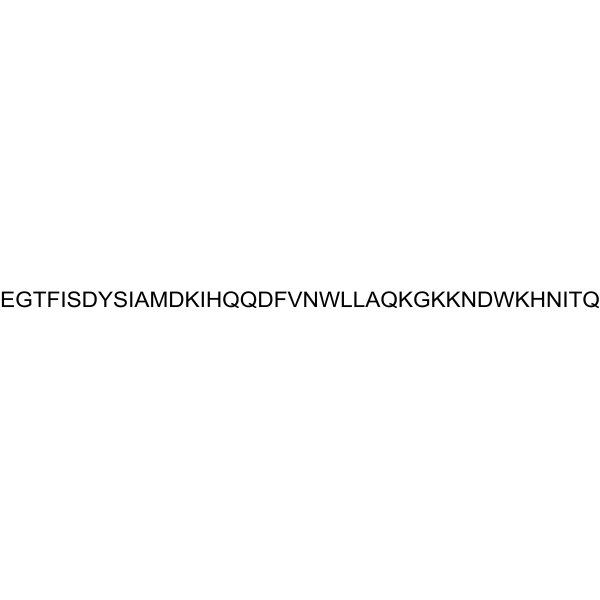
HY-P2542
GIP (3-42), humanGIP Receptor Agonist -

HY-108743
Insulin degludecInsulin Analogue -

HY-P99665
Insulin efsitora alfaInsulin Receptor Agonist -
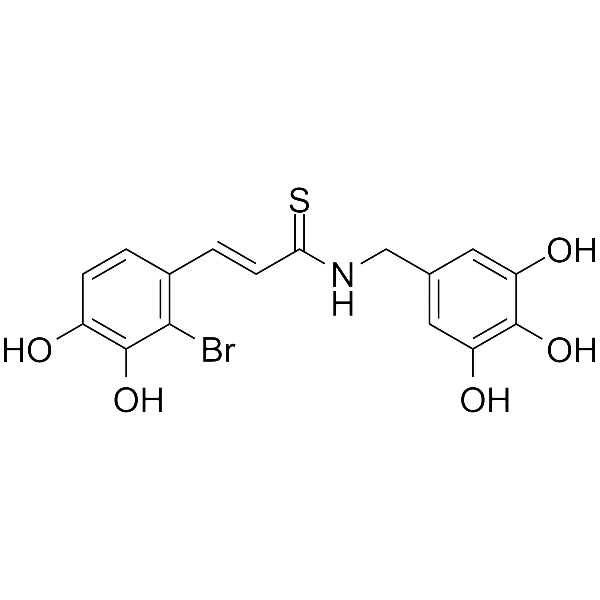
HY-145935
NT219IRS1/2/STAT3 Inhibitor -
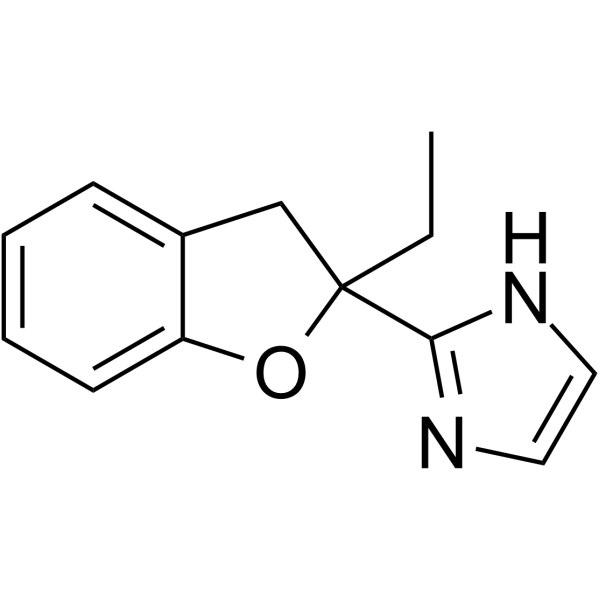
HY-15481
KU14RKATP Channel Inhibitor -
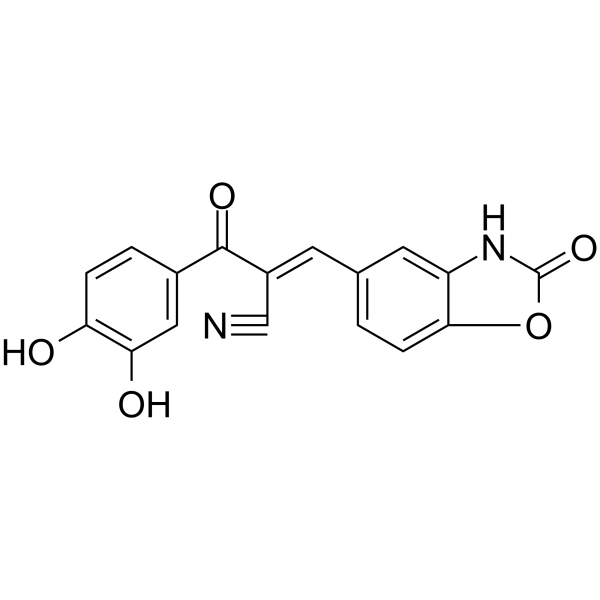
HY-112720
AGL-2263Insulin Receptor Inhibitor -
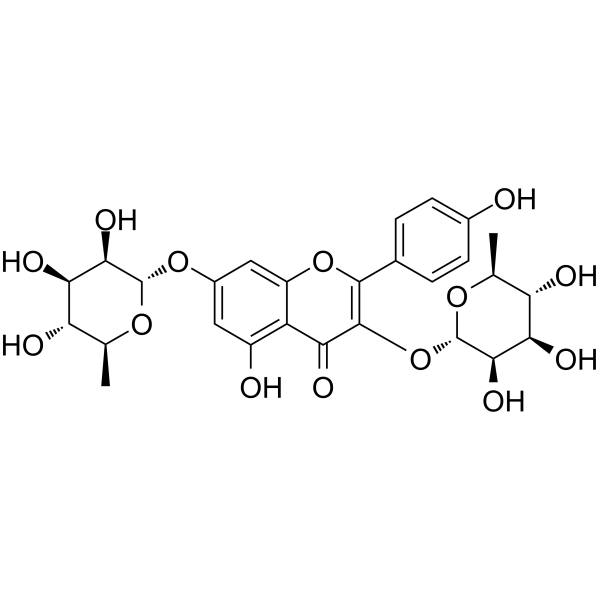
HY-N0628
KaempferitrinInsulin Receptor Activator -

HY-P3255
DA-JC4GLP-1/GIP Receptor Agonist -

HY-P99530
Valanafusp alfaAnti-HIR IDUA-Fusion mAb -
HY-P0035
Insulin (human)Recombinant Human Insulin -

HY-P0035A
Insulin solution (human)Polypeptide Hormone -
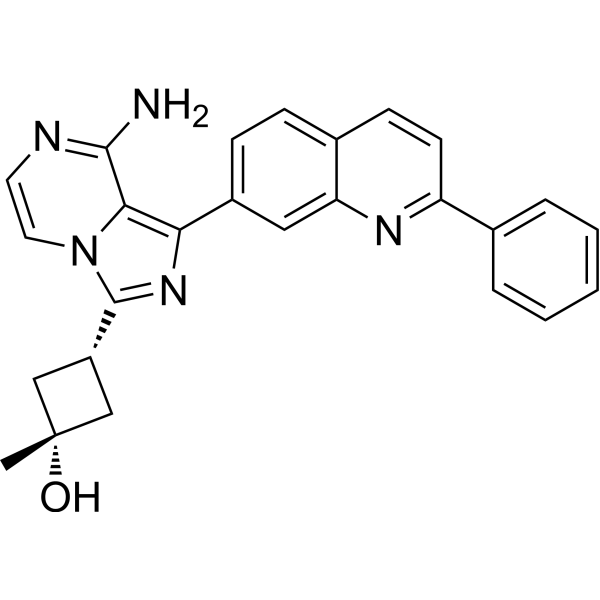
HY-10191
LinsitinibIGF-1R/Insulin Receptor Inhibitor


生物活性
製品説明
IC50 & Target
EC50: 0.026 nM (hGIPR)[2]
Ki/Kd: 0.90 nM (hGIPR); 1.1 nM (Rat GIPR); 0.72 nM (Mouse GIPR)[2]
体外実験
(Pro3) GIP, human induces cAMP accumulation with an EC50 value of 0.026 nM[2].
(Pro3) GIP, human has high binding affinity for human GIPR, Rat GIPR and Mouse GIPR with Ki/ Kd values of 0.90 nM, 1.1 nM and 0.72 nM, respectively[2].
MedChemExpress (MCE) has not independently confirmed the accuracy of these methods. They are for reference only. Further protocols information, click here.
体内実験
MedChemExpress (MCE) has not independently confirmed the accuracy of these methods. They are for reference only.


化学情報
-
CAS 番号 299898-52-5
-
性状 Solid
-
分子量 4951.53
-
分子式 C226H338N60O64S
-
Color White to off-white
-
別名
(Pro3) Gastric Inhibitory Peptide, human
-
配列
Tyr-Ala-Pro-Gly-Thr-Phe-Ile-Ser-Asp-Tyr-Ser-Ile-Ala-Met-Asp-Lys-Ile-His-Gln-Gln-Asp-Phe-Val-Asn-Trp-Leu-Leu-Ala-Gln-Lys-Gly-Lys-Lys-Asn-Asp-Trp-Lys-His-Asn-Ile-Thr-Gln
-
シーケンスの短縮
YAPGTFISDYSIAMDKIHQQDFVNWLLAQKGKKNDWKHNITQ
-
輸送条件
Room temperature in continental US; may vary elsewhere.
-
保管条件
Sealed storage, away from moisture and light
Powder -80°C 2 years -20°C 1 year * In solvent : -80°C, 6 months; -20°C, 1 month (sealed storage, away from moisture and light)

プロトコル
-
Research Protocol for Metabolic Diseases
AMP-activated protein kinase, AMPK, is a conserved cellular energy sensor that responds to reduced cellular energy status and coordinates metabolism by increasing ATP-generating catabolic pathways while suppressing ATP-consuming anabolic processes. In metabolic disease research, the AMPK pathway is experimentally relevant because it regulates hepatic lipid synthesis, fatty acid oxidation, glucose production, skeletal-muscle glucose disposal, mTORC1-linked biosynthesis, autophagy, mitochondrial homeostasis, and whole-body energy balance. The central pathway logic is that energy stress, metformin, exercise-like stimulation, or direct AMPK activators increase AMPKα Thr172 phosphorylation and downstream substrate phosphorylation, including ACC and RAPTOR. Phosphorylation of ACC suppresses lipogenesis and supports fatty acid oxidation, whereas phosphorylation of RAPTOR suppresses mTORC1 signaling and links cellular energy status to growth and protein synthesis control. The pathway is linked


純度とドキュメンテーション
-
データシート (263 KB)
-
SDS (252 KB)
- English - EN (252 KB)
- Français - FR (252 KB)
- Deutsch - DE (252 KB)
- Norwegian - NO (252 KB)
- Español - ES (252 KB)
- Swedish - SV (252 KB)
- Italian - IT (252 KB)
- Korean - KR (252 KB)
- Portuguese - PT (252 KB)
-
取扱説明書 (2659 KB)
参考文献
[1]. Victor A Gault, et al. Chemical ablation of gastric inhibitory polypeptide receptor action by daily (Pro3)GIP administration improves glucose tolerance and ameliorates insulin resistance and abnormalities of islet structure in obesity-related diabetes. Diabetes. 2005 Aug;54(8):2436-46. [Content Brief]
[2]. A H Sparre-Ulrich, et al. Species-specific action of (Pro3)GIP - a full agonist at human GIP receptors, but a partial agonist and competitive antagonist at rat and mouse GIP receptors. Br J Pharmacol. 2016 Jan;173(1):27-38. [Content Brief]

Calculators
濃度 (開始) × 体積 (開始) = 濃度 (終了) × 体積 (終了)


(Pro3) GIP, human 関連分類
HY-P3584 関連分類
 Powered by Bioz