



Tafolecimab

Based on 1 Customer Validation
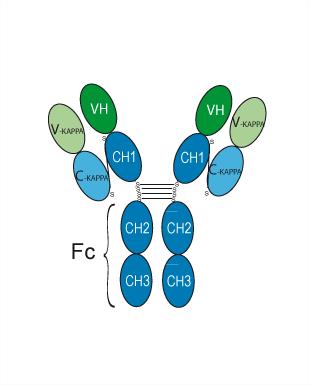
Tafolecimab (IBI306) is a human lgG2 monoclonal antibody that specifically binds PCSK-9 and reduces LDL-C levels by inhibiting PCSK-9-mediated endocytosis of the LDL receptor, which in turn enhances clearance of LDL-C and leads to a reduction in LDL-C levels. Tafolecimab may be used in studies of hypercholesterolaemia.
商品は「研究用試薬」です。人や動物の医療用・臨床診断用・食品用の製品ではありません。
研究用途以外に使用した場合、当社は一切の責任を負いかねます。
- 純度 : 95.04%
- CAS 番号: 2225109-03-3
- 分子量:145.34 kDa
-
保管条件:
Please store the product under the recommended conditions in the Certificate of Analysis.


To place orders, for customer services and technical support, please contact: MedChemExpress USA
Tel: 609-228-6898 E-mail: [email protected] [email protected]


-
 生物活性
生物活性
-
化学情報
- プロトコル
- 純度とドキュメンテーション
- 参考文献
-
 Help & FAQs


-

HY-P9930
EvolocumabPCSK9 Inhibitor -

HY-P9928
AlirocumabPCSK9 Inhibitor -
HY-P9928A
Alirocumab (anti-PCSK9)PCSK9 Inhibitor -

HY-P99822
RecaticimabPCSK9 Inhibitor -

HY-P99187
BococizumabAnti-human PCSK9 Antibody -
HY-120088
PF-06446846PCSK9 Inhibitor -
HY-148758
PCSK9-IN-13PCSK9 Inhibitor -

HY-P99773
OngericimabAnti-PCSK9 Antibody -

HY-P99626
FrovocimabAnti-PCSK9 mAb -

HY-P99871
EbronucimabAnti-PCSK9 Antibody -

HY-P99816
RalpancizumabPCSK9 Inhibitor


生物活性
製品説明
Isotype
Human IgG2 kappa
Recommend Isotype Controls
Species Reactivity
Human
IC50 & Target
PCSK9
臨床実験
| NCT Number | Sponsor | Condition | Start Date |
Phase

|
|---|---|---|---|---|
| NCT01329991 | 2011-05 | PHASE1 |
遺伝子ID
アクセッション番号
Conjugated
Unconjugated
Reconsititution
The product can be reconstituted/diluted with sterile PBS or saline.
Format
-
Human IgG2 kappa
アプリケーション
ELISA, FACS, Functional assay
Verified Bioactivity
-
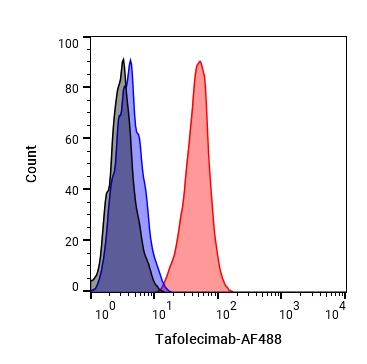 Flow Cytometry analysis of Hela cells labelling PCSK9 (red) with Tafolecimab (anti-PCSK9) (HY-P99552). Cells were fixed with 4% paraformaldehyde and permeabilised with 90% methanol. Then cells were stained with the primary antibody at 1/200 dilution for an hour at 4℃. Goat Anti-Human IgG H&L (AF488) (HY-P83776) was used as the secondary antibody at 1/1,000 dilution for 30 minutes at 4℃. Human IgG2 kappa (HY-P99002, blue) was used as the isotype control, cells without incubation with primary antibody were used as the unlabeled control (black).


化学情報
-
CAS 番号 2225109-03-3
-
性状 Liquid
-
分子量 145.34 kDa
-
Color Colorless to light yellow
-
SMILES
[Tafolecimab]
-
別名
IBI306
-
輸送条件
Shipping with dry ice.
-
Formulation
Please refer to the lot-specific COA for specific buffer information.
-
保管条件
Please store the product under the recommended conditions in the Certificate of Analysis.


純度とドキュメンテーション
-
データシート (272 KB)
-
SDS (251 KB)
- English - EN (251 KB)
- Français - FR (251 KB)
- Deutsch - DE (251 KB)
- Norwegian - NO (251 KB)
- Español - ES (251 KB)
- Swedish - SV (251 KB)
- Italian - IT (251 KB)
- Korean - KR (251 KB)
- Portuguese - PT (251 KB)
-
Inhibitory Antibodies User Guide (603 KB)
参考文献

Calculators
濃度 (開始) × 体積 (開始) = 濃度 (終了) × 体積 (終了)


Tafolecimab 関連分類
HY-P99552 関連分類
 Powered by Bioz