



Adjudin
Based on 5 publication(s) in Google Scholar
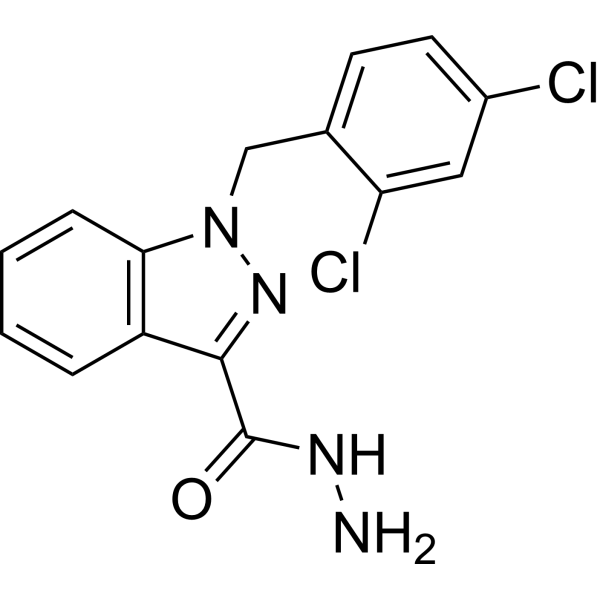
Adjudin is an extensively studied male contraceptive with a superior mitochondria-inhibitory effect. Adjudin is also a potent Cl- channel blocker.
연구목적의 판매만을 진행합니다. 환자를 대상으로 한 판매는 하지 않습니다.
- Purity : 98.0%
- CAS No.: 252025-52-8
- 화학식: C15H12Cl2N4O
- 분자량:335.19
-
보관:Powder -20°C, 3 years , 4°C, 2 years ; In solvent -80°C, 2 years , -20°C, 1 year

To place orders, for customer services and technical support, please contact: MedChemExpress USA
Tel: 609-228-6898 E-mail: [email protected] [email protected]


-
 Biological Activity
-
Chemical Information
-
용액&용해도
- 순도&문서
- References
-
 Help & FAQs


-
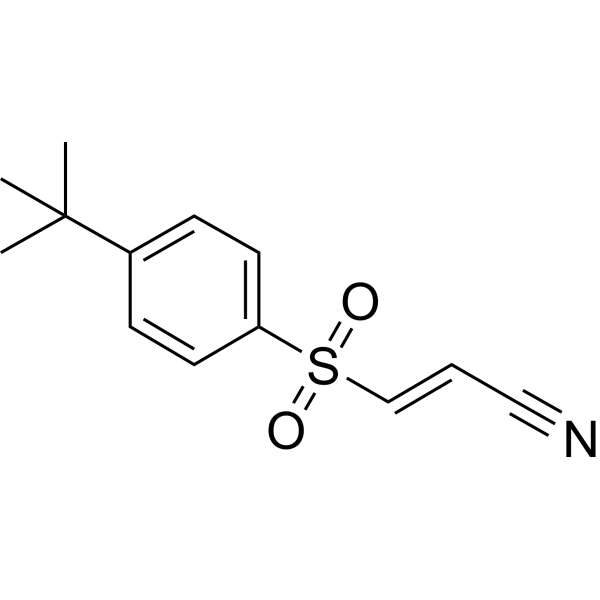
HY-10257
BAY 11-7085NF-κB Activation Inhibitor -
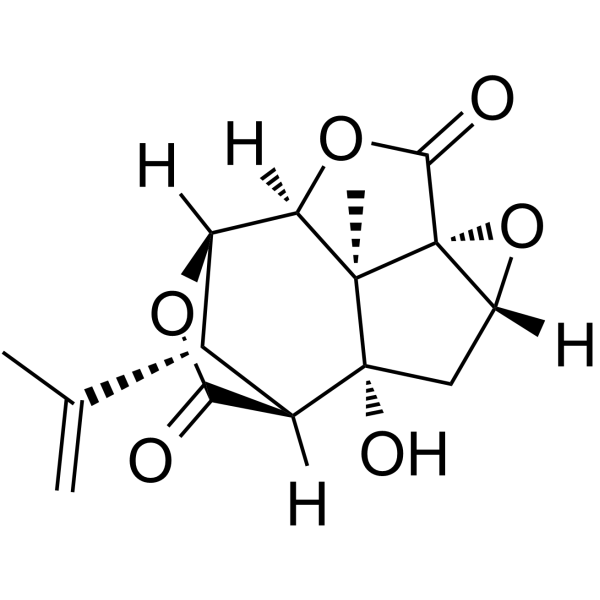
HY-B1494
PicrotoxininGABA Antagonist/Cl Blocker -

HY-18996R
Adjudin (Standard)Chloride Channel Inhibitor -
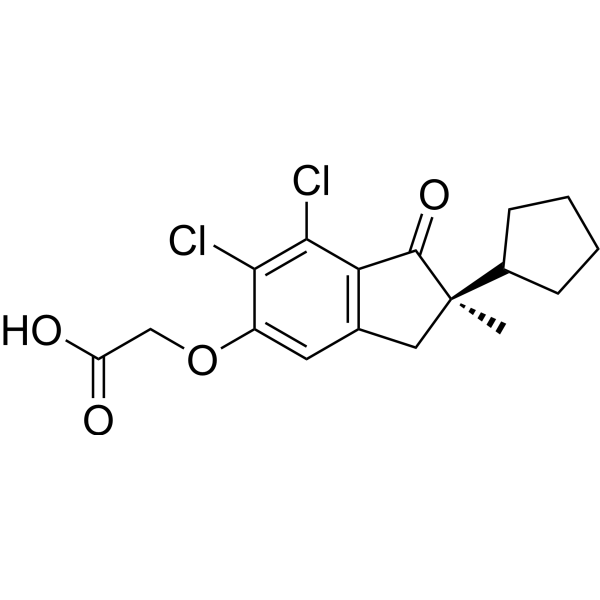
HY-12693
R(+)-MethylindazoneChloride Channel Inhibitor -
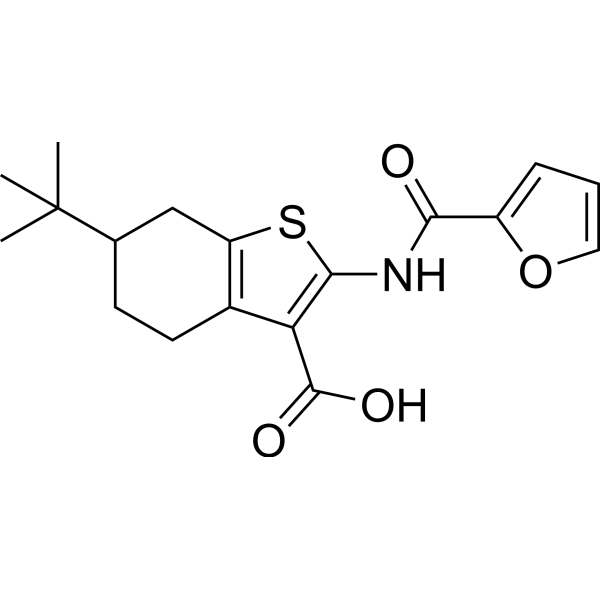
HY-100611
CaCCinh-A01TMEM16A Inhibitor -
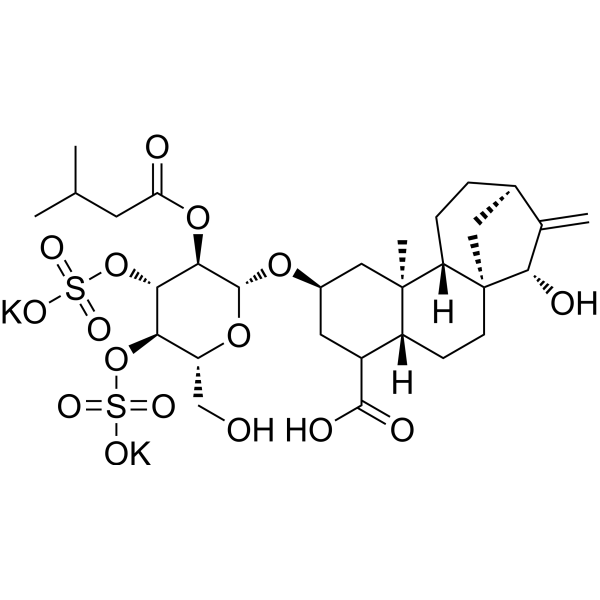
HY-N1462
Atractyloside potassium saltADP/ATP Transport Inhibitor -
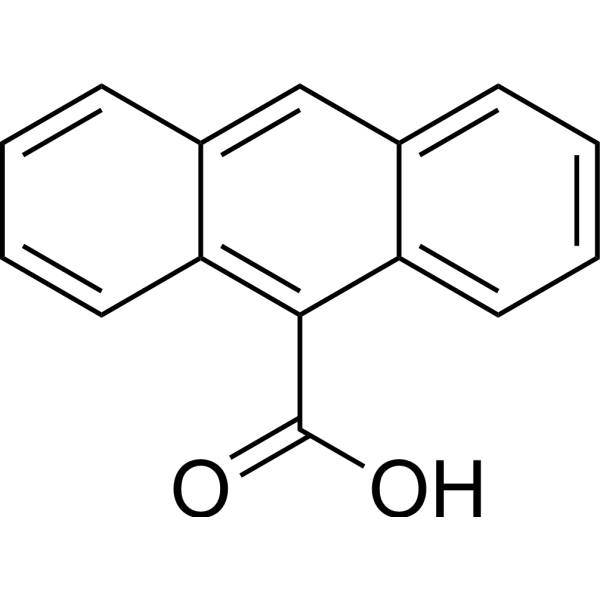
HY-101329
Anthracene-9-carboxylic acidChloride Current Blocker -
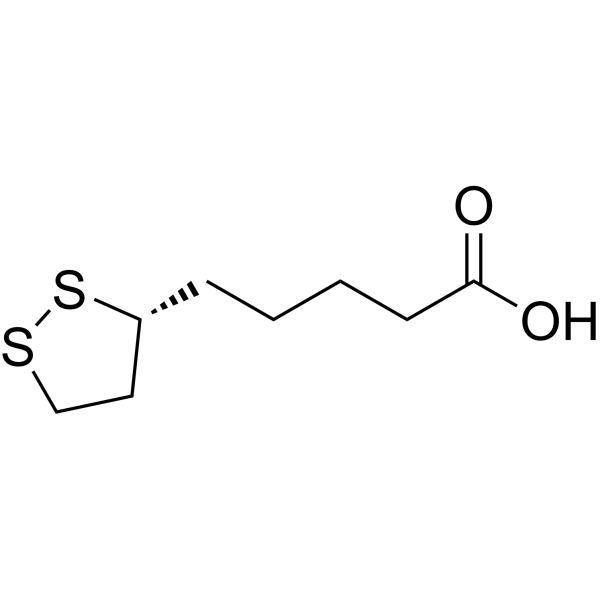
HY-18733
Lipoic acidAntioxidant -
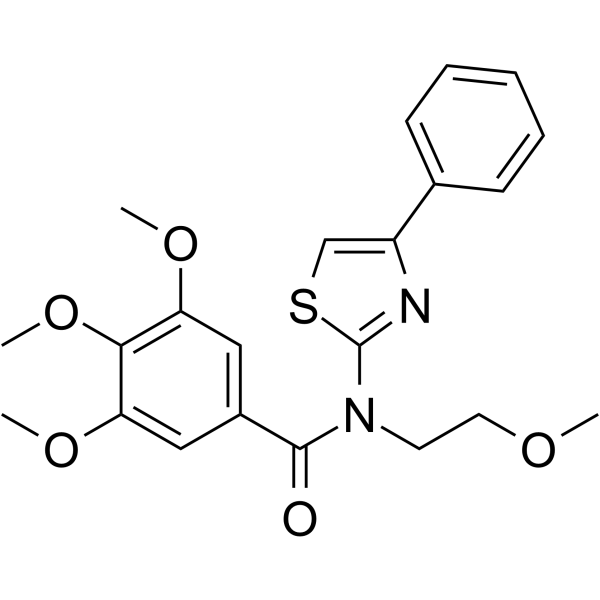
HY-103368
EactTMEM16A Activator -
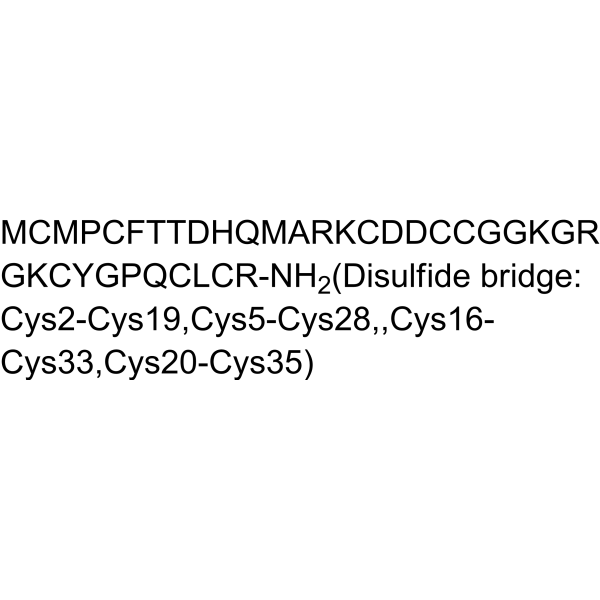
HY-P0173A
ChlorotoxinAntitumor Agent -
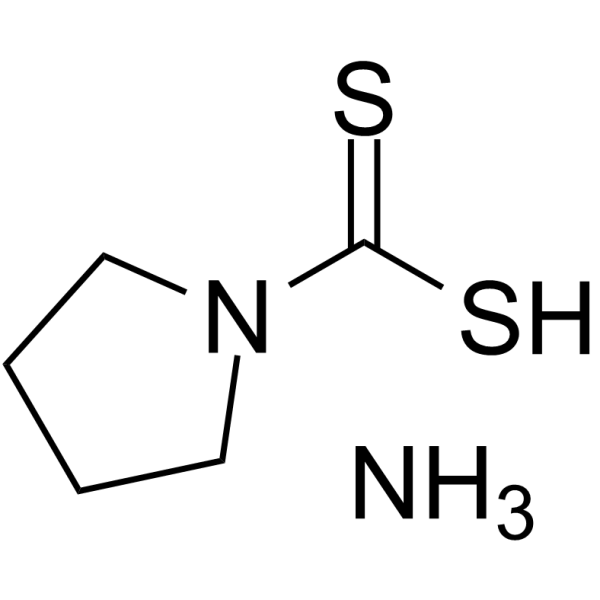
HY-18738
Pyrrolidinedithiocarbamate ammoniumSelective NF-κB Inhibitor -
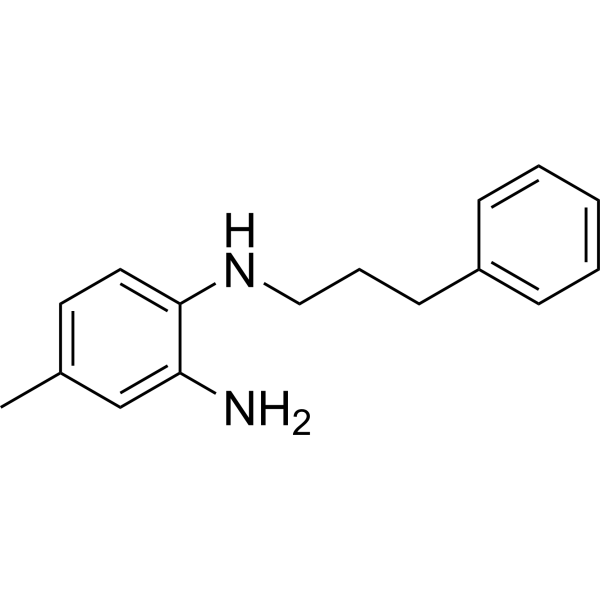
HY-13982
JSH-23NF-κB Inhibitor
Publications Citing Use of MedChemExpress (MCE) Adjudin
More

Biological Activity
제품 설명
IC50 & Target
In Vitro
Adjudin is a potent blocker of Cl- channels: disrupting Cl- ion transport function results in a decline in sperm capacitation and fertilizing ability in humans in vitro[1]. Adjudin (ADD) is a mitochondria inhibitor[2]. Adjudin is a molecule that mediates adherens junction disruption at the Sertoli-germ cell interface. To investigate the effect of Adjudin on cancer cells, more than ten different types of human or mice cancer cell lines are treated with increasing concentrations of Adjudin and the cell proliferation is measured by the modified MTT assay. Adjudin inhibits cell proliferation in a dose dependent manner in SGC-7901 (human gastric adenocarcinoma cell), MDA-MB-231 (human breast adenocarcinoma cell), Smmc-7721 (human hepatoma cell) and MIA Paca-2 (human pancreatic adenocarcinoma cell) cells. The IC50 of Adjudin is determined to be 58.0 μM, 13.8 μM, 72.3 μM and 52.7 μM against SGC-7901, MDA-MB-231, Smmc-7721 and MIA Paca-2 cells, respectively, after treatment for 24 h. Similar results are obtained in other human and mice cancer cell lines. The IC50 of Adjudin in A549 cells and PC3 cells is 63.1 μM and 93.0 μM, respectively. For WI-38 and BPH-1 cells, the IC50 of Adjudin can be observed at more than 300 μM and 200 μM, respectively, which is about 5 times and 2 times more than that for the cancer cell lines A549 and PC3[3].
MedChemExpress (MCE) has not independently confirmed the accuracy of these methods. They are for reference only.
In Vivo
MedChemExpress (MCE) has not independently confirmed the accuracy of these methods. They are for reference only.


Chemical Information
-
CAS No. 252025-52-8
-
Appearance Solid
-
분자량 335.19
-
화학식 C15H12Cl2N4O
-
Color White to off-white
-
SMILES
O=C(C1=NN(CC2=CC=C(Cl)C=C2Cl)C3=C1C=CC=C3)NN
-
Synonyms
AF-2364
-
선적
Room temperature in continental US; may vary elsewhere.
-
보관
Powder -20°C 3 years 4°C 2 years In solvent -80°C 2 years -20°C 1 year


Publications (5)
-
Journal Impact Factor
-
Most Recent
-
Diabetologia
2024 Jan;67(1):137-155. PMID: 37843554 -
Commun Biol
Diurnal testosterone oscillations gate drug delivery via phase separation of ZO-1 at the blood-testis barrier in mice. [Abstract]2026 Jun 1. PMID: 42219451 -
Sci Rep
The relationship between sperm secretion and the Hippo signaling pathway in the rat seminiferous tubules. [Abstract]2025 Aug 2;15(1):28204. PMID: 40753289 -
Biochim Biophys Acta Mol Cell Res
Cytoskeletal orchestration of glucose uptake in Sertoli cell to support efferocytosis of apoptotic germ cells. [Abstract]2023 Apr;1870(4):119434. PMID: 36716822 -
Microbiol Immunol
2025 Mar;69(3):133-147. PMID: 39674913


용액&용해도
In Vitro:
DMSO : 16.67 mg/mL (49.73 mM; Need ultrasonic; Hygroscopic DMSO has a significant impact on the solubility of product, please use newly opened DMSO)
Please refer to the solubility information to select the appropriate solvent. Once prepared, please aliquot and store the solution to prevent product inactivation from repeated freeze-thaw cycles.
Storage method and period of stock solution: -80°C, 2 years; -20°C, 1 year. When stored at -80°C, please use it within 2 years. When stored at -20°C, please use it within 1 year.
Please refer to the solubility information to select the appropriate solvent. Once prepared, please aliquot and store the solution to prevent product inactivation from repeated freeze-thaw cycles.
Storage method and period of stock solution: -80°C, 2 years; -20°C, 1 year. When stored at -80°C, please use it within 2 years. When stored at -20°C, please use it within 1 year.
Concentration (start) × Volume (start) = Concentration (final) × Volume (final)
In Vivo:
Select the appropriate dissolution method based on your experimental animal and administration route.
- For the following dissolution methods, please ensure to first prepare a clear stock solution using an In Vitro approach and then sequentially add co-solvents:
- To ensure reliable experimental results, the clarified stock solution can be appropriately stored based on storage conditions. As for the working solution for In Vivo experiments, it is recommended to prepare freshly and use it on the same day.
- The percentages shown for the solvents indicate their volumetric ratio in the final prepared solution. If precipitation or phase separation occurs during preparation, heat and/or sonication can be used to aid dissolution.
Add each solvent one by one: 10% DMSO 40% PEG300 5% Tween-80 45% Saline
Solubility: ≥ 1.67 mg/mL (4.98 mM); Clear solution
This protocol yields a clear solution of ≥ 1.67 mg/mL (saturation unknown).
Taking 1 mL working solution as an example, add 100 μL DMSO stock solution (16.7 mg/mL) to 400 μL PEG300, and mix evenly; then add 50 μL Tween-80 and mix evenly; then add 450 μL Saline to adjust the volume to 1 mL.
Preparation of Saline: Dissolve 0.9 g sodium chloride in ddH₂O and dilute to 100 mL to obtain a clear Saline solution.
In Vivo Dissolution Calculator
Please enter the basic information of animal experiments:
-
-
-
-
Recommended: Prepare an additional quantity of animals to account for potential losses during experiments.
Please enter your animal formula composition:
-
%DMSO +
Recommended: Keep the proportion of DMSO in working solution below 2% if your animal is weak.
-
%+
-
+%Tween-80 + +
-
%Saline +
The co-solvents required include: DMSO, . All of co-solvents are available by MedChemExpress (MCE). , Tween 80. All of co-solvents are available by MedChemExpress (MCE).
Working solution concentration: 0.22 mg/mL
Method for preparing stock solution: mg drug dissolved in μL DMSO. Stock solution concentration: mg/mL.
1. Take μL DMSO stock solution;
2. Add μL .
μL , mix evenly;
3. Then add μL Tween 80, mix evenly;
4. Then add μL
Please ensure that the stock solution in the first step is dissolved to a clear state, and add co-solvents in sequence. You can use ultrasonic heating (ultrasonic cleaner, recommended frequency 20-40 kHz), vortexing, etc. to assist dissolution.


순도&문서
-
Data Sheet (285 KB)
-
SDS (393 KB)
- English - EN (393 KB)
- Français - FR (393 KB)
- Deutsch - DE (393 KB)
- Norwegian - NO (393 KB)
- Español - ES (393 KB)
- Swedish - SV (393 KB)
- Italian - IT (393 KB)
- Korean - KR (393 KB)
- Portuguese - PT (393 KB)
-
Handling Instructions (2659 KB)
References
[1]. Li K, et al. Inhibition of sperm capacitation and fertilizing capacity by adjudin is mediated by chloride and its channels in humans. Hum Reprod. 2013 Jan;28(1):47-59. [Content Brief]
[2]. Li X, et al. Combination delivery of Adjudin and Doxorubicin via integrating drug conjugation and nanocarrier approaches for the treatment of drug-resistant cancer cells. J Mater Chem B. 2015 Feb 28;3(8):1556-1564. [Content Brief]
[3]. Xie QR, et al. Male contraceptive Adjudin is a potential anti-cancer drug. Biochem Pharmacol. 2013 Feb 1;85(3):345-55. [Content Brief]


Complete Stock Solution Preparation Table
Please refer to the solubility information to select the appropriate solvent. Once prepared, please aliquot and store the solution to prevent product inactivation from repeated freeze-thaw cycles.
Storage method and period of stock solution: -80°C, 2 years; -20°C, 1 year. When stored at -80°C, please use it within 2 years. When stored at -20°C, please use it within 1 year.
| Optional Solvent | Concentration Solvent Mass | 1 mg | 5 mg | 10 mg | 25 mg |
|---|---|---|---|---|---|
| DMSO | 1 mM | 2.9834 mL | 14.9169 mL | 29.8338 mL | 74.5846 mL |
| 5 mM | 0.5967 mL | 2.9834 mL | 5.9668 mL | 14.9169 mL | |
| 10 mM | 0.2983 mL | 1.4917 mL | 2.9834 mL | 7.4585 mL | |
| 15 mM | 0.1989 mL | 0.9945 mL | 1.9889 mL | 4.9723 mL | |
| 20 mM | 0.1492 mL | 0.7458 mL | 1.4917 mL | 3.7292 mL | |
| 25 mM | 0.1193 mL | 0.5967 mL | 1.1934 mL | 2.9834 mL | |
| 30 mM | 0.0994 mL | 0.4972 mL | 0.9945 mL | 2.4862 mL | |
| 40 mM | 0.0746 mL | 0.3729 mL | 0.7458 mL | 1.8646 mL |


Adjudin Related Classifications
HY-18996 Related Classifications
 Powered by Bioz