



CAY10594
Based on 1 publication(s) in Google Scholar
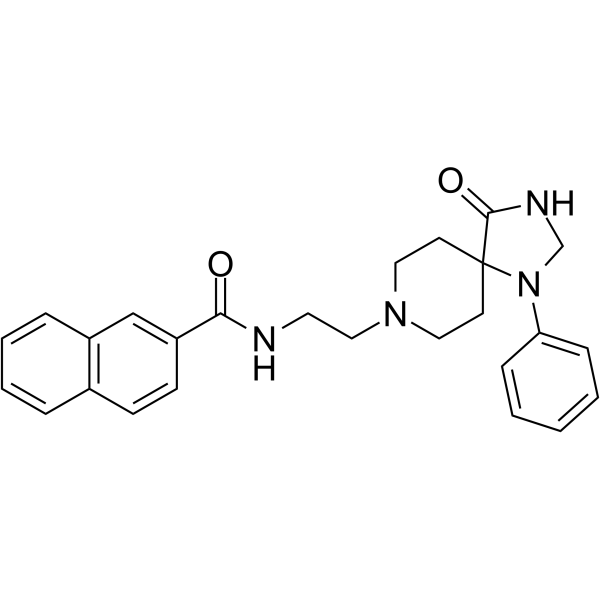
CAY10594 is an orally active PLD2 inhibitor with an IC50 of 140 nM. CAY10594 has activities such as anti-tumor, anti-oxidation and liver protection. CAY10594 can be used for the research of diseases like breast cancer, acute liver injury and colitis.
연구목적의 판매만을 진행합니다. 환자를 대상으로 한 판매는 하지 않습니다.
- Purity: 98.64%
- CAS No.: 1130067-34-3
- 화학식: C26H28N4O2
- 분자량:428.53
-
보관:Powder -20°C, 3 years , 4°C, 2 years ; In solvent -80°C, 6 months , -20°C, 1 month

To place orders, for customer services and technical support, please contact: MedChemExpress USA
Tel: 609-228-6898 E-mail: [email protected] [email protected]


-
 Biological Activity
-
Chemical Information
-
용액&용해도
- 순도&문서
- References
-
 Help & FAQs
-

Apoptosis Compound Library
HY-L003
-
GPCR/G Protein Compound Library
HY-L006
-
Immunology/Inflammation Compound Library
HY-L007
-
JAK/STAT Compound Library
HY-L008
-
Kinase Inhibitor Library
HY-L009
-
Metabolism/Protease Compound Library
HY-L012
-
PI3K/Akt/mTOR Compound Library
HY-L015
-
Protein Tyrosine Kinase Compound Library
HY-L016
-
Stem Cell Signaling Compound Library
HY-L017
-
Wnt/Hedgehog/Notch Compound Library
HY-L020
-
Anti-Cancer Compound Library
HY-L025
-
Small Molecule Immuno-Oncology Compound Library
HY-L031
-
Anti-Aging Compound Library
HY-L034
-
Differentiation Inducing Compound Library
HY-L038
-
Reprogramming Compound Library
HY-L039
-
Oxygen Sensing Compound Library
HY-L045
-
Glycolysis Compound Library
HY-L058
-
Cytoskeleton Compound Library
HY-L060
-
Orally Active Compound Library
HY-L061
-
Anti-Alzheimer's Disease Compound Library
HY-L069
-
Exosomes Compound Library
HY-L072
-
Anti-Breast Cancer Compound Library
HY-L074
-
Anti-Lung Cancer Compound Library
HY-L075
-
Anti-Pancreatic Cancer Compound Library
HY-L077
-
Anti-Blood Cancer Compound Library
HY-L079
-
Anti-Cancer Metabolism Compound Library
HY-L083
-
Neurodegenerative Disease-related Compound Library
HY-L086
-
Anti-Obesity Compound Library
HY-L087
-
Angiogenesis-Related Compound Library
HY-L088
-
Transcription Factor-Targeted Library
HY-L090
-
Lipid Metabolism Compound Library
HY-L091
-
Glucose Metabolism Compound Library
HY-L092
-
Anti-Liver Cancer Compound Library
HY-L101
-
Antidepressant Compound Library
HY-L108
-
Anti-Prostate Cancer Compound Library
HY-L124
-
Anti-Pulmonary Fibrosis Compound Library
HY-L125
-
Chemokine Compound Library
HY-L132
-
Cancer Stem Cells Compound Library
HY-L135
-
Metabolic Enzyme Compound Library
HY-L146
-
Membrane Protein-targeted Compound Library
HY-L149
-
Membrane Receptor-targeted Compound Library
HY-L150
-
Cytokine Inhibitors Library
HY-L161
-
Cell Death Library
HY-L162
-
Serine/Threonine Kinase Inhibitor Library
HY-L164
-
Extracellular Vesicles (EVs) Compound Library
HY-L168
-
Anti-Hematopathy Compound Library
HY-L171
-
Multi-Target Compound Library
HY-L176
-
Radioprotector Library
HY-L178
-
Bioactive Compound Library Max
HY-L181
-
MCE Bioactive Compound Library
HY-L001V
-
Bioactive Compound Library
HY-L001
-
Anti-Brain Cancer Compound Library
HY-L188
-
Protein Kinase Compound Library
HY-L196
-
Non-Alcoholic Fatty Liver Disease (NAFLD) Compound Library
HY-L199
-
Cell Proliferation Compound Library
HY-L201
-
Lactic Acid Metabolic Compound Library
HY-L204
-
High-Throughput Bioactive Compound Library
HY-L205
-
Anti-Rheumatic Arthritis Compound Library
HY-L210
-
Lactylation Compound Library
HY-L249


Publications Citing Use of MedChemExpress (MCE) CAY10594
MoreAll Phospholipase Isoforms
More

Biological Activity
|
p-STAT3 |
GSK-3β |
IL-6 |
IL-17A |
IL-23 |
IL-1β |
CXCR2 |
GRK2 |
|
Cell Line

|
Type | Value | Description | References |
|---|---|---|---|---|
| Calu-1 | IC50 |
1 μM
Compound: 72
|
Inhibition of PLD1 in human Calu-1 cells assessed as decrease in phosphatidylbutanol-[d9] production after 30 mins by mass spectrometric analysis
Inhibition of PLD1 in human Calu-1 cells assessed as decrease in phosphatidylbutanol-[d9] production after 30 mins by mass spectrometric analysis
|
[PMID: 19136975] |
| Calu-1 | IC50 |
1 μM
Compound: 3
|
Inhibition of PLD1 in human Calu1 cells
Inhibition of PLD1 in human Calu1 cells
|
[PMID: 19299128] |
| HEK293 | IC50 |
110 nM
Compound: 72
|
Inhibition of GFP-tagged human PLD2 expressed in human HEK293 cells assessed as decrease in phosphatidylbutanol-[d9] production after 30 mins by mass spectrometric analysis
Inhibition of GFP-tagged human PLD2 expressed in human HEK293 cells assessed as decrease in phosphatidylbutanol-[d9] production after 30 mins by mass spectrometric analysis
|
[PMID: 19136975] |
| HEK293 | IC50 |
110 nM
Compound: 3
|
Inhibition of GFP-labeled PLD2 in human HEK293 cells
Inhibition of GFP-labeled PLD2 in human HEK293 cells
|
[PMID: 19299128] |
| HEK293 | IC50 |
110 nM
Compound: 15a
|
Inhibition of human GST-tagged PLD2A in human HEK293 cells
Inhibition of human GST-tagged PLD2A in human HEK293 cells
|
[PMID: 20735042] |
CAY10594 (Compound 72) (20 μM; 48 h) inhibits the migration of MDA-231, 4T1, and PMT breast cancer cells[1].
CAY10594 (10 μM; 7 h) improves LPS (HY-D1056)-induced increased endothelial permeability and decreased transendothelial electrical resistance, inhibits phosphatidic acid production and STAT3 phosphorylation, and enhances the expression of tight junction proteins in HUVECs[2].
CAY10594 (10 μM; 0-16 h) significantly reduces Acetaminophen (HY-66005)-induced lactate dehydrogenase release and cell death, and blocks GSK-3β phosphorylation in primary hepatocytes[3].
MedChemExpress (MCE) has not independently confirmed the accuracy of these methods. They are for reference only.
-
Cell Line:Human umbilical vein endothelial cells (HUVECs) treated LPS (HY-D1056)
-
Concentration:10 μM
-
Incubation Time:Pretreated with 1 h, then co-incubation for 6 h
-
Result:Increased the levels of occludin and ZO-1.
-
Cell Line:Primary hepatocyte treated Acetaminophen (HY-66005)
-
Concentration:10 μM
-
Incubation Time:0, 2, 4, 6, 8 and 10 h
-
Result:Inhibited the level of pGSK-3β.
CAY10594 (4 mg/kg; oral gavage; 10 days) shows ameliorative effects in a mouse model of colitis[4].
MedChemExpress (MCE) has not independently confirmed the accuracy of these methods. They are for reference only.
-
Animal Model:C57BL/6 mice treated Acetaminophen (HY-66005) to induce acute liver injury[3]
-
Dosage:1, 4 and 8 mg/kg
-
Administration:Intraperitoneal injection; single dose
-
Result:Significantly alleviated hepatic pathological damage, as demonstrated by reduced necrosis and apoptosis in liver tissue sections.
Decreased serum levels of AST and ALT, key markers of liver injury.
Improved the survival rate of mice.
-
Animal Model:C57BL/6 mice (20-25 g, 8-10 weeks old) treated DSS (HY-116282C) to induce colitis[4]
-
Dosage:4 mg/kg
-
Administration:Oral gavage; 10 days
-
Result:Significantly improved clinical symptoms including higher survival rate, less body weight loss, and reduced bloody stools.
Alleviated pathological damage in colon tissues,
Decreased proinflammatory cytokines (TNF-α, IL-6, IL-17A, IL-23, IL-1β) expression, increased anti-inflammatory cytokine (IL-10) expression, and promoted neutrophil migration by upregulating CXCR2 and downregulating GRK2.


Chemical Information
-
CAS No. 1130067-34-3
-
Appearance Solid
-
분자량 428.53
-
화학식 C26H28N4O2
-
Color White to off-white
-
SMILES
O=C(C1=CC2=C(C=C1)C=CC=C2)NCCN3CCC4(CC3)C(NCN4C5=CC=CC=C5)=O
-
선적
Room temperature in continental US; may vary elsewhere.
-
보관
Powder -20°C 3 years 4°C 2 years In solvent -80°C 6 months -20°C 1 month


Publications (1)
-
Journal Impact Factor
-
Most Recent
-
Biochem Pharmacol
Phospholipase D2 regulation by transcription factor FOXA1 promotes the drug resistance of vemurafenib in melanoma cells. [Abstract]2025 Dec;242(Pt 4):117434. PMID: 41110487


용액&용해도
DMSO : 100 mg/mL (233.36 mM; Need ultrasonic; Hygroscopic DMSO has a significant impact on the solubility of product, please use newly opened DMSO)
Please refer to the solubility information to select the appropriate solvent. Once prepared, please aliquot and store the solution to prevent product inactivation from repeated freeze-thaw cycles.
Storage method and period of stock solution: -80°C, 6 months; -20°C, 1 month. When stored at -80°C, please use it within 6 months. When stored at -20°C, please use it within 1 month.
Please refer to the solubility information to select the appropriate solvent. Once prepared, please aliquot and store the solution to prevent product inactivation from repeated freeze-thaw cycles.
Storage method and period of stock solution: -80°C, 6 months; -20°C, 1 month. When stored at -80°C, please use it within 6 months. When stored at -20°C, please use it within 1 month.
Concentration (start) × Volume (start) = Concentration (final) × Volume (final)
Select the appropriate dissolution method based on your experimental animal and administration route.
- For the following dissolution methods, please ensure to first prepare a clear stock solution using an In Vitro approach and then sequentially add co-solvents:
- To ensure reliable experimental results, the clarified stock solution can be appropriately stored based on storage conditions. As for the working solution for In Vivo experiments, it is recommended to prepare freshly and use it on the same day.
- The percentages shown for the solvents indicate their volumetric ratio in the final prepared solution. If precipitation or phase separation occurs during preparation, heat and/or sonication can be used to aid dissolution.
Add each solvent one by one: 10% DMSO 40% PEG300 5% Tween-80 45% Saline
Solubility: ≥ 1.14 mg/mL (2.66 mM); Clear solution
This protocol yields a clear solution of ≥ 1.14 mg/mL (saturation unknown).
Taking 1 mL working solution as an example, add 100 μL DMSO stock solution (11.4 mg/mL) to 400 μL PEG300, and mix evenly; then add 50 μL Tween-80 and mix evenly; then add 450 μL Saline to adjust the volume to 1 mL.
Preparation of Saline: Dissolve 0.9 g sodium chloride in ddH₂O and dilute to 100 mL to obtain a clear Saline solution.
Please enter the basic information of animal experiments:
-
-
-
-
Recommended: Prepare an additional quantity of animals to account for potential losses during experiments.
Please enter your animal formula composition:
-
%DMSO +
Recommended: Keep the proportion of DMSO in working solution below 2% if your animal is weak.
-
%+
-
+%Tween-80 + +
-
%Saline +
The co-solvents required include: DMSO, . All of co-solvents are available by MedChemExpress (MCE). , Tween 80. All of co-solvents are available by MedChemExpress (MCE).
Working solution concentration: 0.22 mg/mL
Method for preparing stock solution: mg drug dissolved in μL DMSO. Stock solution concentration: mg/mL.
1. Take μL DMSO stock solution;
2. Add μL .
μL , mix evenly;
3. Then add μL Tween 80, mix evenly;
4. Then add μL
Please ensure that the stock solution in the first step is dissolved to a clear state, and add co-solvents in sequence. You can use ultrasonic heating (ultrasonic cleaner, recommended frequency 20-40 kHz), vortexing, etc. to assist dissolution.


순도&문서
-
Data Sheet (281 KB)
-
SDS (251 KB)
- English - EN (251 KB)
- Français - FR (251 KB)
- Deutsch - DE (251 KB)
- Norwegian - NO (251 KB)
- Español - ES (251 KB)
- Swedish - SV (251 KB)
- Italian - IT (251 KB)
- Korean - KR (251 KB)
- Portuguese - PT (251 KB)
-
Handling Instructions (2659 KB)
References
[1]. Scott SA, et al. Design of isoform-selective phospholipase D inhibitors that modulate cancer cell invasiveness. Nat Chem Biol. 2009 Feb;5(2):108-17. [Content Brief]
[2]. Qian T, et al. PLD2 deletion alleviates disruption of tight junctions in sepsis-induced ALI by regulating PA/STAT3 phosphorylation pathway. Int Immunopharmacol. 2023 Jan;114:109561. [Content Brief]
[3]. Lee SK, et al. A phospholipase D2 inhibitor, CAY10594, ameliorates acetaminophen-induced acute liver injury by regulating the phosphorylated-GSK-3β/JNK axis. Sci Rep. 2019 May 10;9(1):7242. [Content Brief]
[4]. Zhou G, et al. Blockade of PLD2 Ameliorates Intestinal Mucosal Inflammation of Inflammatory Bowel Disease. Mediators Inflamm. 2016;2016:2543070. [Content Brief]


Complete Stock Solution Preparation Table
Please refer to the solubility information to select the appropriate solvent. Once prepared, please aliquot and store the solution to prevent product inactivation from repeated freeze-thaw cycles.
Storage method and period of stock solution: -80°C, 6 months; -20°C, 1 month. When stored at -80°C, please use it within 6 months. When stored at -20°C, please use it within 1 month.
| Optional Solvent | Concentration Solvent Mass | 1 mg | 5 mg | 10 mg | 25 mg |
|---|---|---|---|---|---|
| DMSO | 1 mM | 2.3336 mL | 11.6678 mL | 23.3356 mL | 58.3390 mL |
| 5 mM | 0.4667 mL | 2.3336 mL | 4.6671 mL | 11.6678 mL | |
| 10 mM | 0.2334 mL | 1.1668 mL | 2.3336 mL | 5.8339 mL | |
| 15 mM | 0.1556 mL | 0.7779 mL | 1.5557 mL | 3.8893 mL | |
| 20 mM | 0.1167 mL | 0.5834 mL | 1.1668 mL | 2.9169 mL | |
| 25 mM | 0.0933 mL | 0.4667 mL | 0.9334 mL | 2.3336 mL | |
| 30 mM | 0.0778 mL | 0.3889 mL | 0.7779 mL | 1.9446 mL | |
| 40 mM | 0.0583 mL | 0.2917 mL | 0.5834 mL | 1.4585 mL | |
| 50 mM | 0.0467 mL | 0.2334 mL | 0.4667 mL | 1.1668 mL | |
| 60 mM | 0.0389 mL | 0.1945 mL | 0.3889 mL | 0.9723 mL | |
| 80 mM | 0.0292 mL | 0.1458 mL | 0.2917 mL | 0.7292 mL | |
| 100 mM | 0.0233 mL | 0.1167 mL | 0.2334 mL | 0.5834 mL |


CAY10594 Related Classifications
HY-121983 Related Classifications
 Powered by Bioz