



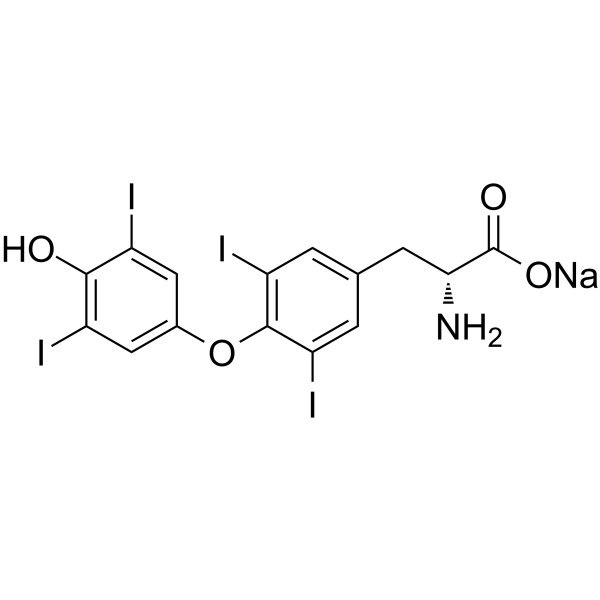
D-Thyroxine sodium
D-thyroxine (D-T4) sodium is an orally active thyroid hormone that inhibits the secretion of TSH. D-thyroxine sodium can inhibit goiter, promote metamorphosis of tadpoles and influence cholesterol metabolism. D-thyroxine sodium can be used for the study of hypercholesterolemia.
연구목적의 판매만을 진행합니다. 환자를 대상으로 한 판매는 하지 않습니다.
- CAS No.: 137-53-1
- 화학식: C15H10I4NNaO4
- 분자량:798.85
-
보관:
Please store the product under the recommended conditions in the Certificate of Analysis.

To place orders, for customer services and technical support, please contact: MedChemExpress USA
Tel: 609-228-6898 E-mail: [email protected] [email protected]


-
 Biological Activity
-
Chemical Information
- Protocol
- 순도&문서
- References
-
 Help & FAQs


-
HY-18341B
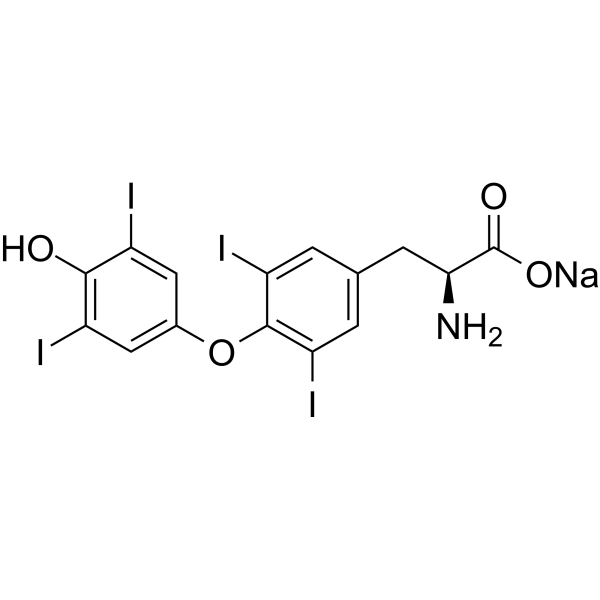
L-Thyroxine sodiumThyroid Hormone -
HY-10473
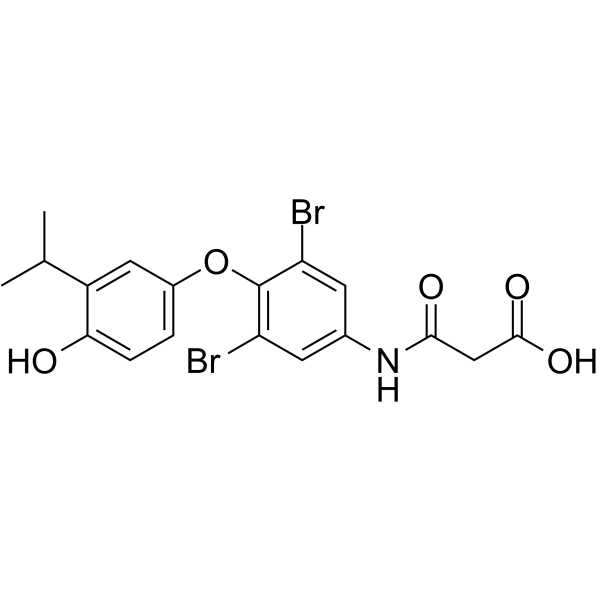
Eprotirome -
HY-18341
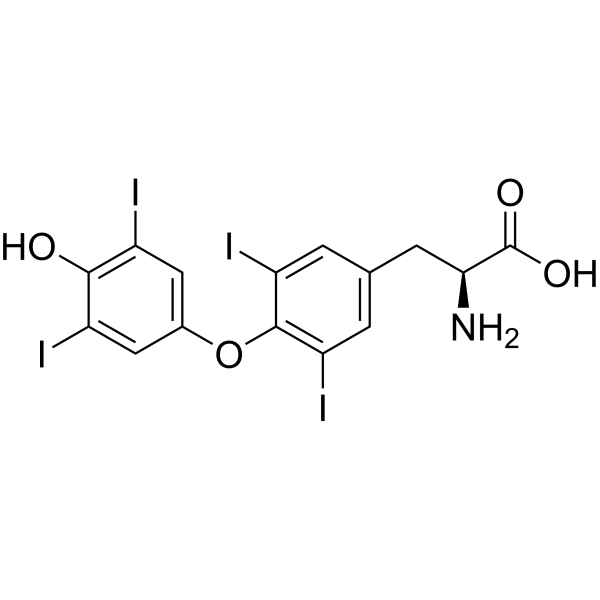
L-ThyroxineThyroid Hormone -

HY-10473R
Eprotirome (Standard)Reference Standard -

HY-18341BR
L-Thyroxine sodium (Standard)Thyroid Hormone -
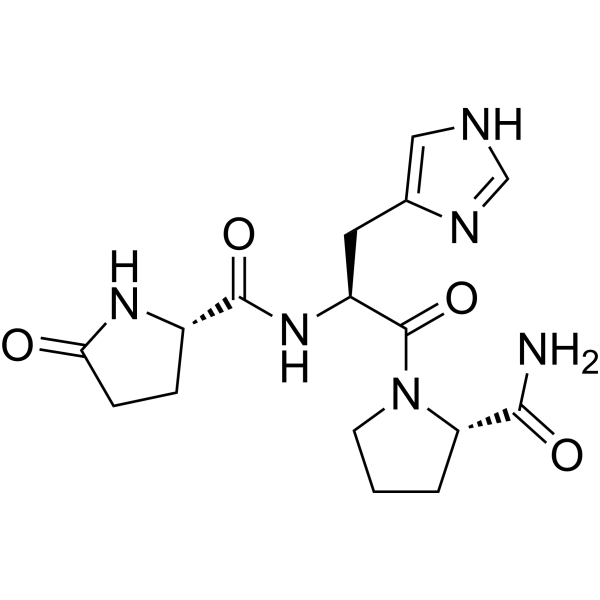
HY-P0002
ProtirelinEndogenous Metabolite -

HY-18341R
L-Thyroxine (Standard)Thyroid Hormone


Biological Activity
제품 설명
In Vitro
D-thyroxine sodium also influences the pharmacologic effect of bishydroxycoumarin[2].
MedChemExpress (MCE) has not independently confirmed the accuracy of these methods. They are for reference only. Further protocols information, click here.
In Vivo
MedChemExpress (MCE) has not independently confirmed the accuracy of these methods. They are for reference only.


Chemical Information
-
CAS No. 137-53-1
-
분자량 798.85
-
화학식 C15H10I4NNaO4
-
SMILES
N[C@H](CC1=CC(I)=C(C(I)=C1)OC2=CC(I)=C(O)C(I)=C2)C(O[Na])=O
-
Synonyms
D-T4 sodium
-
선적
Room temperature in continental US; may vary elsewhere.
-
보관
Please store the product under the recommended conditions in the Certificate of Analysis.

Protocol
-
Research Protocol for Endocrine Diseases
Endocrine diseases often arise from disrupted hormone production, hormone signaling, or target-tissue responsiveness; for diabetes-focused endocrine disease models, insulin signaling regulates glucose uptake, hepatic glucose output, lipid metabolism, and β-cell compensation. Type 2 diabetes develops through interacting defects in insulin resistance, β-cell dysfunction, adipose inflammation, hepatic glucose overproduction, altered incretin signaling, and ectopic lipid metabolism. A major unresolved question is whether endocrine dysfunction is driven primarily by target-tissue insulin resistance, intrinsic β-cell failure, immune/inflammatory stress, or combined multi-organ failure that differs by disease stage.


순도&문서
References

Calculators
Concentration (start) × Volume (start) = Concentration (final) × Volume (final)


D-Thyroxine sodium Related Classifications
HY-A0152A Related Classifications
 Powered by Bioz