



Leukotriene A4 methyl ester
Based on 1 publication(s) in Google Scholar
Leukotriene A4 methyl ester (LTA4 methyl ester) is synthesized in mast cells, eosinophils, and neutrophils from arachidonic acid by 5-lipoxygenase (5-LO), which exhibits both lipoxygenase and LTA4 synthase activities. LTA4 is rapidly metabolized by LTA4 hydrolase or LTC4 synthase to LTB4 or LTC4, respectively. LTA4, from leukocytes, is known to undergo transcellular metabolism in platelets, erythrocytes, and endothelial cells. Further metabolism of LTA4 by 15-LO leads to lipoxin biosynthesis. LTA4 as a free acid is highly unstable. The methyl ester is stable and can be readily hydrolyzed to the free acid as needed.
For research use only. We do not sell to patients.
- CAS No.: 73466-12-3
- Formula: C21H32O3
- Molecular Weight:332.48
-
Storage:
Solution, -20°C, 2 years


To place orders, for customer services and technical support, please contact: MedChemExpress USA
Tel: 609-228-6898 E-mail: [email protected] [email protected]


-
 Biological Activity
-
Chemical Information
- Protocols
- Purity & Documentation
- References
-
 Help & FAQs


-
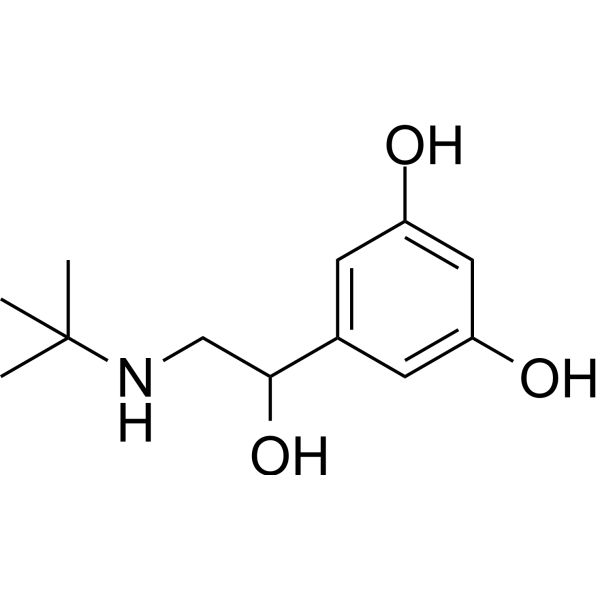
HY-B0802A
Terbutalineβ2-Drenergic Receptor Agonist -
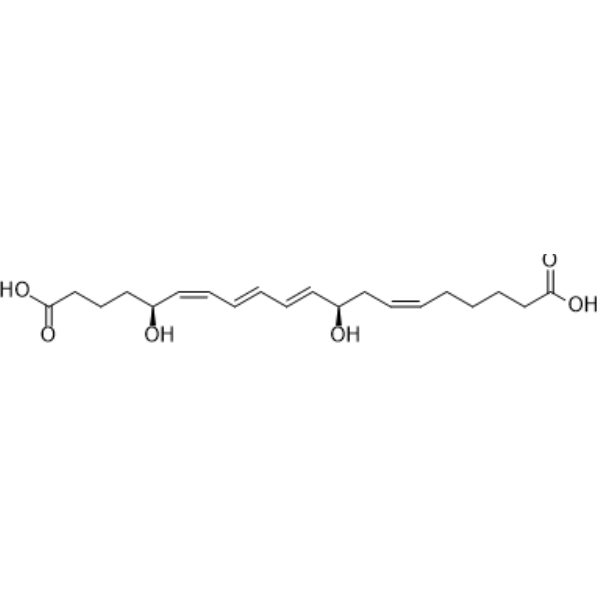
HY-113483
20-Carboxy-Leukotriene B4LTB4 Metabolite -

HY-130429
14,15-Leukotriene C4Leukotrienes -
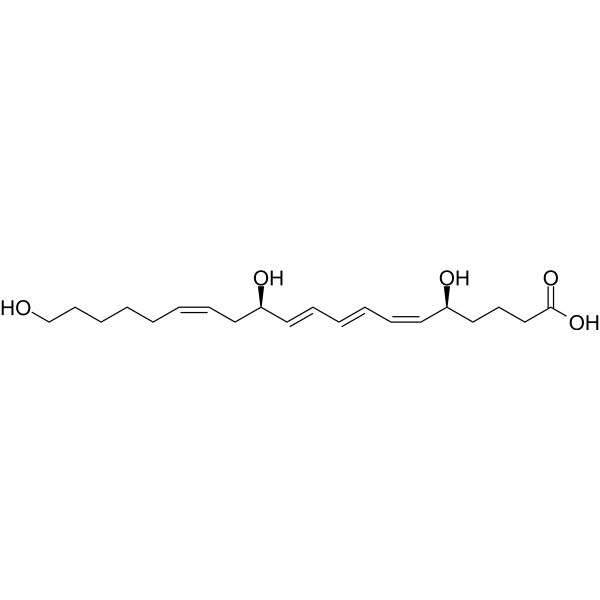
HY-113479
20-Hydroxy-leukotriene B4Endogenous Metabolite -

HY-B0802AR
Terbutaline (Standard)β2-Drenergic Receptor Agonist -
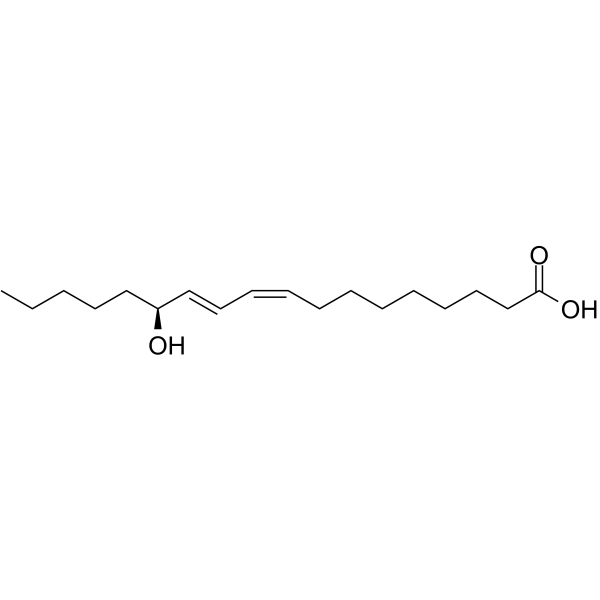
HY-113884B
(S)-Coriolic acidPPARγ Activator/Mitochondrial Dysfunction Inducer -
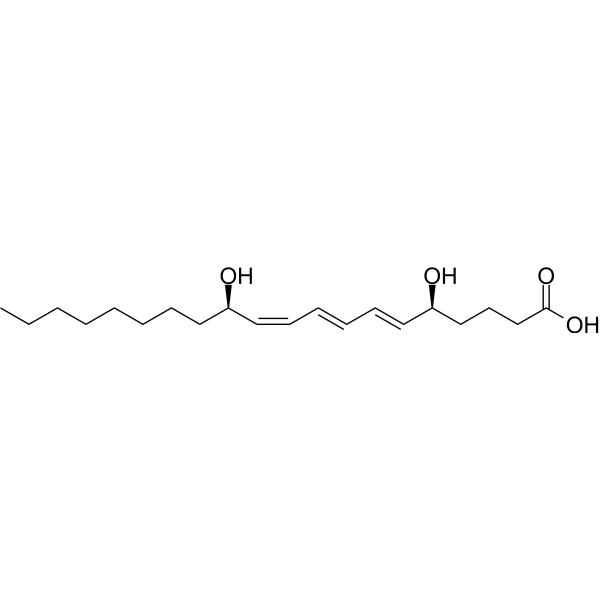
HY-130441
Leukotriene B3Hydrolase Metabolite -
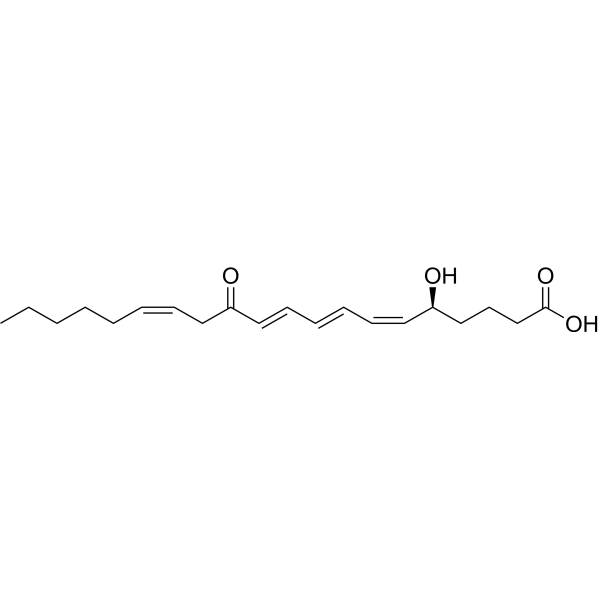
HY-130497
12-Oxo-leukotriene B4Endogenous Metabolite -

HY-115356
Eoxin E4Metabolite of 14,15-LTC4 and 14,15-LTD4 -

HY-137493
14,15-Leukotriene D4Leukotriene -

HY-113509B
15(R)-Lipoxin A4Specialized Pro-resolving Mediator -
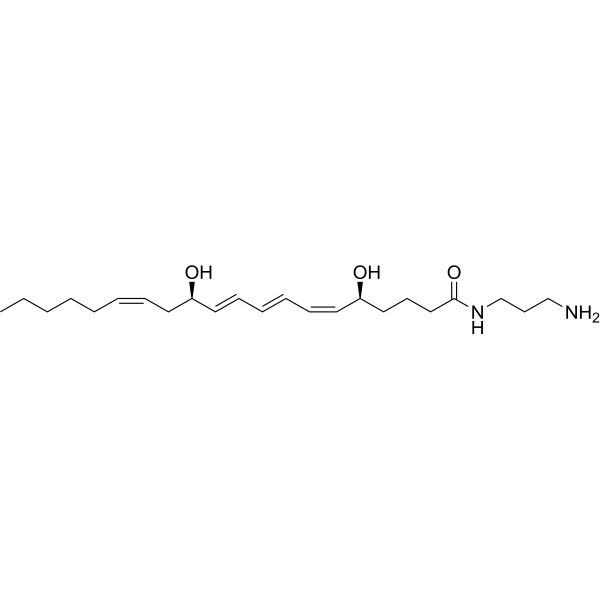
HY-W747565
Leukotriene B4-3-aminopropylamideLeukotriene
Publications Citing Use of MedChemExpress (MCE) Leukotriene A4 methyl ester
More

Biological Activity
Description


Chemical Information
-
CAS No. 73466-12-3
-
Appearance Liquid
-
Molecular Weight 332.48
-
Formula C21H32O3
-
Color Colorless to light yellow
-
SMILES
O=C(OC)CCC[C@@H]1O[C@H]1/C=C/C=C/C=C\C/C=C\CCCCC
-
Synonyms
LTA4 methyl ester
-
Shipping
Room temperature in continental US; may vary elsewhere.
-
Storage
Solution, -20°C, 2 years


Publications (1)
-
Journal Impact Factor
-
Most Recent
-
Int J Mol Sci
Modulation of the 5-Lipoxygenase Pathway by Chalcogen-Containing Inhibitors of Leukotriene A4 Hydrolase. [Abstract]2023 Apr 19;24(8):7539. PMID: 37108702

Protocols
-
Endothelial Tube Formation Assay
Endothelial tube formation assay evaluates the ability of endothelial cells to attach, migrate, align, and organize into capillary-like networks when cultured on gelled basement membrane extract or Matrigel; the readout is the morphology and quantity of tube-like networks, which reflects an in vitro endothelial morphogenesis step related to angiogenesis. Basement membrane extract/Matrigel provides laminin-rich extracellular matrix cues that support endothelial differentiation into capillary-like structures, but it can contain biologically active growth factors, so growth-factor-reduced matrix is preferred when testing defined angiogenic stimulators or inhibitors.


Purity & Documentation
-
Data Sheet (264 KB)
-
SDS (915 KB)
- English - EN (915 KB)
- Français - FR (915 KB)
- Deutsch - DE (915 KB)
- Norwegian - NO (915 KB)
- Español - ES (915 KB)
- Swedish - SV (915 KB)
- Italian - IT (915 KB)
- Korean - KR (915 KB)
- Portuguese - PT (915 KB)
-
Handling Instructions (2659 KB)
References

Calculators
Concentration (start) × Volume (start) = Concentration (final) × Volume (final)


Leukotriene A4 methyl ester Related Classifications
HY-112621 Related Classifications
 Powered by Bioz