



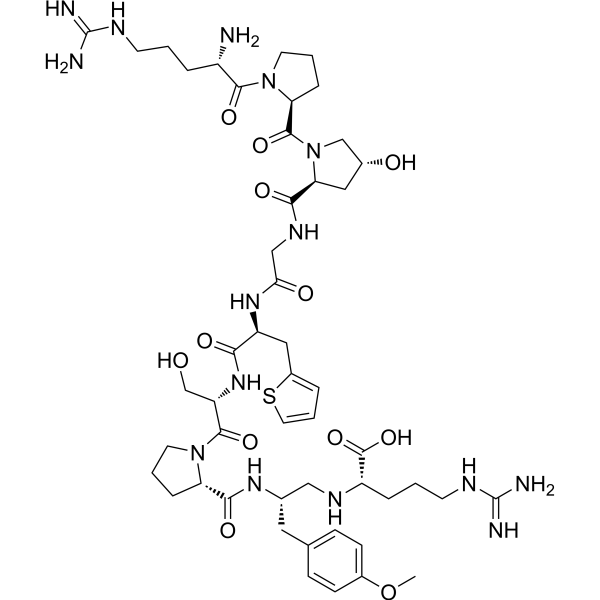
Lys-Bradykinin
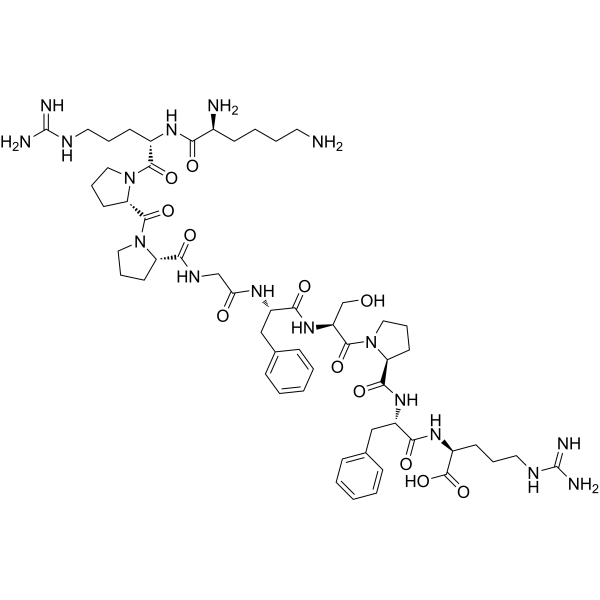
Lys-Bradykinin, a kind of kallidin and bradykinin receptor ligand, can be generated by kininogen protein through enzymatic cleavage by the protease kallikrein. Lys-Bradykinin, also a vasodilator, can widen blood vessels and increase blood flow. ys-Bradykinin stimulates net Na+ influx, and also the DNA synthesis. Lys-Bradykinin involves in vascular regulation, inflammation and pain sensation.
For research use only. We do not sell to patients.
- CAS No.: 342-10-9
- Formula: C56H85N17O12
- Molecular Weight:1188.38
-
Storage:
Please store the product under the recommended conditions in the Certificate of Analysis.

To place orders, for customer services and technical support, please contact: MedChemExpress USA
Tel: 609-228-6898 E-mail: [email protected] [email protected]


-
 Biological Activity
-
Chemical Information
- Protocols
- Purity & Documentation
- References
-
 Help & FAQs


-
HY-17446
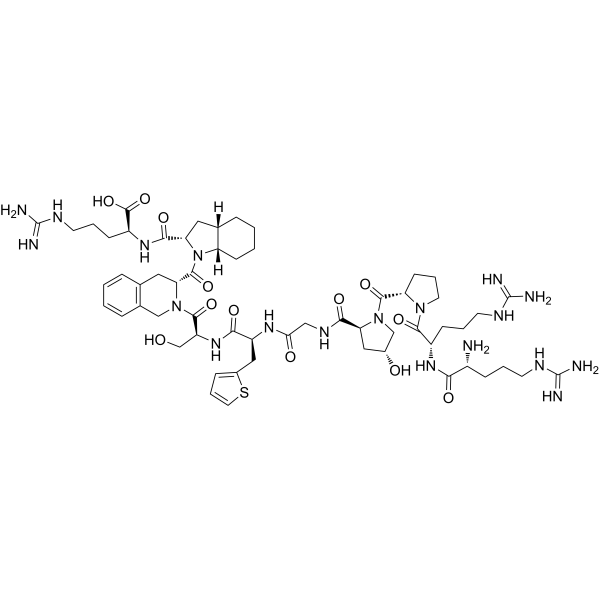
IcatibantBradykinin Receptor Antagonist -
HY-15043
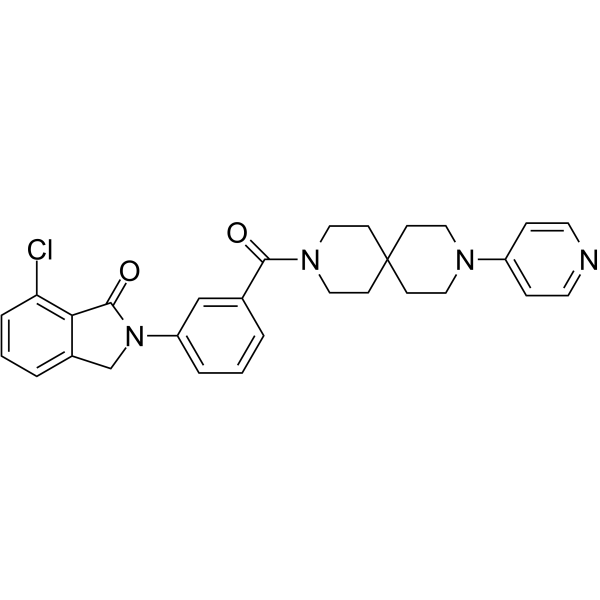
ELN-441958Bradykinin B1 Receptor Antagonist -
![Sar-[D-Phe8]-des-Arg9-Bradykinin](https://file.medchemexpress.com/product_pic/hy-103291.gif)
HY-103291
Sar-[D-Phe8]-des-Arg9-BradykininB1 Receptor Agonist -
HY-103290
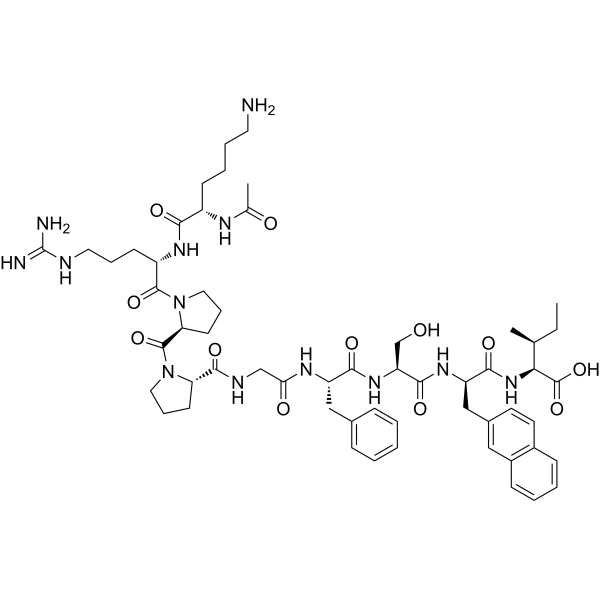
R715Bradykinin B1 Receptor Antagonist -
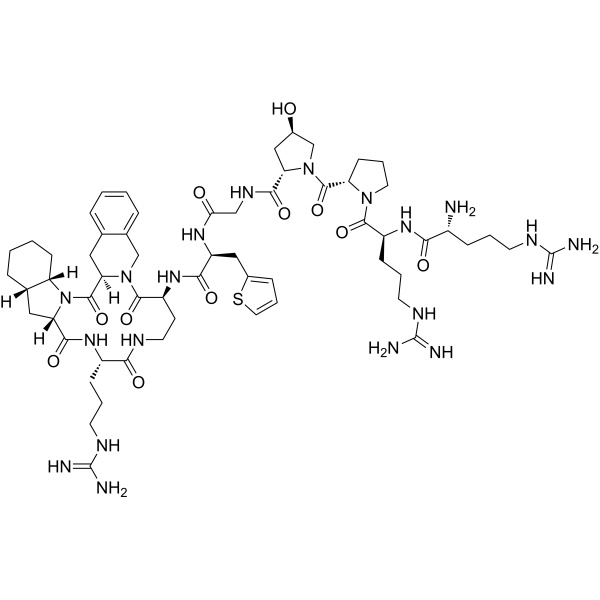
HY-103289
MEN 11270B2 Kinin Receptor Antagonist -
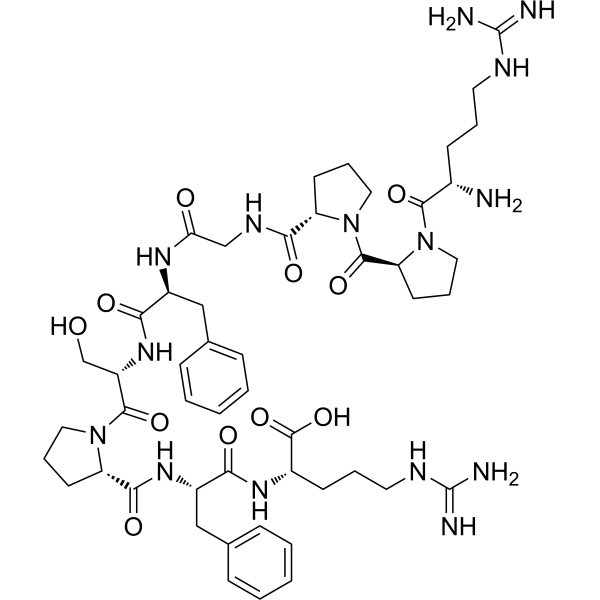
HY-P0206
BradykininBradykinin Receptor Modulator -
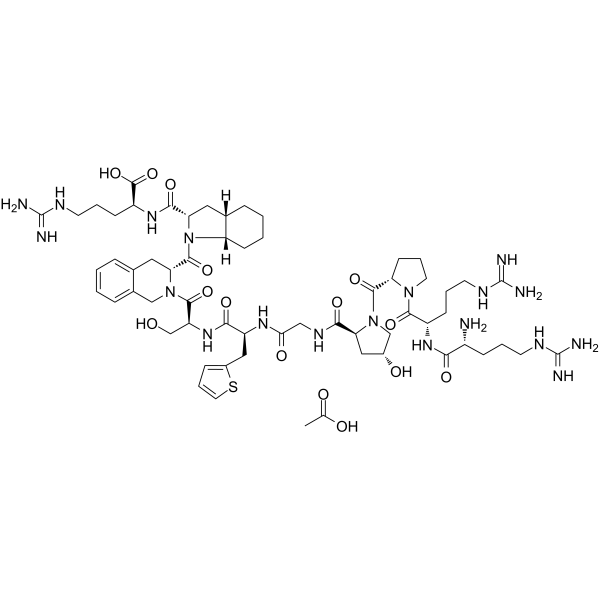
HY-108896
Icatibant acetateBradykinin B2 Antagonist -
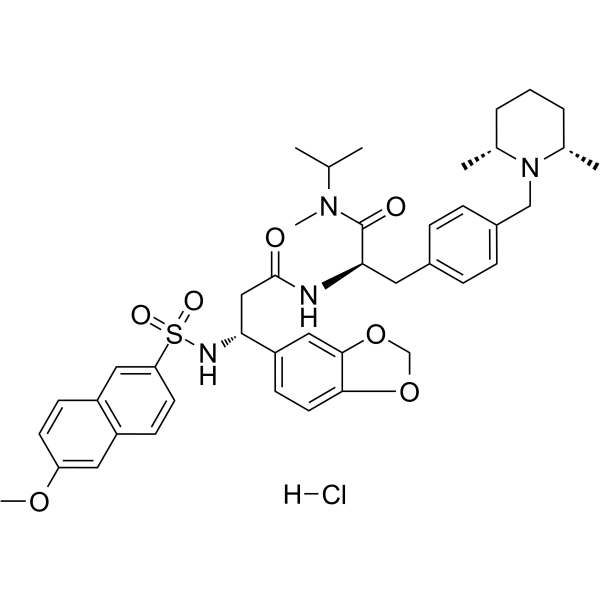
HY-15039
SSR240612 -

HY-17446R
Icatibant (Standard)Bradykinin Receptor Antagonist -
![Lys-[Des-Arg9]Bradykinin](https://file.medchemexpress.com/product_pic/hy-103295.gif)
HY-103295
Lys-[Des-Arg9]BradykininBradykinin B1 Receptor Agonist -
![[Phe8Ψ(CH-NH)Arg9]-Bradykinin](https://file.medchemexpress.com/product_pic/hy-103292.gif)
HY-103292
[Phe8Ψ(CH-NH)Arg9]-BradykininBradykinin receptor B2 Agonist -
HY-105155
LobradimilBradykinin B2 Receptor Agonist
All Bradykinin Receptor Isoforms
More

Biological Activity
Description


Chemical Information
-
CAS No. 342-10-9
-
Molecular Weight 1188.38
-
Formula C56H85N17O12
-
Synonyms
Kallidin (380-389) (human, porcine, bovine)
-
Sequence Shortening
KRPPGFSPFR
-
Shipping
Room temperature in continental US; may vary elsewhere.
-
Storage
Please store the product under the recommended conditions in the Certificate of Analysis.

Protocols
-
EdU Incorporation Assay (Click Chemistry-Based DNA Synthesis Measurement)
The EdU incorporation assay measures DNA synthesis by adding the thymidine analog 5-ethynyl-2′-deoxyuridine to cells or tissues, where it is incorporated into newly synthesized DNA during S phase. Incorporated EdU is detected by copper-catalyzed azide-alkyne cycloaddition, in which a fluorescent azide covalently reacts with the ethynyl group on EdU, allowing S-phase cells to be detected by fluorescence microscopy, flow cytometry, or high-content imaging. EdU detection does not require DNA denaturation or anti-BrdU antibody access, which preserves sample structure and improves compatibility with immunostaining and multiparameter cytometry compared with BrdU-based detection. EdU can be cytotoxic in a cell-type- and exposure-dependent manner, so pulse duration, concentration, and continuous-labeling designs should be validated for each cell type.
-
BrdU Incorporation Assay
Bromodeoxyuridine (BrdU) incorporation assay is based on the principle that BrdU, a thymidine analog, is incorporated into newly synthesized DNA during the S phase of the cell cycle, thereby serving as a marker of DNA replication and cellular proliferation. Incorporated BrdU can be detected using anti-BrdU antibodies following DNA denaturation, enabling visualization or quantification of proliferating cells through immunochemical detection methods such as immunofluorescence or immunohistochemistry.
-
Research Protocol for Inflammation-related Diseases
The NLRP3 inflammasome is a cytosolic innate immune signaling platform that integrates priming signals and danger-signal activation to promote caspase-1 activation, maturation of IL-1β and IL-18, and gasdermin D-mediated pyroptotic cell death. The core experimental logic is to determine whether inflammatory disease phenotypes are driven by increased NLRP3 expression, ASC-containing inflammasome assembly, caspase-1 cleavage, GSDMD cleavage, and extracellular release of IL-1β/IL-18 rather than by nonspecific cell injury alone. The pathway is strongly linked to inflammation-related disease phenotypes because monosodium urate crystals activate NALP3/NLRP3 inflammasome signaling in gout-like crystal inflammation, cholesterol crystals activate NLRP3 inflammasomes in atherogenesis models, and DSS-induced intestinal inflammation has been reported to involve NLRP3 inflammasome activity. However, experimental colitis studies also show context-dependent protective effects of NLRP3 inflammasome co


Purity & Documentation
References

Calculators
Concentration (start) × Volume (start) = Concentration (final) × Volume (final)


Lys-Bradykinin Related Classifications
HY-103293 Related Classifications
 Powered by Bioz