



IFN-beta Protein, Human (CHO)
Based on 6 publication(s) in Google Scholar
IFN-beta is a secretory cytokine produced by cells under viral infection or nucleic acid stimulation. IFNβ binds to cell surface heterodimeric receptors (IFNAR1/IFNAR2), activates the JAK-STAT signaling pathway, and induces the expression of interferon-stimulated genes (ISGs) (such as PKR, 2'5'-OAS). IFN-beta inhibits viral proliferation, regulates immune responses (such as inhibiting Th1 cell polarization, reducing pro-inflammatory cytokine secretion), inhibits the proliferation of vascular smooth muscle cells and tumor cells. IFN-beta has anti-atherosclerotic and vascular remodeling effects. IFN-beta Protein, Human (CHO) is a recombinant interferon-beta protein (CHO), expressed by CHO, without a tag.
- Species: Human
- Source: CHO
-
Storage:Stored at -20°C for 2 years from date of receipt. After reconstitution, it is stable at 4°C for 1 week or -20°C for longer (with carrier protein). It is recommended to freeze aliquots at -20°C or -80°C for extended storage.


To place orders, for customer services and technical support, please contact: MedChemExpress USA
Tel: 609-228-6898 E-mail: [email protected] [email protected]


-
 Biological Activity
-
Technical Parameters
-
Product Properties
- Documentation
- References
- Help & FAQs


-

HY-P7023
IFN-alpha 2b/IFNA2 Protein, Human -
HY-P7025
IFN-gamma Protein, Human -
HY-P73130
IFN-beta Protein, Mouse (HEK293) -
HY-107202
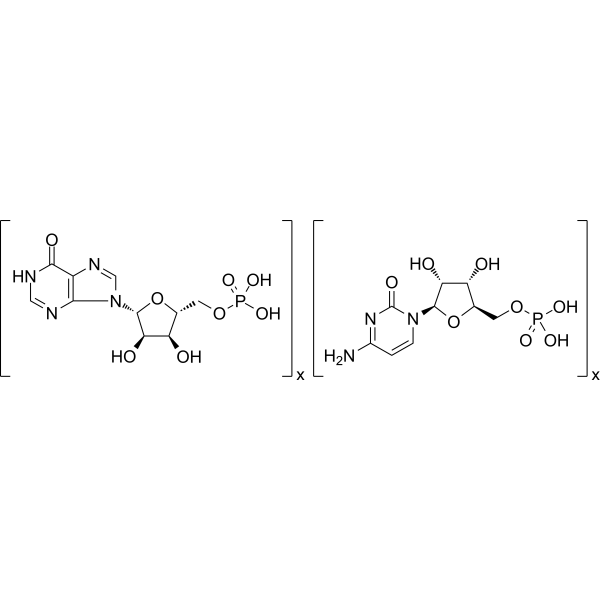
Polyinosinic-polycytidylic acid -
HY-P7022
IFN-alpha 2a/IFNA2 Protein, Human (R46K) -
HY-P7044
IL-6 Protein, Human -
HY-P7058
TNF-alpha/TNFSF2 Protein, Human -
HY-P7025A
IFN-gamma Protein, Human (CHO) -
HY-18739
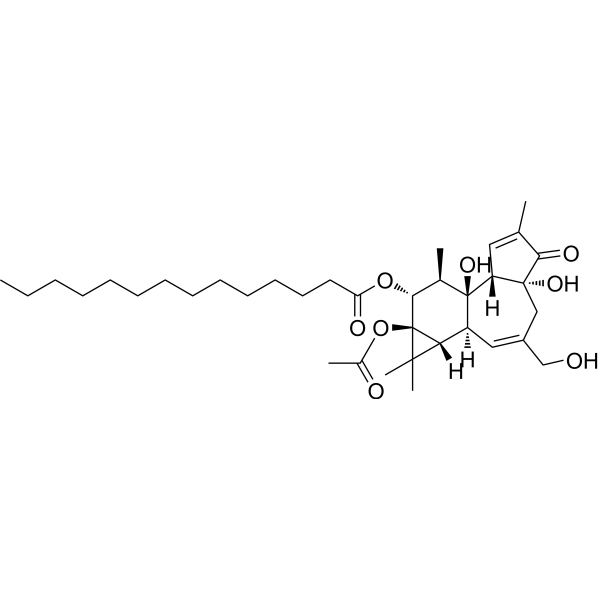
Phorbol 12-myristate 13-acetate -
HY-Y0320C
Dimethyl sulfoxide -
HY-50856
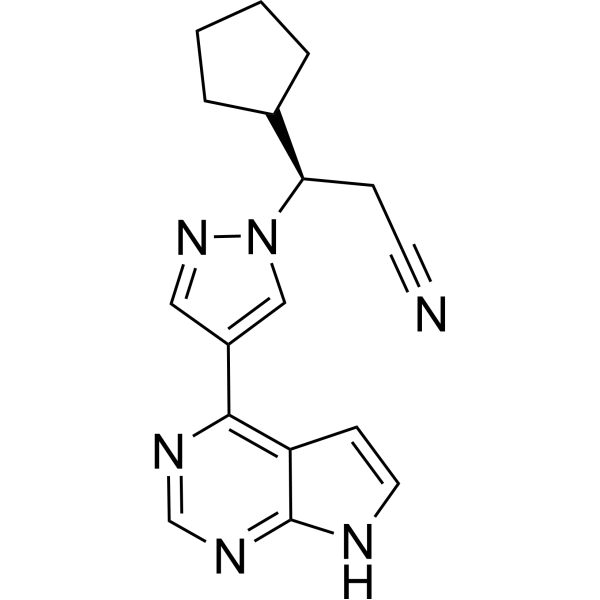
Ruxolitinib -
HY-15141
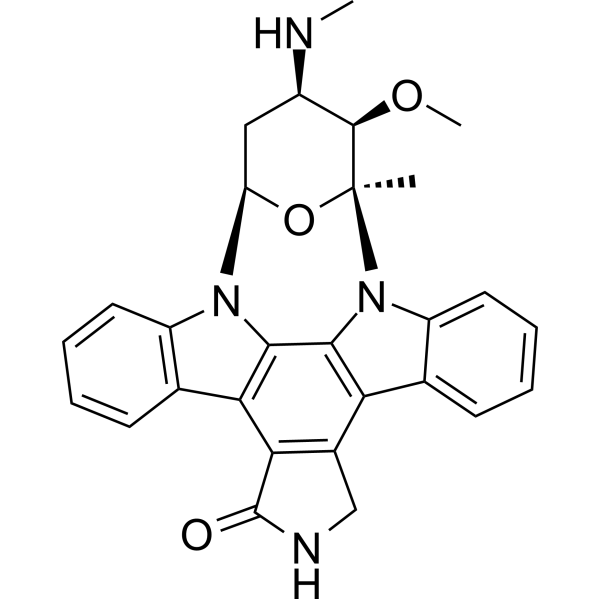
Staurosporine


Biological Activity
Description
IFN-beta is a secretory cytokine produced by cells under viral infection or nucleic acid stimulation. IFNβ binds to cell surface heterodimeric receptors (IFNAR1/IFNAR2), activates the JAK-STAT signaling pathway, and induces the expression of interferon-stimulated genes (ISGs) (such as PKR, 2'5'-OAS). IFN-beta inhibits viral proliferation, regulates immune responses (such as inhibiting Th1 cell polarization, reducing pro-inflammatory cytokine secretion), inhibits the proliferation of vascular smooth muscle cells and tumor cells. IFN-beta has anti-atherosclerotic and vascular remodeling effects. IFN-beta Protein, Human (CHO) is a recombinant interferon-beta protein (CHO), expressed by CHO, without a tag.
Background
IFN-beta belongs to the type I interferon family[2][3][7]. IFN-beta is a secreted cytokine produced by cells in response to viral infection or nucleic acid stimulation[2][5][7]. IFN-beta binds to cell surface heterodimeric receptors (IFNAR1/IFNAR2), activates the JAK-STAT signaling pathway, and induces the expression of interferon-stimulated genes (ISGs) (such as PKR, 2'5'-OAS)[2][3][4][7]. IFN-beta inhibits viral proliferation, regulates immune responses (such as inhibiting Th1 cell polarization and reducing the secretion of pro-inflammatory cytokines), inhibits the proliferation of vascular smooth muscle cells and tumor cells. IFN-beta has anti-atherosclerotic and vascular remodeling effects[2][5][6][7]. IFN-beta is expressed in tissues such as the spleen, lungs, and kidneys, as well as in vascular endothelial cells and immune cells[5][7]. IFN-beta, Human is a 166-amino acid protein with 35% sequence identity to the consensus sequence of IFN-α and 50% sequence identity to murine IFN-β (muIFN-β)[8].
In Vitro
IFN-beta Protein, Human (10 U/mL; 48-96 h) inhibits bFGF mRNA and protein expression in a cell density-dependent manner in human renal cell carcinoma SN12PM6 cells[5].
In Vivo
IFN-beta Protein, Human (25 μg; i.p.; 3 times; days 1, 3, and 10) induces T cell proliferative responses to human IFNβ in BALB/cByJ mice[4].
Verified Bioactivity
1.Measured in antiviral assays using WISH cells infected with vesicular stomatitis virus and the ED50 is 1-20 pg/mL.
2.Determined by a cytotoxicity assay using human TF-1 cells. The ED50 for this effect is <0.1 ng/mL, corresponding to a specific activity of >1 x 10⁷ units/mg.
MCE Validation Data
-
Purity - SDS-PAGE
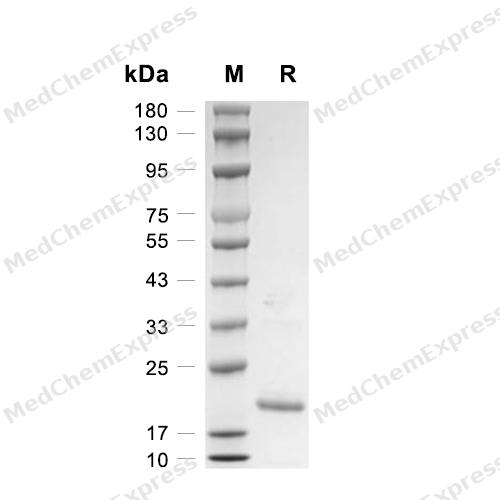
Purity - SDS-PAGE
-
Bioactivity - Cell-Based Assay
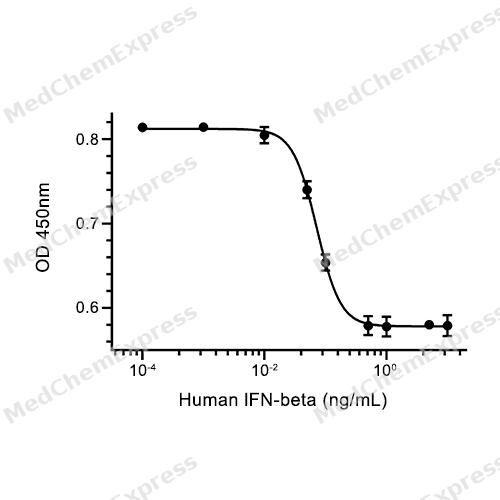
Bioactivity - Cell-Based Assay


Publications (6)
-
Journal Impact Factor
-
Most Recent
-
Immunity
Spatiotemporal dynamics of CXCL10 encode contextual immune information revealed by the genetically encoded fluorescent sensor. [Abstract]2025 Sep 9;58(9):2320-2335.e9. PMID: 40818452 -
Cell Rep Med
Interferon-responsive HEVs drive tumor tertiary lymphoid structure formation and predict immunotherapy response in nasopharyngeal carcinoma. [Abstract]2025 Jul 15;6(7):102200. PMID: 40543508 -
Cell Rep
4-octyl itaconate inhibits cytokine-mediated inflammation via alkylation of TYK2 and JAK1. [Abstract]2026 Mar 30;45(4):117179. PMID: 41915469 -
Anal Chem
The Dual Nondestructive Amplification Strategy Realizes the Ultrasensitive Detection of Soluble TRAIL in Human Plasma. [Abstract]2025 Nov 18;97(45):25295-25303. PMID: 41195534 -
Int J Mol Sci
African Swine Fever Virus pD345L Suppresses JAK-STAT Signaling by Selectively Triggering STAT1 Degradation. [Abstract]2026 Jun 5;27(11):5116. PMID: 42278638 -
Int Immunopharmacol
HERC5 induces podocyte injury in LN by mediated IRF3 ISGylation to promote the production and overactivation of IFN-β in podocytes. [Abstract]2025 Aug 28:161:115059. PMID: 40505230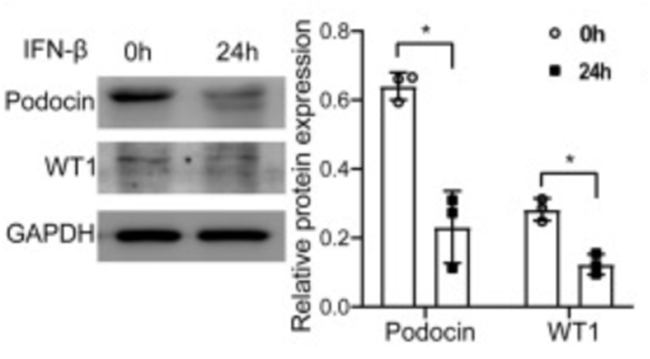
IFN-beta Protein, Human (CHO) purchased from MedChemExpress. Usage Cited in: Int Immunopharmacol. 2025 Aug 28:161:115059. [Abstract]
HPCs were treated with IFN-β1(IFN-β, 1 ng/ml) for 24 h. Representative western blot images and quantitation of Podocin and WT1.
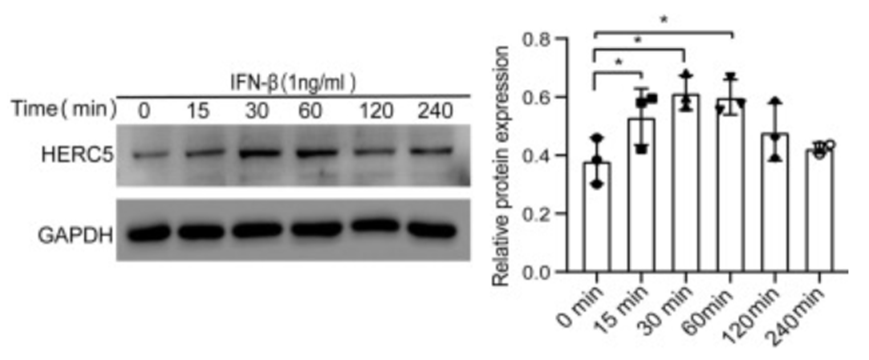
IFN-beta Protein, Human (CHO) purchased from MedChemExpress. Usage Cited in: Int Immunopharmacol. 2025 Aug 28:161:115059. [Abstract]
Representative western blot images and quantitation of HERC5 treated with IFN-β (1 ng/ml) for 15 min, 30 min, 60 min, 120 min, 240 min.
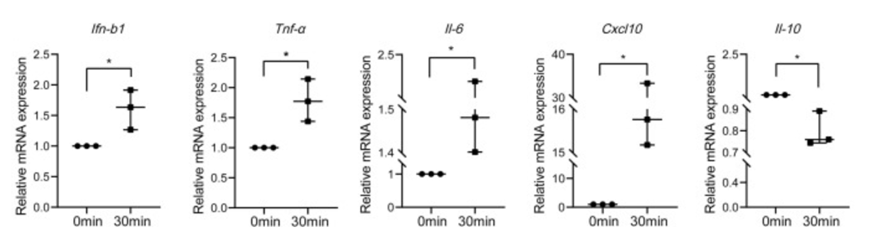
IFN-beta Protein, Human (CHO) purchased from MedChemExpress. Usage Cited in: Int Immunopharmacol. 2025 Aug 28:161:115059. [Abstract]
Real time qPCR showing mRNA levels of Ifn-b1, Tnf-α, Il-6, Cxcl10 and Il-10 treated with IFN-β (1 ng/ml) for 30 min. GAPDH was used for normalization. n = 3 independent experiments.
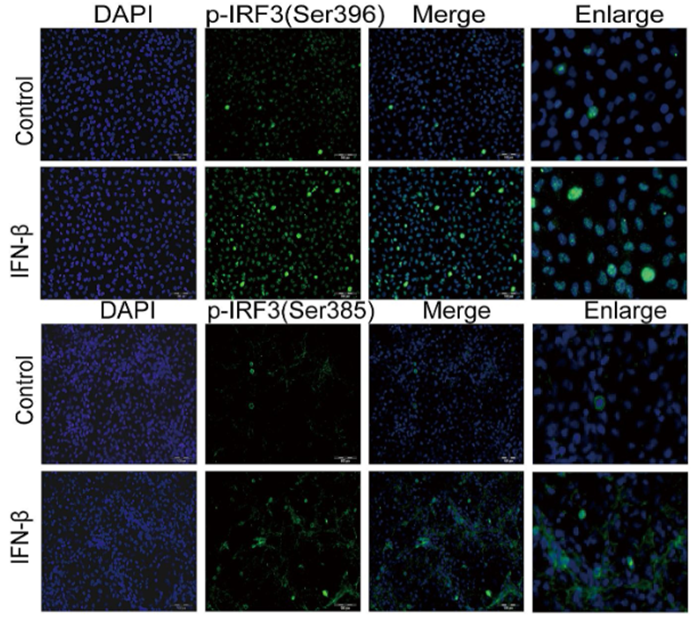
IFN-beta Protein, Human (CHO) purchased from MedChemExpress. Usage Cited in: Int Immunopharmacol. 2025 Aug 28:161:115059. [Abstract]
The localization and expression of p-IRF3 (Ser385) and p-IRF3 (Ser396) in HPCs was detected by IF treated with IFN-β (1 ng/ml) for 30 min
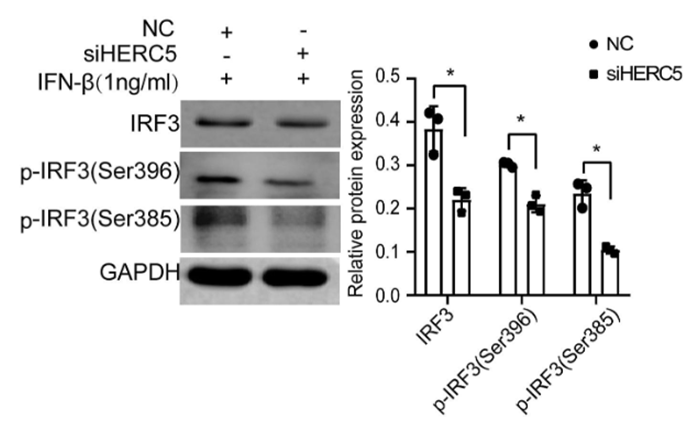
IFN-beta Protein, Human (CHO) purchased from MedChemExpress. Usage Cited in: Int Immunopharmacol. 2025 Aug 28:161:115059. [Abstract]
Representative western blot images and quantitation of HERC5, p-IRF3 (Ser385), p-IRF3 (Ser396) and total IRF3 levels in HPCs pretreated with NC and siHERC5 and treated with IFN-β (1 ng/ml) for 30 min.


Technical Parameters
-
Species Human
-
Source CHO
-
Tag Tag Free
-
Accession
P01574 (M22-N187)
-
Molecular Construction
-
N-term
-
IFN-beta (M22-N187)
Accession # P01574 -
C-term
-
-
Protein Length
Full Length of Mature Protein
-
Synonyms
IFNB1; IFF; Prev. IFNB; Fibroblast Interferon; IFB; IFN-Beta; Interferon Beta; Interferon-Beta; Interferon Beta 1; Interferon, Beta 1, Fibroblast
-
AA Sequence
MSYNLLGFLQRSSNFQCQKLLWQLNGRLEYCLKDRMNFDIPEEIKQLQQFQKEDAALTIYEMLQNIFAIFRQDSSSTGWNETIVENLLANVYHQINHLKTVLEEKLEKEDFTRGKLMSSLHLKRYYGRILHYLKAKEYSHCAWTIVRVEILRNFYFINRLTGYLRN
-
Predicted Molecular Mass
20 kDa
-
Molecular Weight
Approximately 20-23 kDa, based on SDS-PAGE under reducing conditions.
-
Glycosylation
Yes
-
Purity
≥ 95%, as determined by reducing SDS-PAGE.


Product Properties
Lyophilized powder
1. Lyophilized from a 0.22 μm filtered solution of acetate buffer solution 5% trehalose, 5% mannitol, 0.01% Tween-80.
2. Lyophilized from a 0.22 μm filtered solution of PBS, pH 7.4, 8% trehalose.
3. Lyophilized from a 0.22 μm filtered solution of PBS, pH 7.4.
4. Lyophilized from a 0.22 μm filtered solution of 40 mM Arg, 0.12 mg/ml DL-Methionine, 146 mg/ml sucrose, 0.1% PF68, pH 4.5, 5% trehalose, 5% mannitol, 0.01% Tween-80.
5. Lyophilized from a 0.22 μm filtered solution of 10 mM NaAC, 40 mM Arg, 0.12 mg/ml DL-Methionine, 146 mg/ml sucrose, 0.1% PF68, pH 4.5, 5% trehalose, 5% mannitol, 0.01% Tween-80
.
Please refer to the lot-specific COA for specific buffer information.
<1 EU/μg, determined by LAL method.
It is not recommended to reconstitute to a concentration less than 100 μg/mL in ddH2O.
Stored at -20°C for 2 years from date of receipt. After reconstitution, it is stable at 4°C for 1 week or -20°C for longer (with carrier protein). It is recommended to freeze aliquots at -20°C or -80°C for extended storage.
Room temperature in continental US; may vary elsewhere.


Documentation
-
Data Sheet (265 KB)
-
SDS (252 KB)
- English - EN (252 KB)
- Français - FR (252 KB)
- Deutsch - DE (252 KB)
- Norwegian - NO (252 KB)
- Español - ES (252 KB)
- Swedish - SV (252 KB)
- Italian - IT (252 KB)
- Korean - KR (252 KB)
- Portuguese - PT (252 KB)
-
Handling Instructions (2659 KB)


References
[1]. Jeannin S, et al. Response to interferon-Beta treatment in afro-caribbeans with multiple sclerosis. Mult Scler Int. 2011;2011:950126. [Content Brief]
[2]. Stübgen JP. Recombinant interferon-beta therapy and neuromuscular disorders. J Neuroimmunol. 2009 Jul 25;212(1-2):132-41. [Content Brief]
[4]. Yeung VP, et al. Elimination of an immunodominant CD4+ T cell epitope in human IFN-beta does not result in an in vivo response directed at the subdominant epitope. J Immunol. 2004 Jun 1;172(11):6658-65. [Content Brief]
[5]. Singh R, et al. Cell density-dependent modulation of basic fibroblast growth factor expression by human interferon-beta. Int J Oncol. 1996 Apr;8(4):649-56. [Content Brief]
[6]. Fraser-Smith EB, et al. Enhanced efficacy of the acyclic nucleoside 9-(1,3-dihydroxy-2-propoxymethyl)guanine in combination with beta-interferon against herpes simplex virus type 2 in mice. Antimicrob Agents Chemother. 1984 May;25(5):563-5. [Content Brief]
[7]. Zhang LN, et al. Interferon-beta attenuates angiotensin II-accelerated atherosclerosis and vascular remodeling in apolipoprotein E deficient mice. Atherosclerosis. 2008 Mar;197(1):204-11. [Content Brief]
[8]. Karpusas M, et al. The crystal structure of human interferon beta at 2.2-A resolution. Proc Natl Acad Sci U S A. 1997 Oct 28;94(22):11813-8. [Content Brief]

Calculators
Concentration (start) × Volume (start) = Concentration (final) × Volume (final)


 Powered by Bioz

