



Glasdegib
Based on 5 publication(s) in Google Scholar
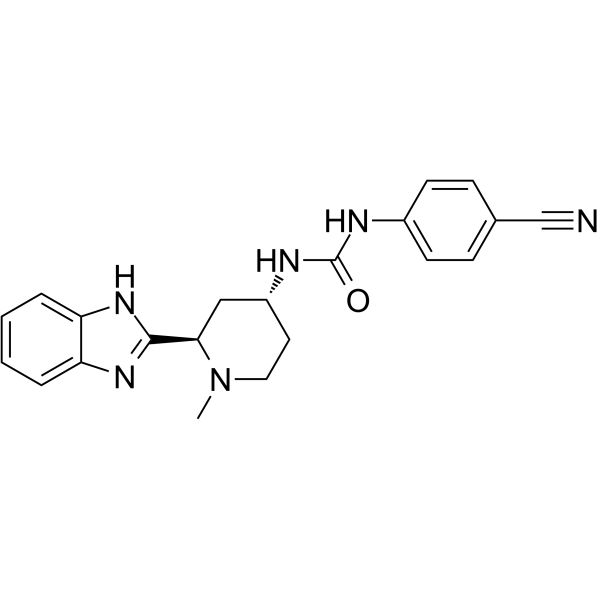
Glasdegib (PF-04449913) is a potent and orally bioavailable smoothened inhibitor. Glasdegib (PF-04449913) binds to human SMO (amino acids 181-787) with an IC50 of 4 nM.
For research use only. We do not sell to patients.
- Purity : 99.65%
- CAS No.: 1095173-27-5
- Formula: C21H22N6O
- Molecular Weight:374.44
-
Storage:
4°C, protect from light
* In solvent : -80°C, 2 years; -20°C, 1 year (protect from light)

To place orders, for customer services and technical support, please contact: MedChemExpress USA
Tel: 609-228-6898 E-mail: [email protected] [email protected]


-
 Biological Activity
-
Chemical Information
-
Solvent & Solubility
- Protocol
- Purity & Documentation
- References
-
 Help & FAQs


-
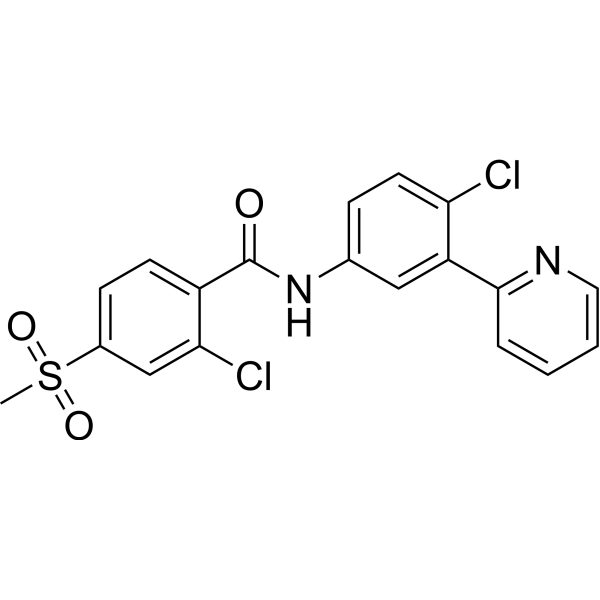
HY-10440
VismodegibHedgehog Inhibitor -
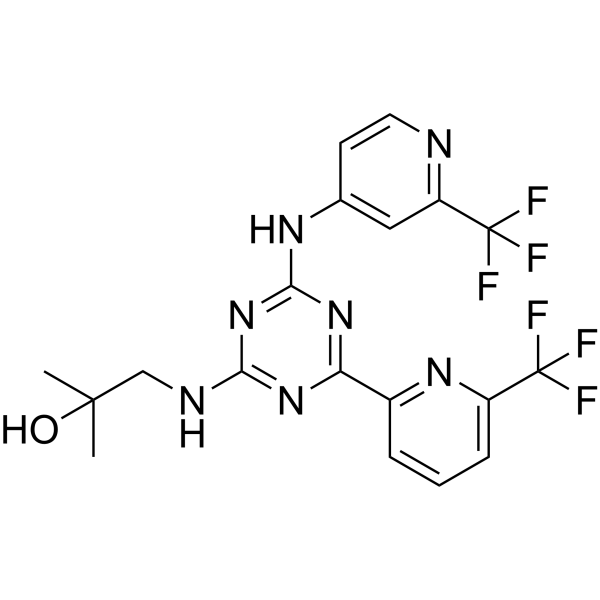
HY-18690
EnasidenibMutant IDH2 Inhibitor -
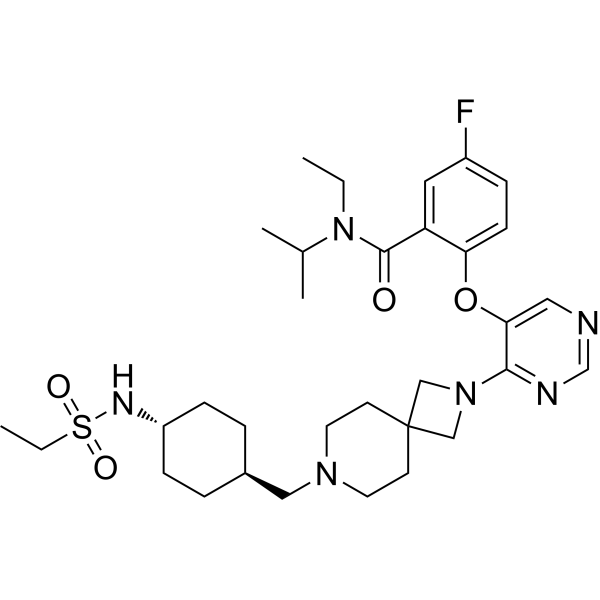
HY-136175
RevumenibMenin-MLL Inhibitor -
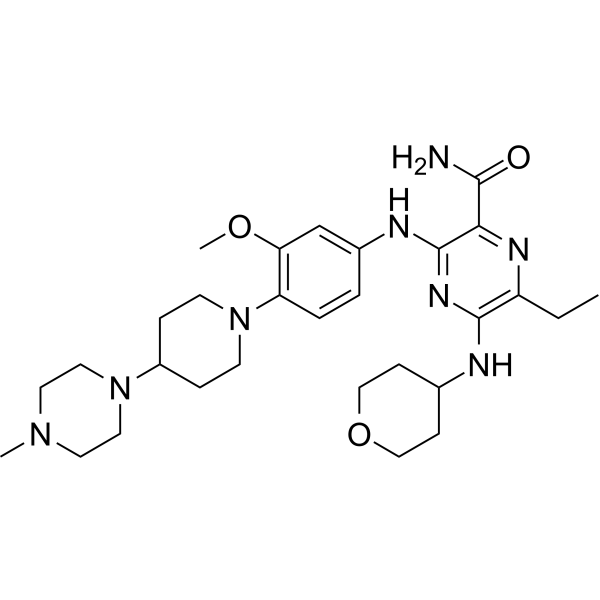
HY-12432
GilteritinibFLT3/AXL Inhibitor -
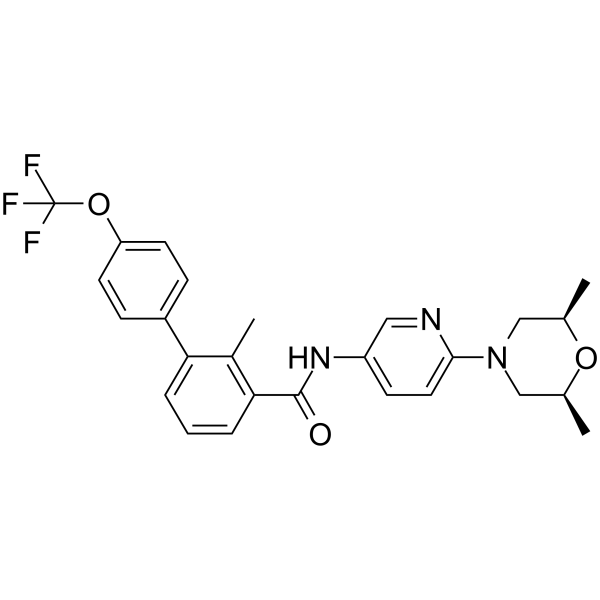
HY-16582A
SonidegibSmo Antagonist -
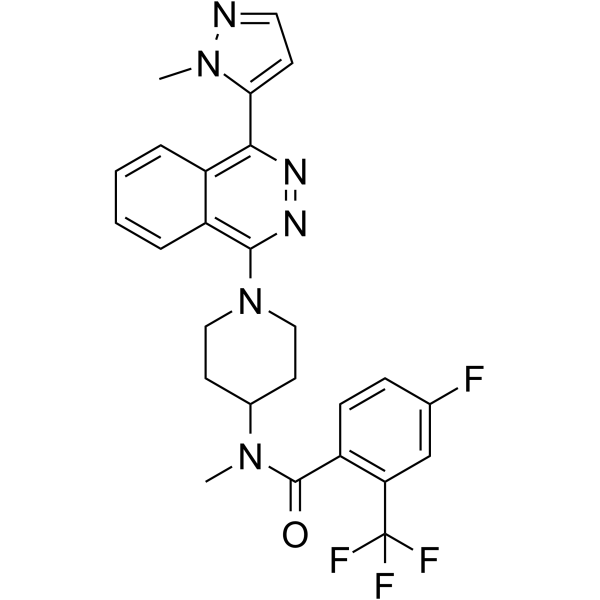
HY-13242
TaladegibSMO Antagonist -
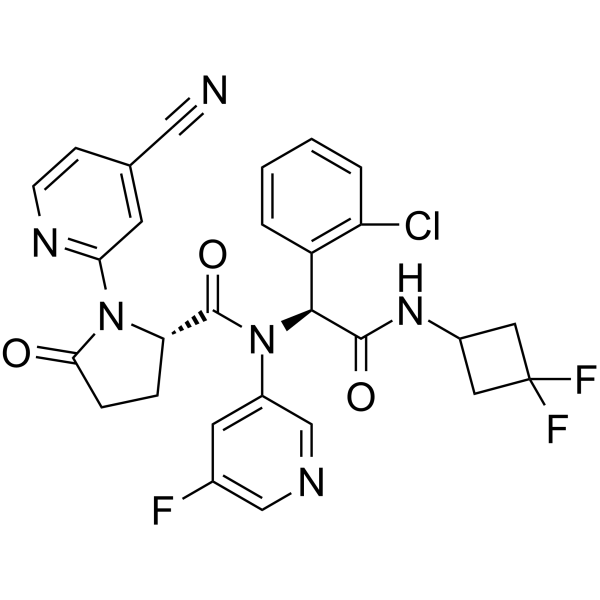
HY-18767
IvosidenibIDH1 Inhibitor -
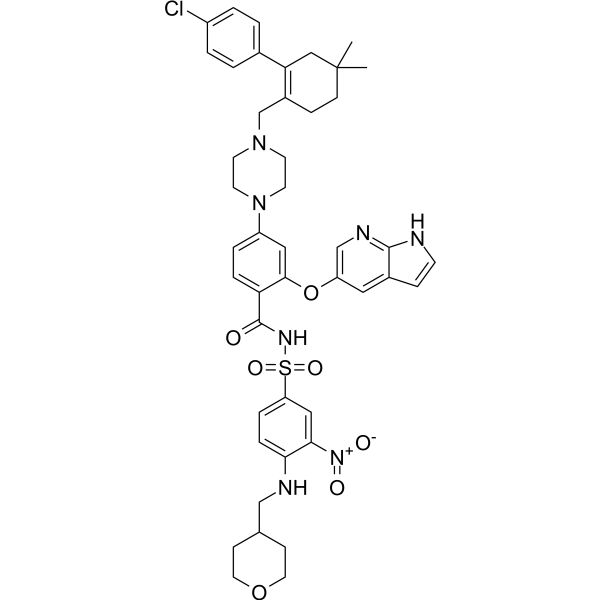
HY-15531
VenetoclaxBCL-2 Inhibitor -
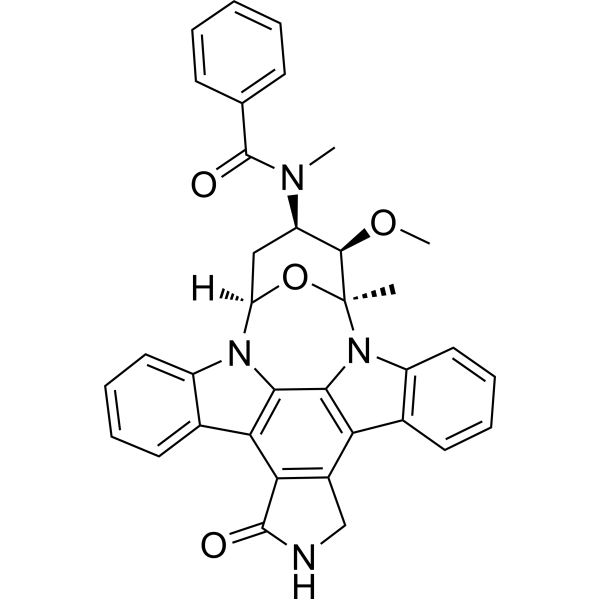
HY-10230
MidostaurinMulti-targeted Protein Kinase Inhibitor -
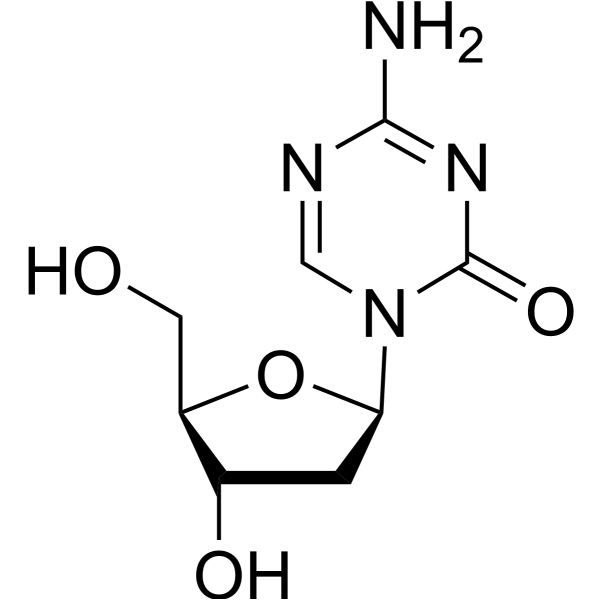
HY-A0004
DecitabineDNMT Inhibitor -
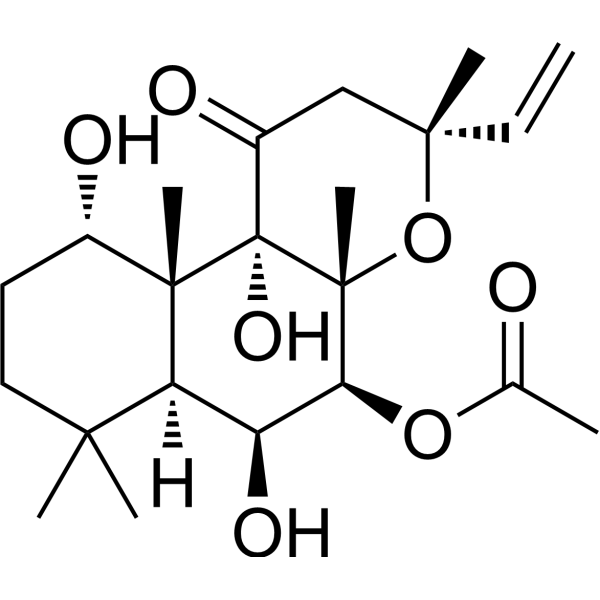
HY-15371
ForskolinAdenylate Cyclase Activator -
HY-10261
AfatinibEGFR/HER2 Inhibitor
Publications Citing Use of MedChemExpress (MCE) Glasdegib
More

Biological Activity
Description
IC50 & Target
IC50: 4 nM (Smo)[1]
Cellular Effect
|
Cell Line

|
Type | Value | Description | References |
|---|---|---|---|---|
| C3H 10T1/2 | IC50 |
5 nM
Compound: 26, PF-04449913, diastereomer
|
Inhibition of Smo in mouse C3H10T1/2 cells using human recombinant SHH assessed as effect on SMO/SHH transient transcriptional activation after 20 hrs by Gli-luciferase reporter assay
Inhibition of Smo in mouse C3H10T1/2 cells using human recombinant SHH assessed as effect on SMO/SHH transient transcriptional activation after 20 hrs by Gli-luciferase reporter assay
|
[PMID: 24900436] |
In Vitro
Glasdegib (PF-04449913) inhibits sonic hedgehog (Shh) stimulated luciferase expression in mouse embryonic fibroblasts with an IC50 of 6.8 nM; and significantly reduces medulloblastoma growth in a Ptch1+/-p53+/- allograft model at doses that decreased murine Shh target gene expression. In stromal co-culture experiments, FACS analysis demonstrates a significant reduction in BC LSC by Glasdegib (PF-04449913) when compared with normal progenitors. Importantly, human BC LSC engrafted RAG2-/-γC-/- mice treated daily with Glasdegib (PF-04449913) compared with vehicle treated controls have a significant spleen weight reduction (p=0.006). This reduction in leukemic burden corresponded with decreased GLI2 protein expression, as determined by both nanoproteomic analysis of FACS purified human progenitors and GLI2 confocal fluorescence microscopic analysis of splenic sections[1].
MedChemExpress (MCE) has not independently confirmed the accuracy of these methods. They are for reference only.
In Vivo
MedChemExpress (MCE) has not independently confirmed the accuracy of these methods. They are for reference only.
Clinical Trial
| NCT Number | Sponsor | Condition | Start Date |
Phase
|
|---|---|---|---|---|
| NCT01329991 | Plexxikon| | 2011-05 | PHASE1 |


Chemical Information
-
CAS No. 1095173-27-5
-
Appearance Solid
-
Molecular Weight 374.44
-
Formula C21H22N6O
-
Color White to off-white
-
SMILES
O=C(NC1=CC=C(C#N)C=C1)N[C@H]2C[C@H](C3=NC4=CC=CC=C4N3)N(C)CC2
-
Synonyms
PF-04449913
-
Shipping
Room temperature in continental US; may vary elsewhere.
-
Storage
4°C, protect from light
* In solvent : -80°C, 2 years; -20°C, 1 year (protect from light)


Publications (5)
-
Journal Impact Factor
-
Most Recent
-
-
Molecules
Development and Validation of a Rapid LC-MS/MS Method for Quantifying Alvocidib: In Silico and In Vitro Metabolic Stability Estimation in Human Liver Microsomes. [Abstract]2023 Mar 4;28(5):2368. PMID: 36903615 -
-
-
Methods Mol Biol
2018:1711:351-398. PMID: 29344898


Solvent & Solubility
In Vitro:
DMSO : 62.5 mg/mL (166.92 mM; ultrasonic and warming and heat to 60°C; Hygroscopic DMSO has a significant impact on the solubility of product, please use newly opened DMSO)
Please refer to the solubility information to select the appropriate solvent. Once prepared, please aliquot and store the solution to prevent product inactivation from repeated freeze-thaw cycles.
Storage method and period of stock solution: -80°C, 2 years; -20°C, 1 year (protect from light). When stored at -80°C, please use it within 2 years. When stored at -20°C, please use it within 1 year.
Please refer to the solubility information to select the appropriate solvent. Once prepared, please aliquot and store the solution to prevent product inactivation from repeated freeze-thaw cycles.
Storage method and period of stock solution: -80°C, 2 years; -20°C, 1 year (protect from light). When stored at -80°C, please use it within 2 years. When stored at -20°C, please use it within 1 year.
Concentration (start) × Volume (start) = Concentration (final) × Volume (final)
In Vivo:
Select the appropriate dissolution method based on your experimental animal and administration route.
- For the following dissolution methods, please ensure to first prepare a clear stock solution using an In Vitro approach and then sequentially add co-solvents:
- To ensure reliable experimental results, the clarified stock solution can be appropriately stored based on storage conditions. As for the working solution for In Vivo experiments, it is recommended to prepare freshly and use it on the same day.
- The percentages shown for the solvents indicate their volumetric ratio in the final prepared solution. If precipitation or phase separation occurs during preparation, heat and/or sonication can be used to aid dissolution.
Add each solvent one by one: 10% DMSO 40% PEG300 5% Tween-80 45% Saline
Solubility: ≥ 2.08 mg/mL (5.55 mM); Clear solution
This protocol yields a clear solution of ≥ 2.08 mg/mL (saturation unknown).
Taking 1 mL working solution as an example, add 100 μL DMSO stock solution (20.8 mg/mL) to 400 μL PEG300, and mix evenly; then add 50 μL Tween-80 and mix evenly; then add 450 μL Saline to adjust the volume to 1 mL.
Preparation of Saline: Dissolve 0.9 g sodium chloride in ddH₂O and dilute to 100 mL to obtain a clear Saline solution.
Add each solvent one by one: 10% DMSO 90% (20% SBE-β-CD in Saline)
Solubility: ≥ 2.08 mg/mL (5.55 mM); Clear solution
This protocol yields a clear solution of ≥ 2.08 mg/mL (saturation unknown).
Taking 1 mL working solution as an example, add 100 μL DMSO stock solution (20.8 mg/mL) to 900 μL 20% SBE-β-CD in Saline, and mix evenly.
Preparation of 20% SBE-β-CD in Saline (4°C, storage for one week): 2 g SBE-β-CD powder is dissolved in 10 mL Saline, completely dissolve until clear.
In Vivo Dissolution Calculator
Please enter the basic information of animal experiments:
-
-
-
-
Recommended: Prepare an additional quantity of animals to account for potential losses during experiments.
Please enter your animal formula composition:
-
%DMSO +
Recommended: Keep the proportion of DMSO in working solution below 2% if your animal is weak.
-
%+
-
+%Tween-80 + +
-
%Saline +
The co-solvents required include: DMSO, . All of co-solvents are available by MedChemExpress (MCE). , Tween 80. All of co-solvents are available by MedChemExpress (MCE).
Working solution concentration: 0.22 mg/mL
Method for preparing stock solution: mg drug dissolved in μL DMSO. Stock solution concentration: mg/mL. * In solvent : -80°C, 2 years; -20°C, 1 year (protect from light)
1. Take μL DMSO stock solution;
2. Add μL .
μL , mix evenly;
3. Then add μL Tween 80, mix evenly;
4. Then add μL
Please ensure that the stock solution in the first step is dissolved to a clear state, and add co-solvents in sequence. You can use ultrasonic heating (ultrasonic cleaner, recommended frequency 20-40 kHz), vortexing, etc. to assist dissolution.

Protocol
Cell Assay[1]
Normal or BC CML CD34+ cells are treated with vehicle, Glasdegib (PF-04449913) (1 μM), BMS-354825 (50 nM), or combination treatment. Mouse bone marrow stromal cell lines, M2-10B4 (M2) and SL/SL (SL) are plated in a 1:1 mixture at a total concentration of 100,000 cells/mL one day prior to co-culture with 10,000-20,000 CD34+ BC CML or normal progenitors. After 1 week of culture, progenitors are FACS sorted into hematopoietic progenitor assays and colonies are scored at 14 days. To assess survival of normal human hematopoietic stem and progenitor cells, irradiated (20 Gray) OP9 (M2 clone) stromal cells are co-cultured with 50,000 human CD34+ cord blood cells, vehicle or Glasdegib (PF-04449913) in AlphaMEM with 20% Hyclone FBS, 1% pen strep glutamine and supplemented with 50 ng/mL SCF, 10 ng/mL thrombopoietin, and 10 ng/mL Flt3 and quantified by weekly FACS analysis[1].
MedChemExpress (MCE) has not independently confirmed the accuracy of these methods. They are for reference only.
Animal Administration[1]
Mice[1]
RAG2-/-c-/- mice are transplanted intrahepatically with equal numbers of normal progenitors or BC LSC. Upon detection of human CD45+ cell peripheral blood engraftment, mice are treated daily by oral gavage with vehicle (50% 1,2 Propandiol, 50% HBSS or methylcellulose), Glasdegib (100 mg/kg), BMS-354825 (50 mg/kg), or the combination for 14 days followed by FACS to quantify human engraftment in hematopoietic niches. To assess effects on normal HSC function, 7 to 10 week old NOD. Cg-PrkdcSCID IL2R1Wjl/SzJ mice are sublethally irradiated, transplanted retro-orbitally with 100,000 CD34+ human cord blood cells and treated 8 weeks later with vehicle or Glasdegib (100 mg/kg) for 14 days followed by FACS engraftment analysis.
MedChemExpress (MCE) has not independently confirmed the accuracy of these methods. They are for reference only.


Purity & Documentation
-
Data Sheet (283 KB)
-
SDS (393 KB)
- English - EN (393 KB)
- Français - FR (393 KB)
- Deutsch - DE (393 KB)
- Norwegian - NO (393 KB)
- Español - ES (393 KB)
- Swedish - SV (393 KB)
- Italian - IT (393 KB)
- Korean - KR (393 KB)
- Portuguese - PT (393 KB)
-
Handling Instructions (2659 KB)
References


Complete Stock Solution Preparation Table
Please refer to the solubility information to select the appropriate solvent. Once prepared, please aliquot and store the solution to prevent product inactivation from repeated freeze-thaw cycles.
Storage method and period of stock solution: -80°C, 2 years; -20°C, 1 year (protect from light). When stored at -80°C, please use it within 2 years. When stored at -20°C, please use it within 1 year.
| Optional Solvent | Concentration Solvent Mass | 1 mg | 5 mg | 10 mg | 25 mg |
|---|---|---|---|---|---|
| DMSO | 1 mM | 2.6707 mL | 13.3533 mL | 26.7065 mL | 66.7664 mL |
| 5 mM | 0.5341 mL | 2.6707 mL | 5.3413 mL | 13.3533 mL | |
| 10 mM | 0.2671 mL | 1.3353 mL | 2.6707 mL | 6.6766 mL | |
| 15 mM | 0.1780 mL | 0.8902 mL | 1.7804 mL | 4.4511 mL | |
| 20 mM | 0.1335 mL | 0.6677 mL | 1.3353 mL | 3.3383 mL | |
| 25 mM | 0.1068 mL | 0.5341 mL | 1.0683 mL | 2.6707 mL | |
| 30 mM | 0.0890 mL | 0.4451 mL | 0.8902 mL | 2.2255 mL | |
| 40 mM | 0.0668 mL | 0.3338 mL | 0.6677 mL | 1.6692 mL | |
| 50 mM | 0.0534 mL | 0.2671 mL | 0.5341 mL | 1.3353 mL | |
| 60 mM | 0.0445 mL | 0.2226 mL | 0.4451 mL | 1.1128 mL | |
| 80 mM | 0.0334 mL | 0.1669 mL | 0.3338 mL | 0.8346 mL | |
| 100 mM | 0.0267 mL | 0.1335 mL | 0.2671 mL | 0.6677 mL |


Glasdegib Related Classifications
HY-16391 Related Classifications
 Powered by Bioz