230 Results for "

2-(2-Chlorophenyl)-2-hydroxycyclohexanone

" in MedChemExpress (MCE) Product Catalog:
Products (230)

230 Results for "2-(2-Chlorophenyl)-2-hydroxycyclohexanone" in MCE Product Catalog:

Cat. No.: HY-P3293
CAS No.: 906547-89-5
Synonyms: POL6014
Target:  

Elastase

Research Areas:  

Inflammation/Immunology

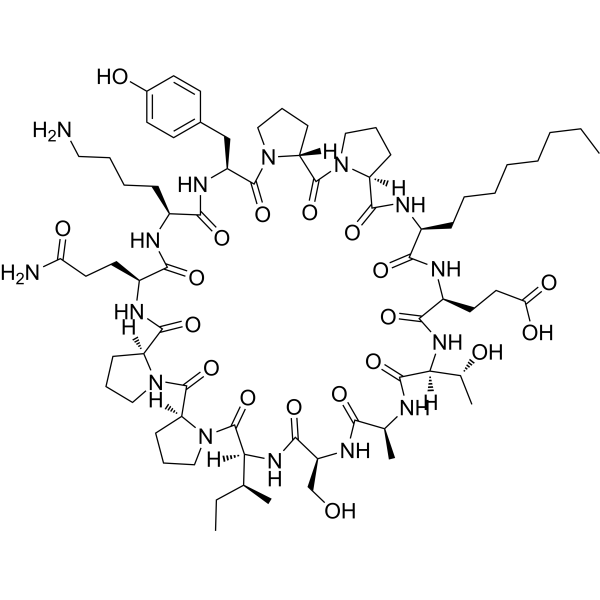
Lonodelestat (POL6014) is a potent, orally active and selective peptide inhibitor of human neutrophil elastase (hNE). Lonodelestat (POL6014) has the potential for the research of cystic fibrosis (CF) .
loading...
    loading...
Cat. No.: HY-P3350
CAS No.: 2892148-58-0
Target:  

Bacterial

Research Areas:  

Infection

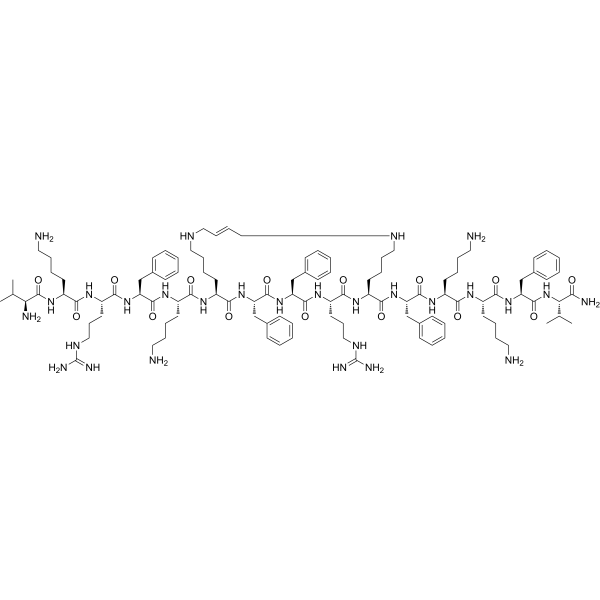
LS-BF1 is a stable and low toxic cationic antimicrobial peptide. LS-BF1 displays broad spectrum of antibacterial activity, including the challenging ESKAPE pathogens, by cell membrane disruptive mechanism. LS-BF1 shows good in vivo efficacy for elimination of bacteria in a mouse infection model[1].
loading...
    loading...
Cat. No.: HY-P0036A
CAS No.: 1607842-55-6
Synonyms: SMS 201-995 dihydrochloride
Octreotide (SMS 201-995) hydrochloride is a somatostatin receptor agonist and synthetic octapeptide endogenous somatostatin analogue. Octreotide hydrochloride can bind to the somatostatin receptors which are mainly subtypes 2, 3 and 5. Octreotide hydrochloride increases Gi activity and reduces intracellular cAMP production. Octreotide hydrochloride has antitumor activity, mediates apoptosis and may also be used in disease studies in acromegaly .
loading...
    loading...
Cat. No.: HY-P4910
CAS No.: 1622872-91-6
Target:  

Proteasome Apoptosis

Research Areas:  

Cancer

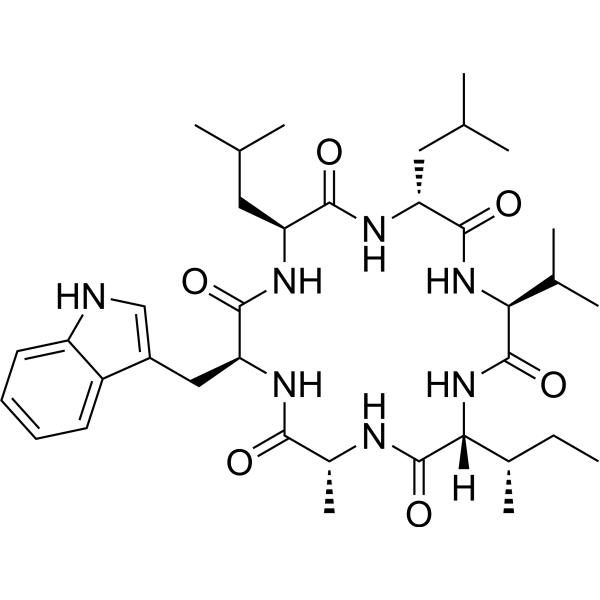
Baceridin is a proteasome inhibitor and a cyclic hexapeptide. Baceridin can be isolated from the culture medium of Epiphytic Bacillus. Baceridin can inhibit cell cycle progression and induce tumor cell apoptosis through a p53-independent pathway. Baceridin can be used in cancer research .
loading...
    loading...
Cat. No.: HY-P5098
CAS No.: 250612-47-6
Target:  

Integrin

Research Areas:  

Neurological Disease Cancer

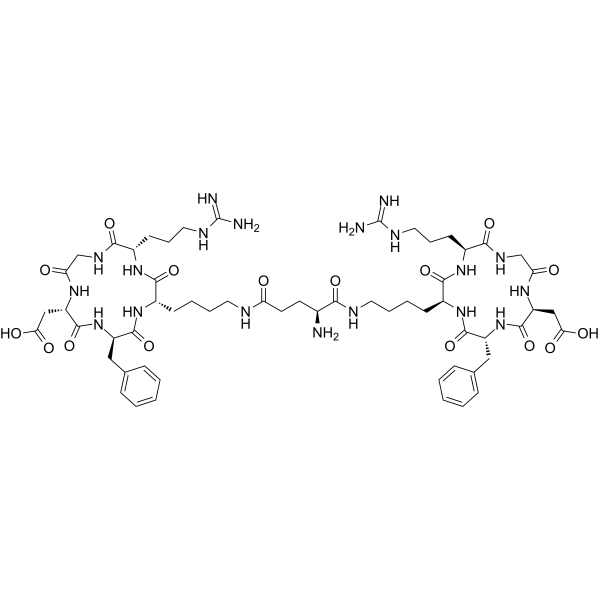
E (c (RGDfK)) 2 is a αvβ3 integrin ligand and tumor-targeting agent. E (c (RGDfK)) 2 binds to αvβ3 integrin, mediates receptor-mediated endocytosis of conjugated payloads, and inhibits integrin-dependent cell adhesion to fibrinogen. E (c (RGDfK)) 2 inhibits the proliferation of cancer cells and endothelial cells. E (c (RGDfK)) 2 preferentially accumulates in orthotopic mouse breast tumors and human ovarian cancer xenograft tumors. E (c (RGDfK)) 2 can be used in research related to glioblastoma, lung cancer, breast adenocarcinoma and ovarian cancer .
loading...
    loading...
Cat. No.: HY-P10051
CAS No.: 1782098-79-6
Target:  

Ras Raf

Research Areas:  

Cancer

Cyclorasin 9A5 is an 11-residue cell-permeable cyclic peptide that orthosterically inhibits the Ras-Raf protein interaction with an IC50 of 120 nM .
loading...
    loading...
Cat. No.: HY-P10051A
Target:  

Ras Raf

Research Areas:  

Cancer

Cyclorasin 9A5 TFA is an 11-residue cell-permeable cyclic peptide that orthosterically inhibits the Ras-Raf protein interaction with an IC50 of 120 nM .
loading...
    loading...
Cat. No.: HY-P10203
Target:  

Opioid Receptor

Research Areas:  

Inflammation/Immunology

μ/κ/δ opioid receptor agonist 1 is a μ opioid receptor (MOR), κ opioid receptor (KOR), and δ opioid receptor (DOR) agonist. μ/κ/δ opioid receptor agonist 1 produces a strong and long-lasting analgesic effect through peripheral MOR and KOR in the tail-flick test .
loading...
    loading...
Cat. No.: HY-P10588
CAS No.: 151928-32-4
Target:  

Neurokinin Receptor

Research Areas:  

Others

WIN 66306 is a cyclic heptapeptide that can be isolated from an Aspergillus species. WIN 66306 is a neurokinin antagonist with antagonistic effects on both NK1 and NK2 receptors .
loading...
    loading...
Cat. No.: HY-P10644
CAS No.: 1831064-63-1
Target:  

Fluorescent Dye

Research Areas:  

Cancer

CPP9 is a small, amphipathic, cyclic cell penetrating peptide (CPP). CPPs bind directly to the plasma membrane phospholipids and enter mammalian cells via endocytosis, followed by efficient release from the endosome. CPP9 can be used for intracellular delivery of therapeutic agents and chemical probes .
loading...
    loading...
Cat. No.: HY-P10644A
Target:  

Inhibitory Antibodies

Research Areas:  

Cancer

CPP9 TFA is a small, amphipathic, cyclic cell penetrating peptide (CPP). CPPs bind directly to the plasma membrane phospholipids and enter mammalian cells via endocytosis, followed by efficient release from the endosome. CPP9 TFA can be used for intracellular delivery of therapeutic agents and chemical probes .
loading...
    loading...
Cat. No.: HY-P11824
Research Areas:  

Cancer

CoA-C2-SGRGK-cCPP is a NatD (NAA40) bisubstrate inhibitor with an IC50 of 78 nM and a Ki of 39 nM. CoA-C2-SGRGK-cCPP competitively targets the peptide substrate binding site and noncompetitively targets the CoA binding site of NatD to block acetyltransferase activity. CoA-C2-SGRGK-cCPP reduces cellular Nα-acetylation on histone H4, modulates EMT marker expression. CoA-C2-SGRGK-cCPP can be used for the research of non-small cell lung cancer .
loading...
    loading...
Cat. No.: HY-P11888
CAS No.: 1886065-39-9
Target:  

PD-1/PD-L1

Research Areas:  

Cancer

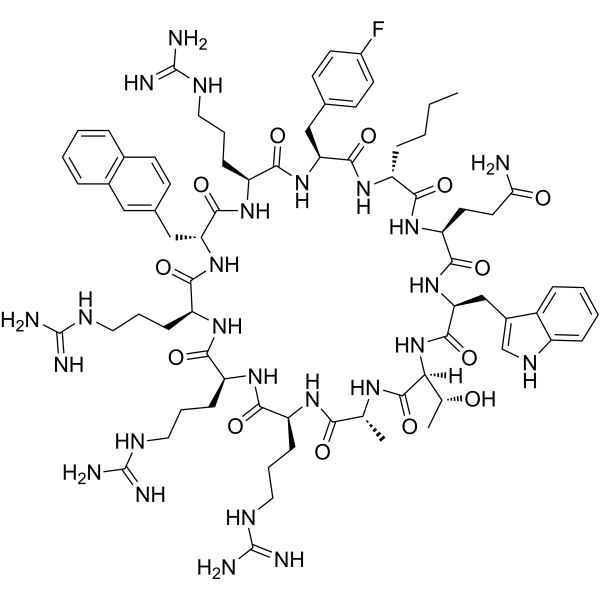
DK 221 is a PD-L1 blocker with an IC50 of 24.5 nM for inhibiting the binding of PD-L1 to PD-1. DK 221 reduces the uptake of [ 18F]DK222 in PD-L1-positive tumor cells and mouse xenografts. DK 221 is applicable to research related to triple-negative breast cancer and melanoma .
loading...
    loading...
Cat. No.: HY-P11892
c10c-G1V3 is a BRAG2 binder with a Kd value of 7.37 μM. c10c-G1V3 binds to BRAG2, thereby disrupting its interaction with GluA2 and blocking GluA2 endocytosis and AMPAR subunit switching. c10c-G1V3 reduces glutamate-induced intracellular reactive oxygen species (ROS) accumulation and cell apoptosis (apoptosis). c10c-G1V3 decreases infarct volume in the transient middle cerebral artery occlusion model. c10c-G1V3 can be used in studies related to ischemic stroke .
loading...
    loading...
Cat. No.: HY-P11894
Target:  

Bacterial

Research Areas:  

Infection

Antimicrobial peptide 6b is a cationic macrocyclic antimicrobial peptide. It exhibits broad-spectrum antibacterial and antifungal activities, with a MIC of 1.5-6.2 μg/mL against drug-resistant Gram-positive bacteria, a MIC of 4-25 μg/mL against Gram-negative bacteria, and also shows activity against pathogenic fungi. It acts through a membrane disruption mechanism, has a unique "sandwich" conformation, low hemolytic activity, and can rapidly kill bacteria and eliminate bacterial and fungal biofilms. Antimicrobial peptide 6b can be used in studies of drug-resistant bacterial infections and fungal infections .
loading...
    loading...
Cat. No.: HY-P11895
CAS No.: 3081054-21-6
Research Areas:  

Neurological Disease

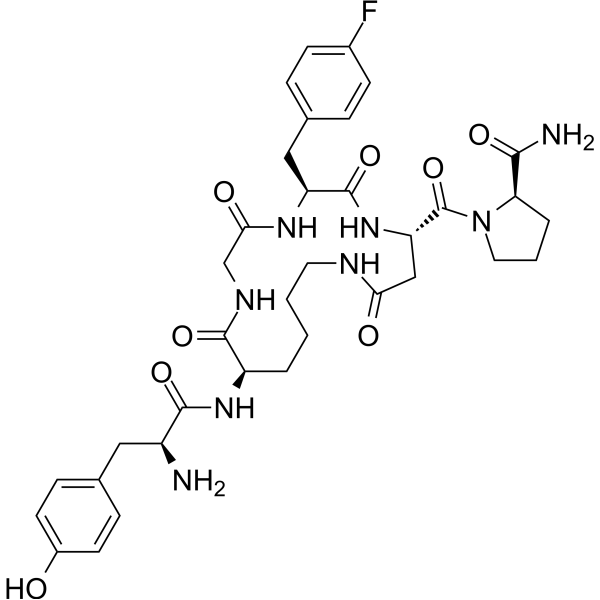
Tyr-c [D-Lys-p-F-Phe-Phe-Asp]-D-Pro-NH2 is a multi-opioid receptor (Opioid Receptor) modulator, acting as a MOR/KOR agonist and a DOR antagonist. Tyr-c [D-Lys-p-F-Phe-Phe-Asp]-D-Pro-NH2 activates the G protein-mediated cAMP inhibitory pathway and β-arrestin2 recruitment pathway downstream of MOR, with an EC50 of 159 nM for β-arrestin2 recruitment, an EC50 of 1.1 nM for MOR-mediated calcium mobilization, and an EC50 of 397 nM for KOR. Tyr-c [D-Lys-p-F-Phe-Phe-Asp]-D-Pro-NH2 exhibits potent analgesic activity in vivo. It can be used in studies related to opioid receptor function and analgesia .
loading...
    loading...
Cat. No.: HY-P11896
CAS No.: 3081054-30-7
Research Areas:  

Neurological Disease

Tyr-c[D-Lys-p-Br-Phe-Phe-Asp]-D-Pro-NH2 is a MOR-selective antagonist with a pA2 value of 9.9. Tyr-c[D-Lys-p-Br-Phe-Phe-Asp]-D-Pro-NH2 blocks G protein- and β-arrestin2-mediated downstream signaling pathways of MOR. Tyr-c[D-Lys-p-Br-Phe-Phe-Asp]-D-Pro-NH2 significantly delays the development of μ-opioid agonist-induced analgesic tolerance by blocking peripheral MOR. Tyr-c[D-Lys-p-Br-Phe-Phe-Asp]-D-Pro-NH2 is applicable to studies related to opioid receptor function and analgesic tolerance .
loading...
    loading...
Cat. No.: HY-P6176
CAS No.: 3032608-72-0
Target:  

Melanocortin Receptor

Research Areas:  

Metabolic Disease Endocrinology

JLB2-110c activates MCRs receptor (mMC4R EC50 = 0.34 nM) and has a strong in vivo appetite suppressant effect .
loading...
    loading...
Cat. No.: HY-175323
Target:  

Integrin PD-1/PD-L1

Research Areas:  

Cancer

NOTA-IMB-RGD is a dual molecular probe targeting integrin αvβ3 and programmed death ligand-1 (PD-L1). NOTA-IMB-RGD blocks the PD-1/PD-L1 signaling pathway and integrin αvβ3-overexpressing tumor vasculature. NOTA-IMB-RGD is promising for research of solid tumors co-expressing PD-L1 and αvβ3 (e.g., glioma, breast cancer) .
loading...
    loading...
Cat. No.: HY-P10649
CAS No.: 1831064-62-0
Target:  

Inhibitory Antibodies

Research Areas:  

Cancer

CPP12 is a small, amphipathic, cyclic cell-penetrating peptide (CPP). CPP12 binds directly to plasma membrane phospholipids, enters mammalian cells via endocytosis, and then efficiently escapes from endosomes. CPP12 can be used for the intracellular delivery of drugs and chemical probes .
loading...
    loading...

