245 Results for "

Control compound

" in MedChemExpress (MCE) Product Catalog:
Products (245)

245 Results for "Control compound" in MCE Product Catalog:

Cat. No.: HY-139838
CAS No.: 353292-31-6
Target:  

Herbicide

Research Areas:  

Others Cancer

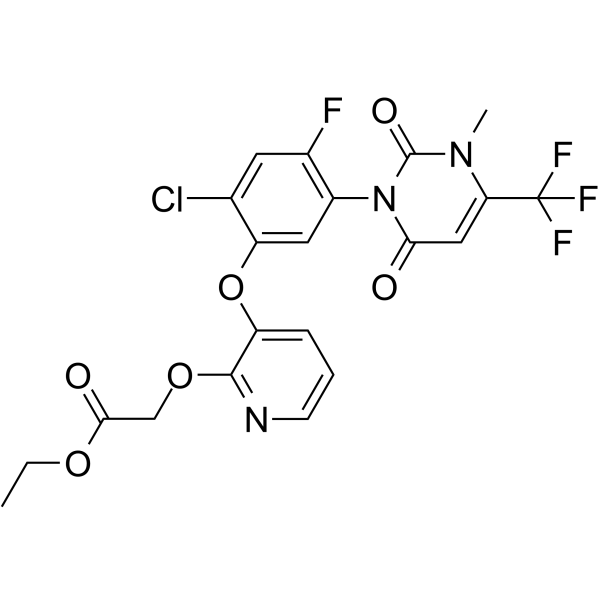
Epyrifenacil is a protoporphyrinogen oxidase (PPO) inhibiting herbicide, potently targeting the PPO2 isoform from weeds such as Amaranthus palmeri with an IC50 of 0.637 nM. Epyrifenacil also inhibits liver mitochondrial PPO across species, with IC50 values of 2.2 nM (mouse), 2.6 nM (rat), 12.1 nM (rabbit), 7.6 nM (dog), and 10.2 nM (human). Epyrifenacil induces liver tumor development in mice. Epyrifenacil can be used for weed control, and also used as a tool compound in toxicological research to study the mechanism of PPO inhibition, chemical-induced hepatotoxicity, and the mode of action of non-genotoxic carcinogens in rodents [3].
loading...
    loading...
Cat. No.: HY-154835
CAS No.: 1513855-74-7
Research Areas:  

Others

N6-[[(4-Azidophenyl)methoxy]carbonyl]-L-lysine is an unnatural lysine analog and a substrate of the PABKRS mutant PylRS. N6-[[(4-Azidophenyl)methoxy]carbonyl]-L-lysine enables site-specific genetic integration into proteins via amber stop codon suppression; it undergoes Staudinger reduction with phosphine compounds, followed by a self-elimination reaction to release native lysine. N6-[[(4-Azidophenyl)methoxy]carbonyl]-L-lysine serves as a genetically encoded element for the temporal chemical control of protein SUMOylation and nuclear translocation in living mammalian cells, and also acts as a bioorthogonal reaction handle for bioconjugation reactions .
loading...
    loading...
Cat. No.: HY-171541
CAS No.: 354562-11-1
Target:  

Fungal

Research Areas:  

Infection

CDA-IN-1 (Compound vs#2-1) is an inhibitor of chitin deacetylase (CDA). CDA-IN-1 exhibits antifungal activity. It can inhibit fungal growth by suppressing the activity of fungal CDA, activating the plant immune response, and accumulating reactive oxygen species (ROS). At a concentration of 100 μM, CDA-IN-1 can achieve inhibition rates of 86.9% and 74.5% against PxCDA1 and PxCDA2 of P. xanthii, respectively. CDA-IN-1 can be applied to the research in the field of controlling plant fungal diseases, such as the research on diseases like cucurbit powdery mildew and tomato gray mold .
loading...
    loading...
Cat. No.: HY-175647
Target:  

Myosin Fungal

Research Areas:  

Infection

Myosin-5-IN-2 (Compound G19) is a Myosin-5 inhibitor. Myosin-5-IN-2 has an antifungal activity against Fusarium graminearum (Fg), Botrytis cinerea and Rhizoctonia solani with an EC50 s of 0.326 μg/mL for Fg. Myosin-5-IN-2 has effective protective and curative control efficiency for wheat leaves. Myosin-5-IN-2 severely damages the surface integrity of mycelial cells and induces cytoplasmic leakage. Myosin-5-IN-2 can be used for fungal infections like fusarium head blight (FHB) research .
loading...
    loading...
Cat. No.: HY-180329
CAS No.: 2417296-83-2
Target:  

PROTACs Raf ERK

CG 858-Neg (compound 13) is a negative control for Thalidomide (HY-14658)-derived PROTAC degraders, targeting BRAF and BRAF V600E with Ki values ​​of 9.5 nM and 14.4 nM, respectively. CG 858-Neg inhibits downstream ERK phosphorylation and suppresses BRAF V600E-driven melanoma (e.g., A375 cells, IC50=492 nM) and colorectal cancer (e.g., HT-29 cells, IC50=459 nM) cells. CG 858-Neg can be used in research related to melanoma and colorectal cancer .
loading...
    loading...
Cat. No.: HY-112624K
CAS No.: 9004-54-0
Synonyms: Dextran 5; Dextran D5; Dextran T5(MW 4500-5500)
Dextran T5 (MW 5,000) is a sulfated polysaccharide anti-apoptotic and autophagic agent. Dextran T5 (MW 5,000) has sulfated groups and interacts with cell membranes by mimicking endogenous glycosaminoglycans, inhibiting the mitochondrial apoptotic pathway and delaying DNA fragmentation to exert anti-apoptotic activity. Dextran T5 (MW 5,000) also promotes the conversion of LC3-I to LC3-II and the formation of autophagosomes to activate the autophagic pathway. Dextran T5 (MW 5,000) can prolong the survival cycle of CHO cells and increase the production of recombinant erythropoietin (EPO). The Dextran series of compounds are also natural polysaccharide drug carriers that can be connected to drugs through covalent bonding methods such as ester bonds, amide bonds or click chemistry, or self-assembled to form carriers such as nanoparticles and hydrogels. Dextran is biodegradable and biocompatible, and can achieve targeted delivery and controlled release of drugs. Dextran derivatives can prolong drug half-life, increase local concentration and reduce immune clearance activity. The Dextran series of compounds are also natural polysaccharide drug carriers that can be connected to drugs through covalent bonding methods such as ester bonds, amide bonds or click chemistry, or self-assembled to form carriers such as nanoparticles and hydrogels. Dextran is biodegradable and biocompatible, and can achieve targeted delivery and controlled release of drugs. Dextran derivatives can prolong the half-life of drugs, increase local concentrations, and reduce the activity of immune clearance .
loading...
    loading...
Cat. No.: HY-151761
CAS No.: 2084913-49-3
Purity:  99.69%
Research Areas:  

Others

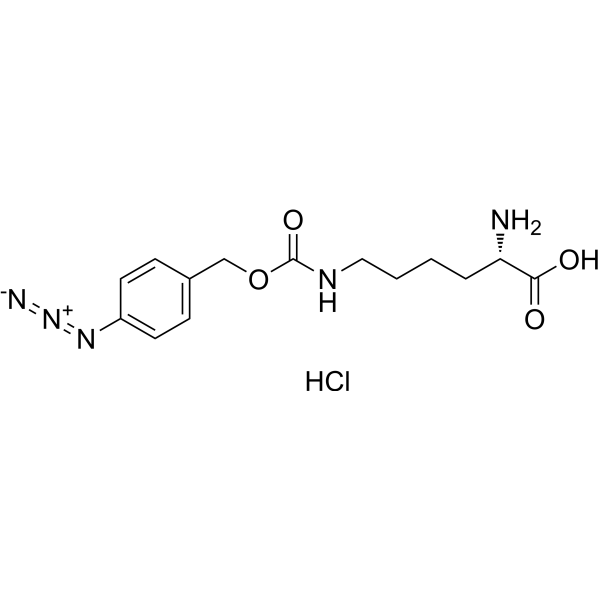
H-L-Lys (4-N3-Z)-OH hydrochloride is an unnatural lysine analog and a substrate of the PABKRS mutant PylRS. H-L-Lys (4-N3-Z)-OH hydrochloride enables site-specific genetic integration into proteins via amber stop codon suppression; it undergoes Staudinger reduction with phosphine compounds, followed by a self-elimination reaction to release native lysine. H-L-Lys (4-N3-Z)-OH hydrochloride serves as a genetically encoded element for the temporal chemical control of protein SUMOylation and nuclear translocation in living mammalian cells, and also acts as a bioorthogonal reaction handle for bioconjugation reactions .
loading...
    loading...
Cat. No.: HY-176823
CAS No.: 2381196-78-5
Target:  

PROTACs SGK

Research Areas:  

Cancer

PROTAC SGK3 degrader-2 is the cis epimer of PROTAC SGK3 degrader-1 (SGK3-PROTAC1) (HY-125878). PROTAC SGK3 degrader-2 exhibits inhibitory activity against SGK3, SGK1 and S6K1, with IC50 values of 0.6 μM, 1.4 μM and 1.7 μM, respectively, but fails to degrade SGK3. PROTAC SGK3 degrader-2 can serve as a control compound to investigate the specific effects of SGK3 degradation mediated by SGK3-PROTAC1 .
loading...
    loading...
Cat. No.: HY-W105601
CAS No.: 161599-46-8
Synonyms: 2',3'-Di-O-acetyl-5'-deoxy-5-fluorocytidine
Target:  

Endogenous Metabolite

Research Areas:  

Infection

5'-Deoxy-2',3'-di-O-acetyl-5-fluorocytidine (2',3'-Di-O-acetyl-5'-deoxy-5-fluorocytidine) is an antiviral compound that inhibits HBV reverse transcriptase activity. 5'-Deoxy-2',3'-di-O-acetyl-5-fluorocytidine shows potential to control HBV replication in vitro. 5'-Deoxy-2',3'-di-O-acetyl-5-fluorocytidine, as a nucleoside analog, may provide a new option for the suppression of chronic hepatitis B .
loading...
    loading...
Cat. No.: HY-L258
437 compounds

In modern medicinal chemistry and chemical biology research, alkyne (-C≡C-) structures play an important role in click chemistry, bioorthogonal labeling, and the construction of functional molecules due to their unique linear geometry and high reactivity. In particular, driven by the development of copper-catalyzed azide-alkyne cycloaddition (CuAAC) and copper-free click reactions (SPAAC), terminal alkyne groups have become important “chemical handles” for building complex biomolecular systems.

The MCE Alkyne Compound Library contains 437 compounds designed for the construction of click chemistry reaction systems and the development of diverse functional molecules. In drug discovery, these structures serve as key reactive sites that can efficiently undergo click reactions with azide groups, enabling modular assembly of PROTAC molecules, construction of ADC linkers, and rapid synthesis of bioorthogonal labeling probes. In addition, alkyne groups exhibit high stability, mild reaction conditions, and excellent biocompatibility, allowing them to maintain reactivity in complex biological environments. This contributes to improved efficiency and controllability in drug development, making them indispensable chemical building blocks in modern drug design and functional molecular engineering.

Cat. No.: HY-124352S
Synonyms: C9-PQS-d4
2-Nonyl-3-hydroxy-4-quinolone-d4 (C9-PQS-d4) is deuterium labeled 2-Nonyl-3-hydroxy-4-quinolone. 2-nonyl-3-hydroxy-4-Quinolone (C9-PQS) is a quinolone compound produced by P. aeruginosa and other related bacterias. 2-nonyl-3-hydroxy-4-Quinolone is a quorum sensing (QS) signal molecule that controls the expression of many virulence genes as a function of cell population density .
loading...
    loading...
Cat. No.: HY-178988
Target:  

Bacterial

Research Areas:  

Infection

Antibacterial agent 299 (Compound P5) is a highly effective antibacterial agent against Xanthomonas oryzae pv. oryzae (Xoo), with an EC₅₀ value of 6.9 μg/mL. Antibacterial agent 299 integrates into bacterial membranes, disrupts membrane structure, inhibits biofilm formation, and thus exerts antibacterial effects. Antibacterial agent 299 also shows inhibitory activity against Xanthomonas oryzae pv. oryzicola (Xoc) (EC₅₀ = 32.5 ± 3.0 μg/mL), but its activity against Xanthomonas axonopodis pv. citri (Xac) is weaker. Antibacterial agent 299 demonstrated excellent control efficacy in a rice bacterial blight (BLB) model. Antibacterial agent 299 can be used for BLB research .
loading...
    loading...
Cat. No.: HY-L117
226 compounds

Calcium channel blockers (CCBs), also called calcium antagonists are compounds that slow the movement of calcium (Ca2+) through calcium channels into the cells of the heart and blood vessel walls. Calcium causes the heart and arteries to squeeze more strongly. By blocking calcium, calcium channel blockers allow blood vessels to relax and open. So calcium channel blockers are usually used to lower blood pressure, relieve chest pain (angina) and control an irregular heartbeat.

MCE supplies a unique collection of 226 calcium channel blockers and antagonists, all of which have the identified inhibitory effect on calcium channel. MCE Calcium Channel Blocker Library is a useful tool for discovery of antihypertensive drugs and cardiovascular disease research.

Cat. No.: HY-150220
CAS No.: 125401-63-0
Purity:  ≥97.0%
Target:  

Liposome

Research Areas:  

Cancer

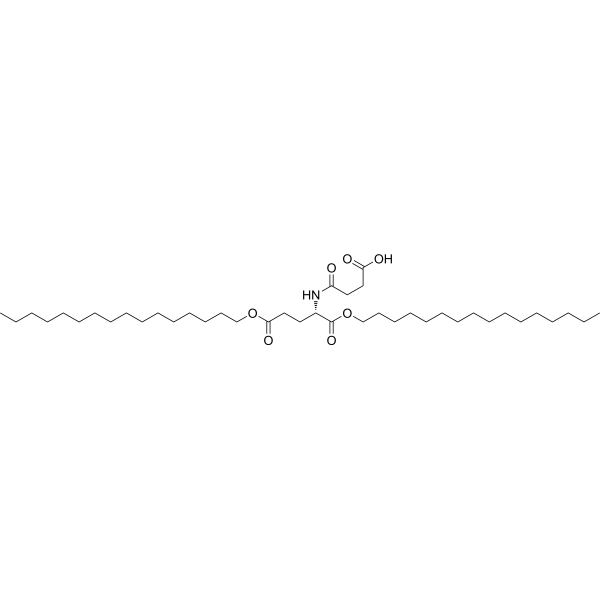
1,5-Dihexadecyl N-(3-carboxy-1-oxopropyl)-L-glutamate is a carboxylic acid lipid targeting agent. 1,5-Dihexadecyl N-(3-carboxy-1-oxopropyl)-L-glutamate serves as a carboxylic acid lipid substitute for phosphatidylserine and is used to control liposome surface modification, and the modified liposomes exhibit in vivo compound release behavior similar to that of unmodified liposomes. Liposomes containing 1,5-Dihexadecyl N-(3-carboxy-1-oxopropyl)-L-glutamate specifically target bone marrow. 1,5-Dihexadecyl N-(3-carboxy-1-oxopropyl)-L-glutamate is used in the study of breast cancer .
loading...
    loading...
Cat. No.: HY-D0180
CAS No.: 17455-13-9
Synonyms: 18C6; 1,4,7,10,13,16-Hexaoxacyclooctadecane
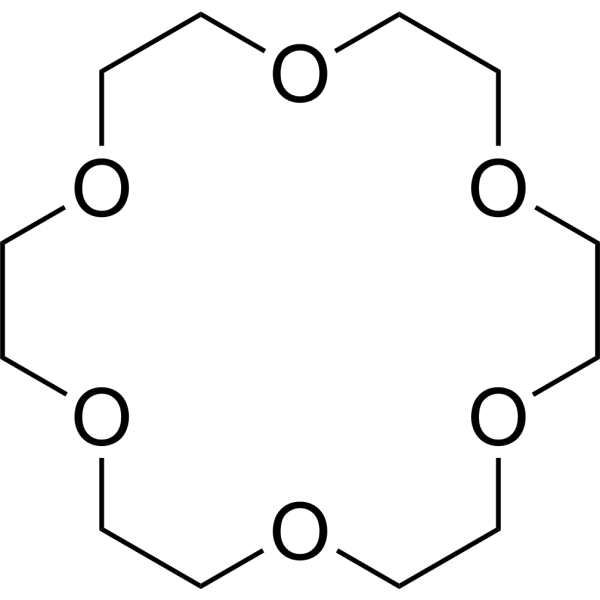
18-Crown-6-ether is a type of crown ether compound and a specific structure dissociating agent. 18-Crown-6-ether can compete with K + for binding to G-quadruplexes, disrupting their stable structure to regulate the functions of related systems. 18-Crown-6-ether combines with K + and other metal ions to achieve precise ion transmembrane transport. 18-Crown-6-ether can act as an "susceptibility substrate" for the multi-drug efflux pump EmrE (a bacterial multidrug resistance transporter), ultimately inhibiting bacterial growth. 18-Crown-6-ether can be used in microcapsule controlled release and the research on developing antibacterial enhancers .
loading...
    loading...
Cat. No.: HY-L167
165 compounds

Boric acid is a stable and usually non-toxic group widely used in modern synthesis to form C-C and C-heteroatom bonds. Boric acid exhibits exquisite reversible coordination characteristics and can be explored as a molecular construction tool, with specific mechanisms for controlling the structure and biological characteristics of bioconjugates. Boric acid has various activities, such as anticancer, antibacterial, and antiviral activities. In drugs, boric acid mainly exists in the form of arylboronic acid. In addition to this form, heterocycles containing boric acid, such as pyridine, pyrrole, and indole derivatives, are also very useful in pharmaceutical chemistry. Molecular modification by introducing boric acid groups into bioactive molecules has been shown to alter selectivity, physicochemical, and pharmacokinetic characteristics, and improve existing activity.

MCE designs a unique collection of 165 boronic acid compounds. It is a good tool to be used for research on cancer and other diseases.

Cat. No.: HY-147614
CAS No.: 2456295-65-9
Target:  

PI3K mTOR

Research Areas:  

Cancer

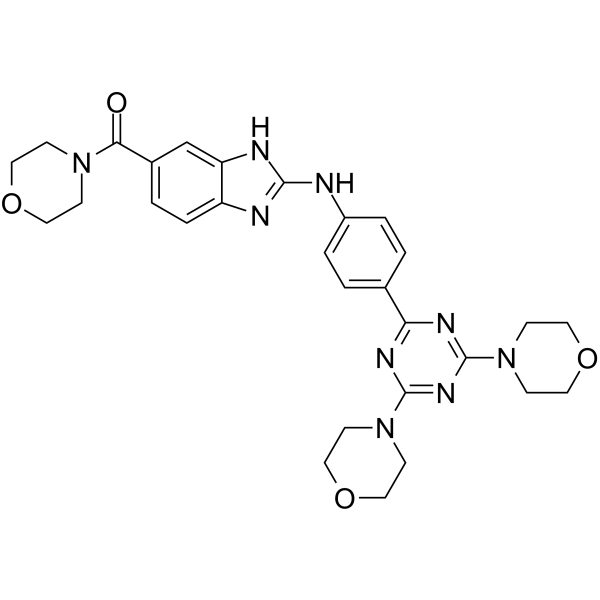
PI3K/mTOR Inhibitor-7 (Compound 19i) is a potent and dual inhibitor of PI3K/mTOR. PI3K/mTOR Inhibitor-7 shows 4.7-fold higher potency than the positive control gedatolisib (0.3 vs. 1.4 μM, IC50 values). PI3K/mTOR Inhibitor-7 significantly suppresses the PI3K/Akt/mTOR signaling pathway at 10 μM. PI3K/mTOR Inhibitor-7 has the potential for the research of cancer diseases .
loading...
    loading...
Cat. No.: HY-L015
1,149 compounds

The PI3K/Akt/mTOR pathway controls many cellular processes that are important for the formation and progression of cancer, including apoptosis, transcription, translation, metabolism, angiogenesis, and cell cycle progression. Every major node of this signaling network is activated in a wide range of human tumors. Mechanisms for the pathway activation include activation of receptor tyrosine kinases (RTKs) upstream of PI3K, mutation or amplification of PIK3CA encoding p110α catalytic subunit of PI3K, mutation or loss of PTEN tumor suppressor gene, and mutation or amplification of Akt1. Once the pathway is activated, signaling through Akt can stimulate a series of substrates including mTOR which is involved in protein synthesis. Thus, inhibition of this pathway is an attractive concept for cancer prevention and/or therapy. Currently some mTOR inhibitors are approved for several indications, and there are several novel PI3K/Akt/mTOR inhibitors in clinical trials.

MCE owns a unique collection of 1,149 compounds that can be used for PI3K/Akt/mTOR pathway research. PI3K/Akt/mTOR Compound Library also acts as a useful tool for anti-cancer drug discovery.

Cat. No.: HY-112624E
CAS No.: 9004-54-0
Synonyms: Dextran 0.8; Dextran D0.8; Dextran T0.8(MW 640-960)
Dextran T0.8 (Dextran 0.8; Dextran T0.8(MW 640-960)) is a food additive with a porous network structure that exhibits strong hydration capacity and low browning activity. Dextran T0.8 (MW 800) can improve the coagulation of dairy products and is used as a prebiotic in baked goods. Dextran T0.8 (MW 800) is non-toxic to HeLa cells at a concentration of ~500 μg/mL and has a low relative browning rate in the Maillard reaction. The Dextran series of compounds are also natural polysaccharide drug carriers that can be connected to drugs through covalent bonding methods such as ester bonds, amide bonds or click chemistry, or self-assembled to form carriers such as nanoparticles and hydrogels. Dextran is biodegradable and biocompatible, and can achieve targeted delivery and controlled release of drugs. Dextran derivatives can prolong the half-life of drugs, increase local concentrations, and reduce the activity of immune clearance .
loading...
    loading...
Cat. No.: HY-112624J
CAS No.: 9004-54-0
Synonyms: Dextran 4; Dextran D4; Dextran T4(MW 3200-4800)
Dextran 4,000 is a mucus rheology modifier. The dextran molecules in Dextran 4,000 can reduce the cross-link density of mucus through osmotic effects and hydrogen bond substitution, and reduce viscoelasticity and improve the mucociliary/cough clearance index by destroying the DNA-mucin network structure in mucus. Dextran 4,000 has the ability to improve the rheological properties and clearance ability of cystic fibrosis (CF) sputum, and can be used in the study of inhalation therapy or aerosol delivery of mucostatic respiratory diseases. The Dextran series of compounds are also natural polysaccharide drug carriers that can be connected to drugs through covalent bonding methods such as ester bonds, amide bonds or click chemistry, or self-assembled to form carriers such as nanoparticles and hydrogels. Dextran is biodegradable and biocompatible, and can achieve targeted delivery and controlled release of drugs. Dextran derivatives can prolong the half-life of drugs, increase local concentrations, and reduce the activity of immune clearance .
loading...
    loading...