2729 Results for "

Complexes

" in MedChemExpress (MCE) Product Catalog:
Products (2729)

2729 Results for "Complexes" in MCE Product Catalog:

Cat. No.: HY-12238G
CAS No.: 1127442-82-3
Synonyms: endo-IWR 1 (GMP); IWR-1-endo (GMP)
IWR-1 (IWR-1-endo) (GMP) is the IWR-1 (HY-12238) produced by using GMP guidelines. GMP small molecules work appropriately as an auxiliary reagent for cell therapy manufacture. IWR-1 (IWR-1-endo) is a tankyrase inhibitor targeting Wnt/β-catenin (IC50 = 180 nM). IWR-1 compromises critical steps of the canonical Wnt signaling, namely translocation of β-catenin to the nucleus and subsequent TCF/LEF activation and expression of Wnt/β-catenin downstream targets. IWR-1 promotes β-catenin phosphorylation by promoting stability of Axin-scaffolded destruction complexes. IWR-1 can be studied in research for anti-tumor purposes, and diseases such as osteosarcoma, colorectal cancer and psoriasis .
loading...
    loading...
Cat. No.: HY-130841
CAS No.: 1683617-62-0
Purity:  ≥98.0%
Research Areas:  

Cancer

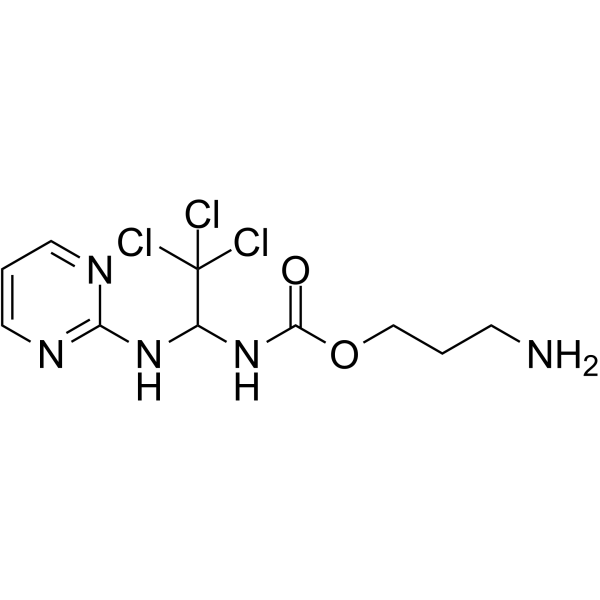
Apcin-A is a small molecule inhibitor that selectively targets the cell division cycle protein Cdc20 and is a derivative of Apcin (HY-110287). Apcin-A competitively binds to the D-box binding pocket of Cdc20 and inhibits substrate ubiquitination mediated by the anaphase promoting complex APC/C-Cdc20. Apcin-A also blocks the binding of Cdc20 to substrates (such as securin and cyclin B1), inhibiting anaphase initiation and cell cycle exit. Apcin-A can promote or prolong mitotic slippage in coordination with p31 comet under conditions of high spindle assembly checkpoint (SAC) activity. Apcin-A can be used to develop anti-mitotic drugs and overcome tumor chemotherapy resistance. Apcin-A can be used to synthesize PROTAC CP5V (HY-130257)[1][2][3].
loading...
    loading...
Cat. No.: HY-134560
CAS No.: 147795-40-2
Purity:  99.62%
Synonyms: 3-Oxo-C10-HSL
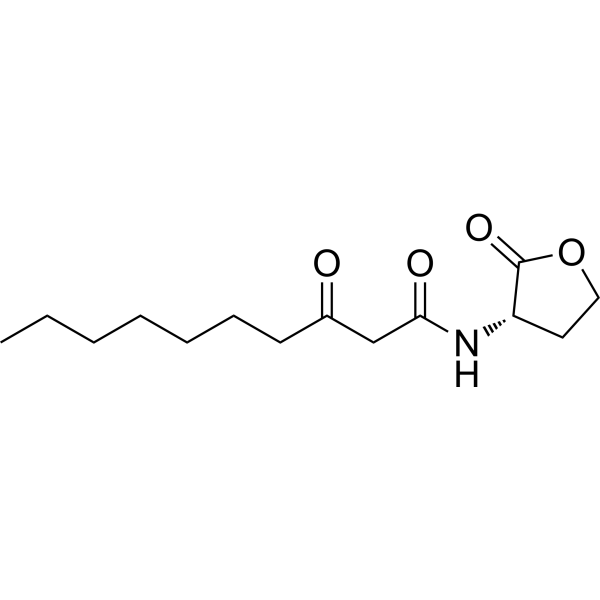
N-(3-Oxodecanoyl)-L-homoserine lactone (3-Oxo-C10-HSL) is a bacterial signaling molecule with quorum-sensing agonistic activity and competitive antagonistic activity against short-chain AHLs. N-(3-Oxodecanoyl)-L-homoserine lactone binds to VanR to form a complex, activates the transcription of the vanI gene, and establishes an autoregulatory loop for its own synthesis. N-(3-Oxodecanoyl)-L-homoserine lactone inhibits the synthesis of violacein induced by short-chain AHLs. N-(3-Oxodecanoyl)-L-homoserine lactone serves as the sole carbon and nitrogen source for Rhodococcus erythropolis W2 and can be completely degraded. N-(3-Oxodecanoyl)-L-homoserine lactone can be used in studies related to bacterial infections .
loading...
    loading...
Cat. No.: HY-139662
CAS No.: 2387821-46-5
Purity:  99.73%
Research Areas:  

Cancer

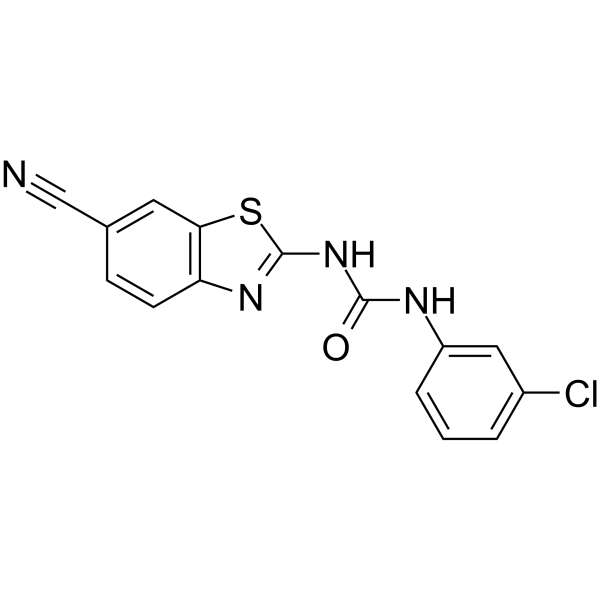
HB007 is a SUMO1 molecular glue degrader targeting CAPRIN1 and FBXO42. HB007 selectively binds CAPRIN1 to induce CAPRIN1-FBXO42 interaction, recruits SUMO1 to the CAPRIN1-CUL1-FBXO42 E3 ligase complex, and drives SUMO1 ubiquitination and degradation without affecting SUMO2/3. HB007 induces TCF4 deSUMOylation and proteasomal degradation to inhibit StarD7 transcriptional activity, reduces StarD7 mRNA and protein levels, and triggers ER stress and ROS production. HB007 can be used for the research of brain cancer, breast cancer, colon cancer, lung cancer .
loading...
    loading...
Cat. No.: HY-153598
CAS No.: 2782022-40-4
Research Areas:  

Inflammation/Immunology Cancer

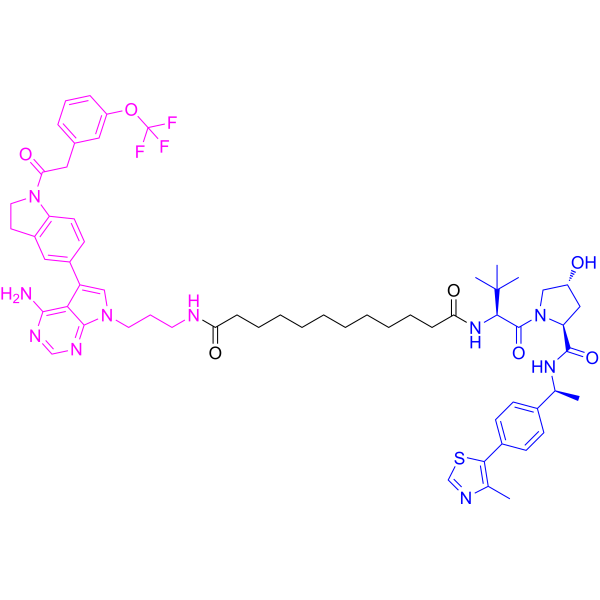
LD4172 is a selective RIPK1 PROTAC degrader with a Ki of 4.8 nM. LD4172 induces RIPK1 protein degradation via ternary complex formation with RIPK1 and VHL E3 ligase, driving ubiquitination and proteasomal breakdown. LD4172 abrogates TNF-induced classical NF-κB signaling in TRAF2-deficient cells, impairing IκBα phosphorylation and degradation, and reducing IL-8 production. LD4172 induces apoptosis and immunogenic cell death in tumor cells, enhances tumor-infiltrating lymphocyte responses, and sensitizes tumors to anti-PD1 therapy. LD4172 acts as a chemical probe for investigating RIPK1 scaffolding functions. LD4172 can be used for the research of melanoma, colon cancer .
loading...
    loading...
Cat. No.: HY-159099
CAS No.: 2654011-51-3
Purity:  99.15%
WIZ degrader 9 is an orally active molecular glue degrader of the WIZ transcription factor. As a molecular glue, WIZ degrader 9 recruits WIZ to the cereblon E3 ubiquitin ligase complex via its ZF7 domain, driving proteasome-dependent degradation of WIZ. WIZ degrader 9 induces hemoglobin production, reduces the level of H3K9 dimethylation across the whole genome and at the β-globin locus, upregulates the transcription of γ-globin and BGLT3, and increases the level of histone H3K9 acetylation in the promoter region of HBG1/2. WIZ degrader 9 effectively induces fetal hemoglobin production in both mice and cynomolgus monkeys. WIZ degrader 9 can be used for research on sickle cell disease .
loading...
    loading...
Cat. No.: HY-161250
Research Areas:  

Cancer

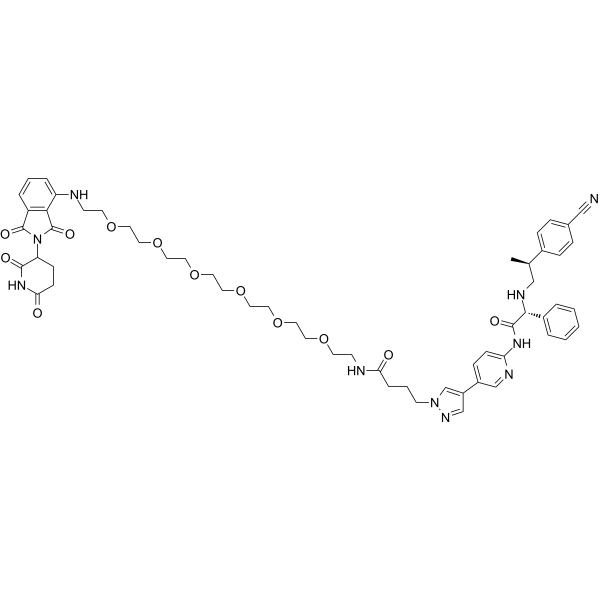
Pomalidomide-NH-PEG6-amide-C2-CPI-1612 is a CBP/EP300 PROTAC degrader with a DC50 value of 1.3 μM. Pomalidomide-NH-PEG6-amide-C2-CPI-1612 mediates the formation of a ternary complex between CRBN and the core of CBP, with an EC50 of 1.2 μM. Pomalidomide-NH-PEG6-amide-C2-CPI-1612 inhibits cancer cell growth and exhibits cell line-specific degradation activity. Pomalidomide-NH-PEG6-amide-C2-CPI-1612 can be used in research related to multiple myeloma and leukemia .
loading...
    loading...
Cat. No.: HY-164924
CAS No.: 3026007-23-5
Research Areas:  

Cancer

ERD-12310A is an orally active ERα PROTAC degrader, with a Ki value of 0.95 nM against human ERα and a DC50 of 47 pM for ERα in MCF-7 cells. ERD-12310A forms a ternary complex with ERα and the CRBN E3 ubiquitin ligase, thereby inducing ubiquitination and proteasomal degradation of wild-type and ESR1 Y537S mutant ERα. ERD-12310A induces tumor regression in ER+ breast cancer xenografts and inhibits tumor growth in ESR1 Y537S mutant breast cancer xenografts. ERD-12310A can be used in studies related to ER-positive breast cancer and ESR1-mutant breast cancer .
loading...
    loading...
Cat. No.: HY-169279
Research Areas:  

Cancer

PROTAC PXR degrader-1 is a PROTAC degrader targeting PXR, with a DC50 value of 49.8 nM in SNU-C4 3xFLAG-PXR KI cells. PROTAC PXR degrader-1 exhibits selectivity towards CAR, VDR, FXR, LXRα and LXRβ. PROTAC PXR degrader-1 induces the formation of a ternary complex with PXR and VHL, triggering proteasomal degradation of PXR. PROTAC PXR degrader-1 reduces both agonist-induced and basal PXR-mediated CYP3A4 promoter activation, and decreases the expression of endogenous CYP3A4 gene in cancer cells. PROTAC PXR degrader-1 enhances the cytotoxic effect of paclitaxel on cancer cells. PROTAC PXR degrader-1 can be used for the research of colorectal cancer .
loading...
    loading...
Cat. No.: HY-172662
Target:  

Telomerase

Research Areas:  

Cancer

TRF1-TIN2 PPI-IN-1 (Compound 40) is a TRF1-TIN2 interaction inhibitor. TRF1-TIN2 PPI-IN-1 binds to the TRFH domain of TRF1 (KD = 29 μM) and competitively inhibits the binding of the TIN2 peptide (IC50 = 67 μM). TRF1-TIN2 PPI-IN-1 disrupts the interaction between TRF1 and TIN2 by occupying the hotspot region of the TRF1-TIN2 binding interface. TRF1-TIN2 PPI-IN-1 can expel TRF 1 from the shelterin complex and can be used to study shelterin-related cancers .
loading...
    loading...
Cat. No.: HY-173351
CAS No.: 2901806-51-5
Research Areas:  

Cancer

G-6599 is a covalent molecular glue degrader targeting SMARCA2/SMARCA4, with DC50 values of 0.017 nM and 0.057 nM against SMARCA2 and SMARCA4 in SW1573 cells, respectively. G-6599 exhibits proteome selectivity for SMARCA2, SMARCA4, and PBRM1. G-6599 induces the assembly of the SMARCA2-FBXO22 ternary complex, enabling ubiquitination and proteasomal degradation of both proteins via the ubiquitin-proteasome pathway without the need for biotransformation. G-6599 shows antiproliferative effects in relevant cancer cell models. G-6599 can be used for research on androgen-dependent prostate cancer and SMARCA4-mutant non-small cell lung cancer .
loading...
    loading...
Cat. No.: HY-173679
CAS No.: 2569517-30-0
Research Areas:  

Infection Cancer

RBN012811 is a highly selective PROTAC-based PARP14 degrader. RBN012811 forms a ternary complex with cereblon by binding to the NAD + site of PARP14, and mediates the specific degradation of PARP14 via the ubiquitin-proteasome pathway (IC50=10 nM). RBN012811 effectively depletes endogenous PARP14 in various cell lines and primary human macrophages, thereby downregulating IL-10 production and IFN-β mRNA levels, increasing phosphorylated STAT1 levels to enhance inflammatory signaling, and inhibiting interferon-induced ADPr condensate formation. RBN012811 also modulates viral replication, exhibiting increased HSV1 replication while reducing VSV replication. RBN012811 has important application value in research related to cancer and viral infections .
loading...
    loading...
Cat. No.: HY-181107
Research Areas:  

Infection

DNA Gyrase/ribosomes-IN-1 is a bacterial ribosome and DNA gyrase inhibitor, with IC50 values of 1.11 μM and 3.31 μM, respectively. DNA Gyrase/ribosomes-IN-1 also inhibits CYP3A4, with an IC50 of 18.5 μM, and exhibits stability in mouse plasma and liver microsomes. DNA Gyrase/ribosomes-IN-1 inhibits bacterial protein synthesis by interacting with ribosomal RNA and associated sites. DNA Gyrase/ribosomes-IN-1 suppresses bacterial DNA replication by interacting with the gyrase complex. DNA Gyrase/ribosomes-IN-1 restores activity against macrolide-resistant, erm-mediated Gram-positive pathogens and enhances activity against Gram-negative bacteria such as Haemophilus influenzae and Moraxella catarrhalis. DNA Gyrase/ribosomes-IN-1 can be used in research on community-acquired bacterial pneumonia .
loading...
    loading...
Cat. No.: HY-181838
CAS No.: 3064485-73-7
Target:  

CDK Apoptosis

Research Areas:  

Cancer

CIRc-014 is an orally active Cyclin A/B inhibitor with a Cyclin A IC50 of 0.05 μM, Cyclin A Kd of 2.7 nM, Cyclin B IC50 of less than 0.02 μM and Cyclin B Kd of 1.0 nM. CIRc-014 activates the spindle assembly checkpoint and promotes the formation of a complex between Cyclin B and CDK2 by blocking the RxL interaction of Cyclin A/B. CIRc-014 can induce replication stress, DNA damage, mitotic arrest and apoptosis in tumor cells. CIRc-014 showed tumor growth inhibition and regression in NCI-H69 and NCI-H446 small cell lung cancer xenograft models. CIRc-014 can be used for the research of small-cell lung cancer .
loading...
    loading...
Cat. No.: HY-182067
Research Areas:  

Cancer

anti-TNBC agent-15 is a platinum (IV) complex with anti-triple-negative breast cancer activity. anti-TNBC agent-15 inhibits cancer cell viability. anti-TNBC agent-15 reverses the resistance of triple-negative breast cancer cells to Cisplatin (HY-17394), increases intracellular uptake, and effectively triggers apoptosis by inducing DNA damage, enhancing intracellular ROS accumulation and activating the mitochondrial pathway. anti-TNBC agent-15 enhances lipid peroxidation, interferes with the signal transduction of the cystine/glutamate transporter-glutathione peroxidase axis, and induces ferroptosis. anti-TNBC agent-15 significantly inhibits tumor growth in triple-negative breast cancer/Cisplatin xenograft models. anti-TNBC agent-15 can be used for the research of triple-negative breast cancer .
loading...
    loading...
Cat. No.: HY-183070
Target:  

PROTACs CDK Apoptosis

Research Areas:  

Cancer

CXJ2080 is a selective PROTAC-based CDK7 degrader with a DC50 of 0.88 nM. CXJ2080 recruits VHL E3 ligase to induce ubiquitin-proteasome-dependent CDK7 degradation, disrupts the CDK7-cyclin H-MAT1 complex, suppresses CDK7-dependent phosphorylation of RNA polymerase II CTD Ser5, CDK1 Thr161, and CDK2 Thr160. CXJ2080 activates the p53-p21 axis, suppresses MYC-driven signaling, induces leukemia cell cycle arrest, apoptosis, and differentiation, reduces CD117 expression, spares platelets and normal PBMCs, maintains sustained CDK7 degradation post-washout. CXJ2080 can be used for the research of acute leukemia .
loading...
    loading...
Cat. No.: HY-183826
CAS No.: 2841473-91-2
Target:  

Autophagy

Research Areas:  

Infection Cancer

ATG5 PPI-IN-4 is an autophagy inhibitor targeting ATG5, with an IC50 of 12.78 μM against ATG5-ATG16L1 and an IC50 of 12.00 μM against ATG5-TECAIR. ATG5 PPI-IN-4 blocks the protein interactions between ATG5 and ATG16L1, as well as between ATG5 and TECAIR, disrupts the assembly of the ATG12-ATG5-ATG16L1 ternary complex, inhibits the lipidation modification of LC3/ATG8, and ultimately downregulates cellular autophagy levels. ATG5 PPI-IN-4 can be used in autophagy-related research, such as studies on infection and cancer .
loading...
    loading...
Cat. No.: HY-184389
Research Areas:  

Inflammation/Immunology

PROTAC HDAC6 degrader 10 is a highly efficient, safe and selective HDAC6 PROTAC degrader with a pIC50 of 8.75 and a pDC50 of 9.2 in BEAS-2B cells. PROTAC HDAC6 degrader 10 recruits cereblon to form a ternary complex with HDAC6, thereby achieving the degradation of HDAC6. PROTAC HDAC6 degrader 10 significantly induces hyperacetylation of α-tubulin without affecting the acetylation of H3, and achieves sustained HDAC6 knockdown in mouse lung tissues. PROTAC HDAC6 degrader 10 exhibits high bioavailability after subcutaneous administration in mice. PROTAC HDAC6 degrader 10 enables the study of HDAC6 pharmacology via chemical knockdown of HDAC6 in vitro and in vivo, and can be used for research on pulmonary diseases .
loading...
    loading...
Cat. No.: HY-187168
CAS No.: 2407654-72-0
Research Areas:  

Cancer

KAT2A degrader-1 is a molecular glue degrader targeting KAT2A, with a DC50 of 89 nM in Kelly cells. KAT2A degrader-1 recruits KAT2A to cereblon (CRBN) in a degron-independent manner, forms a ternary complex with KAT2A and CRBN, and drives the polyubiquitination and proteasome-dependent degradation of KAT2A. KAT2A degrader-1 reduces the level of histone H3 lysine 9 acetylation (H3K9Ac). KAT2A degrader-1 induces antiproliferative effects in acute myeloid leukemia cells, while enhancing KAT2A-CRBN dimerization activity and eliminating the targeting effect on GSPT1. KAT2A degrader-1 can be used for research related to acute myeloid leukemia .
loading...
    loading...
Cat. No.: HY-187810
Synonyms: LC-04-118
Research Areas:  

Cancer

dWBP4-1 (LC-04-118) is a CRBN-dependent molecular glue degrader targeting WBP4. dWBP4-1 binds to the IMiD site of CRBN via its glutarimide ring, induces the formation of the CRBN-WBP4 ternary complex (EC50 = 224 nM), and mediates the rapid degradation of WBP4 through the G-loop dependent ubiquitin-proteasome pathway, a process that can be rescued by MLN4924 (HY-70062), Lenalidomide (HY-A0003) or Bortezomib (HY-10227). dWBP4-1 causes almost no perturbation at the transcriptome and alternative splicing levels, exhibits no obvious cytotoxicity, and produces no hook effect. dWBP4-1 can be used for the construction of chemical genetic protein degradation platforms and research related to acute T-lymphoblastic leukemia .
loading...
    loading...

