2735 Results for "

Complexes

" in MedChemExpress (MCE) Product Catalog:
Products (2735)

2735 Results for "Complexes" in MCE Product Catalog:

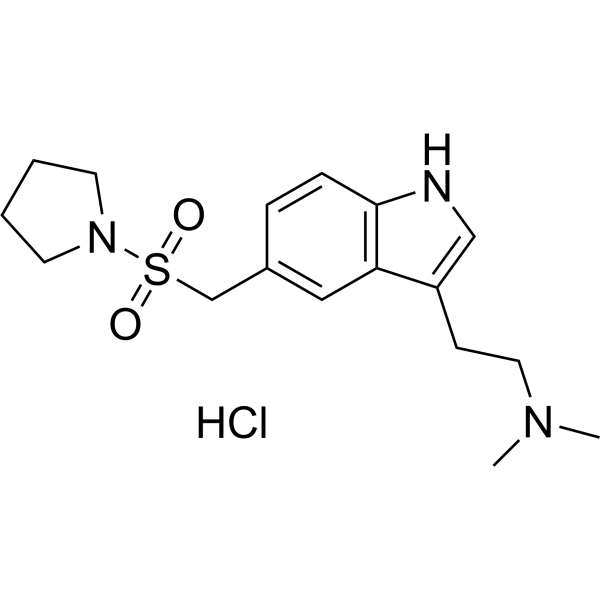
Cat. No.: HY-W335976
CAS No.: 154323-46-3
Target:  

5-HT Receptor

Research Areas:  

Neurological Disease

Almotriptan (PNU180638) hydrochloride is an orally active, highly selective agonist of the 5-HT1B/1D receptor (5-HT1B/1D receptor), with EC50 values of 1.6 nM and 3.1 nM, respectively. Almotriptan hydrochloride shows moderate affinity for the 5-HT1F receptor, and weak affinity for the 5-HT1A, 5-HT6 and 5-HT7 receptors. Almotriptan hydrochloride induces intracranial vasoconstriction, inhibits nociceptive neurotransmission in the trigeminocervical complex, and suppresses the release of vasoactive peptides from trigeminal nerve endings. Almotriptan hydrochloride can be used in research related to migraine.
loading...
    loading...
Cat. No.: HY-L028
1,170 compounds

The blood-brain barrier (BBB) is the complex network of brain microvessels. It protects the brain from the external bloodstream environment and supplies the brain with the required nutrients for normal function. However, blood-brain barrier is also the obstacle to deliver beneficial drugs to treat CNS (central nervous system) diseases or brain tumors, as it has the least permeable capillaries in the entire body due to physical barriers (tight junctions). Therefore, it is crucial to discover drugs which can cross this barrier for the treatment of brain-based diseases, such as Alzheimer’s disease (AD), Parkinson’s disease (PD) and epilepsy.

MCE offers a unique collection of 1,170 compounds with confirmed CNS-Penetrant property. It’s a useful tool for the discovery of drugs used for brain diseases, such as brain tumors, mental disorders, and neurodegenerative diseases.

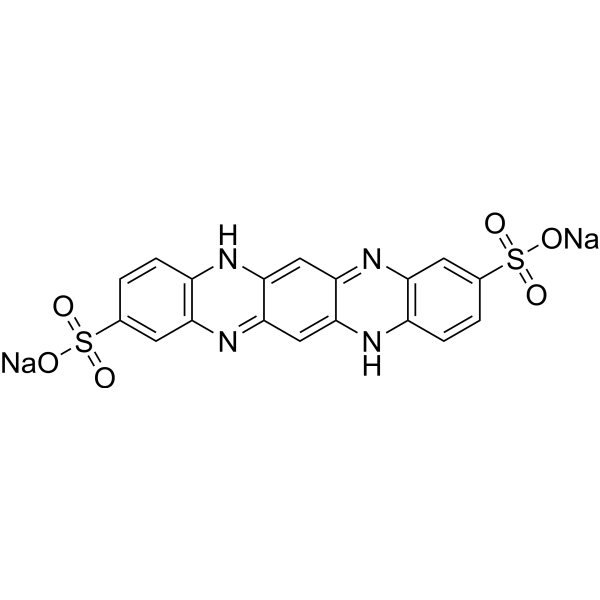
Cat. No.: HY-112573A
CAS No.: 3863-80-7
Synonyms: Phacolysine sodium
Research Areas:  

Neurological Disease

Azapentacene (Phacolysine) sodium is an anti-cataract compound. Azapentacene sodium prevents cataract formation in guinea pigs with vitamin C deficiency and delays the progression of congenital cataract in Nakano mice. Azapentacene sodium undergoes reversible one-electron oxidation to form a stable radical cation, undergoes irreversible secondary oxidation to form a hydrolyzable unstable dication, and can also be oxidized by thallium (III) trifluoroacetate in trifluoroacetic acid to generate a detectable radical cation. Azapentacene sodium is used in research related to cataracts, vitamin C deficiency-induced cataracts, and congenital cataracts .
loading...
    loading...
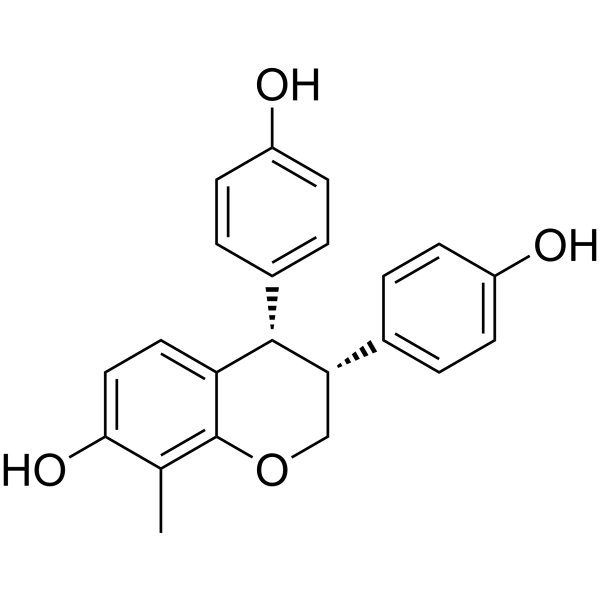
Cat. No.: HY-112749
CAS No.: 1374524-68-1
ME-344 is an Isoflavone. ME-344 increases mitochondrial ROS generation. ME-344 inhibits tubulin polymerization. ME-344 inhibits HO-1 and impacts its mitochondrial translocation. ME-344 induces Apoptosis through Caspase 3 activation. ME-344 synergizes with Vinblastine in leukemia cells. ME-344 displays anti-tumor activity against leukemia and lung tumor. ME-344 can be used in the research of lung cancer, acute myeloid leukemia, and HER2-negative breast cancer .
loading...
    loading...
Cat. No.: HY-113355
CAS No.: 58-68-4
NADH is an orally active dehydrogenase coenzyme that acts as a crucial electron carrier in cellular respiration and participates in ATP production. NADH promotes metabolism, supports brain function, and counteracts oxidative stress by transferring electrons to the electron transport chain. As a signaling molecule, NADH regulates multiple biological processes, including anti-apoptosis, synaptic plasticity, gene expression, and calcium homeostasis. Redox imbalance of NADH/NAD⁺ is one of the key pathological mechanisms of various diseases, such as diabetic nephropathy, neurodegenerative diseases, and ischemia-reperfusion injury.
loading...
    loading...
Cat. No.: HY-12462
CAS No.: 1421227-52-2
Purity:  98.00%
WS3 is an allosteric inhibitor of 14-3-3 (14-3-3ζ: Kd = 2.29 μM). WS3 activates GSK3β by disrupting the binding of 14-3-3-pGSK3β, promotes the ubiquitination and degradation of NRF2, and inhibits the NRF2-ARE signaling pathway (IC50 = 135 nM). It exerts antioxidant inhibition and chemotherapeutic/ferroptosis sensitizing effects in tumors with hyperactivated NRF2. WS3 binds to EBP1/IKKε and promotes the proliferation of β cells and retinal pigment epithelial (RPE) cells, which can be applied to islet regeneration and RPE expansion transplantation . WS3 is applicable to research related to age-related macular degeneration, retinal degeneration and non-small cell lung cancer .
loading...
    loading...
Cat. No.: HY-141474
CAS No.: 103192-48-9
Purity:  99.00%
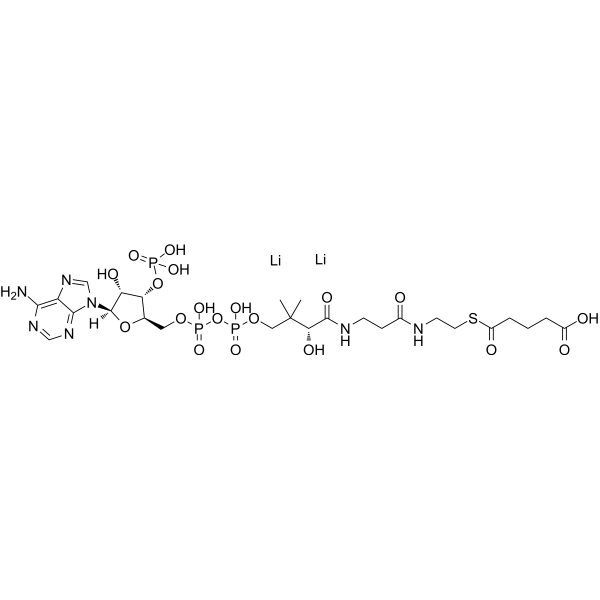
Glutaryl coenzyme A lithium is an endogenous metabolite. Glutaryl coenzyme A lithium acts on the E2k subunit to inhibit KGDHc. It serves as a substrate for the reverse reaction of E2k and does not affect the E1k or E3 subunits of KGDHc. Glutaryl coenzyme A lithium exhibits weak inhibitory activity against citrate synthase. It can be used in research on glutaryl-CoA dehydrogenase deficiency (type I glutaric acidemia) .
loading...
    loading...
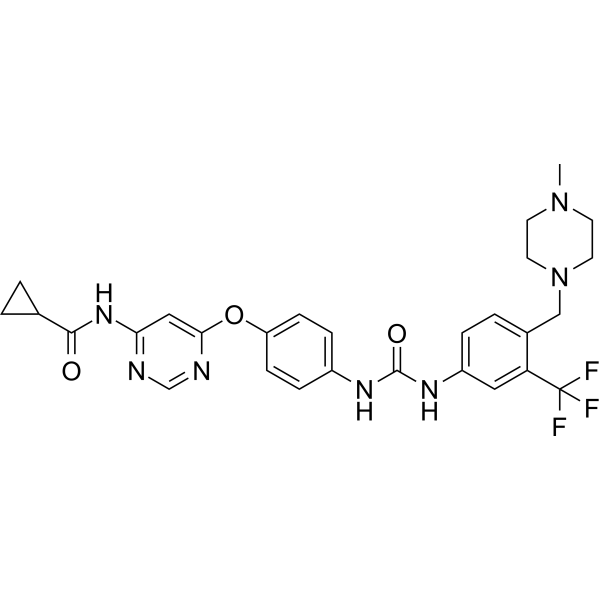
Cat. No.: HY-179732
Research Areas:  

Cancer

PROTAC ALK degrader-4 is a ALK PROTAC degrader with a DC50 of 445.25 nM. PROTAC ALK degrader-4 induces concentration- and time-dependent degradation of EML4-ALK, as well as concentration-dependent degradation of ALK F1174L. PROTAC ALK degrader-4 downregulates 390 proteins in NCI-H3122 cells, including the targets of ceritinib (ALK, IGF-1R) and downstream molecules ERK1/2 and STAT3. PROTAC ALK degrader-4 exerts antiproliferative activity in ALK-positive cancer cells. ALK degrader-4 can be used in studies related to lung adenocarcinoma .
loading...
    loading...
Cat. No.: HY-183378
CAS No.: 132259-06-4
RP 59794 is a potent collagenase (collagenase) and broad-spectrum matrix metalloproteinase (MMP) inhibitor. The active stereoisomer of RP 59794 has a Ki of 13 nM against MMP-1 (with native collagen as substrate) and 45 nM (with a synthetic octapeptide as substrate). RP 59794 blocks and partially dissociates TIMP by binding to the active site of collagenase, specifically inhibits the collagen-transmigrating migration of osteoclasts and bone resorption on collagen-coated surfaces, but exerts no effect on cell migration in collagen-free environments, and acts in a time-dependent manner in bone tissues. RP 59794 can be used in studies of arthritis, periodontal disease, corneal ulcers and tumor invasion .
loading...
    loading...
Cat. No.: HY-184984
CAS No.: 3110372-70-5
Target:  

Topoisomerase

Research Areas:  

Cancer

SN-38-A2 is a topoisomerase I (TOP1) degrader with an IC50 of 6.2 nM in MIA PaCa-2 pancreatic cancer cells. SN-38-A2 mimics protein misfolding via an adamantane hydrophobic tag, hijacks the HSP90 chaperone system, and mediates TOP1 degradation through the ubiquitin-proteasome system. SN-38-A2 assembles with poly β-cyclodextrin to form pH-responsive nanoparticles, enabling site-specific release under the acidic conditions of the tumor microenvironment, and exhibits tumor growth inhibitory effects in MIA PaCa-2 pancreatic cancer and HCT116 colorectal cancer xenograft models. SN-38-A2 can be used in research related to pancreatic cancer, colorectal cancer, and breast cancer .
loading...
    loading...
Cat. No.: HY-189090
CAS No.: 3106140-37-5
Target:  

Fungal

Research Areas:  

Infection Others

LEX-K02 is a broad-spectrum and potent thiazole amide antifungal agent with an EC50 of 0.140 μM. LEX-K02 inhibits fungal growth by disrupting the fungal cell membrane to cause leakage of intracellular substances and targeting the map00510 pathway to interfere with N-glycan biosynthesis. LEX-K02 can be used in studies related to Gaeumannomyces graminis infection .
loading...
    loading...
Cat. No.: HY-189360
CAS No.: 3017179-52-8
Target:  

PROTACs EGFR

Research Areas:  

Cancer

PROTAC EGFR degrader 19 is a potent EGFR PROTAC degrader. PROTAC EGFR degrader 19 bridges EGFR and VHL E3 ligase, thereby promoting ubiquitination and degradation of EGFR, which in turn blocks oncogenic signaling pathways. PROTAC EGFR degrader 19 can be used for research on non-small cell lung cancer .
loading...
    loading...
Cat. No.: HY-CE01804
CAS No.: 3131-84-8
Synonyms: Glutarylcoenzyme A
Glutaryl coenzyme A s an endogenous metabolite. Glutaryl coenzyme A acts on the E2k subunit to inhibit KGDHc. It serves as a substrate for the reverse reaction of E2k and does not affect the E1k or E3 subunits of KGDHc. Glutaryl coenzyme A exhibits weak inhibitory activity against citrate synthase. It can be used in research on glutaryl-CoA dehydrogenase deficiency (type I glutaric acidemia) .
loading...
    loading...
Cat. No.: HY-D0876
CAS No.: 68189-43-5
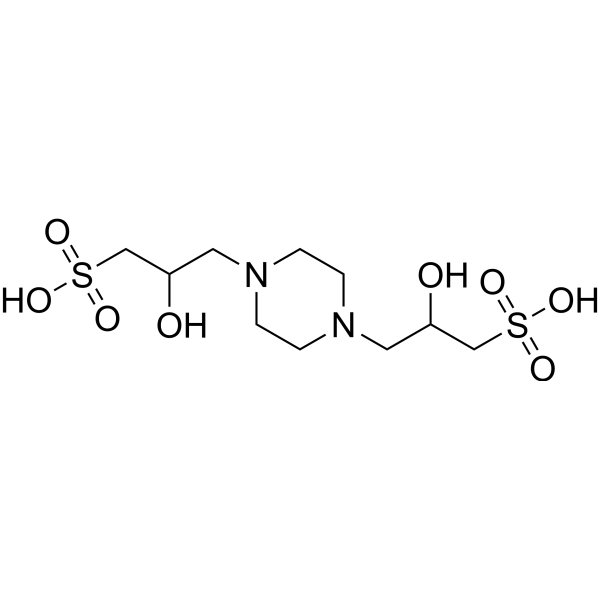
POPSO is a zwitterionic buffer, increases osmolality and shows marked inhibition of anion uniport. POPSO inhibits chloride uniport with an IC50 value of 24 mM. POPSO enhances copper uptake and toxicity in alga, impairs mitochondrial inner membrane. The working pH range of POPSO sesquisodium salt is 7.2-8.5 .
loading...
    loading...
Cat. No.: HY-D2946
Synonyms: BC-TMR
CLIP-TMR (BC-TMR) is a TMR-labeled CLIP tag fluorescent probe. CLIP-TMR combines the high specificity recognition ability of the CLIP-tag and the excellent optical performance of the TMR fluorophore, and can be used for the specific labeling and visualization of the HCV NS5A protein .
loading...
    loading...
Cat. No.: HY-N16021
CAS No.: 2260669-09-6
4A-MPLA ammonium is an orally active TLR4 agonist. 4A-MPLA ammonium induces TLR4 endocytosis dependent on Cdc42 and galectin-3, triggering TRIF-mediated signaling and sustained IFN-β production. 4A-MPLA ammonium promotes lipid droplet formation, upregulates interferon-stimulated genes and type I IFN signaling genes, downregulates lysosome/phagosome function genes, and modulates tolerogenic dendritic cell function. 4A-MPLA ammonium can be used for the research of colitis .
loading...
    loading...
Cat. No.: HY-P12213
Research Areas:  

Inflammation/Immunology

APG-2305 is a selective IL-23 receptor inhibitor. APG-2305 inhibits IL-23-induced STAT3 phosphorylation, reduces the expression of pro-inflammatory cytokines (IL-1, IL-6, IL-22) without altering IL-17 levels, and alleviates inflammation in multiple in vivo models. APG-2305 is used for research on inflammatory autoimmune diseases .
loading...
    loading...
Cat. No.: HY-P992473

Target:  

TNF Receptor

Research Areas:  

Inflammation/Immunology Cancer

TAS266 is a tetrameric nanobody agonist targeting DR5. TAS266 selectively induces cancer cell death. TAS266 triggers sustained tumor regression in xenograft models and also elicits immunogenic responses including antibody binding. TAS266 exhibits superior anti-tumor efficacy compared with traditional DR5-targeting strategies. TAS266 can be used in research related to pancreatic cancer and advanced solid tumors .
loading...
    loading...
Cat. No.: HY-W756144
Target:  

Fluorescent Dye

Research Areas:  

Others

Sulfo-cy3 picolyl azide is a fluorescent dye used for detecting interactions between labeled molecules and proteins based on click chemistry. Sulfo-cy3 picolyl azide undergoes copper (I)-catalyzed azide-alkyne cycloaddition (CuAAC) to covalently bind to alkyne-labeled targets, enabling fluorescent detection via scanning. The excitation/emission wavelengths of Sulfo-cy3 picolyl azide are Ex/Em = 550/560 nm. Sulfo-cy3 picolyl azide can be used for in-gel detection of protein-small molecule interactions, as well as labeling ribosome-associated cellular protein targets .
loading...
    loading...
Cat. No.: HY-100355
CAS No.: 2304-81-6
Purity:  99.95%
Synonyms: C18-Ceramide
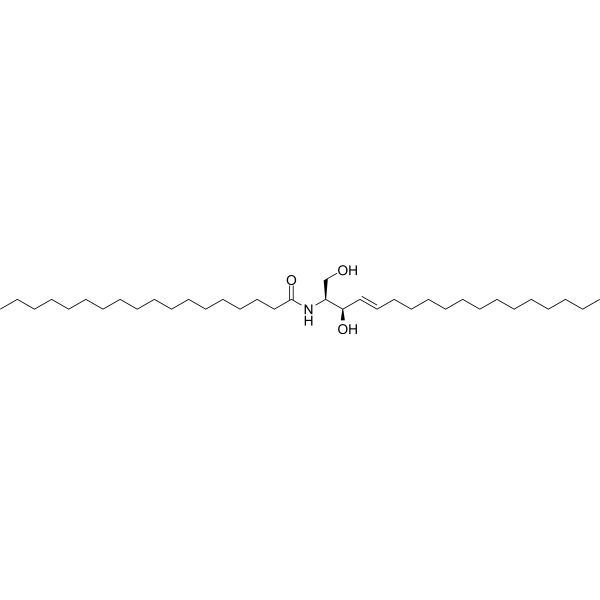
C18-Ceramide (d18:1/18:0) is a bioactive molecule with multiple functions in cells, not a traditional agonist or inhibitor targeting a single site. It can act on multiple cellular targets, such as proteins related to endoplasmic reticulum stress (e.g., ATF-4, XBP-1, CHOP), proteins in the PI3K/AKT signaling pathway, and SNARE complex proteins. It exerts activities like inducing cell death, promoting autophagy, and regulating exocytosis through mechanisms such as activating endoplasmic reticulum stress, inhibiting the PI3K/AKT signaling pathway, and affecting lipid raft - related functions. It can be used in research on the mechanism of neuronal injury in the field of neuroscience and in the treatment research of cancers such as glioma in the field of oncology .
loading...
    loading...

