
260 Results for "

cell surface targets

" in MedChemExpress (MCE) Product Catalog:
Products (260)

260 Results for "cell surface targets" in MCE Product Catalog:

Cat. No.: HY-D3582
Target:  

Fluorescent Dye

Research Areas:  

Others

AF633 C5 Maleimide is a fluorescent dye used for surface protein labeling of extracellular vesicles and peptide labeling. AF633 C5 Maleimide covalently binds to protein thiol residues under neutral pH conditions (6.5-7.5), enabling visualization and quantitative analysis of extracellular vesicle uptake by target cells. AF633 C5 Maleimide undergoes maleimide-cysteine conjugation with cysteine residues on peptides in acetonitrile-water buffer solution, supporting detection of peptide-functionalized gold nanorods via confocal laser scanning microscopy, as well as tracking their cellular uptake and localization .
loading...
    loading...
Cat. No.: HY-W1048555A
Mal-PEG2000-SCM is a heterobifunctional PEG crosslinker bearing maleimide and succinimidyl carboxymethyl ester functional groups. MMal-PEG2000-SCM conjugates the F3 peptide to nanoparticles: the SCM group reacts with amino groups on the nanoparticle surface to form amide groups, while the MAL group reacts with thiol groups of the F3 peptide to form carbon-sulfur bonds. Mal-PEG-SCM enables unidirectional addition of linkers, ensuring that appropriate functional groups are available for RGD incorporation. Mal-PEG2000-SCM can be used in the development of nanoparticles targeting specific tumor cells .
loading...
    loading...
Cat. No.: HY-L260
82 compounds

KRAS (Kirsten Rat Sarcoma Viral Oncogene Homolog) is one of the most important oncogenic driver genes in oncology, with high mutation frequencies in pancreatic cancer, non‑small cell lung cancer, and colorectal cancer. For a long time, KRAS was considered "undruggable" due to the lack of suitable small‑molecule binding pockets on its protein surface. In recent years, with the discovery of the switch‑II pocket and the successful approval of KRAS G12C inhibitors, KRAS‑targeted research has achieved groundbreaking progress, which has also spurred a wave of development targeting non‑G12C mutants such as G12D and G12V, as well as upstream and downstream regulatory factors including SOS1 and SHP2.

MCE KRAS Targeted Compound Library contains 82 small‑molecule compounds targeting the KRAS, serving as high‑quality research tools for mechanistic studies of KRAS‑mutant tumors, combination therapy development, resistance mechanism exploration, and high‑throughput drug screening, thereby providing robust support for KRAS‑targeted drug discovery.

Cat. No.: HY-P12127A
Synonyms: BF2-B TFA
Buforin IIb TFA (BF2-B TFA) is an anticancer peptide, as well as an Antibacterial and Antifungal agent. Buforin IIb TFA is derived from histone H2A. Buforin IIb TFA activates SAPK/JNK and p38 MAPK. Buforin IIb TFA induces mitochondria-dependent Apoptosis . Buforin IIb TFA achieves selective targeting by interacting with gangliosides on the surface of cancer cells, and can penetrate cancer cell membranes without causing damage. Buforin IIb TFA exhibits antibacterial activity against Gram-negative bacteria, Gram-positive bacteria and fungi. Buforin IIb TFA can be used in the research of cervical cancer, as well as cancers including leukemia, central nervous system cancer, ovarian cancer, breast cancer, melanoma, colon cancer, non-small cell lung cancer, renal cancer and prostate cancer .
loading...
    loading...
Cat. No.: HY-P99899
CAS No.: 2052591-32-7
Synonyms: PR-1498487

Target:  

ADC Antibodies

Research Areas:  

Cancer

Samrotamab (PR-1498487) is a humanized IgG1-κ chimeric monoclonal antibody targeting LRRC15, with a Kd of 5.42 nM for human LRRC15. Samrotamab can be used to synthesize antibody-drug conjugates (ADC). Samrotamab disrupts the LRRC15-SCG5 signaling module, binds to a membrane-proximal conformational epitope within the C-terminal leucine-rich repeat region of LRRC15, and binds to the lateral edge of the LRR solenoid while leaving the canonical concave β-sheet surface fully exposed. Samrotamab reduces the viability of bladder cancer cells, inhibits clonogenic growth, impairs cell migration, and compromises cell invasion. Samrotamab induces compensatory upregulation of LRRC15 transcripts while suppressing the expression of SCG5 mRNA. Samrotamab is applicable to research related to urothelial carcinoma, sarcoma, osteosarcoma, and undifferentiated pleomorphic sarcoma .
loading...
    loading...
Cat. No.: HY-155052A
Purity:  95.64%
Research Areas:  

Cancer

PAD4-IN-2 TFA is a highly tumor-targeted and irreversible PAD4 inhibitor with an IC50 of 1.94 μM. PAD4-IN-2 TFA selectively recognizes sialic acid on tumor surfaces and accumulates in tumor tissues, with distribution in the cytoplasm of tumor cells and nuclei of neutrophils. PAD4-IN-2 TFA inhibits the PAD4-H3cit-NETs (Neutrophil Extracellular Traps) pathway, reduces senescent tumor-associated neutrophils, and promotes M1 macrophage polarization. The compound exhibits potent anti-tumor and anti-metastatic activities and is suitable for breast cancer research .
loading...
    loading...
Cat. No.: HY-P11108
CAS No.: 1895883-60-9
RP-182 is a synthetic immunomodulatory peptide that exerts anti-tumor effects by targeting the mannose receptor CD206 (Kd = 8 μM) on the surface of tumor-associated macrophages (TAMs). RP-182 induces a conformational switch of the CD206 receptor, which activates NF-κB signaling and phagocytosis in CD206 high TAMs. RP-182 has dual function: activation of canonical NF-κB signaling, triggering TNFα secretion and autocrine activation of the TNF receptor 1 (TNFR1), leading to activation of caspase 8, apoptosis, and cell death. RP-182 is used in pancreatic cancer and melanoma research .
loading...
    loading...
Cat. No.: HY-P11108A
RP-182 acetate is a synthetic immunomodulatory peptide that exerts anti-tumor effects by targeting the mannose receptor CD206 (Kd = 8 μM) on the surface of tumor-associated macrophages (TAMs). RP-182 acetate induces a conformational switch of the CD206 receptor, which activates NF-κB signaling and phagocytosis in CD206 high TAMs. RP-182 acetate has dual function: activation of canonical NF-κB signaling, triggering TNFα secretion and autocrine activation of the TNF receptor 1 (TNFR1), leading to activation of caspase 8, apoptosis, and cell death. RP-182 acetate is used in pancreatic cancer and melanoma research .
loading...
    loading...
Cat. No.: HY-W011696
CAS No.: 112-90-3
Synonyms: cis-1-Amino-9-octadecene, 80-90%
Oleylamine, 80-90% (cis-1-Amino-9-octadecene, 80-90%) is a multifunctional reagent used for metal ion coordination and nanoparticle surface modification, and acts as a solvent, surfactant and reducing agent in the synthesis of metal oxide nanoparticles. Oleylamine, 80-90% regulates nanoparticle morphology, magnetization intensity and water proton relaxation rate via thiol-ene "click" reaction, and enhances the colloidal stability of nanoparticles in organic reagents. Oleylamine, 80-90% is mainly used in research and applications in fields such as nanomaterial synthesis, biomedical imaging (MRI contrast agents, fluorescent probes), cancer cell targeting and drug delivery .
loading...
    loading...
Cat. No.: HY-164702
Synonyms: Izalontamab Brengitecan
Research Areas:  

Cancer

BL-B01D1 (Izalontamab Brengitecan) is a bispecific antibody-drug conjugate (ADC) targeting EGFR and HER3, formed by conjugating the EGFR/HER3 bispecific antibody Izalontamab (HY-P99676) to a novel TOP-I inhibitor payload Deruxtecan 2-hydroxypropanamide (HY-153891) via a cleavable linker (Mc-Gly-Gly-Phe-Gly). BL-B01D1 binds to EGFR and HER3 on the surface of tumor cells, mediates endocytosis and releases the payload, inhibits topoisomerase I, blocks DNA replication and RNA synthesis, and disrupts DNA structure. BL-B01D1 induces cell cycle S-phase arrest, apoptosis, antibody-dependent cell-mediated cytotoxicity, and tumor cell death. BL-B01D1 can be used for cancer research .
loading...
    loading...
Cat. No.: HY-P992062

Target:  

PD-1/PD-L1

Research Areas:  

Inflammation/Immunology

Anti-Mouse CD80 Antibody (TKMG48) is an antibody that targets mouse CD80. By specifically binding to and disrupting the CD80:PD-L1 complex to release PD-L1, Anti-Mouse CD80 Antibody (TKMG48) functions as an indirect PD-1 agonist without blocking CD28 co-stimulation or CD80-CTLA4 binding. Anti-Mouse CD80 Antibody (TKMG48) inhibits T cell activation, reduces T cell effector functions and antigen-specific CD8 + T cell populations, and does not interfere with the differentiation, migration, antigen presentation or surface marker expression of dendritic cells. Anti-Mouse CD80 Antibody (TKMG48) significantly attenuates disease severity in mouse models of arthritis, spondyloarthritis, multiple sclerosis and Sjögren's syndrome, and its activity depends on the expression of PD-1 and PD-L1 .
loading...
    loading...
Cat. No.: HY-107146R
CAS No.: 371131-16-7
Synonyms: P1pal-7 (Standard)
PZ-128 (Standard) (P1pal-7 (Standard)) is the analytical standard of PZ-128 (HY-107146). This product is intended for research and analytical applications. PZ-128 (P1pal-7), a cell-penetrating lipopeptide pepducin, is a first-in-class, specific and reversible protease-activated receptor-1 (PAR1) antagonist. PZ-128 targets the cytoplasmic surface of PAR1 and interrupts signaling to internally-located G (PAR1-G) proteins. PZ-128 has antiplatelet, anti-metastatic, anti-angiogenic and anticancer effects .
loading...
    loading...
Cat. No.: HY-B0507B
CAS No.: 72-14-0
Target:  

Antibiotic Bacterial

Research Areas:  

Endocrinology Cancer

Sulfathiazole (100 μg/mL in acetonitrile) is an orally active, endocrine disruptor targeting the steroidogenic pathway, specifically enhancing the activity of CYP19 in human adrenal cancer cells (H295R) and upregulating the mRN expression of CYP17, CYP19, and 3β-HSD. Sulfathiazole (100 μg/mL in acetonitrile) increases the production of 17-estradiol (E2) and has endocrine disrupting effects on aquatic organisms such as the Japanese medaka fish. Sulfathiazole (100 μg/mL in acetonitrile) is also a cathodic corrosion inhibitor. Sulfathiazole (100 μg/mL in acetonitrile) inhibits the corrosion of copper by chloride ions through chemical and physical adsorption on the copper surface, reduces the corrosion current density and shifts the corrosion potential negatively .
loading...
    loading...
Cat. No.: HY-B0507AR
CAS No.: 144-74-1
Research Areas:  

Endocrinology Cancer

Sulfathiazole sodium (Standard) is the analytical standard of Berberine sodium (HY-B0507A). This product is intended for research and analytical applications. Sulfathiazole sodium is an orally active, endocrine disruptor targeting the steroidogenic pathway, specifically enhancing the activity of CYP19 in human adrenal cancer cells (H295R) and upregulating the mRN expression of CYP17, CYP19, and 3β-HSD. Sulfathiazole sodium increases the production of 17-estradiol (E2) and has endocrine disrupting effects on aquatic organisms such as the Japanese medaka fish. Sulfathiazole sodium is also a cathodic corrosion inhibitor. Sulfathiazole sodium inhibits the corrosion of copper by chloride ions through chemical and physical adsorption on the copper surface, reduces the corrosion current density and shifts the corrosion potential negatively .
loading...
    loading...
Cat. No.: HY-122578
CAS No.: 922150-12-7
Purity:  99.93%
Target:  

MDM-2/p53

Research Areas:  

Cancer

P53R3 is a potent p53 reactivator and restores sequence-specific DNA binding of p53 hot spot mutants, including p53 R175H, p53 R248W and p53 R273H. P53R3 induces p53-dependent antiproliferative effects with much higher specificity than PRIMA-1. P53R3 enhances the recruitment of wild-type p53 and p53 M237I to several target gene promoters. P53R3 strongly enhances the mRNA, total protein and cell surface expression of the death receptor death receptor 5 (DR5). P53R3 is used for cancer research .
loading...
    loading...
Cat. No.: HY-184626
Thiol-modified magnetite nanoparticles are prepared via high-temperature pyrolysis and surface-modified with thiol functional groups. Magnetite is widely used in magnetic resonance imaging, magnetic separation, targeted drug delivery, tumor hyperthermia, cell labeling and separation, as a contrast agent, and in retinal detachment repair surgery due to its stable properties, good biocompatibility, high strength, and lack of toxicity. It is also used as a catalyst carrier, microwave absorbing material, and magnetic recording material. Xianfeng has developed numerous derivatives of magnetite, including oleic acid-modified magnetite, magnetite with different PEG ends, DMSA-modified magnetite, polylysine-modified magnetite, carboxylated dextran-modified magnetite nanoparticles, streptavidin-modified magnetite particles, thiol-modified magnetite magnetic nanoparticles, and polyethyleneimine (PEI)-modified magnetic magnetite nanoparticles, among others.
loading...
    loading...
Cat. No.: HY-P11107
CAS No.: 2375823-45-1
Target:  

Apoptosis TNF Receptor

Research Areas:  

Inflammation/Immunology Cancer

RP-832c is a synthetic analogue of host defense peptides (HDP), targeting the mannose receptor CD206 on the surface of M2 polarized macrophages (Kd = 3.5 μM). RP-832c binding to CD206 induces a significant conformational change in the receptor, activating signaling pathways that lead to rapid apoptosis and repolarization of CD206-positive M2 macrophages to an M1 phenotype. RP-832c treatment significantly reduces CD206 gene expression in M2 macrophages while transiently increasing expression of TNF-α, a marker for M1 macrophages. RP-832c is used for the studies of T-cell lymphoma (CTCL) and idiopathic pulmonary fibrosis (IPF) .
loading...
    loading...
Cat. No.: HY-L214
227 compounds

Liposomes are spherical or multilayered spherical vesicles formed by the self-assembly of diacyl chain phospholipids (lipid bilayers) in aqueous solutions, which can be made from natural or synthetic phospholipids and exhibit good biocompatibility and low toxicity. They can serve as delivery carriers for various bioactive substances (such as drugs, proteins, nucleic acids, etc.) and are widely used in biomedical and chemical research. The main advantages of liposomes include 1) Protective effect: Their bilayer structure can protect encapsulated molecules from enzymatic degradation, oxidation, and other influences, extending stability and activity; 2) Active targeting: Surface modifications enable active targeting, enhancing the concentration of drugs or molecules in specific tissues or cells; 3) Customizability: The composition and structure of liposomes can be adjusted according to needs, such as altering phospholipid types or adding targeting ligands. These properties make liposomes highly valuable in developing novel drug delivery systems, serving as nucleic acid carriers for gene transfection, studying cellular uptake mechanisms and drug release kinetics, as well as developing functional food additives to improve the bioavailability of nutritional components.

MCE contains 227 liposome compounds, which is a good tool for drug delivery-related studies.

Cat. No.: HY-P992056

Target:  

Autophagy

Research Areas:  

Cancer

Anti-Human/Mouse LY6E Antibody (9B12) is a high-affinity, multi-target antibody that binds specifically to LY6E. Anti-Human/Mouse LY6E Antibody (9B12) binds specifically to cell-surface LY6E and enters lysosomes via lipid raft-dependent endocytosis, thereby effectively inhibiting the growth of various LY6E-expressing solid tumors (such as breast cancer and lung cancer) in both in vitro and in vivo models. Anti-Human/Mouse LY6E Antibody (9B12) exerts a dual mechanism of action: on one hand, it blocks the interaction between PILRα and CD8α, specifically reduces the survival rate of peripheral CD8 + T cells and induces their activation, breaking the state of cellular quiescence; on the other hand, it recognizes and immunoprecipitates IDE under both non-denaturing and denaturing conditions, which is applicable to studies on the subcellular localization and protein interactions of IDE. The regulatory effect of Anti-Human/Mouse LY6E Antibody (9B12) on CD8 + T cells strictly depends on the presence of PILRα, and it does not affect CD4 + T cells or T cell development in the thymus, exhibiting high specificity .
loading...
    loading...
Cat. No.: HY-155887
CAS No.: 474922-26-4
Synonyms: DSPE-PEG-NH2, MW 3400 ammonium
Target:  

Liposome

Research Areas:  

Cancer

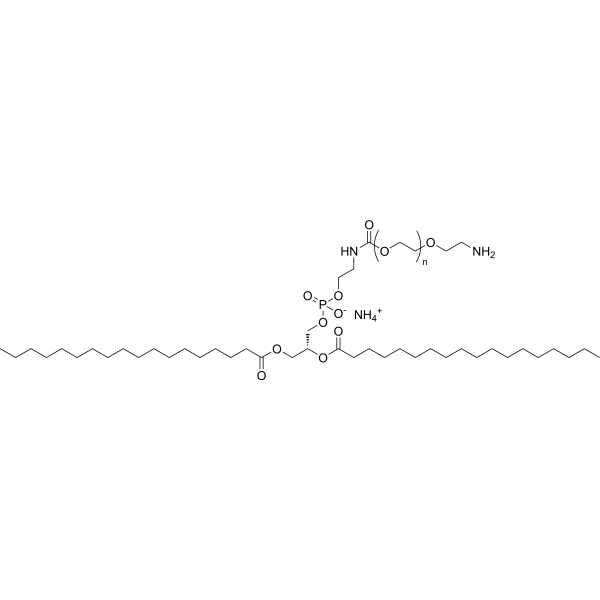
DSPE-PEG-Amine (DSPE-PEG-NH2), MW 3400 ammonium is an amino-functionalized PEGylated phospholipid. It serves not only as a key component for preparing σ receptor-targeted liposomes (such as anisamide-modified lipids) but also as a starting material for synthesizing click chemistry- and tumor-targeted lipids including DSPE-PEG-DBCO (HY-155788) and DSPE-PEG2000-TCO (HY-170704). DSPE-PEG-Amine, MW 3400 ammonium effectively modulates the ζ potential of nanoparticles, enables complexation with nucleic acids or proteins to protect DNA from nuclease degradation, and supports ligand conjugation on the nanoparticle surface. It is used in studies related to DU-145 tumors, breast cancer, and other relevant research .
loading...
    loading...

