432 Results for "

mRNA expression

" in MedChemExpress (MCE) Product Catalog:
Products (432)

432 Results for "mRNA expression" in MCE Product Catalog:

Cat. No.: HY-159796A
CAS No.: 117211-03-7
Synonyms: GR69153
Cefetecol (GR69153) is a semisynthetic β-lactam antibacterial agent and α-glucosidase inhibitor (yeast IC50 = 2.1 μM; Ki = 5.78 μM) that crosses the blood-brain barrier. Cefetecol reduces blood glucose levels in Streptozotocin-induced diabetic mice. Cefetecol decreases the mRNA expression of GSK-3, PPAR-γ, and UCP-3. Cefetecol induces bacterial cell filamentation and exhibits bactericidal activity against Gram-positive and Gram-negative bacteria. Cefetecol is used in the study of diabetes and bacterial infections .
loading...
    loading...
Cat. No.: HY-161982
CAS No.: 3079468-41-7
Target:  

TNF Receptor

Research Areas:  

Cancer

JNU-0921 is a potent and orally active CD137 agonist. JNU-0921 increases the mRNA expression of IFN-γ and GZMB. JNU-0921 induces luciferase activity with an EC50 value of 64.07 nM.JNU-0921 enhances effector and memory function of cytotoxic CD8 + T cells (CTLs) and alleviates their exhaustion. JNU-0921 also skews polarization of helper T cells toward T helper 1 type and enhances their activity to boost CTL function. JNU-0921 shows anticancer activity .
loading...
    loading...
Cat. No.: HY-163897
CAS No.: 3098187-24-4
PROTAC NCOA4 degrader-1 is a VHL-based PROTAC NCOA4 degrader. PROTAC NCOA4 degrader-1 is a ferroptosis inhibitor. PROTAC NCOA4 degrader-1 reduces Fe 2+ elevation, ROS production, MDA content and PTGS2 mRNA expression. PROTAC NCOA4 degrader-1 ameliorates liver damage in a CCl4-induced acute liver injury model. PROTAC NCOA4 degrader-1 can be used for the researches of inflammation and immunology .
loading...
    loading...
Cat. No.: HY-175769
Target:  

VSV

Research Areas:  

Infection

SMU-V18 is a vesicular stomatitis virus (VSV) inhibitor, with an EC50 of 6.2 μM. SMU-V18 inhibits VSV-GFP fluorescence intensity, viral mRNA/protein expression, and progeny virus replication. SMU-V18 interferes with early viral infection stages, also effective against wild-type VSV (VSV-WT). SMU-V18 inhibits VSV-GFP in mouse tissues and prolongs survival. SMU-V18 can be used for the study of vesicular stomatitis virus (VSV) infection .
loading...
    loading...
Cat. No.: HY-178909
CAS No.: 741278-95-5
Research Areas:  

Cancer

Y502-2304 is a c-Myc G-quadruplex stabilizer. Y502-2304 exhibits potent antiproliferative activity in multiple myeloma (MM) cells. Y502–2304 downregulates c-Myc mRNA and protein expression. Y502-2304 induces apoptosis in MM cells, characterizes by elevated γH2AX levels, increases reactive oxygen species (ROS) generation, and mitochondrial dysfunction. Y502-2304 significantly inhibits tumor growth in a xenograft MM model. Y502-2304 can be used for the study of multiple myeloma .
loading...
    loading...
Cat. No.: HY-181006
TSLP modulator-1 (Compound 14O) is a potent TSLP signaling modulator. TSLP modulator-1 exhibits potent inhibition of CCL17 and IL-1β mRNA expression. TSLP modulator-1 attenuates the protein levels of IL-6, IL-4 and IL-13. TSLP modulator-1 significantly attenuates calcium influx. TSLP modulator-1 exerts anti-inflammatory effects. TSLP modulator-1 effectively alleviates pruritus and atopic dermatitis-like symptoms .
loading...
    loading...
Cat. No.: HY-187208
Target:  

METTL3 SARS-CoV

Research Areas:  

Infection

METTL3-IN-14 is a METTL3 inhibitor with a target IC50 of 6.68 μM and target Kd of 8.7 μM. METTL3-IN-14 binds to the METTL3 active site, inhibits methyltransferase activity, and does not alter METTL3 mRNA or protein expression levels. METTL3-IN-14 acts as an antiviral agent, exerts anti-SARS-CoV-2 activity via non-METTL3 targets. METTL3-IN-14 can be used for the research of covid-19 .
loading...
    loading...
Cat. No.: HY-188138
Research Areas:  

Cancer

BP1002 is an antisense oligonucleotide targeting BCL-2. BP1002 silences BCL-2 expression by targeting the translation initiation site of Bcl-2 mRNA. Its backbone carries ethoxy modifications, which confer nuclease resistance, reduce off-target effects, and lower toxicity. BP1002 prolongs survival in non-Hodgkin's lymphoma xenograft models. BP1002 can be used in studies of acute myeloid leukemia, aggressive non-Hodgkin's lymphoma, and Venetoclax (HY-15531)-resistant hematological malignancies .
loading...
    loading...
Cat. No.: HY-N0908R
CAS No.: 186763-78-0
Ginsenoside Rg5 (Standard) is the analytical standard of Ginsenoside Rg5. This product is intended for research and analytical applications. Ginsenoside Rg5 is the main component of Red ginseng and IGF-1R agonist. Ginsenoside Rg5 compets for the binding site of IGF-1R and blocks the binding of IGF-1 to IGF-1R (IC50 about 90 nM). Ginsenoside Rg5 also inhibits the mRNA expression of COX-2 via suppression of the DNA binding activities of NF-κB p65.
loading...
    loading...
Cat. No.: HY-177971
Braxlosiran is a component of the AOC reagent Delpacibart braxlosiran (HY-177566), consisting of an siRNA targeting DUX4 (double homeobox protein) and SMCC linker (HY-42360). Delpacibart braxlosiran binds to TfR1. Aberrant expression of the DUX4 protein causes changes in gene expression in muscle cells, which are associated with muscle function loss in facioscapulohumeral muscular dystrophy (FSHD) .
loading...
    loading...
Cat. No.: HY-145425
CAS No.: 2771006-54-1
Target:  

IRE1 Apoptosis FGFR

Research Areas:  

Inflammation/Immunology

PAIR2 is a highly selective inhibitor targeting the kinase domain of human IRE1α, with a Ki value of 8.8 nM against human IRE1α. PAIR2 fully occupies the ATP-binding site of the IRE1α kinase domain, partially antagonizes the ribonuclease activity of IRE1α, specifically inhibits regulated IRE1α-dependent decay (RIDD) and its mediated substrate cleavage, while preserving the splicing function of Xbp1 mRNA. PAIR2 also promotes the differentiation of B cells into plasma cells, blocks IRE1α-induced cell apoptosis, and restores the expression of Fgfr2 mRNA in AT2 cells. PAIR2 effectively reaches a steady-state concentration in the lung tissues of Mus musculus, and serves as an important tool for investigating the function of the IRE1α signaling pathway in diseases such as pulmonary fibrosis .
loading...
    loading...
Cat. No.: HY-107551
CAS No.: 599150-20-6
Purity:  ≥95%
Target:  

Hedgehog Gli

Research Areas:  

Cancer

Hh Pathway-IN-1, a Hedgehog (Hh) pathway inhibitor, is a potent Gli antagonist. Hh Pathway-IN-1 inhibits Hh pathway functional with an IC50 value of 1.1 µM in C3H10T1/2 cells. Hh Pathway-IN-1 does not inhibit Wnt signaling. Hh Pathway-IN-1 shows anti-proliferative activity. Hh Pathway-IN-1 decreases the GLI1 mRNA expression. Hh Pathway-IN-1 inhibits colony formation in a dose-dependent manner .
loading...
    loading...
Cat. No.: HY-158821
CAS No.: 2179222-27-4
Target:  

TGF-beta/Smad

Research Areas:  

Neurological Disease

ISTH0036 is a phosphorothioate LNA-modified antisense oligonucleotide gapmer that selectively targets and downregulates TGF-β2 mRNA. ISTH0036 suppresses TGF-β2 expression, reduces choroidal neovascularization and vascular leakage, inhibits fibrosis, blocks epithelial-to-mesenchymal transition, and inhibits angiogenesis while promoting bleb survival. ISTH0036 exhibits long-lasting, dose-dependent ocular tissue distribution and target engagement in rabbit and non-human primate eyes. ISTH0036 can be used for the study of various ocular disorders, such as glaucoma and neovascular retinal diseases .
loading...
    loading...
Cat. No.: HY-158821A
Target:  

TGF-beta/Smad

Research Areas:  

Neurological Disease

ISTH0036 sodium is a phosphorothioate LNA-modified antisense oligonucleotide gapmer that selectively targets and downregulates TGF-β2 mRNA. ISTH0036 sodium suppresses TGF-β2 expression, reduces choroidal neovascularization and vascular leakage, inhibits fibrosis, blocks epithelial-to-mesenchymal transition, and inhibits angiogenesis while promoting bleb survival. ISTH0036 sodium exhibits long-lasting, dose-dependent ocular tissue distribution and target engagement in rabbit and non-human primate eyes. ISTH0036 sodium can be used for the study of various ocular disorders, such as glaucoma and neovascular retinal diseases .
loading...
    loading...
Cat. No.: HY-B0822R
CAS No.: 120068-37-3
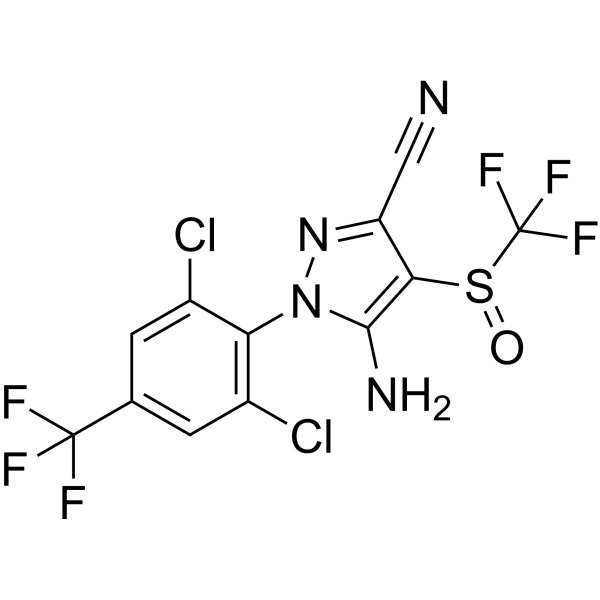
Fipronil (Standard) is the analytical standard of Fipronil. This product is intended for research and analytical applications. Fipronil is a broad-spectrum insecticide effective against Lepidoptera species as well as thrips, locusts, ants, cockroaches, fleas and ticks. Fipronil selectively inhibits GABA receptor with IC50s of 30 nM and 1600 nM for cockroach and rat GABA receptors, respectively. Glutamate-gated chloride channels (GluCls), which are present in cockroaches but not in mammals, are sensitive to the blocking effect of Fipronil. Fipronil also induces apoptosis in HepG2 cells and promotes the expression of CYP1A1 and CYP3A4 mRNA in human hepatocytes .
loading...
    loading...
Cat. No.: HY-N11507
CAS No.: 2319668-87-4
Synonyms: TKV
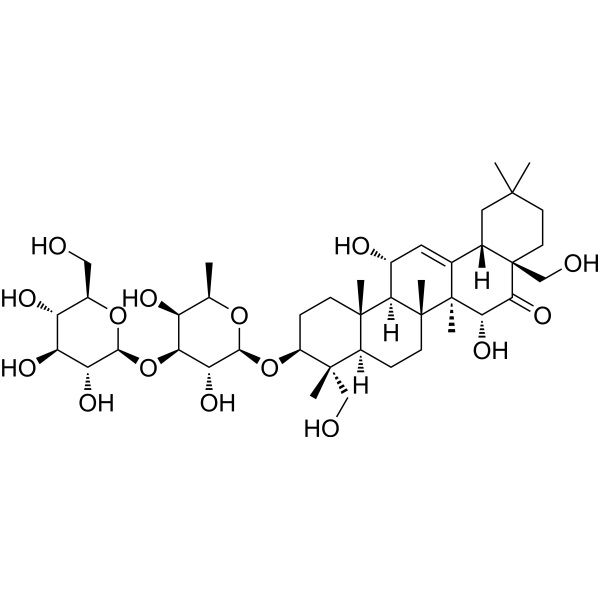
Tibesaikosaponin V (TKV) is a triterpene diglycoside, which can be isolated from the methanol extract of the roots of Bupleurum chinense DC.. Tibesaikosaponin V inhibits lipid accumulation and triacylglycerol content occurred without cytotoxicity to adipocytes. Tibesaikosaponin V suppresses the mRNA expression of nuclear transcription factors, such as peroxisome proliferator-activated receptor γ (PPARγ) and CCAAT/enhancer binding protein α (C/EBPα). Tibesaikosaponin V inhibits 3T3-L1 preadipocyte differentiation. Tibesaikosaponin V can be used fro research of obesity and its associated metabolic disorders .
loading...
    loading...
Cat. No.: HY-N20744
CAS No.: 10387-49-2
Synonyms: Acetylumbelliferone
7-Acetoxycoumarin (Acetylumbelliferone) is an anti-inflammatory inhibitor with antibacterial and amoebicidal activities. 7-Acetoxycoumarin reduces the phosphorylation levels of ERK, JNK, NF-κB and p38 MAPK. 7-Acetoxycoumarin downregulates the protein and mRNA expression levels of iNOS and COX-2. 7-Acetoxycoumarin inhibits the production of IL-1β, IL-6, TNF-α, NO and PG2. 7-Acetoxycoumarin reduces the degradation of IκBα. 7-Acetoxycoumarin can be used in studies related to amoebiasis and Bacillus lentus infection .
loading...
    loading...
Cat. No.: HY-N9330
CAS No.: 162558-94-3
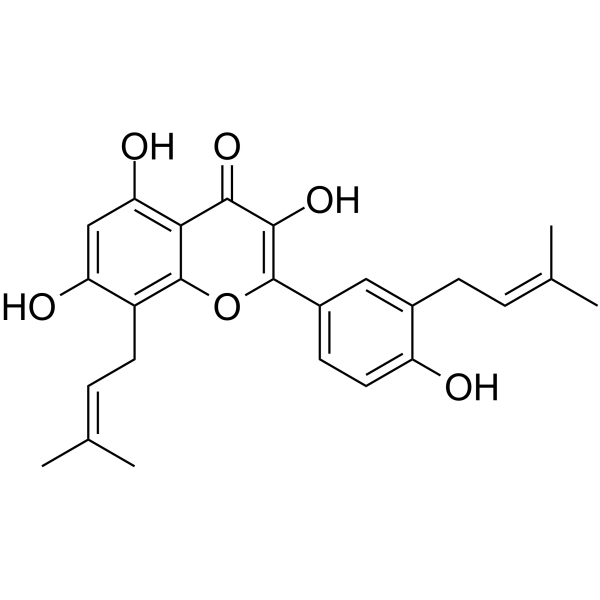
Broussoflavonol F is a potent dual inhibitor of the HER2-RAS-MEK-ERK signaling pathway and mushroom tyrosinase with an IC50 value of 82.3 μM. Broussoflavonol F downregulates the expression of RAS, HER2, phosphorylated BRAF, phosphorylated MEK and phosphorylated Erk proteins. Broussoflavonol F induces cell cycle arrest and apoptosis, and exhibits cytotoxicity in colon cancer cells. Broussoflavonol F inhibits endothelial proliferation, migration and tube formation, suppresses subintestinal vascular development, and reduces the mRNA levels of angiogenesis-associated genes.Broussoflavonol F can be used for colon cancer research .
loading...
    loading...
Cat. No.: HY-W019670R
CAS No.: 3768-18-1
N4-acetylcytidine (N4A) is an endogenous nucleoside metabolite from the degradation of tRNA. N4-Acetylcytidine is formed by N-acetyltransferase 10 and other enzymes. N4-acetylcytidine might sustain NLRP3 inflammasome activation via induction of HMGB1 expression and releasee. N4-Acetylcytidine modifies mRNA, tRNA and rRNA, affecting their stability, translation efficiency (such as enterovirus 71 RNA). N4-Acetylcytidine is used in the study of cancer, neuroinflammatory diseases, viral infections and obesity .
loading...
    loading...
Cat. No.: HY-W854721
CAS No.: 120389-54-0
Synonyms: Manganese(III) Protoporphyrin IX Chloride
Target:  

Heme Oxygenase (HO)

Research Areas:  

Metabolic Disease

Mn(III) protoporphyrin IX chloride is a metalloporphyrin. It induces mRNA expression of the genes encoding δ-aminolevulinate synthase and heme oxygenase (HO), enzymes that catalyze the rate-limiting steps of heme biosynthesis and degradation, respectively, in chick embryo liver cells when used at a concentration of 10 μM. Mn(III) protoporphyrin IX chloride-containing nanobialys have been used in magnetic resonance imaging (MRI) of fibrin clots in vitro. It has also been used in the synthesis of Mn(III) protoporphyrin IX-6(7)-glycyl-glycyl-L-histidine methyl ester (MnGGH), a metalloporphyrin conjugate with microperoxidase activity.
loading...
    loading...

