
408 Results for "

assemblies

" in MedChemExpress (MCE) Product Catalog:
Products (408)

408 Results for "assemblies" in MCE Product Catalog:

Referencia número: HY-185483
AMG-172 is an antibody-drug conjugate (ADC) composed of a fully human IgG1 monoclonal anti-CD27L antibody conjugated to DM1 (HY-19792) via the non-cleavable linker MCC. AMG-172 releases the intracellular active component Lysine-MCC-DM through catabolism. Lysine-MCC-DM inhibits the assembly and disassembly dynamics of Microtubule and induces cell arrest at metaphase. AMG-172 can be used for research on relapsed/refractory clear cell renal cell carcinoma .
loading...
    loading...
Referencia número: HY-187279A
Synonyms: Alkyne-PEG2000-CSRNLIDC
Alkyne-PEG2000-pPB (Alkyne-PEG2000-CSRNLIDC) is a functionalized PEGylated lipid conjugate composed of three modular components: alkyne (propargyl/alkyne linker) as the lipid anchoring group, PEG, and platelet-derived growth factor receptor β-binding peptide (pPB peptide (HY-P11549)) as the terminal targeting/functional ligand. Alkyne-PEG2000-pPB does not contain a lipid anchoring group but instead provides a terminal reactive site for post-assembly ligand or probe conjugation on PEGylated nanoparticles.
loading...
    loading...
Referencia número: HY-187324A
Alkyne-PEG2000-GE11 is a functionalized PEGylated lipid conjugate composed of three modular components: alkyne (propargyl/alkyne linker) as the lipid anchoring group, a polyethylene glycol (PEG) spacer arm with a molecular weight of 2000 Da, and GE11 peptide (YHWYGYTPQNVI) (HY-P10128) as the terminal targeting/functional ligand. Alkyne-PEG2000-GE11 does not contain a lipid anchoring group but instead provides a terminal reactive site for post-assembly ligand or probe conjugation on PEGylated nanoparticles.
loading...
    loading...
Referencia número: HY-187325A
Alkyne-PEG2000-RVG29 is a functionalized PEGylated lipid conjugate composed of three modular components: alkyne (propargyl/alkyne linker) as the lipid anchoring group, a polyethylene glycol (PEG) spacer arm with a molecular weight of 2000 Da, and RVG29 peptide (YTIWMPENPRPGTPCDIFTNSRGKRASNG) (HY-P5623) as the terminal targeting/functional ligand. Alkyne-PEG2000-RVG29 does not contain a lipid anchoring group but instead provides a terminal reactive site for post-assembly ligand or probe conjugation on PEGylated nanoparticles.
loading...
    loading...
Referencia número: HY-19916A
No. CAS: 1387574-54-0
Synonyms: BAL-101553 dihydrochloride
Áreas de investigación:  

Cancer

Lisavanbulin (BAL-101553) dihydrochloride is the prodrug of the microtubule targeting agent Avanbulin (BAL 27862) (HY-106008). Lisavanbulin dihydrochloride exhibits antitumor activity, especially in tumors that express high levels of end-binding protein 1. Lisavanbulin dihydrochloride has ability to target tumor cell proliferation and affects the tumor microenvironment by reducing tumor microvasculature. Lisavanbulin dihydrochloride is also a spindle assembly checkpoint activator. Lisavanbulin dihydrochloride induces cell cycle arrest and subsequent death or aberrant chromosome segregation. Lisavanbulin dihydrochloride can be studied in research for diffuse large B cell lymphoma (DLBCL) and glioblastoma .
loading...
    loading...
Referencia número: HY-N16152
No. CAS: 106918-69-8
Synonyms: C6-NBD-PE
Target:  

Fluorescent Dye

Áreas de investigación:  

Others

16:0-06:0 NBD PE (C6-NBD-PE) is a commonly used fluorescent phospholipid analog and membrane-disrupting agent for investigating membrane lipid structure and dynamics. In aqueous buffers, the self-assembly of 16:0-06:0 NBD PE can be disrupted via binding to methylated α-, β-, and γ-cyclodextrins. 16:0-06:0 NBD PE can be selectively extracted from lipid vesicles upon the addition of methylated cyclodextrins, with an extraction efficiency lower than that of NBD-PC and NBD-SM analogs .
loading...
    loading...
Referencia número: HY-W133898
No. CAS: 73049-73-7
Tryptone is a peptide-rich bacterial culture medium component that can regulate bacterial cell surface proteins and biofilm-related genes. Tryptone promotes the expression and assembly of bacterial adhesion proteins (such as LapA and LapF) by providing peptide substances as structural factors, enhancing cell surface hydrophobicity and intercellular adhesion, thereby stabilizing the biofilm matrix and supporting the maturation and maintenance of bacterial biofilms. The peptide mixture contained in Tryptone can specifically regulate the transcription of bacterial adhesion-related genes (such as activating LapA and inhibiting LapF), affecting the synthesis and localization of biofilm structural proteins .
loading...
    loading...
Referencia número: HY-121634
No. CAS: 794466-17-4
Áreas de investigación:  

Others

DAP-81 is an inhibitory agent targeting Polo-like kinases (Plks), a class of evolutionarily conserved serine/threonine kinases. DAP-81 dose-dependently increases the number of monopolar spindles in treated cells. High-resolution live-cell microscopy revealed that Plk activity is required for the assembly and maintenance of bipolar mitotic spindles. Plk inhibition destabilizes centromeric microtubules while stabilizing other spindle microtubules, leading to the formation of monopolar spindles. Further testing of compounds based on "privileged scaffolds" such as the DAP scaffold may lead to the discovery of new cell division probes and anti-microtubule agents.
loading...
    loading...
Referencia número: HY-155112
No. CAS: 2713553-88-7
Áreas de investigación:  

Cancer

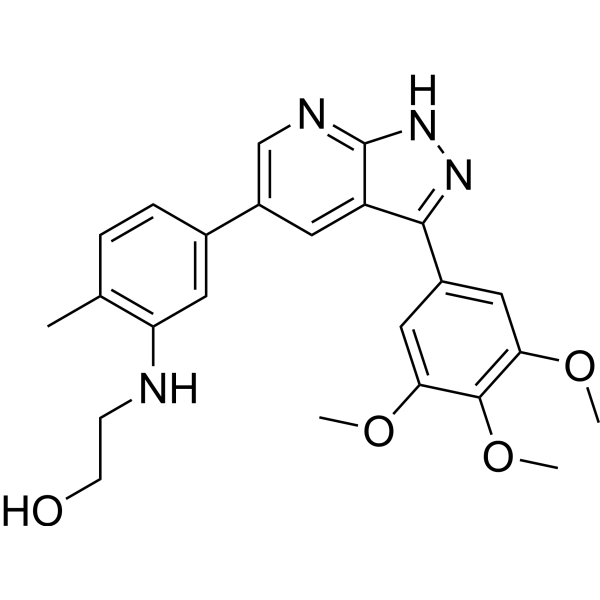
Antiproliferative agent-30 (Compound 8g) inhibits tubulin assembly and inhibits FLT3 and Abl1. Antiproliferative agent-30 has vascular-disrupting activity. Antiproliferative agent-30 has broad antiproliferative activities against cancer cell lines (IC50s: 0.054 nM, 0.008 nM, 0.144 nM for HCT-116, K562, MV-4-11 cells respectively). Antiproliferative agent-30 also has anticancer effect against AML with FLT3-ITD-TKD mutation .
loading...
    loading...
Referencia número: HY-158189
No. CAS: 3030629-73-0
TPP-Ce6 is a mitochondria-targeted photosensitizer formed by the ester bond conjugation of chlorophyll e6 (Ce6) with triphenylphosphine (TPP). Under light irradiation or ultrasound exposure, TPP-Ce6 generates reactive oxygen species, induces cell apoptosis, and triggers immunogenic cell death. TPP-Ce6 can serve as a component of carrier-free co-delivery systems, undergo enzyme-induced self-assembly within tumors, and modulate tumor hypoxia. TPP-Ce6 is applicable to research on breast cancer and glioblastoma .
loading...
    loading...
Referencia número: HY-168089
Áreas de investigación:  

Inflammation/Immunology

NLRP3-IN-49 (compound Z48) is a potent and specific NLRP3 inhibitor (IC50=0.26 μM in THP-1 cells, IC50=0.21 μM in mouse bone marrow macrophages). NLRP3-IN-49 can directly bind to NLRP3 protein (Kd=1.05 μM), effectively preventing the assembly and activation of NLRP3 inflammasome, thereby exhibiting anti-inflammatory properties. NLRP3-IN-49 can be used in the study of inflammatory bowel disease .
loading...
    loading...
Referencia número: HY-168534
No. CAS: 2929223-35-6
Target:  

SF3B1 Apoptosis FOXA

Áreas de investigación:  

Cancer

WX-02-23 is a small-molecule probe that stereoselectively and site-specifically binds to C258 of FOXA1 and C1111 of SF3B1. WX-02-23 remodels FOXA1's chromatin binding and pioneer activity in a DNA-dependent manner, disrupts spliceosome assembly, and enhances the thermal stability of SF3B1. WX-02-23 inhibits tumor cell proliferation and induces apoptosis. WX-02-23 can be used for research on cancers such as prostate cancer .
loading...
    loading...
Referencia número: HY-168634
Áreas de investigación:  

Cancer

SJ46421 is a BRD3BD2 PROTAC degrader. SJ46421 induces a cooperative ternary complex of KLHDC2 and BRD3BD2 with an IC50 of 7.8 nM. SJ46421 binds to the substrate-binding pocket of KLHDC2, forms cooperative ternary complexes with BRD3BD2, BRD2BD2 and BRD4BD2, disrupts the autoinhibitory tetramer assembly of KLHDC2, drives selective ubiquitination of BRD3BD2, and inhibits the ubiquitination of endogenous KLHDC2 diglycine substrates. SJ46421 can be used in cancer research .
loading...
    loading...
Referencia número: HY-172760
No. CAS: 3104363-32-5
Target:  

SARS-CoV

Áreas de investigación:  

Infection

CIM-834 is an orally effective inhibitor of SARS-CoV-2 membrane protein. CIM-834 can prevent the assembly of infectious virus particles without inhibiting the synthesis of viral RNA. CIM-834 can reduce the viral titer in the lungs of SCID mice infected nasally with SARS-CoV-2, block the spread of SARS-CoV-2 among Syrian hamsters, and inhibit the replication of SARS-CoV-2 (including variants) and SARS-CoV. CIM-834 can be used in related research on COVID-19 .
loading...
    loading...
Referencia número: HY-174305
Target:  

Amyloid-β

Áreas de investigación:  

Neurological Disease

Aβ42-IN-7 (Compound CT-01) is a brain-penetrant and selective amyloid-β42 (Aβ42) inhibitor. Aβ42-IN-7 inhibits Aβ42’s assembly into neurotoxic soluble oligomers and extracellular fibrillary aggregates. Aβ42-IN-7 exerts neuroprotective effects by reducing amyloid-mediated neuronal toxicity. Aβ42-IN-7 can be used in research on Alzheimer’s disease (AD) .
loading...
    loading...
Referencia número: HY-178898
No. CAS: 13072-74-7
7-Oxogedunin (Compound 7DG; Compound 16) is a small molecule that protects macrophages from cell pyroptosis induced by anthrax lethal toxin (LT). Its target is protein kinase R (PKR). 7-Oxogedunin can widely inhibit the assembly of various inflammasomes (NLRP1 and NLRP3) and the activation of caspase-1 by inhibiting the kinase-independent function of PKR. 7-Oxogedunin has growth inhibitory activity on European corn borer larvae. 7-Oxogedunin can be used for LT toxicity inhibition and pest control research .
loading...
    loading...
Referencia número: HY-184651
No. CAS: 3055155-53-5
Áreas de investigación:  

Neurological Disease

NLRP3-IN-93 is an orally active, blood-brain barrier-permeable NLRP3 inhibitor. NLRP3-IN-93 binds to the NACHT domain, blocks inflammasome assembly, and inhibits downstream IL-1β release, without significantly inhibiting various CYP isoforms. NLRP3-IN-93 demonstrates dose-dependent efficacy in mouse models of acute inflammation and Parkinson's disease, and exhibits good tolerability and an acceptable safety window in rats and dogs. NLRP3-IN-93 can be used in research on Parkinson's disease .
loading...
    loading...
Referencia número: HY-19916
No. CAS: 1263384-43-5
Synonyms: BAL-101553
Áreas de investigación:  

Cancer

Lisavanbulin (BAL-101553) is the prodrug of the microtubule targeting agent Avanbulin (BAL 27862) (HY-106008). Lisavanbulin is a BBB-penetrant and orally active antitumor agent, especially in tumors that express high levels of end-binding protein 1. Lisavanbulin has ability to target tumor cell proliferation and affects the tumor microenvironment by reducing tumor microvasculature. Lisavanbulin is also a spindle assembly checkpoint activator. Lisavanbulin induces cell cycle arrest and subsequent death or aberrant chromosome segregation. Lisavanbulin can be studied in research for diffuse large B cell lymphoma (DLBCL) and glioblastoma .
loading...
    loading...
Referencia número: HY-P10669
No. CAS: 2999646-19-2
Target:  

Caspase Apoptosis

Áreas de investigación:  

Cancer

NDI-Lyso is a lysosome-targeted anticancer agent that induces the formation of rigid long fibers in cancer cell lysosomes through an enzyme-instructed self-assembly (EISA) mechanism catalyzed by cathepsin B. This process triggers lysosomal swelling, membrane permeabilization (LMP), and membrane disruption, ultimately leading to cancer cell apoptosis via a non-classical caspase-independent pathway. NDI-Lyso exhibits significant selective anticancer activity in various cancer cell lines and drug-resistant cancer cells (IC50 ~10 μM) while showing low toxicity to normal cells (IC50 > 60 μM) .
loading...
    loading...
Referencia número: HY-174371
No. CAS: 3032576-92-1
Áreas de investigación:  

Neurological Disease Cancer

INNO-220 is an orally active, CRBN-dependent molecular glue degrader targeting CK1α. INNO-220 induces cell cycle arrest at G0/G1 phase and triggers apoptosis by degrading CK1α. INNO-220 disrupts the assembly and function of the CARD11/BCL10/MALT1 complex, thereby inhibiting NF-κB signaling in stimulated T cells and lymphoma cells that harbor an activating mutation in CARD11. INNO-220 provides a new direction for lymphoma research.
loading...
    loading...

