408 Results for "

assemblies

" in MedChemExpress (MCE) Product Catalog:
Products (408)

408 Results for "assemblies" in MCE Product Catalog:

Cat. No.: HY-184489
CAS No.: 328265-32-3
Research Areas:  

Cancer

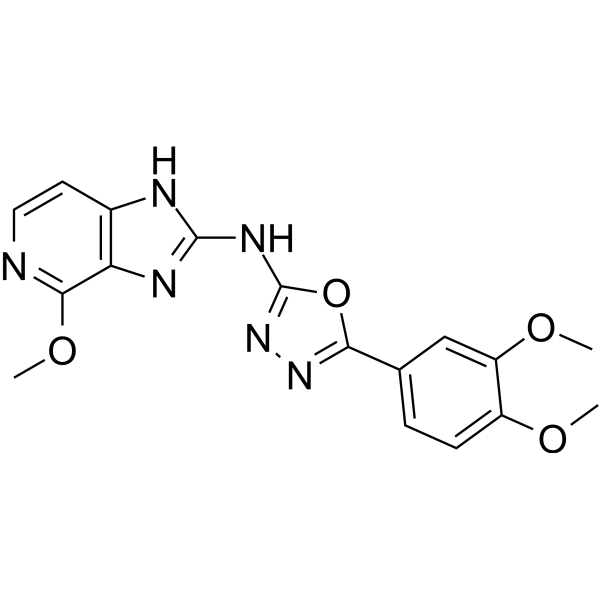
PGP/FSP1-IN-1 is a dual PGP and FSP1 inhibitor and ferroptosis inducer that inhibits the oxidoreductase activity of FSP1. PGP/FSP1-IN-1 competes with NAD (P) H for binding to the pocket of FSP1 and induces FSP1 self-assembly, thereby directly blocking the catalytic function of the relevant enzyme. PGP/FSP1-IN-1 promotes lipid peroxidation and significantly enhances cellular sensitivity to ferroptosis when GPX4 activity is impaired or glutathione synthesis is inhibited. PGP/FSP1-IN-1 can be used in cancer research .
loading...
    loading...
Cat. No.: HY-W585368
CAS No.: 945921-51-7
Research Areas:  

Others

BODIPY dyes are a class of small-molecule fluorophores with strong ultraviolet absorption and sharp fluorescence emission peaks. BODIPY dyes can non-specifically label erythrocyte membranes, fail to inhibit the proliferation of Plasmodium falciparum, exhibit weak cytotoxicity against Chinese hamster ovary cells, and have extremely low hemolytic activity. BODIPY dyes serve as a universal scaffold for fluorescent compounds such as laser dyes and fluorescent probes, and can also be used to construct photoelectric and biophotonic molecular assembly units. BODIPY dyes are applicable to research related to live-cell imaging, fluorescent labeling of proteins and DNA, and various biological imaging assays .
loading...
    loading...
Cat. No.: HY-151341
CAS No.: 2827693-99-0
Research Areas:  

Cancer

HIF-1/2α-IN-1 is an orally active HIF-2α inhibitor. HIF-1/2α-IN-1 inhibits HIF-2α activity with an IC50 value of 0.92 μM. HIF-1/2α-IN-1 also can decrease HIF-1α levels. HIF-1/2α-IN-1 can be used for the research of clear cell renal cell carcinoma (ccRCC) .
loading...
    loading...
Cat. No.: HY-185780
Synonyms: T-DM21
Research Areas:  

Cancer

Trastuzumab-DM12 (T-DM21) is an antibody-drug conjugate (ADC). Trastuzumab-DM12 binds to HER2, inhibits HER2 shedding, and mediates antibody-dependent cellular cytotoxicity. Trastuzumab-DM12 is formed by conjugating the antibody Trastuzumab (HY-P9907) with DM-21 (HY-139441). Trastuzumab-DM12 can be used for cancer research .
loading...
    loading...
Cat. No.: HY-124108
CAS No.: 1191-85-1
Purity:  ≥99.0%
Synonyms: ETYA
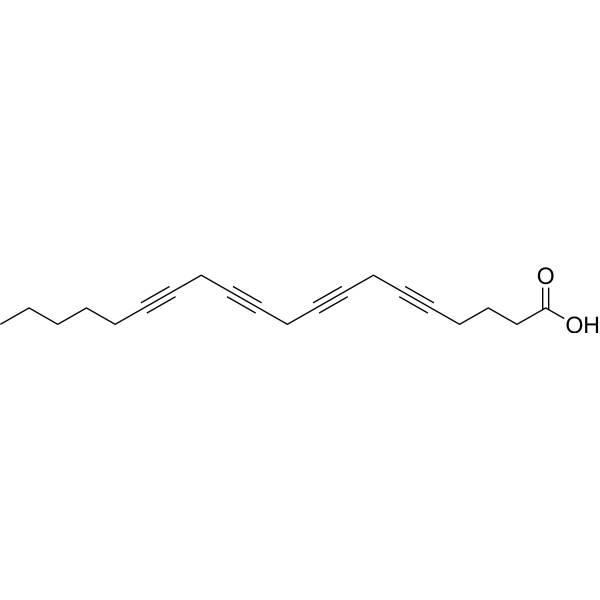
Eicosatetraynoic acid (ETYA) is a non-metabolizable analog of Arachidonic acid (HY-109590) and also an inhibitor of the lipoxygenase (LOX)/cyclooxygenase (COX) pathway (ID50 = 8 μM and 4 μM). Eicosatetraynoic acid acts as a suicide substrate to inhibit the production of inflammatory mediators such as leukotrienes and prostaglandins. Eicosatetraynoic acid acts directly on cell membranes and membrane proteins to exert a wide range of effects, including blocking potassium channels, increasing cell membrane fluidity, elevating intracellular calcium levels, inhibiting DNA synthesis in tumor cells, inducing differentiation of certain cells, and specifically inhibiting the assembly and replication of orthopoxviruses. Eicosatetraynoic acid alleviates acute lung injury induced by chemicals such as phosgene .
loading...
    loading...
Cat. No.: HY-138198A
Target:  

Acyltransferase

Research Areas:  

Infection

YIC-C8-434 is an orally active ACAT inhibitor. YIC-C8-434 selectively blocks cholesterol esterification in intestinal epithelial cells and hepatocytes without affecting the production of triglycerides or phospholipids. YIC-C8-434 effectively reduces intracellular cholesteryl ester levels and induces an increase in lipid droplet volume, exhibiting excellent cholesterol-lowering activity and safety. YIC-C8-434 disrupts the assembly of hepatitis C virus (HCV) virions, reduces HCV RNA synthesis and viral particle release. YIC-C8-434 can be used in studies related to hepatitis C virus infection .
loading...
    loading...
Cat. No.: HY-161329
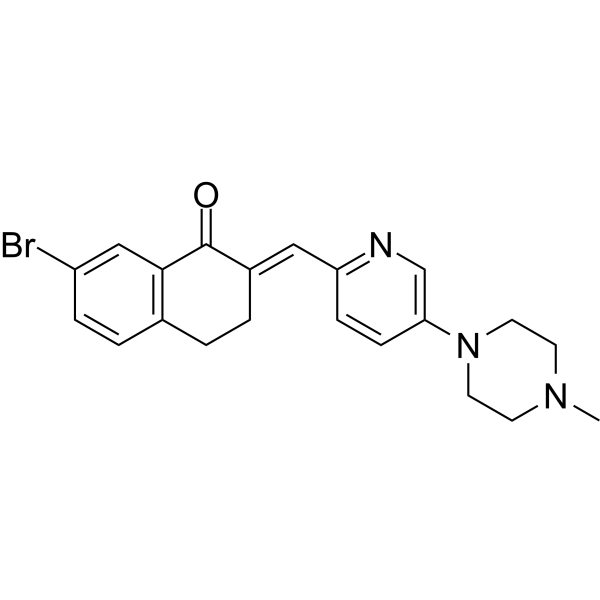
NLRP3-IN-32 (compound 7a), a 3, 4-dihydronaphthalene-1(2H)-one derivative, is a potential NLRP3 inflammatory vesicles inhibitor. NLRP3-IN-32 can block the assembly and activation of NLRP3 inflammasome by down-regulating the expression of NLPR3 and apoptosis-associated speck-like protein containing a CARD (ASC), and inhibiting the production of reactive oxygen species (ROS) and other inflammatory mediators. NLRP3-IN-32 inhibits the phosphorylation of IκBα and NF-κB/p65 and the nuclear translocation of p65, thereby inhibiting NF-κB signaling .
loading...
    loading...
Cat. No.: HY-N14780
CAS No.: 544712-82-5
Synonyms: (+)-Pochonin D
Pochonin D ((+)-Pochonin D) is an inhibitor of heat shock protein 90 (Hsp90) with antiviral and anti-inflammatory activities. Pochonin D inhibits Hsp90, affects the homeostasis, folding and assembly processes of viral proteins, and reduces the replication capacity of viruses. Pochonin D is a copper ion carrier that can induce cuproptosis in triple-negative breast cancer cells by targeting PRDX1. Pochonin D reduces the infiltration of inflammatory cells, decreases the secretion of inflammatory cytokines such as TNF-α and IL-1β, and alleviates inflammatory responses. Pochonin D is a promising candidate for research on human rhinovirus (HRV) infection and cancer .
loading...
    loading...
Cat. No.: HY-P3795
CAS No.: 361443-81-4
Target:  

HSV

Research Areas:  

Infection Neurological Disease

G2-Peptide is a 3-O-sulfated heparan sulfate (3-OS HS) binder and antiviral agent. G2-Peptide blocks herpesvirus attachment, entry, cell-to-cell spread and syncytium formation, and reduces viral protein translocation. G2-Peptide exhibits antiviral activity against both HSV-1 and HSV-2. G2-Peptide inhibits neural activity and impairs synapse assembly. G2-Peptide can be used in the research of genital herpes, ocular herpes infection and keratitis .
loading...
    loading...
Cat. No.: HY-154871
CAS No.: 2152-75-2
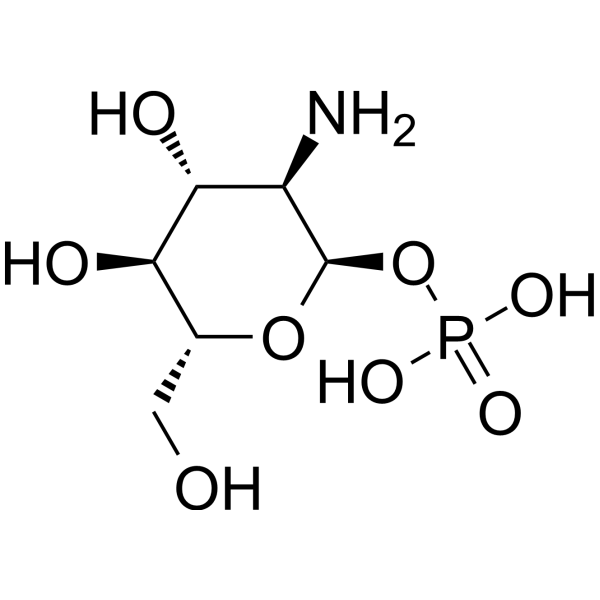
α-D-Glucosamine 1-phosphate is a glycosyl donor analog of Glc-1-P. α-D-Glucosamine 1-phosphate acts as a glycosyl donor to produce α(1→4)-linked glucosamine chains in the enzyme-catalyzed polymerization reaction mediated by thermostable α-glucan phosphorylase. α-D-Glucosamine 1-phosphate serves as a glycosyl donor analog to generate a pentasaccharide with a glucosamine residue at the non-reducing end in the maltotetraose glucosamination reaction catalyzed by potato α-glucan phosphorylase. α-D-Glucosamine 1-phosphate is used for the synthesis of amphiphilic block polysaccharides with pH-responsive assembly/disassembly properties .
loading...
    loading...
Cat. No.: HY-111964R
CAS No.: 2189684-44-2
Synonyms: GS-6207 (Standard)
Target:  

Reference Standards HIV

Research Areas:  

Infection

Lenacapavir (Standard) is the analytical standard of Lenacapavir (HY-111964). This product is intended for research and analytical applications. Lenacapavir (GS-6207) is an HIV-1 capsid inhibitor. Lenacapavir binds to the interface between capsid hexamers and CA monomers, disrupts capsid assembly and viral maturation, inhibits nuclear translocation of HIV-1 DNA, interferes with CA-mediated protein-protein interactions, reduces the formation of 2-LTR circles and pre-integration proviruses, induces aberrant capsids, and decreases the production of mature HIV-1. Lenacapavir exhibits activity against a variety of HIV-1 subtypes and clinical isolates. Lenacapavir is applicable to research related to human immunodeficiency virus type 1 (HIV-1) infection .
loading...
    loading...
Cat. No.: HY-118243
CAS No.: 1089681-42-4
Target:  

Amyloid-β

Research Areas:  

Others

KMS88009 is a potent small molecule that directly interferes with the formation of amyloid-β oligomers, thereby preserving cognitive behavior when used preventively and reversing cognitive behavior decline when used therapeutically. Oral administration of KMS88009 around the onset of Alzheimer's disease symptoms significantly reduced the assembly of amyloid-β oligomers and improved cognitive behavior in the APP/PS1 double transgenic mouse model. This unique dual mode of action suggests that KMS88009 may be a powerful therapeutic candidate for the treatment of Alzheimer's disease. In an evaluation, the physicochemical properties, pharmacokinetics and toxicity of this anti-amyloidogenic small molecule KMS88009 were studied, as well as post-mortem analysis of APP/PS1 TG mice after behavioral testing.
loading...
    loading...
Cat. No.: HY-153736
CAS No.: 90379-42-3
Purity:  98.40%
Target:  

DNA/RNA Synthesis

Research Areas:  

Cancer

NSC 194308, a U2AF2-RNA complexes enhancer, increases association of the U2AF1-U2AF2-SF1-splice site RNA complex by binding a site between the U2AF2 RNA recognition motifs (RRM1 and RRM2). NSC 194308 inhibits pre-mRNA splicing by stalling spliceosome assembly at the point where U2AF helps recruit U2 snRNP to the branchpoint. NSC 194308 enhances the binding of pre-mRNA to U2AF2, selectively triggering cell death in leukemia cell lines containing spliceosome mutations .
loading...
    loading...
Cat. No.: HY-179421
PROTAC HDAC6 degrader 7 is an orally active, highly efficient, and selective PROTAC degrader targeting histone deacetylase 6 (HDAC6) (IC50 = 118 nM). PROTAC HDAC6 degrader 7 can eliminate both the catalytic and zinc-finger ubiquitin-binding domain. PROTAC HDAC6 degrader 7 inhibits NLRP3 inflammasome assembly and activation, as well as blocks NF-κB signaling, thereby reducing the transcription and release of key inflammatory factors. PROTAC HDAC6 degrader 7 can reduce the mRNA levels of NLRP3, pro-IL-1β, TNF-α, and IL-6. PROTAC HDAC6 degrader 7 can be used for the study of inflammatory bowel disease (IBD) .
loading...
    loading...
Cat. No.: HY-179557
CAS No.: 2463893-46-9
iMQT_020 is a selective allosteric SLC1A5_var inhibitor. iMQT_020 disrupts the trimeric assembly of SLC1A5_var, causing metabolic crisis in cancer cells and selectively suppressing their growth. iMQT_020 reduces glutamine anaplerosis and oxidative phosphorylation, resulting in a broad disruption of cancer metabolism. iMQT_020 reduces GSH levels and increases cellular ROS and mitochondrial ROS. iMQT_020 induces apoptosis and ferroptosis. iMQT_020 can epigenetically upregulate PD-L1 expression. iMQT_020 can be used for the study of pancreatic cancer, lung cancer, and colon cancer .
loading...
    loading...
Cat. No.: HY-184601
Glycyrrhizic acid (GA) is a saponin derived from the root of the traditional Chinese medicine licorice. It possesses various pharmacological effects, such as anti-inflammatory, antioxidant, immunomodulatory, and antiviral activity. In addition to its own pharmacological activity, GA can form complexes with many drugs and other natural products. Structurally, glycyrrhizic acid is an amphiphilic molecule; its hydrophilic portion consists of glucuronic acid residues, while its hydrophobic portion is composed of glycyrrhizic acid residues. It can aggregate in water to form self-assembled micelles. Glycyrrhizic acid encapsulates hydrophobic drugs through self-assembly into host-guest complexes, thereby increasing drug solubility and inhibiting precipitation. These complexes can also achieve sustained and controlled release of encapsulated drugs. Therefore, glycyrrhizic acid micelles can serve as drug carriers to improve the absorption of hydrophobic drugs.
loading...
    loading...
Cat. No.: HY-19482
CAS No.: 630100-90-2
Research Areas:  

Cancer

E7107 is a pre-mRNA spliceosome inhibitor and apoptosis (Apoptosis) inducer. E7107 binds to spliceosome-associated protein 130, inhibits spliceosome assembly and pre-mRNA splicing, regulates cellular protein expression, induces G1 and G2/M phase cell cycle arrest, triggers DNA damage, alters R-loop levels, reduces CHEK2 expression, impairs transcriptional elongation, and shifts MCL1 splicing toward pro-apoptotic isoforms. E7107 inhibits tumor growth in xenograft models and reduces leukemia burden. E7107 can be used in the research of advanced solid tumors, acute myeloid leukemia, T-cell acute lymphoblastic leukemia, and triple-negative breast cancer .
loading...
    loading...
Cat. No.: HY-W698249R
CAS No.: 299-29-6
Ferrous gluconate (Standard) is the analytical standard of Ferrous gluconate. This product is intended for research and analytical applications. Ferrous gluconate is a highly water-soluble iron-containing agent with high bioavailability and bactericidal activity. As a non-heme iron, Ferrous gluconate is used for meat product fortification and improvement of iron deficiency anemia. Ferrous gluconate induces ferroptosis in E. coli through Fe 2+ infiltration, reactive oxygen species burst, lipid peroxidation and direct interaction with DNA. Ferrous gluconate also downregulates the SOS responsive transcriptional repressor LexA. In addition, Ferrous gluconate regulates multiple key pathways in E. coli such as fatty acid metabolism, iron-sulfur cluster assembly and pyruvate metabolism, and is applied in studies related to *E. coli* infection and iron deficiency anemia .
loading...
    loading...
Cat. No.: HY-111175
CAS No.: 905978-63-4
IG-105 is an orally active and potent tubulin inhibitor that competitively inhibits [ 3H] colchicine binding to tubulin with an IC50 of 0.6 μM and inhibits tubulin polymerization with an IC50 of 3 μM. IG-105 inhibits microtubule polymerization by binding to the colchicine pocket of tubulin, induces G2-M phase arrest, and subsequently activates the caspase cascade through Bcl-2 inactivation and p53 upregulation, inducing apoptosis. IG-105 effectively overcomes multidrug resistance as a non-Pgp substrate. IG-105 can be used for research on leukemia, breast cancer, liver cancer, prostate cancer, lung cancer, melanoma, pancreatic cancer, and colon cancer .
loading...
    loading...
Cat. No.: HY-Y0070
CAS No.: 420-04-2
Cyanamide is a cell division and plant growth inhibitor, as well as an allelochemical derived from Vicia villosa. Cyanamide inhibits root growth and biomass accumulation in a dose-dependent manner by disrupting the formation of mitotic spindles and phragmoplast complexes, reducing the number of mitotic cells and blocking the cell cycle. The effects of Cyanamide are partially reversible after removal from low-concentration environments. Cyanamide is also a specific inhibitor of aldehyde dehydrogenase (ALDH). Although Cyanamide has no direct effect on tumor growth, it can significantly enhance the anti-tumor efficacy of Cyclophosphamide (HY-17420) at non-toxic doses by inhibiting the inactivation of Cyclophosphamide. Cyanamide enables Cyclophosphamide to exert equivalent therapeutic effects at lower doses, effectively inhibiting the growth of primary and metastatic tumors and prolonging the lifespan of tumor-bearing mice. Cyanamide is commonly used in studies related to ha-1 hepatoma and rls lymphosarcoma .
loading...
    loading...

